What is the primary function of a horizontal rotary tube furnace in the preparation of sustainable activated carbon? - Guide
Updated 3 months ago
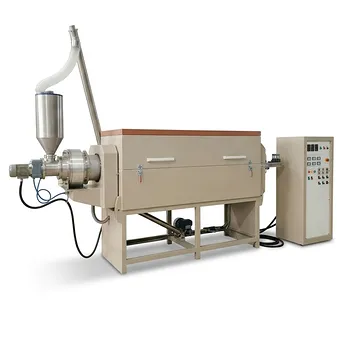
The horizontal rotary tube furnace is a specialized thermal processing unit designed to maximize material uniformity during the production of activated carbon. Its primary function is to maintain biomass precursors in a continuous state of tumbling and stirring, which ensures homogeneous contact between solid particles and gaseous activating agents like steam or carbon dioxide. This dynamic mechanical motion prevents localized over-activation or under-activation, leading to a consistent and well-developed pore structure throughout the material.
Core Takeaway: By utilizing a rotating reactor to agitate raw materials, the horizontal rotary tube furnace overcomes the limitations of static heating, ensuring that every particle undergoes uniform thermal decomposition and chemical etching for superior pore development.
Achieving Structural Homogeneity Through Agitation
The Impact of Continuous Tumbling
In a standard static furnace, material can settle, leading to uneven heat distribution and restricted gas access to the center of the mass. The rotary movement of the furnace tube ensures that biomass charcoal remains in a state of constant motion, exposing all particle surfaces to the thermal environment.
Optimizing Gas-Solid Interaction
The mechanical stirring facilitated by the rotating quartz or ceramic reactor allows gaseous activating agents—such as steam, CO2, or argon—to permeate the material bed effectively. This prevents the "shielding" effect found in stationary beds, where only the top layer of material reacts fully with the atmosphere.
Prevention of Localized Overheating
Uniform heating is critical to avoid "hot spots" that can lead to excessive carbon loss or the collapse of the delicate pore skeleton. The constant rotation distributes heat evenly across the particles, ensuring a homogeneous development of the micropore and mesopore volumes.
The Dual Role: Carbonization and Activation
Initial Pyrolysis and Carbon Enrichment
During the early stages of processing, the furnace provides a controlled, inert environment (typically using Nitrogen) at temperatures between 600°C and 800°C. This stage facilitates thermal decomposition, removing non-carbon elements as volatiles through dehydration and decarboxylation to build the initial porous carbon skeleton.
High-Temperature Physical Activation
Once carbonized, the furnace temperature is often raised (up to 950°C) while switching the atmosphere to an activating gas. In this stage, the furnace manages the redox reactions required to etch the carbon structure, significantly increasing the specific surface area and reaction activity of the final product.
Precision Chemical Activation
For processes involving chemical activators like potassium hydroxide (KOH), the tube furnace provides the precise heating rates and stable high-temperature environments necessary for the activator to react with the carbon skeleton. This level of control is essential for transforming agricultural waste into high-performance materials for electronics or filtration.
Understanding the Trade-offs
Mechanical Wear and Maintenance
The rotational mechanism introduces complexity and potential failure points, such as seals and drive systems, that are not present in static furnaces. Constant movement at high temperatures can lead to accelerated mechanical wear on the furnace tube, especially if the raw materials are abrasive.
Particle Attrition and Dust Generation
The continuous tumbling of biomass particles can cause physical degradation or "dusting" of the material. This particle attrition may result in a higher percentage of fines, which might require additional post-processing steps to separate or could potentially clog gas exhaust systems.
How to Apply This to Your Project
Optimizing Your Carbon Production Strategy
- If your primary focus is maximum surface area uniformity: Prioritize a rotary furnace with a high-precision rotation speed control to ensure every particle is equally exposed to the activating agent.
- If your primary focus is processing fragile biomass precursors: Utilize lower rotation speeds or specialized internal baffles to minimize mechanical impact and prevent the breakdown of the carbon skeleton.
- If your primary focus is multi-stage synthesis (carbonization and activation): Select a program-controlled furnace capable of multi-channel gas switching and precise temperature ramping to manage the entire transformation in a single cycle.
The horizontal rotary tube furnace remains the gold standard for producing sustainable, high-quality activated carbon by bridging the gap between laboratory precision and industrial uniformity.
Summary Table:
| Feature | Rotary Tube Furnace Benefit | Static Furnace Comparison |
|---|---|---|
| Material Uniformity | Continuous tumbling prevents settling | Potential for uneven heating |
| Gas Interaction | 360° exposure to activating agents | Limited surface-only reaction |
| Pore Development | Homogeneous pore structure | Risk of localized over-activation |
| Heat Distribution | Even distribution; no hot spots | Risk of thermal gradients |
Elevate Your Material Research with THERMUNITS
As a leading manufacturer of high-temperature laboratory equipment, THERMUNITS offers a comprehensive range of thermal processing solutions tailored for material science and industrial R&D. From specialized Rotary Tube Furnaces for activated carbon to Muffle, Vacuum, CVD/PECVD systems, and Vacuum Induction Melting (VIM) furnaces, our equipment provides the precision and uniformity your projects demand.
Ready to enhance your lab's efficiency and achieve superior results? Contact us today to discuss your specific heat treatment requirements and see how our expertise can drive your innovation forward.
References
- Taher Selmi, Alain Celzard. Enhancing micropollutant removal efficiency using sustainable activated charcoal. DOI: 10.1016/j.jece.2024.114855
Mentioned Products
- Multi Position Tube Furnace 1100C for Laboratory Material Research and Advanced Industrial Thermal Processing
- 900°C Max Rotary Tube Furnace with 8 Inch 310S Alloy Tube and Optional Multi Zone Heating for Industrial Material Calcination
- Ten Zone Multi Orientation Laboratory Tube Furnace for 1200C High Temperature Gradient Thermal Processing
- 1500C Max Dual Zone Rotary Tube Furnace with 60 mm OD Alumina Tube for High Temperature Material Synthesis
- High Temperature 1700C Dual Zone Rotary Tube Furnace with 60mm Alumina Tube and Precision Rotation Control
People Also Ask
- Why use a tube furnace for oxygen annealing LaCrO3/LaMnO3? Optimize Phase Transition & Magnetic Performance.
- What key role does a laboratory high-temperature tube furnace play in the production of carbon nanofibers? Guide
- How is a laboratory high-temperature tube furnace utilized to research the products of aluminothermic reduction? Advanced Metallurgical Solutions
- What is the role of a laboratory tube furnace in the carbonization process of porous carbon foam (PCF)? Master 3D Synthesis
- What role does a laboratory tube furnace play in the pyrolysis and carbonization of biomass? Optimize Thermal Research.

Tech Team · ThermUnits
Last updated on Jun 02, 2026
Related Products
Multi Position Tube Furnace 1100C for Laboratory Material Research and Advanced Industrial Thermal Processing
900°C Max Rotary Tube Furnace with 8 Inch 310S Alloy Tube and Optional Multi Zone Heating for Industrial Material Calcination
Ten Zone Multi Orientation Laboratory Tube Furnace for 1200C High Temperature Gradient Thermal Processing
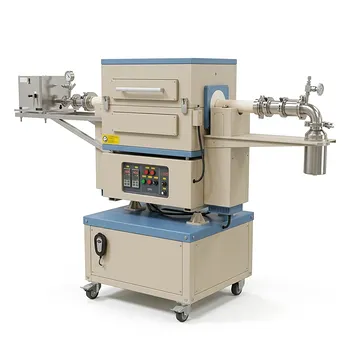
1500C Max Dual Zone Rotary Tube Furnace with 60 mm OD Alumina Tube for High Temperature Material Synthesis
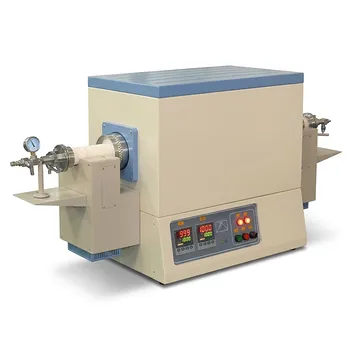
High Temperature 1700C Dual Zone Rotary Tube Furnace with 60mm Alumina Tube and Precision Rotation Control
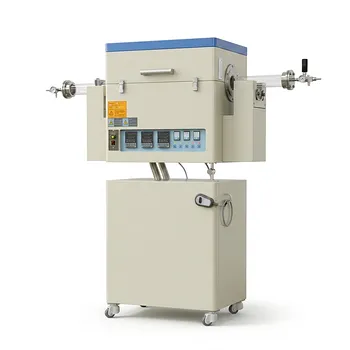
Three Temperature Zone Rotating Tube Furnace for Material Sintering and Controlled Atmospheric Heat Treatment
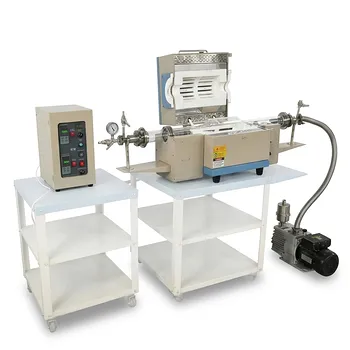
Two Zone Rotary Tube Furnace for Powder CVD Coating and Core Shell Material Synthesis 1100C

5 Inch Three Zone Rotary Tube Furnace with Integrated Gas Delivery System and 1200C Capability for Advanced Material CVD Processing
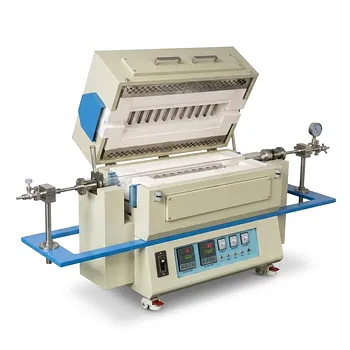
High Temperature Dual Zone Rotating Tube Furnace 1500C Silicon Carbide Heating for Advanced Material Synthesis
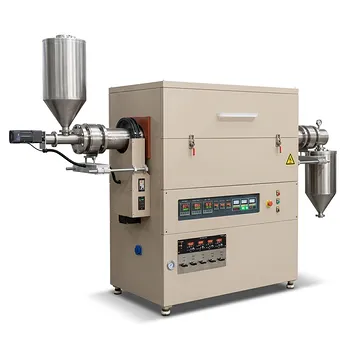
High Temperature Tilting Rotary Tube Furnace with Integrated Mass Flow Control and Multi Zone Heating
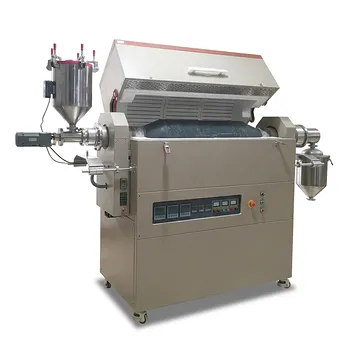
High Temperature Tilting Rotary Tubular Furnace for Continuous Powder Thermal Processing and Controlled Atmosphere Sintering
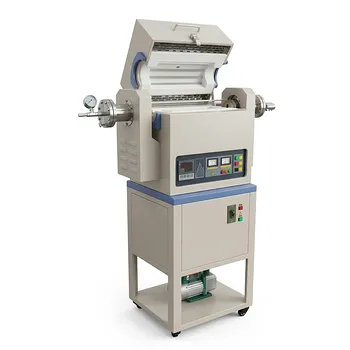
High Temperature Rotary Tilt Tubular Furnaces for Advanced Powder Sintering and Material Processing
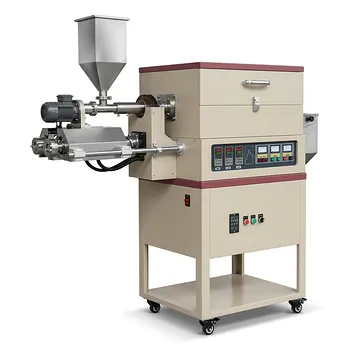
Laboratory Tilting Rotary Tubular Furnaces for Material Science and Industrial Heat Treatment
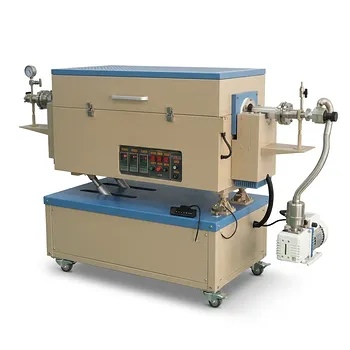
Three Zone Rotary Tube Furnace for High Temperature Powder Processing and Material Research
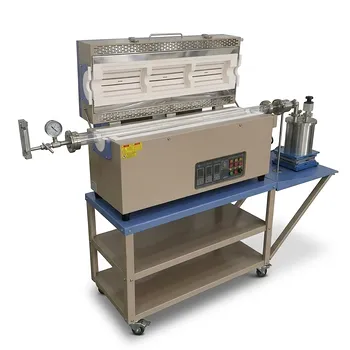
5 Inch Two Zone Rotary Tube Furnace 1100C for Powder CVD and Material Synthesis
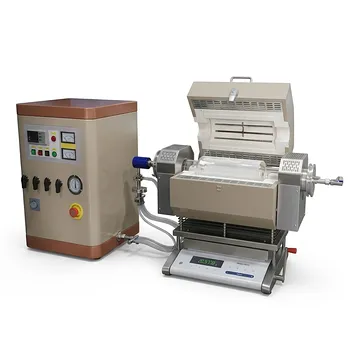
Mini Rotary Tubular Furnaces for Precision Powder Heat Treatment and Thermogravimetric Analysis
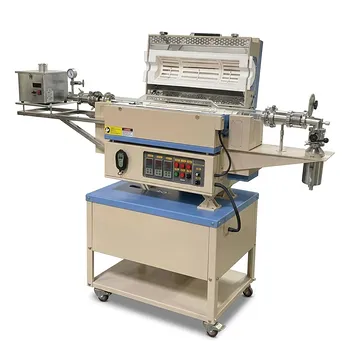
5 Inch Rotary Tube Furnace with Automatic Feeding and Receiving System 1200C Three Zone CVD Powder Processing
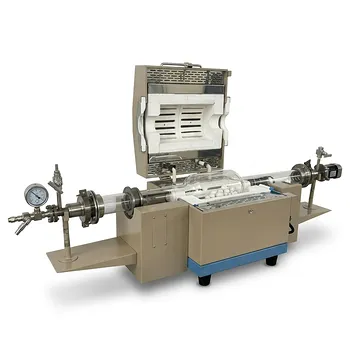
High Temperature Rotary Tube Furnace with Integrated Ball Milling and Gas Flow Function for Powder Nitriding
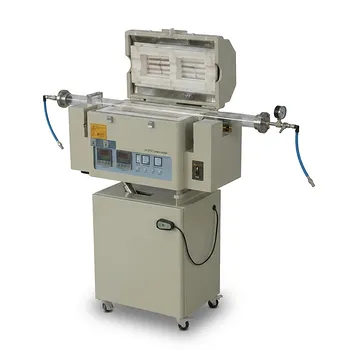
Double Temperature Revolving Tube Furnace with Precision Rotation and Adjustable Inclination for Advanced Material Research