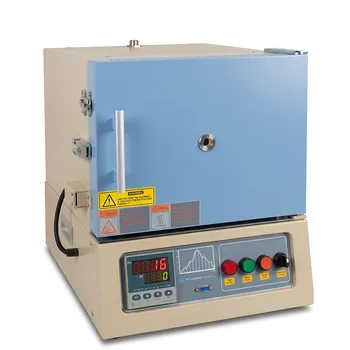
What is the role of a high-temperature muffle furnace in the preparation of CaO-SiO2-Al2O3 glassy slag systems? Key Role.
Updated 3 months ago
The high-temperature muffle furnace is the primary tool for synthesizing homogeneous $CaO-SiO_2-Al_2O_3$ glassy slags through precise isothermal control. It facilitates the chemical reaction of analytical-grade oxide powders at sustained temperatures, typically around 1673 K. This thermal treatment transforms raw powders into a uniform liquid phase that, upon cooling, provides a standardized glassy slag essential for carbon dissolution, surface tension, or density measurements.
The muffle furnace serves as the foundational thermal processing unit, ensuring that multi-component oxide mixtures reach a fully reacted, chemically uniform, and stable glassy state. Its role extends beyond simple melting to include critical pre-treatment steps such as calcination, decomposition of precursors, and the removal of residual impurities.
Achieving Chemical and Physical Homogeneity
Facilitating Complete Isothermal Reaction
To form a stable $CaO-SiO_2-Al_2O_3$ system, raw materials must be held at high temperatures for extended periods to overcome kinetic barriers. The muffle furnace provides a stable 1673 K environment, often for three hours or more, allowing the individual oxides to react fully.
Ensuring Uniform Chemical Distribution
The furnace provides the constant thermal energy required to dissolve disparate oxide particles into a single, cohesive liquid phase. This results in a slag with a consistent chemical composition across the entire sample, which is vital for the reproducibility of downstream metallurgical experiments.
Establishing a Standardized Initial State
By utilizing repeated isothermal treatments, the furnace ensures the slag reaches a stable physical state. This standardization is critical when the slag is used as a baseline for measuring how external factors, such as carbon dissolution or temperature changes, affect the system's properties.
Pre-treatment and Purification of Raw Materials
Decomposition of Carbonates and Hydroxides
Many raw materials are introduced as carbonates or contain adsorbed water and hydroxides. The muffle furnace allows for precise calcination—often at temperatures like 1000°C—to ensure the complete decomposition of $CaCO_3$ into $CaO$ and the removal of moisture.
Post-Synthesis Decarbonization
If melting occurs in graphite crucibles, residual carbon or carbides can contaminate the slag and interfere with surface tension measurements. A muffle furnace can be used for extended high-precision thermal treatment (e.g., 1000°C for 80 hours) to eliminate these impurities through oxidation.
Clarification and Bubble Removal
At peak temperatures, the muffle furnace maintains the melt in a low-viscosity state for several hours to facilitate clarification. This process allows the melt to discharge trapped air bubbles, resulting in a transparent, defect-free glass that is structurally sound for analytical testing.
Understanding the Trade-offs
Refractory and Crucible Interaction
At the high temperatures required for $CaO-SiO_2-Al_2O_3$ systems, the molten slag becomes chemically aggressive. There is a constant risk of the slag reacting with or leaching elements from the crucible (such as Alumina or Platinum), which can inadvertently alter the final chemical composition.
Component Volatilization
Extended residence time at high temperatures can lead to the evaporation of specific oxides. While $CaO$, $Al_2O_3$, and $SiO_2$ are relatively stable, any trace components or fluxing agents may volatilize, shifting the intended stoichiometry of the glass.
Thermal Gradients and Cooling Rates
While muffle furnaces are excellent at maintaining isothermal conditions, internal temperature gradients can exist if the heating elements are not properly calibrated. Additionally, the rate of cooling after the furnace is turned off must be controlled to prevent unwanted crystal precipitation or "devitrification" of the glassy phase.
How to Apply This to Your Slag Preparation
- If your primary focus is Chemical Purity: Utilize a multi-stage heating profile in the muffle furnace to ensure all hydroxides and carbonates are fully decomposed before reaching the final melting temperature.
- If your primary focus is Physical Homogeneity: Employ repeated melting cycles and extended isothermal holds (3+ hours) at 1673 K to ensure the oxide powders are fully incorporated into a single phase.
- If your primary focus is Eliminating Impurities: Perform a secondary decarbonization step at 1000°C for an extended duration to remove carbon residues that could skew surface tension or density data.
Through precise temperature regulation and sustained isothermal environments, the high-temperature muffle furnace transforms raw oxides into the high-quality, standardized glassy systems required for advanced metallurgical research.
Summary Table:
| Key Process Stage | Temperature / Duration | Core Objective |
|---|---|---|
| Calcination | 1000°C | Decomposition of carbonates and removal of moisture |
| Isothermal Synthesis | 1673 K (3+ Hours) | Complete chemical reaction and phase homogeneity |
| Decarbonization | 1000°C (Extended) | Elimination of residual carbon/carbide impurities |
| Clarification | Peak Temperature | Bubble removal for defect-free, transparent glass |
Optimize Your Slag Synthesis with THERMUNITS Precision
At THERMUNITS, we specialize in the high-precision thermal environments required for advanced material science and industrial R&D. Our high-temperature Muffle Furnaces are engineered to deliver the stable isothermal control essential for synthesizing homogeneous $CaO-SiO_2-Al_2O_3$ glassy systems without contamination.
As a leading manufacturer, we offer a comprehensive range of thermal processing solutions tailored for researchers, including:
- Muffle, Vacuum, and Atmosphere Furnaces
- Tube, Rotary, and Hot Press Furnaces
- CVD/PECVD Systems and Vacuum Induction Melting (VIM)
- Dental Furnaces and High-Quality Thermal Elements
Ensure the chemical purity and physical consistency of your research samples. Contact THERMUNITS today to consult with our experts on the ideal heat treatment equipment for your laboratory.
References
- Qiuju Li, Bowen Han. Dissolution of Carbon-Containing Species in CaO–SiO<sub>2</sub>–Al<sub>2</sub>O<sub>3</sub> Slag. DOI: 10.2355/isijinternational.isijint-2023-353
Mentioned Products
- Large Bench Top 1700C High Temperature Muffle Furnace with 19L Chamber for Advanced Material Sintering and Annealing
- 1200C High Temperature Muffle Furnace with Motorized Door and Automated PC Control for Industrial Sintering and Material Processing 27 Liter
- High Temperature Muffle Furnace with Dual Controllers and 36L Large Chamber 1700C Max
- 1750C Compact Muffle Furnace 1.7L Ultra High Temperature Laboratory Sintering System for Advanced Ceramics and Material Science Research
- High Temperature 1500C Benchtop Muffle Furnace 3.6L Alumina Fiber Chamber Programmable Controller Sintering Annealing Carbonization Thermal Processing System
People Also Ask
- What is the function of a high-temp muffle furnace in Ni-V oxide synthesis? Optimize your material's performance.
- What is the purpose of using muffle or tube furnaces in glass synthesis? Achieve Precise Melt-Quenching & Homogeneity
- What role does a high-temperature muffle furnace play in evaluating the mineral composition of rock samples? LOI & XRF Guide
- What is the function of a high-temperature muffle furnace in phosphorus-modified zeolite catalyst preparation?
- What is the function of a muffle furnace in aluminoborosilicate glass prep? Stabilize Raw Materials for Superior Purity

Tech Team · ThermUnits
Last updated on Jun 03, 2026
Related Products
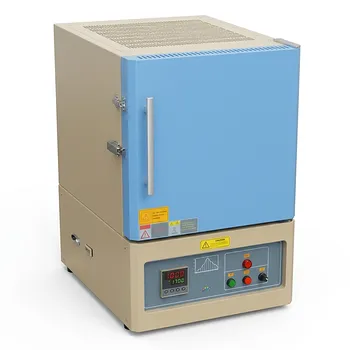
Large Bench Top 1700C High Temperature Muffle Furnace with 19L Chamber for Advanced Material Sintering and Annealing
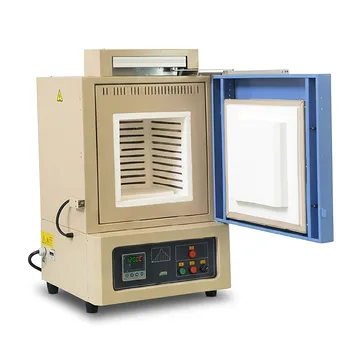
1200C High Temperature Muffle Furnace with Motorized Door and Automated PC Control for Industrial Sintering and Material Processing 27 Liter
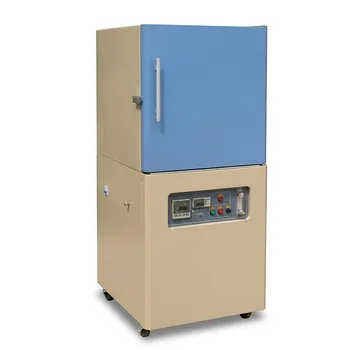
High Temperature Muffle Furnace with Dual Controllers and 36L Large Chamber 1700C Max
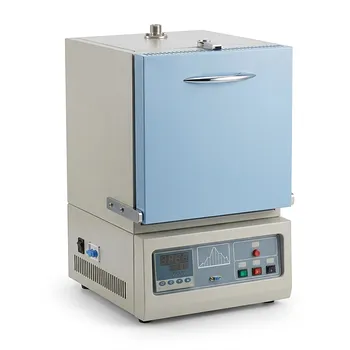
1750C Compact Muffle Furnace 1.7L Ultra High Temperature Laboratory Sintering System for Advanced Ceramics and Material Science Research
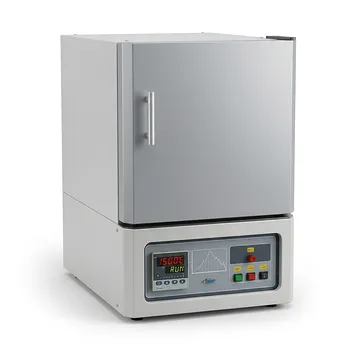
High Temperature 1500C Benchtop Muffle Furnace 3.6L Alumina Fiber Chamber Programmable Controller Sintering Annealing Carbonization Thermal Processing System
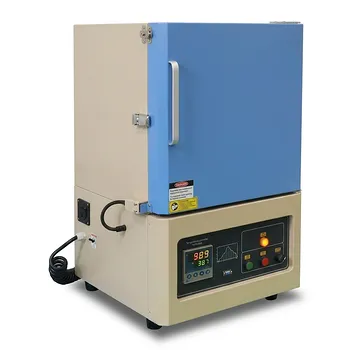
1200°C High Temperature Muffle Furnace 19L Chamber with 50 Segment Programmable Controller
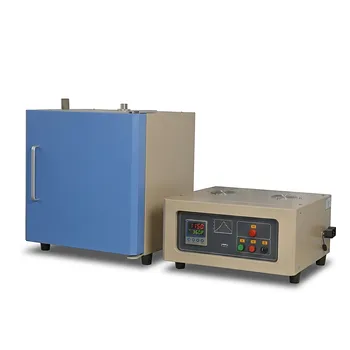
High Temperature Muffle Furnace with Alloy Chamber for Debinding and Sintering Applications
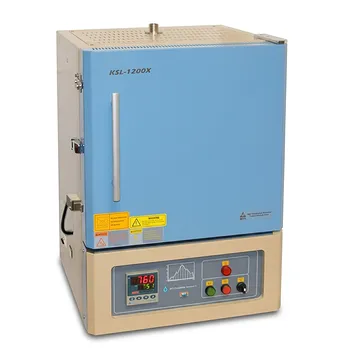
High Temperature 1200C Muffle Furnace 27L Volume 12x12x12 Chamber with Programmable PID Controller for Laboratory Material Science
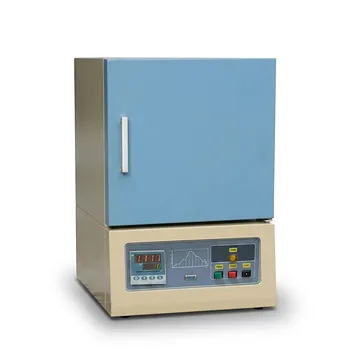
Ultra High Temperature Bench Top Muffle Furnace 1750C Sintering System with Kanthal Super Heating Elements and Precision Digital Control
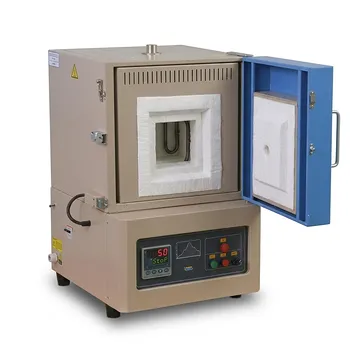
1800°C Bench Top Ultra High Temperature Muffle Furnace with Sapphire Observation Window and Top Feeding Port for Materials Research and Thermal Processing
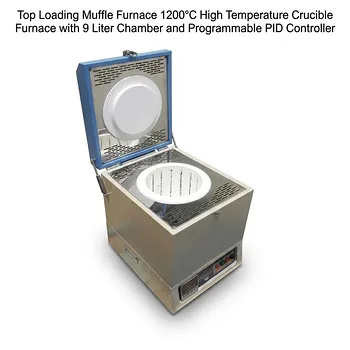
Top Loading Muffle Furnace 1200°C High Temperature Crucible Furnace with 9 Liter Chamber and Programmable PID Controller
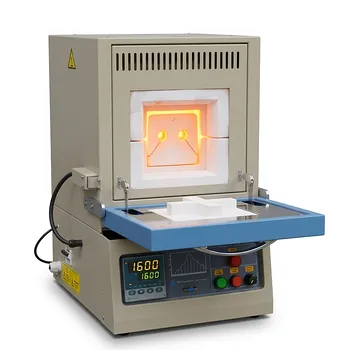
High Temperature Compact Muffle Furnace 1700 C with 30 Segment Programmable Controller and 1.7L Cubic Chamber
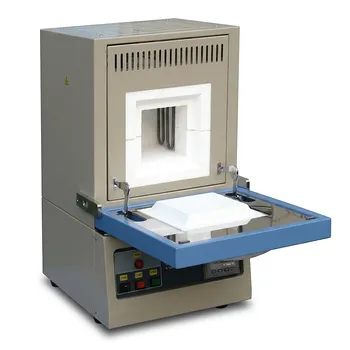
High Temperature 1800C Compact Muffle Furnace with Kanthal Super 1900 Heating Elements and 1.7L Alumina Chamber
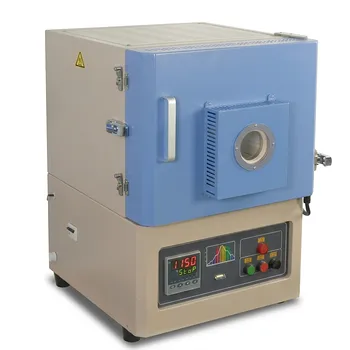
High Temperature Benchtop Muffle Furnace with Quartz Observation Window for Thermal Imaging and Material Analysis
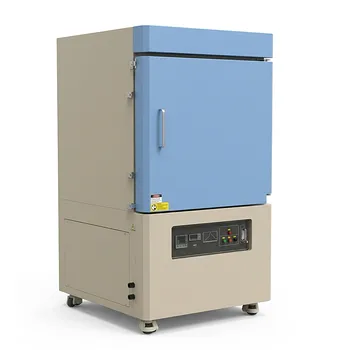
Industrial Large Box Furnace 1700C 216L High Temp Muffle Sintering System
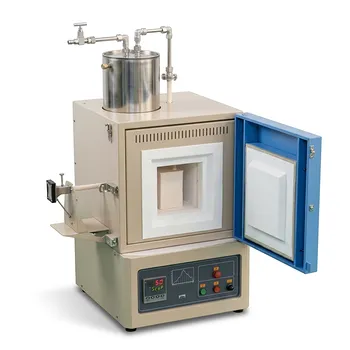
High Temperature Bench Top Muffle Furnace 1700C with Integrated Evaporating Particle Collection and 8x8x8 Alumina Fiber Chamber
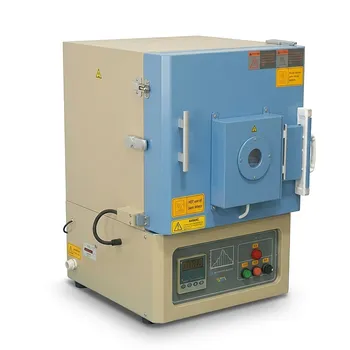
High Temperature Benchtop Muffle Furnace 1500C with 3.6L Chamber and Quartz Observation Window
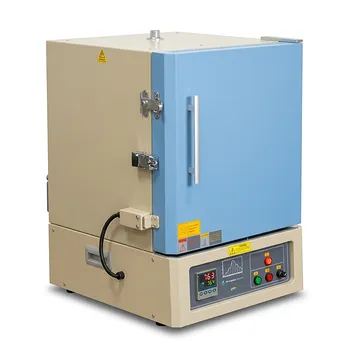
Large Capacity 1200C Muffle Furnace 64 Liter Chamber with Digital PID Controller and Built In Venting Port
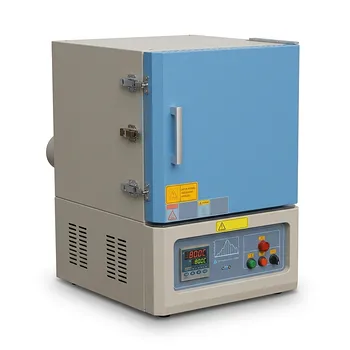
1800C Bench Top Muffle Furnace 18 Liters with Kanthal Super 1900 Heating Elements for High Purity Ceramic Sintering and Material Research