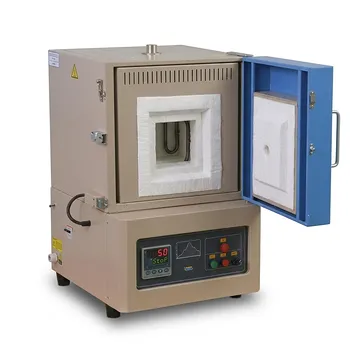
What is the role of an industrial-grade muffle furnace in catalyst preparation? Optimizing Methanethiol Synthesis
Updated 3 months ago
The industrial-grade muffle furnace is the primary thermal processing tool for establishing the structural and chemical integrity of molybdenum-based catalysts. It serves two critical roles: the pretreatment of support materials (like alumina) to remove impurities and the final calcination of impregnated precursors to transform them into stable, active metal oxide phases. This controlled environment ensures the catalyst possesses the necessary surface area and metal-support interactions required for efficient methanethiol synthesis.
Core Takeaway: The muffle furnace facilitates the transition from inactive precursors to functional catalysts by providing a stable, high-temperature oxidizing environment. This process is essential for achieving uniform oxide distribution and structural stability, which are the foundations of long-term catalytic performance.
Phase 1: Carrier Pretreatment and Structural Stabilization
Removal of Volatile Impurities
Before active metals are added, the muffle furnace is used to heat the carrier (such as alumina or zirconia). This step effectively removes moisture, organic residues, and volatile components that could interfere with metal loading.
Establishing Crystalline Phases
Specific supports require precise temperatures to reach their most effective crystalline state. For instance, treatment in a muffle furnace can facilitate the formation of the anatase phase in titanium dioxide at 400°C or stabilize niobium phosphate structures.
Surface Area Optimization
By maintaining controlled high temperatures, the furnace can remove soft template agents (like CTAB) used during support synthesis. This clears the micropores, ensuring the carrier has maximum available surface area for subsequent molybdenum impregnation.
Phase 2: Thermal Decomposition and Oxide Formation
Conversion of Metal Salts
Once the molybdenum precursors (such as ammonium heptamolybdate) are impregnated onto the support, the furnace performs final calcination. This process causes the thermal decomposition of metal nitrates or hydroxides into stable active oxide phases, such as molybdenum trioxide (MoO3).
Precise Regulation of Thermal Kinetics
Industrial-grade furnaces allow for the exact regulation of heating rates and isothermal holding times. This precision ensures that the decomposition occurs uniformly throughout the catalyst bed, preventing "hot spots" that could lead to uneven chemical properties.
Achieving High Purity and Dispersion
The stable air environment within the furnace chamber ensures that the precursors transform into high-purity oxide powders. This step is critical for ensuring that the molybdenum components are highly dispersed across the support surface, which directly impacts the number of active sites available for methanethiol synthesis.
Phase 3: Establishing Metal-Support Interactions
Anchoring Active Components
The high-temperature environment promotes the formation of metal-support interactions. These chemical bonds "anchor" the molybdenum oxide species within the surface micropores of the support, preventing them from migrating or leaching during the reaction.
Foundation for Subsequent Activation
The oxide phase created in the muffle furnace serves as the chemical foundation for later stages of catalyst preparation. For example, a well-formed MoO3 phase is essential for subsequent carbonization or reduction treatments that finalize the catalyst's active state.
Understanding the Trade-offs and Pitfalls
The Risk of Particle Sintering
While high temperatures are necessary for decomposition, excessive heat can lead to sintering. This is the process where small particles fuse together, drastically reducing the active surface area and declining the catalyst's overall activity.
Balancing Decomposition and Surface Energy
A muffle furnace must be operated within a specific window—typically between 350°C and 580°C. Operating below this range may leave residual precursors that poison the catalyst, while operating above it can collapse the delicate pore structure of the support.
Atmosphere Control
Because muffle furnaces typically operate in an oxidizing (air) environment, they are ideal for creating oxides. However, if a catalyst requires a reduced or sulfided state, the muffle furnace can only provide the "intermediate" oxide form, necessitating a second processing step in a different environment.
Applying Furnace Parameters to Your Synthesis Goals
How to Apply This to Your Project
- If your primary focus is maximizing active surface area: Prioritize a lower calcination temperature (near 350°C–400°C) with longer isothermal holding times to prevent sintering.
- If your primary focus is long-term catalyst stability: Utilize higher temperatures (near 500°C–550°C) to ensure strong metal-support interactions and complete carrier phase stabilization.
- If your primary focus is precursor purity: Ensure the heating rate is slow and the furnace is well-ventilated to allow for the complete escape of volatile decomposition gases.
The muffle furnace acts as the definitive architect of the catalyst’s physical and chemical landscape, turning raw chemical inputs into a structured, high-performance industrial tool.
Summary Table:
| Synthesis Phase | Primary Function | Key Benefit |
|---|---|---|
| Carrier Pretreatment | Removal of volatiles & phase stabilization | Maximizes surface area and structural integrity |
| Final Calcination | Thermal decomposition of metal salts | Converts precursors into active molybdenum oxide phases |
| Thermal Regulation | Precise control of heating kinetics | Ensures high dispersion and prevents particle sintering |
| Interaction Setup | Anchoring active components | Establishes strong metal-support bonds for stability |
Optimize Your Catalyst Synthesis with THERMUNITS Precision
As a global leader in high-temperature laboratory equipment, THERMUNITS provides the advanced thermal processing solutions essential for material science and industrial R&D. Our industrial-grade Muffle Furnaces deliver the uniform heating and precise temperature kinetics required to produce high-purity catalysts for methanethiol synthesis and beyond.
From Muffle and Tube furnaces to specialized CVD/PECVD systems and Vacuum Induction Melting (VIM) equipment, our solutions empower researchers to achieve superior metal-support interactions and optimal surface area.
Enhance your laboratory's heat treatment capabilities today.
Contact Our Engineering Team to discuss your specific catalyst preparation requirements.
References
- Hao Wang, Yongming Luo. The Influence of Sulfurization and Carbonization on Mo-Based Catalysts for CH3SH Synthesis. DOI: 10.3390/catal14030190
Mentioned Products
- 1750C Bench Top Muffle Furnace 3.6L High Grade Molybdenum Disilicide Heating Elements Laboratory Heat Treatment Equipment
- 1200C High Temperature Muffle Furnace with Motorized Door and Automated PC Control for Industrial Sintering and Material Processing 27 Liter
- Industrial Large Box Furnace 1700C 216L High Temp Muffle Sintering System
- High Temperature Muffle Furnace with Dual Controllers and 36L Large Chamber 1700C Max
- High Temperature Bench Top Muffle Furnace 1700C with Integrated Evaporating Particle Collection and 8x8x8 Alumina Fiber Chamber
People Also Ask
- Why is a benchtop muffle furnace essential for U3O8 micromaterials? Achieve precision stoichiometry and purity.
- What materials are typically used for heating elements in muffle furnaces? A Guide to Performance & Temperature Limits
- What role does a laboratory high-temperature muffle furnace play in the ash analysis phase of biomass co-firing research? [Guide]
- What role does a high-temperature muffle furnace play in evaluating the mineral composition of rock samples? LOI & XRF Guide
- What is the function of a muffle furnace in aluminoborosilicate glass prep? Stabilize Raw Materials for Superior Purity

Tech Team · ThermUnits
Last updated on Jun 03, 2026
Related Products
1750C Bench Top Muffle Furnace 3.6L High Grade Molybdenum Disilicide Heating Elements Laboratory Heat Treatment Equipment
1200C High Temperature Muffle Furnace with Motorized Door and Automated PC Control for Industrial Sintering and Material Processing 27 Liter
Industrial Large Box Furnace 1700C 216L High Temp Muffle Sintering System
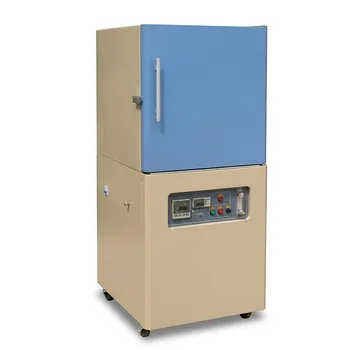
High Temperature Muffle Furnace with Dual Controllers and 36L Large Chamber 1700C Max
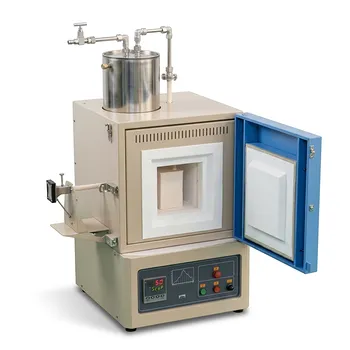
High Temperature Bench Top Muffle Furnace 1700C with Integrated Evaporating Particle Collection and 8x8x8 Alumina Fiber Chamber
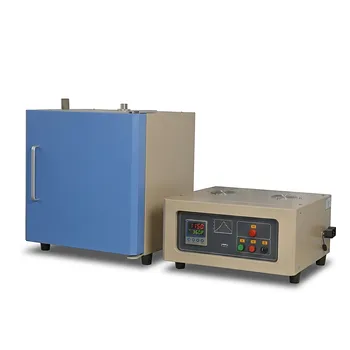
High Temperature Muffle Furnace with Alloy Chamber for Debinding and Sintering Applications
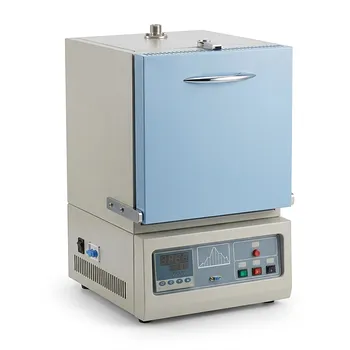
1750C Compact Muffle Furnace 1.7L Ultra High Temperature Laboratory Sintering System for Advanced Ceramics and Material Science Research
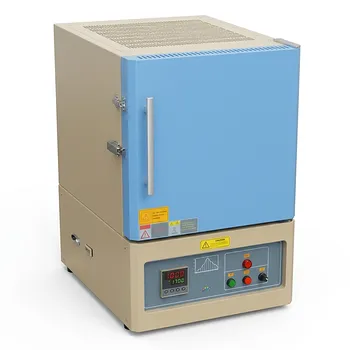
Large Bench Top 1700C High Temperature Muffle Furnace with 19L Chamber for Advanced Material Sintering and Annealing
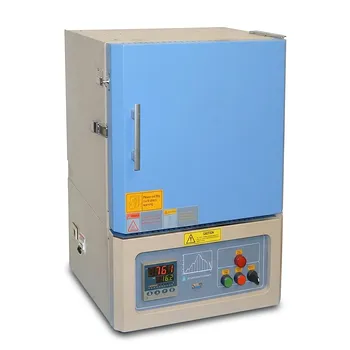
High Temperature 1700C Bench Top Muffle Furnace with Alumina Fiber Insulation and 3.6L Chamber Capacity for Precision Sintering and Heat Treatment
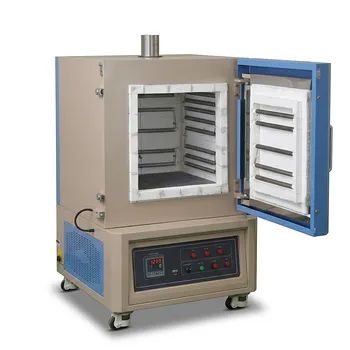
1200C High Temperature 125L Muffle Furnace 5 Side Heating for Large Batch Sintering with Optional Alloy Debinding Chamber
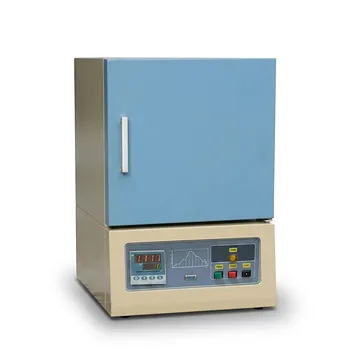
Ultra High Temperature Bench Top Muffle Furnace 1750C Sintering System with Kanthal Super Heating Elements and Precision Digital Control
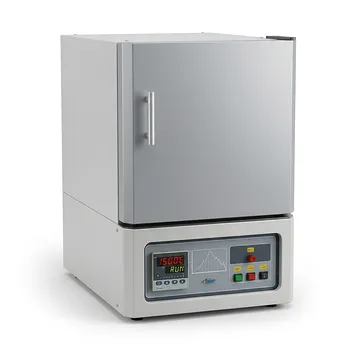
High Temperature 1500C Benchtop Muffle Furnace 3.6L Alumina Fiber Chamber Programmable Controller Sintering Annealing Carbonization Thermal Processing System
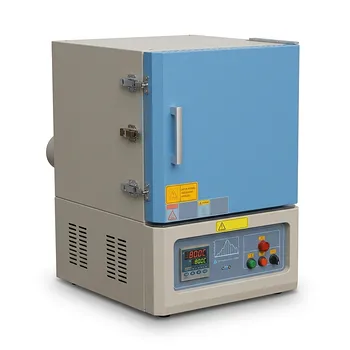
1800C Bench Top Muffle Furnace 18 Liters with Kanthal Super 1900 Heating Elements for High Purity Ceramic Sintering and Material Research
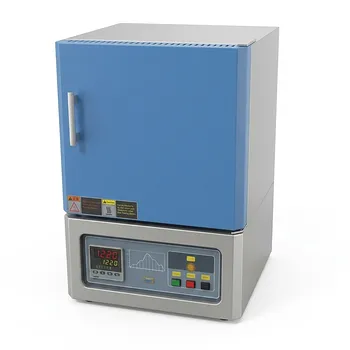
High Temperature Benchtop Muffle Furnace 1700C 10L Chamber Alumina Fiber Insulation MoSi2 Heating Elements
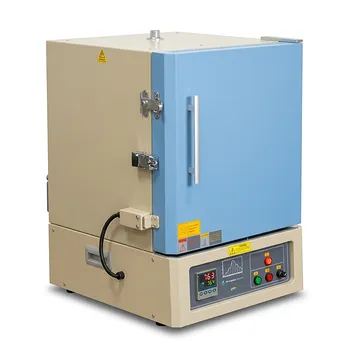
Large Capacity 1200C Muffle Furnace 64 Liter Chamber with Digital PID Controller and Built In Venting Port
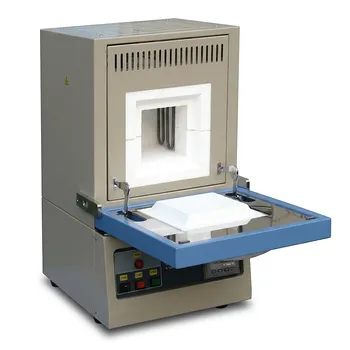
High Temperature 1800C Compact Muffle Furnace with Kanthal Super 1900 Heating Elements and 1.7L Alumina Chamber
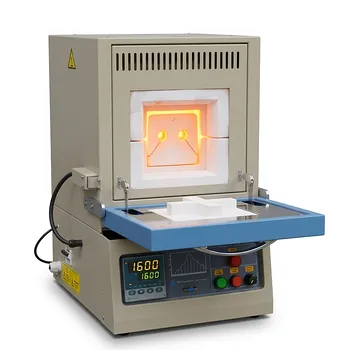
High Temperature Compact Muffle Furnace 1700 C with 30 Segment Programmable Controller and 1.7L Cubic Chamber
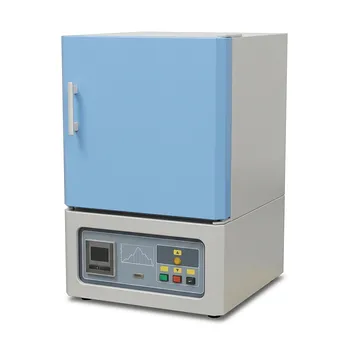
1800C Bench Top Muffle Furnace with Kanthal Super 1900 Heating Elements and 3.6L Alumina Fiber Chamber
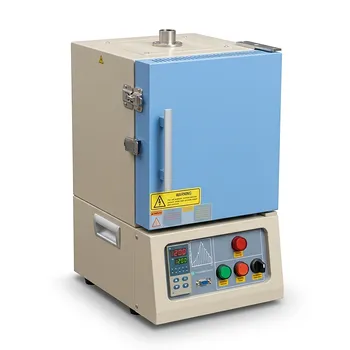
1200°C Small Box Furnace 4.2 Liter Programmable Muffle Furnace with High Purity Alumina Insulation and PID Control