What is the technical purpose of using 500 mm slender alumina crucibles? Advanced Oxygen Control for LiF Salt Corrosion
Updated 3 months ago
The primary technical purpose is the creation of a controlled oxygen diffusion barrier. These specialized 500 mm slender alumina crucibles allow researchers to stack lithium fluoride (LiF) salt columns several tens of centimeters high. This vertical depth physically isolates the alloy sample at the bottom from atmospheric oxygen, effectively simulating the oxygen-depleted conditions found in specific industrial environments.
Core Takeaway: The crucible's extreme length is a functional tool used to manipulate oxygen partial pressure. By using the salt column as a physical barrier, researchers can distinguish between corrosion caused by the salt itself and corrosion accelerated by atmospheric oxygen.
Simulating Industrial Oxygen Depletion
Creating a Diffusion Barrier
The height of the salt column is the critical variable in this experimental design. By placing the alloy sample under tens of centimeters of molten LiF, the "path length" for oxygen diffusion is significantly increased.
Controlling Oxygen Partial Pressure
This setup allows for a direct comparison between high-oxygen and oxygen-depleted environments. Lowering the oxygen partial pressure at the sample interface reveals how atmospheric contaminants influence the morphology of corrosion products.
Mimicking Real-World Conditions
Many industrial molten salt applications operate in environments where oxygen is scarce or strictly controlled. The slender crucible provides a laboratory-scale method to replicate these low-oxygen industrial conditions accurately.
Material and Geometric Requirements
High-Temperature Chemical Inertness
Alumina (aluminum oxide) is selected because it remains chemically inert at the high temperatures required for LiF experiments. It ensures that the container does not react with the salt or the alloy, which would otherwise invalidate the corrosion data.
The Advantage of Slender Geometry
The "slender" aspect ratio is intentional; it minimizes the surface-area-to-volume ratio at the top of the crucible. This narrow opening further restricts the volume of oxygen that can enter the system and begin the downward diffusion process.
Supporting High-Density Salt Columns
Lithium fluoride is a high-density salt, and 500 mm crucibles are structurally engineered to withstand the hydrostatic pressure of a tall molten column. This structural integrity is vital for maintaining the safety and consistency of long-term corrosion tests.
Understanding the Trade-offs
Thermal Gradient Challenges
The primary drawback of a 500 mm crucible is the difficulty of maintaining a uniform temperature across the entire length. Thermal gradients can cause variations in salt density and convection currents, which may inadvertently assist oxygen transport.
Fragility and Thermal Shock
Alumina is a ceramic, meaning it is highly susceptible to thermal shock. The slender, elongated shape makes these crucibles particularly vulnerable to snapping or cracking if heated or cooled too rapidly during the experiment.
How to Apply This to Your Project
Choosing the Right Experimental Depth
Selecting the correct crucible length depends entirely on the degree of oxygen isolation required for your specific alloy study.
- If your primary focus is simulating deep-submerged industrial components: Utilize the full 500 mm length to maximize the diffusion barrier and minimize oxygen partial pressure.
- If your primary focus is studying rapid oxidation mechanisms: Use a shorter salt column or a wider crucible to allow atmospheric oxygen to interact more freely with the alloy surface.
- If your primary focus is pure salt chemistry without atmospheric interference: Combine the tall crucible design with an inert glovebox environment to ensure total oxygen exclusion.
By strategically using crucible geometry to control the environment, you can isolate the specific variables driving alloy degradation in molten salts.
Summary Table:
| Feature | Technical Function | Benefit to Researcher |
|---|---|---|
| 500mm Length | Creates a tall salt column barrier | Isolates sample from atmospheric oxygen |
| Slender Shape | Minimizes surface-to-volume ratio | Restricts oxygen diffusion path length |
| Alumina Material | High-temperature chemical inertness | Prevents reaction with salts or alloys |
| High Structural Integrity | Withstands hydrostatic pressure | Ensures safety for high-density salt columns |
Elevate Your Material Research with THERMUNITS
Precision in thermal processing is critical for accurate corrosion studies. As a leading manufacturer of high-temperature laboratory equipment, THERMUNITS provides the specialized tools needed for material science and industrial R&D. Our comprehensive range includes Muffle, Vacuum, Atmosphere, Tube, and Rotary Furnaces, as well as CVD/PECVD systems, Dental Furnaces, and Vacuum Induction Melting (VIM) units. Whether you need high-purity thermal elements or complex heat treatment solutions, we deliver the reliability your experiments demand.
Ready to optimize your lab’s thermal capabilities? Contact our experts today to find the perfect furnace for your LiF corrosion tests and beyond!
References
- Aida Nikbakht, Christine Geers. Deep Intergranular Fluoride Attack by High-Temperature Corrosion on Alloy 625 by LiF in Air at 600 °C. DOI: 10.1007/s11085-024-10259-6
Mentioned Products
- Vertical Crucible Furnace 1000C High Temperature Laboratory Equipment 4.7 Inch Diameter Chamber SS316 Anti Corrosive Enclosure
- 1200C Sliding Internal Crucible Tube Furnace for Controlled Atmosphere Thin Film Deposition and Material Sublimation Research
- Automatic 10 Crucible Induction Melting and Casting System with Stirring Function and Glovebox Integration 2000C
- 600°C Vertical Crucible Furnace with SS316 Alloy Reactor and 6 Port Vacuum Flange
- Compact Crucible Melting Furnace 1100C Programmable Temperature Controller Metal Sintering Equipment
People Also Ask
- What is the function of a high-temperature laboratory furnace in the synthesis of Crystalline Carbon Nitride (PTI)?
- How Lab Furnaces Simulate Industrial Conditions for CPCM Stability: Optimize Your Thermal Cycling R&D
- Why is a low initial heating rate of 1 °C/min required for Rh–WNO precursors? Ensuring Structural Integrity & Dispersion
- Why is a laboratory furnace with ultra-high heating rate capabilities necessary for simulating coal injection processes?
- What is the objective of performing long-term annealing at 653 K on quenched PbTe-Ag2Te? Drive Ostwald Ripening.

Tech Team · ThermUnits
Last updated on Jun 03, 2026
Related Products
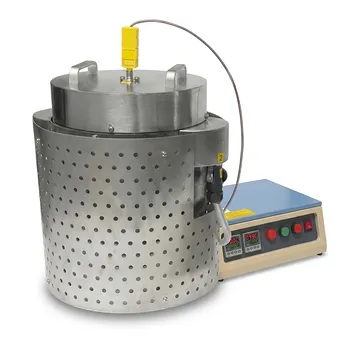
Vertical Crucible Furnace 1000C High Temperature Laboratory Equipment 4.7 Inch Diameter Chamber SS316 Anti Corrosive Enclosure
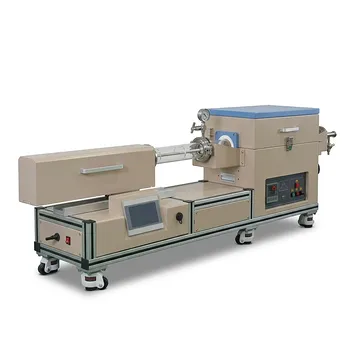
1200C Sliding Internal Crucible Tube Furnace for Controlled Atmosphere Thin Film Deposition and Material Sublimation Research
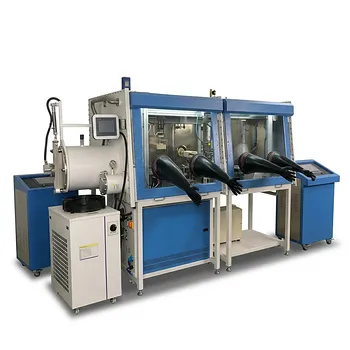
Automatic 10 Crucible Induction Melting and Casting System with Stirring Function and Glovebox Integration 2000C
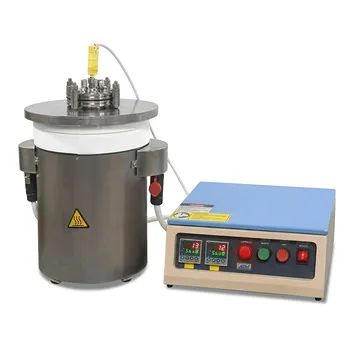
600°C Vertical Crucible Furnace with SS316 Alloy Reactor and 6 Port Vacuum Flange
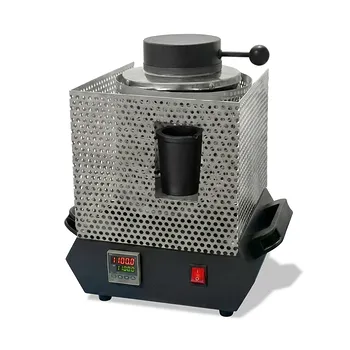
Compact Crucible Melting Furnace 1100C Programmable Temperature Controller Metal Sintering Equipment
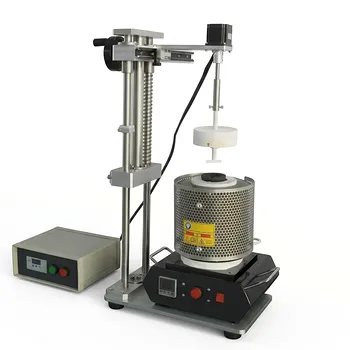
1100C Crucible Melting Furnace with Stirring Function for Glovebox and Air Sensitive Alloy Research
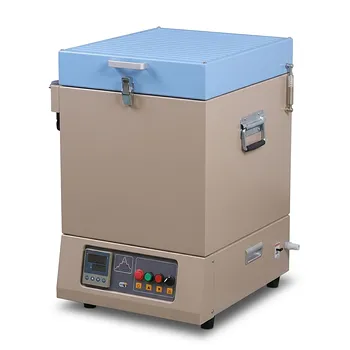
High Temperature Vertical Crucible Furnace with 22L Heating Chamber and 1200C Maximum Temperature