How Lab Furnaces Simulate Industrial Conditions for CPCM Stability: Optimize Your Thermal Cycling R&D
Updated 3 months ago
A high-temperature laboratory furnace simulates industrial operating conditions by subjecting composite phase change materials (CPCMs) to programmed, repeated thermal cycles that mimic real-world energy storage demands. By precisely controlling heating rates, peak temperatures (often reaching 800°C), and cooling phases, the furnace replicates the stresses of continuous charging and discharging cycles to evaluate material durability.
Core Takeaway: Laboratory furnaces act as accelerated aging environments, using automated temperature-time curves to reveal how composite phase change materials maintain their structure, chemical integrity, and energy storage capacity over their intended service life.
The Mechanism of Thermal Cycle Simulation
Precision Temperature-Time Curves
Modern furnaces use program-controlled systems to follow standardized heating profiles that mirror industrial or fire-hazard environments. These systems allow researchers to heat specimens from ambient levels to extreme temperatures, such as 800°C, and maintain them for specific durations to observe steady-state behavior.
High-Volume Cyclic Loading
To verify long-term stability, the furnace performs repeated thermal cycles—sometimes numbering in the hundreds or thousands. This frequency simulates the "periodic temperature changes" found in industrial thermal energy storage or building environments, where materials must melt and solidify daily without failure.
Uniform Thermal Exposure
High-temperature furnaces ensure a uniform temperature field, which is critical for consistency across multiple specimens. This uniformity guarantees that every part of the composite material experiences the same thermal load, allowing for accurate tracking of phase transformation behavior.
Evaluating Material Integrity and Performance
Monitoring Physical and Shape Stability
One of the primary goals of these simulations is to monitor shape retention and mass loss during repeated phase changes. If a composite cannot maintain its structural integrity at high temperatures, it may leak or deform, rendering it useless for industrial containment systems.
Assessing Physicochemical Compatibility
The furnace environment allows researchers to detect chemical stability and the compatibility between the phase change material and its supporting matrix or shell. Continuous exposure can reveal the reliability of shell seals and the growth of unwanted interface products that could degrade the material over time.
Tracking Latent Heat Performance
By subjecting materials to extended heat treatment, scientists can measure the decay in latent heat performance. This identifies whether the material's ability to store and release thermal energy diminishes after repeated use, which is a core metric for determining its industrial service life.
Simulating Environmental Variables
Atmospheric Control and Oxidation
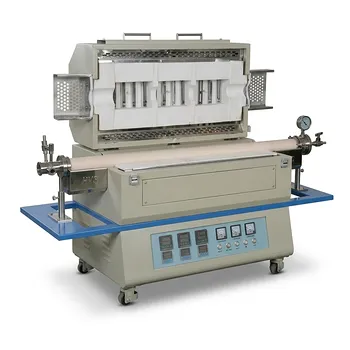
Many laboratory furnaces, such as tube or muffle furnaces, allow for controlled atmospheres using gases like argon or oxygen. This replicates specific industrial conditions, such as oxygen-rich environments for solid-phase reactions or inert environments to prevent the oxidation of metal-based composites.
Accelerated Aging and Durability
By maintaining high heat for extended periods (e.g., 500 hours or more), these furnaces simulate extreme service environments like deep-well drilling or high-heat industrial manufacturing. This duration allows for the observation of grain growth and microstructural evolution that would normally take years to occur.
Understanding the Trade-offs
Laboratory vs. Industrial Scale
While a laboratory furnace provides a highly controlled environment, it may not perfectly replicate the mechanical pressures or gravitational stresses found in large-scale industrial silos. Physical degradation in a small crucible may differ significantly from the behavior of several tons of material.
Accelerated Testing Divergence
Accelerated thermal cycling can sometimes trigger degradation mechanisms that would not occur during slower, real-world temperature transitions. Researchers must carefully calibrate furnace programs to ensure the "accelerated" results remain representative of actual service conditions.
How to Apply These Insights to Your Research
Evaluating Experimental Design
- If your primary focus is material durability: Prioritize a high number of cycles (50+) at peak operating temperatures to monitor mass loss and shape retention.
- If your primary focus is energy efficiency: Use precise calorimetry in conjunction with the furnace to track the decay of latent heat capacity over time.
- If your primary focus is chemical compatibility: Utilize a furnace with atmospheric control (e.g., argon or vacuum) to isolate the effects of thermal stress from oxidation or environmental contamination.
The high-temperature furnace is an indispensable tool that bridges the gap between material synthesis and industrial application by providing a rigorous, repeatable environment for stress-testing.
Summary Table:
| Simulation Feature | Evaluation Parameter | Impact on R&D |
|---|---|---|
| Thermal Cycling | Latent Heat Performance | Predicts energy storage efficiency & service life |
| Temperature Uniformity | Shape & Mass Stability | Ensures consistent results and structural integrity |
| Atmospheric Control | Chemical Compatibility | Manages oxidation and interface reactions for purity |
| Accelerated Aging | Microstructural Evolution | Simulates years of industrial use in standard lab hours |
Elevate Your Material Stability Testing with THERMUNITS
Precision is non-negotiable when simulating extreme industrial environments. As a leading manufacturer of high-temperature laboratory equipment for material science, THERMUNITS provides the advanced thermal processing solutions needed to validate composite phase change materials (CPCMs) and other advanced alloys.
From high-volume cyclic loading to uniform thermal exposure, our equipment is designed to bridge the gap between material synthesis and industrial application. Our comprehensive range includes:
- Muffle & Tube Furnaces: For precise programmed thermal cycling.
- Vacuum & Atmosphere Furnaces: To prevent oxidation during high-heat testing.
- Rotary & Hot Press Furnaces: For industrial-scale material evaluation.
- Advanced Systems: CVD/PECVD, Dental Furnaces, VIM, and Electric Rotary Kilns.
Ready to enhance your lab's testing accuracy? Contact our engineering team today to find the perfect furnace for your research requirements.
References
- Yahui Chen, Yanqi Zhao. High-temperature (800 °C) performance of spodumene slag-based ternary sulphate composite phase change materials with improved mechanical property. DOI: 10.1016/j.cej.2024.157936
Mentioned Products
- 1750C Compact Muffle Furnace 1.7L Ultra High Temperature Laboratory Sintering System for Advanced Ceramics and Material Science Research
- High Temperature 1200C Muffle Furnace 27L Volume 12x12x12 Chamber with Programmable PID Controller for Laboratory Material Science
- Vertical Crucible Furnace 1000C High Temperature Laboratory Equipment 4.7 Inch Diameter Chamber SS316 Anti Corrosive Enclosure
- High Temperature Benchtop Muffle Furnace 1500C with 3.6L Chamber and Quartz Observation Window
- High Temperature 1700C Bench Top Muffle Furnace with Alumina Fiber Insulation and 3.6L Chamber Capacity for Precision Sintering and Heat Treatment
People Also Ask
- What role does a laboratory high-temperature muffle furnace play in the ash analysis phase of biomass co-firing research? [Guide]
- What is the function of a high-temp muffle furnace in Ni-V oxide synthesis? Optimize your material's performance.
- What role does a high-temperature muffle furnace play in the synthesis of Melem precursors? Precision Polymerization.
- What is the function of a high-temperature muffle furnace in phosphorus-modified zeolite catalyst preparation?
- What is the function of a muffle furnace in aluminoborosilicate glass prep? Stabilize Raw Materials for Superior Purity

Tech Team · ThermUnits
Last updated on Jun 02, 2026
Related Products
1750C Compact Muffle Furnace 1.7L Ultra High Temperature Laboratory Sintering System for Advanced Ceramics and Material Science Research
High Temperature 1200C Muffle Furnace 27L Volume 12x12x12 Chamber with Programmable PID Controller for Laboratory Material Science
Vertical Crucible Furnace 1000C High Temperature Laboratory Equipment 4.7 Inch Diameter Chamber SS316 Anti Corrosive Enclosure
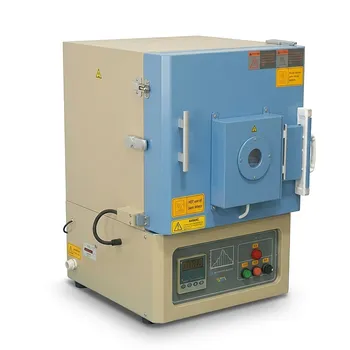
High Temperature Benchtop Muffle Furnace 1500C with 3.6L Chamber and Quartz Observation Window
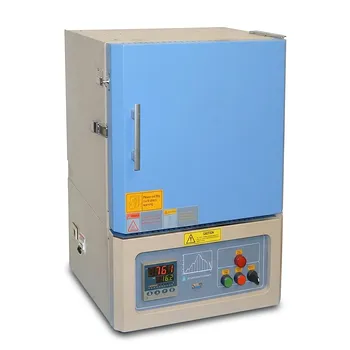
High Temperature 1700C Bench Top Muffle Furnace with Alumina Fiber Insulation and 3.6L Chamber Capacity for Precision Sintering and Heat Treatment
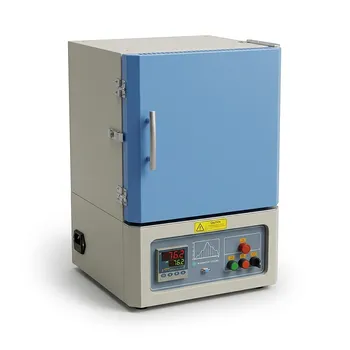
1750C Bench Top Muffle Furnace 3.6L High Grade Molybdenum Disilicide Heating Elements Laboratory Heat Treatment Equipment
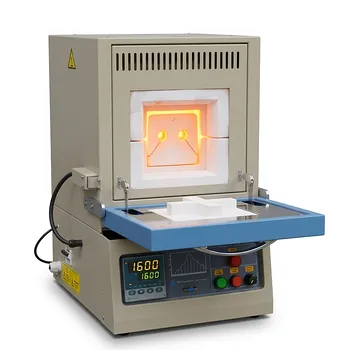
High Temperature Compact Muffle Furnace 1700 C with 30 Segment Programmable Controller and 1.7L Cubic Chamber
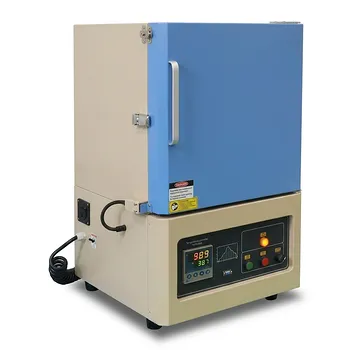
1200°C High Temperature Muffle Furnace 19L Chamber with 50 Segment Programmable Controller
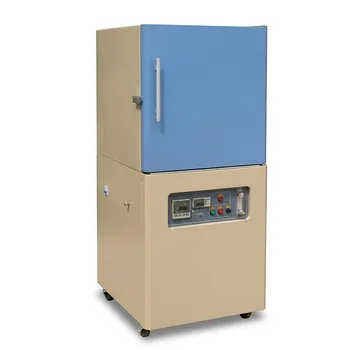
High Temperature Muffle Furnace with Dual Controllers and 36L Large Chamber 1700C Max
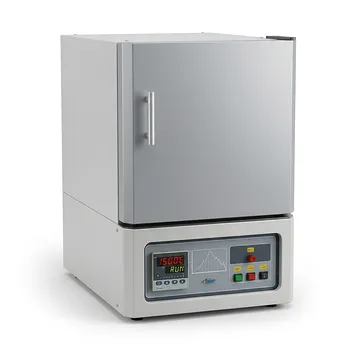
High Temperature 1500C Benchtop Muffle Furnace 3.6L Alumina Fiber Chamber Programmable Controller Sintering Annealing Carbonization Thermal Processing System
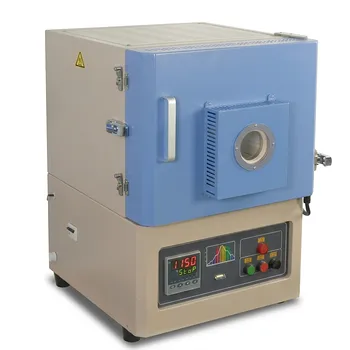
High Temperature Benchtop Muffle Furnace with Quartz Observation Window for Thermal Imaging and Material Analysis
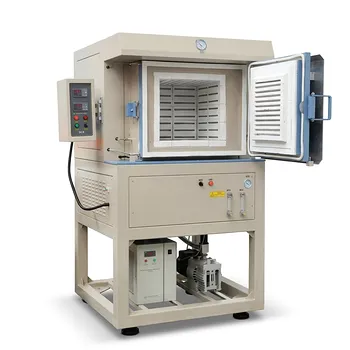
1200°C Five Side Heating Atmosphere Controlled Muffle Furnace 64 Liter High Uniformity Box Furnace for Material Synthesis
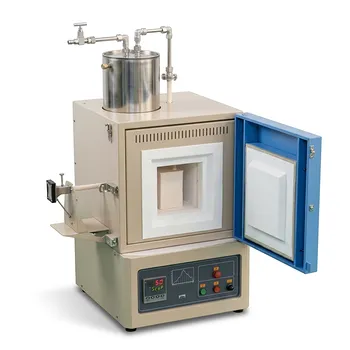
High Temperature Bench Top Muffle Furnace 1700C with Integrated Evaporating Particle Collection and 8x8x8 Alumina Fiber Chamber
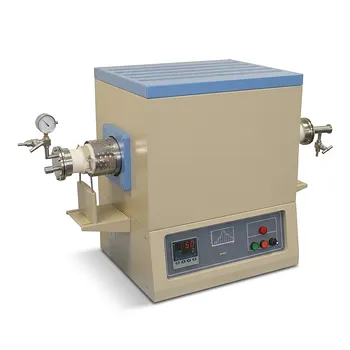
1700C High Temperature Alumina Tube Furnace with 18 Inch Heated Zone and Vacuum Sealing Flanges
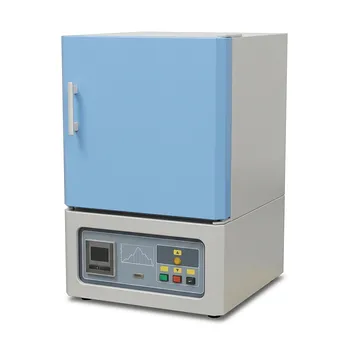
1800C Bench Top Muffle Furnace with Kanthal Super 1900 Heating Elements and 3.6L Alumina Fiber Chamber
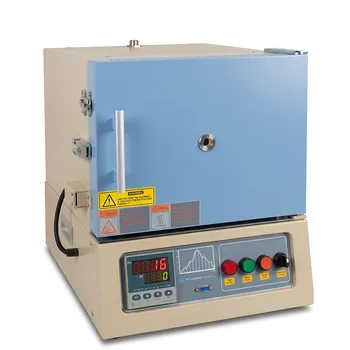
1200C Muffle Furnace 12x8x5 7.2L Heating Chamber with Quartz Observation Window and Vent Port
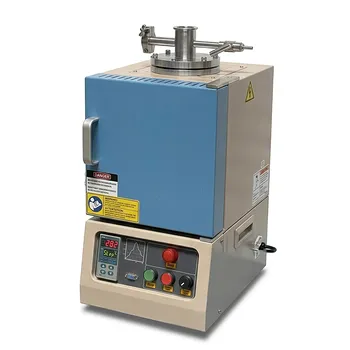
High Temperature Hybrid Muffle and Tube Furnace with Vacuum Capability and PID Control
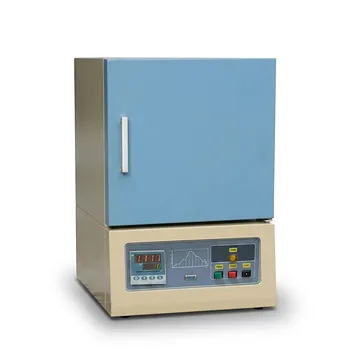
Ultra High Temperature Bench Top Muffle Furnace 1750C Sintering System with Kanthal Super Heating Elements and Precision Digital Control
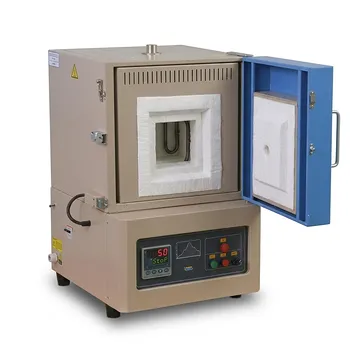
1800°C Bench Top Ultra High Temperature Muffle Furnace with Sapphire Observation Window and Top Feeding Port for Materials Research and Thermal Processing