Why is a low initial heating rate of 1 °C/min required for Rh–WNO precursors? Ensuring Structural Integrity & Dispersion
Updated 3 months ago
A low initial heating rate of 1 °C per minute is required to ensure the slow, steady evaporation of residual ethanol solvent from the precursor gel. This controlled desolvation prevents the violent release of internal gases, which would otherwise cause the precursor’s delicate pore structure to collapse or become blocked. By maintaining this precise thermal profile, the furnace preserves the interconnected nanohybrid architecture and prevents the unwanted agglomeration of rhodium species.
Core Takeaway: The 1 °C per minute heating rate acts as a structural safeguard, balancing the rate of internal gas diffusion with solvent evaporation to maintain the catalyst's high-surface-area morphology and metallic dispersion.
Preventing Structural Collapse Through Controlled Desolvation
The Risk of Violent Outgassing
During the initial stages of thermal treatment, the Rh–WNO precursor gel contains significant amounts of residual ethanol. If the temperature rises too quickly, the solvent can reach its boiling point rapidly, leading to a violent release of gas from within the material's interior.
Protecting the Pore Network
A slow heating rate ensures that the ethanol transitions from a liquid to a vapor phase at a rate the material can accommodate. This prevents "clogging" or the physical destruction of the pores, which is essential for maintaining the high porosity required for catalytic activity.
Ensuring Uniform Gas Escape
By graduating the heat at 1 °C per minute, the furnace allows gases to migrate from the center of the material to the surface uniformly. This avoids localized pressure build-ups that could lead to micro-fractures or the total structural breakage of the nanohybrid framework.
Maintaining Elemental Dispersion and Nanohybrid Geometry
Preventing Rhodium Agglomeration
One of the primary goals of this thermal treatment is to keep rhodium species finely dispersed across the tungsten oxide (WNO) support. Rapid heating can cause localized "hot spots" or structural shifting that forces rhodium atoms to clump together, significantly reducing the catalyst's effective surface area.
Preserving Interconnected Structures
The 1 °C per minute rate is a prerequisite for maintaining the specific "one-dimensional" or interconnected morphology of the nanohybrid. Slow heating provides the necessary time for the organic components to decompose and outgas without disturbing the forming inorganic lattice.
Facilitating Stable Structural Evolution
Similar to the processing of glass networks or nanofibers, a slow rate allows the molecular chains within the precursor to rearrange and cross-link stably. This ensures that the final catalyst achieves its intended geometric integrity rather than deforming during the phase transition.
Understanding the Trade-offs
Time Efficiency vs. Structural Quality
The most significant trade-off of a 1 °C per minute heating rate is the substantial increase in total processing time. While a faster ramp would save energy and increase furnace throughput, it almost invariably results in a "sintered" or collapsed material with inferior catalytic properties.
Thermal Gradients and Material Thickness
While 1 °C per minute is effective for standard laboratory samples, thicker "bulk" materials may still experience thermal stress. There is a delicate balance between the heating rate and the physical dimensions of the precursor; if the sample is too large, even a slow rate may not completely eliminate internal stress gradients.
The Cost of Precision
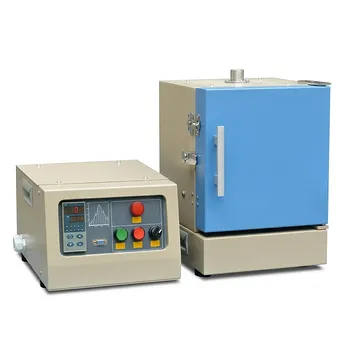
Maintaining such a low and steady heating rate requires high-precision, program-controlled furnace equipment. Standard manual furnaces often struggle to maintain linearity at such low increments, potentially leading to temperature "overshoot" which can ruin the precursor's delicate nanostructure.
How to Apply This to Your Thermal Treatment
To achieve the best results when treating sensitive precursors like Rh–WNO, the heating strategy must prioritize structural preservation over speed.
- If your primary focus is maximizing catalytic surface area: Strictly adhere to the 1 °C/min rate to ensure the pore network remains open and the rhodium remains highly dispersed.
- If your primary focus is preventing material breakage or cracking: Use the low heating rate to minimize thermal stress gradients between the interior and the exterior of your precursor gel.
- If your primary focus is ensuring complete organic removal: Combine the 1 °C/min ramp with an isothermal "hold" at the evaporation temperature of your specific solvent to ensure all volatiles have escaped before moving to higher temperatures.
Precise control of the initial thermal ramp is the single most critical factor in transforming a precursor gel into a high-performance nanohybrid catalyst.
Summary Table:
| Key Factor | Function of 1 °C/min Rate | Impact on Final Catalyst |
|---|---|---|
| Desolvation | Controls ethanol evaporation speed | Prevents violent outgassing and structural breakage |
| Pore Network | Allows uniform gas migration | Maintains high surface area and prevents pore clogging |
| Rh Dispersion | Prevents localized thermal hotspots | Ensures fine metallic dispersion and catalytic activity |
| Morphology | Facilitates stable molecular cross-linking | Preserves the 1D interconnected nanohybrid geometry |
Optimize Your Catalyst Synthesis with Precision Thermal Control
Achieving the delicate balance of a 1 °C per minute heating rate requires high-performance equipment with superior thermal stability. THERMUNITS is a leading manufacturer of high-temperature laboratory equipment specifically designed for material science and industrial R&D.
Our comprehensive range of thermal processing solutions—including Muffle, Vacuum, Atmosphere, Tube, Rotary, and Hot Press furnaces, CVD/PECVD systems, and Vacuum Induction Melting (VIM) furnaces—provides the precise programmable control needed to protect your nanohybrid architectures from structural collapse.
Whether you are developing advanced catalysts or high-performance ceramics, our equipment ensures uniform heating and repeatable results. Contact our technical team today to find the perfect thermal solution for your research and development needs.
References
- Ben Zhang, Shuang Li. Interfacial electron-engineered tungsten oxynitride interconnected rhodium layer for highly efficient all-pH-value hydrogen production. DOI: 10.1039/d3ta06856k
Mentioned Products
- 1750C Compact Muffle Furnace 1.7L Ultra High Temperature Laboratory Sintering System for Advanced Ceramics and Material Science Research
- 1750C Bench Top Muffle Furnace 3.6L High Grade Molybdenum Disilicide Heating Elements Laboratory Heat Treatment Equipment
- High Temperature 1200C Muffle Furnace 27L Volume 12x12x12 Chamber with Programmable PID Controller for Laboratory Material Science
- High Temperature Benchtop Muffle Furnace 1500C with 3.6L Chamber and Quartz Observation Window
- Vertical Crucible Furnace 1000C High Temperature Laboratory Equipment 4.7 Inch Diameter Chamber SS316 Anti Corrosive Enclosure
People Also Ask
- What role does a laboratory high-temperature muffle furnace play in the ash analysis phase of biomass co-firing research? [Guide]
- What is the function of a high-temp muffle furnace in Ni-V oxide synthesis? Optimize your material's performance.
- What role does a high-temperature muffle furnace play in the synthesis of Melem precursors? Precision Polymerization.
- What is the function of a high-temperature muffle furnace in phosphorus-modified zeolite catalyst preparation?
- What is the function of a muffle furnace in aluminoborosilicate glass prep? Stabilize Raw Materials for Superior Purity

Tech Team · ThermUnits
Last updated on Jun 03, 2026
Related Products
1750C Compact Muffle Furnace 1.7L Ultra High Temperature Laboratory Sintering System for Advanced Ceramics and Material Science Research
1750C Bench Top Muffle Furnace 3.6L High Grade Molybdenum Disilicide Heating Elements Laboratory Heat Treatment Equipment
High Temperature 1200C Muffle Furnace 27L Volume 12x12x12 Chamber with Programmable PID Controller for Laboratory Material Science
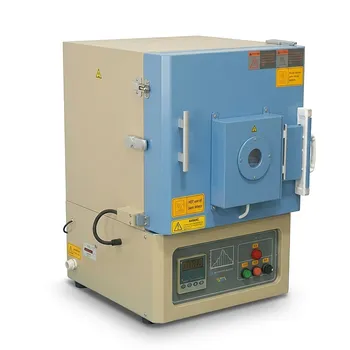
High Temperature Benchtop Muffle Furnace 1500C with 3.6L Chamber and Quartz Observation Window
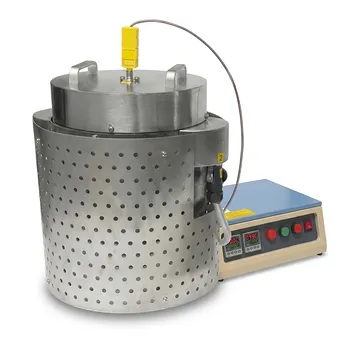
Vertical Crucible Furnace 1000C High Temperature Laboratory Equipment 4.7 Inch Diameter Chamber SS316 Anti Corrosive Enclosure
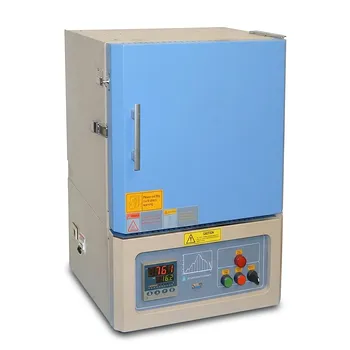
High Temperature 1700C Bench Top Muffle Furnace with Alumina Fiber Insulation and 3.6L Chamber Capacity for Precision Sintering and Heat Treatment
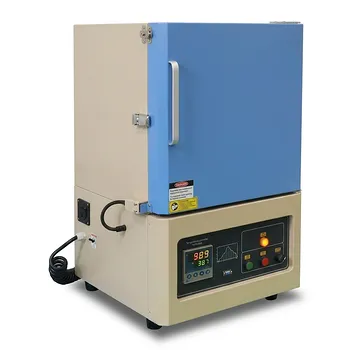
1200°C High Temperature Muffle Furnace 19L Chamber with 50 Segment Programmable Controller
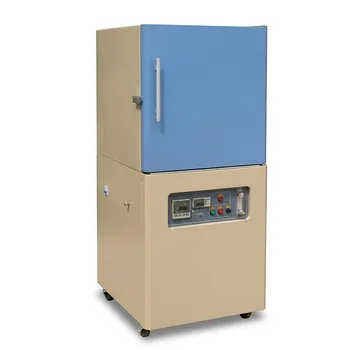
High Temperature Muffle Furnace with Dual Controllers and 36L Large Chamber 1700C Max
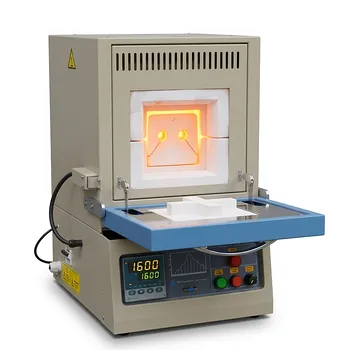
High Temperature Compact Muffle Furnace 1700 C with 30 Segment Programmable Controller and 1.7L Cubic Chamber
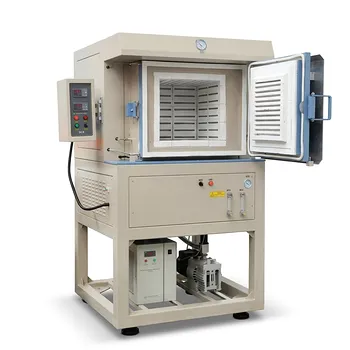
1200°C Five Side Heating Atmosphere Controlled Muffle Furnace 64 Liter High Uniformity Box Furnace for Material Synthesis
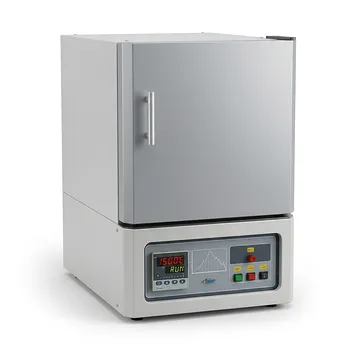
High Temperature 1500C Benchtop Muffle Furnace 3.6L Alumina Fiber Chamber Programmable Controller Sintering Annealing Carbonization Thermal Processing System
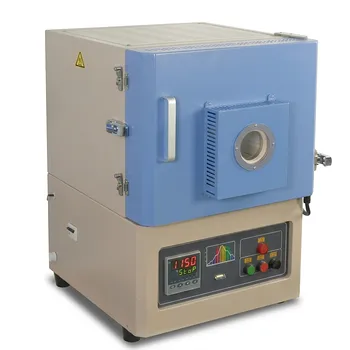
High Temperature Benchtop Muffle Furnace with Quartz Observation Window for Thermal Imaging and Material Analysis
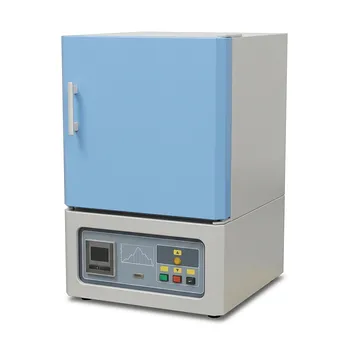
1800C Bench Top Muffle Furnace with Kanthal Super 1900 Heating Elements and 3.6L Alumina Fiber Chamber
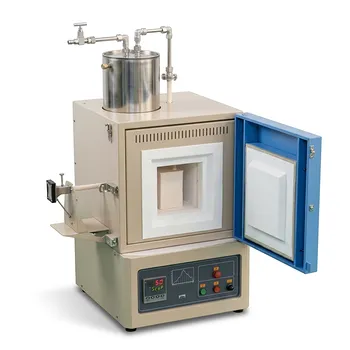
High Temperature Bench Top Muffle Furnace 1700C with Integrated Evaporating Particle Collection and 8x8x8 Alumina Fiber Chamber
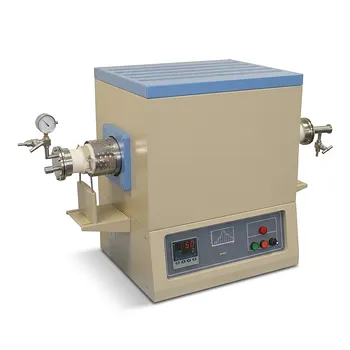
1700C High Temperature Alumina Tube Furnace with 18 Inch Heated Zone and Vacuum Sealing Flanges
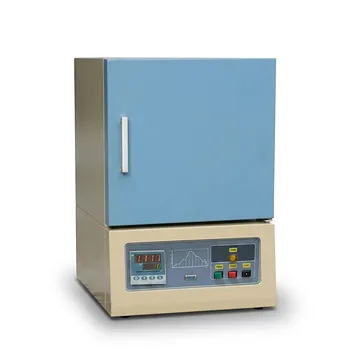
Ultra High Temperature Bench Top Muffle Furnace 1750C Sintering System with Kanthal Super Heating Elements and Precision Digital Control
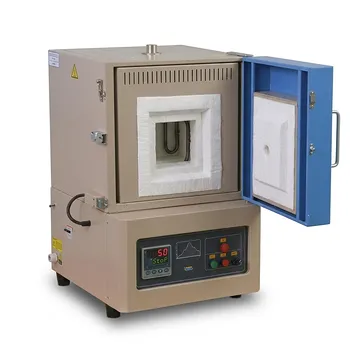
1800°C Bench Top Ultra High Temperature Muffle Furnace with Sapphire Observation Window and Top Feeding Port for Materials Research and Thermal Processing
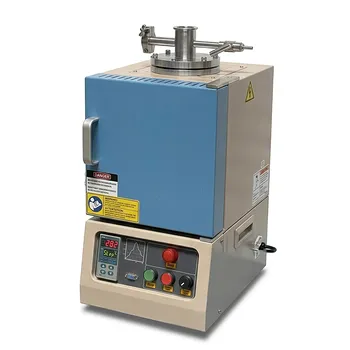
High Temperature Hybrid Muffle and Tube Furnace with Vacuum Capability and PID Control
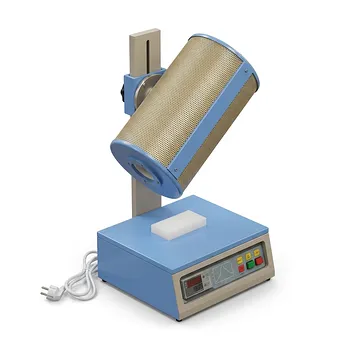
1100°C Vertical Laboratory Furnace for DIY Tubular Reactors with PID Temperature Controller