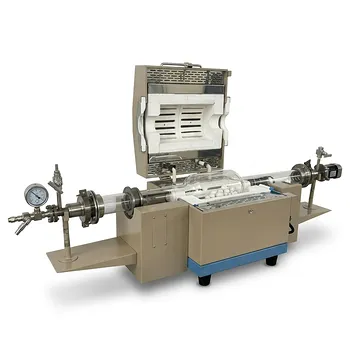
What practical advantages do rotary kilns offer for large-scale industrial pyroprocessing? Scale & Precision Explained
Updated 5 months ago
Rotary kilns are the backbone of modern industrial pyroprocessing, offering a unique combination of massive scale and precise material control. These systems enable the continuous conversion of raw materials into high-value products at capacities reaching thousands of tons per day. By utilizing a rotating, inclined cylinder, they ensure that every particle undergoes a uniform thermal transformation while maximizing energy recovery and operational efficiency.
The primary advantage of the rotary kiln is its ability to deliver high-volume, continuous throughput without sacrificing chemical uniformity. This is achieved through a dynamic tumbling motion that ensures all materials experience a consistent thermal history, effectively eliminating the quality variations inherent in batch processing.
Achieving Massive Scale Through Continuous Operation
High-Volume Throughput
Industrial rotary kilns are engineered for uninterrupted production, capable of processing thousands of tons of material daily. This continuous flow eliminates the significant downtime associated with the heating, cooling, and loading cycles of static batch furnaces.
Consistency Across Production Batches
Because the process is continuous, every gram of material passes through the same temperature zones for the same duration. This results in stable product performance and guaranteed chemical uniformity, which is critical for meeting strict industrial specifications.
Integration with Downstream Systems
The continuous nature of the kiln allows it to be easily integrated with preheaters and waste-heat recovery systems. These integrations significantly lower fuel requirements by recycling thermal energy that would otherwise be lost to the atmosphere.
Maximizing Thermal and Mass Transfer Efficiency
The Dynamics of Material Tumbling
The rotation of the kiln tube causes the material bed to tumble, constantly renewing the surface area exposed to the thermal atmosphere. This dynamic heating method prevents local overheating and ensures that heat is distributed evenly throughout the entire material mass.
Optimized Internal Heat Exchange
Large-scale kilns often utilize internal features like lifters and chains to physically manipulate the feedstock. These components increase the contact between the material and the hot gases, drastically reducing specific energy consumption and improving reaction kinetics.
Superior Phase Purity
By avoiding the stagnant "cold spots" common in static furnaces, rotary kilns achieve higher phase purity and chemical uniformity. This makes them the preferred choice for complex reactions such as calcination, roasting, and sintering of powders or granules.
Adaptability to Diverse Raw Materials
Handling Heterogeneous Feedstocks
The mechanical agitation provided by the kiln’s rotation allows it to process feedstocks with varying particle sizes and moisture contents. This flexibility is a major advantage when dealing with raw materials that may not be perfectly uniform in their natural state.
Versatility in Thermal Processing
Rotary kilns are highly adaptable and can be configured for a wide range of applications, including dehydration, oxidation, and reduction. The ability to control the atmosphere within the kiln tube allows for precise management of the chemical environment during the heating process.
Understanding the Trade-offs and Maintenance
Significant Capital Investment
The design, fabrication, and installation of an industrial-scale rotary kiln require a substantial upfront financial commitment. The complexity of the drive systems, high-temperature seals, and refractory linings makes them more expensive than simpler heating alternatives.
Mechanical Wear and Refractory Management
The constant motion of the kiln, combined with extreme temperatures, leads to unavoidable wear on the refractory lining and mechanical components. Rigorous maintenance schedules are necessary to prevent unplanned downtime and ensure the structural integrity of the rotating shell.
Operational Complexity
Managing a continuous rotary kiln requires sophisticated control systems to balance feed rates, rotation speeds, and fuel input. Small fluctuations in any of these variables can impact the thermal profile, requiring skilled operators to maintain optimal performance.
Optimizing Your Pyroprocessing Strategy
How to Apply This to Your Project
Choosing the right kiln configuration depends heavily on your specific production goals and material characteristics.
- If your primary focus is maximum throughput: Prioritize a continuous kiln integrated with multi-stage preheater towers to achieve the highest tons-per-hour capacity.
- If your primary focus is product purity: Invest in a kiln design that emphasizes tumbling dynamics and precise atmosphere control to ensure uniform phase transformation.
- If your primary focus is energy cost reduction: Focus on implementing advanced waste-heat recovery systems and optimized internal lifters to minimize specific fuel consumption.
By leveraging the dynamic motion and continuous flow of the rotary kiln, industrial operators can achieve a level of scale and quality that static systems simply cannot match.
Summary Table:
| Advantage | Key Feature | Industrial Benefit |
|---|---|---|
| High Throughput | Continuous 24/7 operation | Processes thousands of tons per day |
| Uniformity | Dynamic tumbling motion | Ensures consistent chemical properties |
| Energy Efficiency | Waste-heat recovery | Drastically reduces specific fuel consumption |
| Versatility | Adjustable atmosphere | Ideal for oxidation, reduction, and roasting |
| Flexibility | Mechanical agitation | Handles heterogeneous sizes and moisture |
Maximize Your Thermal Processing Efficiency with THERMUNITS
At THERMUNITS, we specialize in empowering material science and industrial R&D with precision-engineered heat treatment solutions. As a leading manufacturer, we provide the robust equipment necessary for complex pyroprocessing, including Rotary kilns, Vacuum Induction Melting (VIM) furnaces, and CVD/PECVD systems.
Whether your project requires a Muffle, Atmosphere, Tube, or Hot Press furnace, our comprehensive range is designed to deliver uniform results and operational longevity.
Ready to scale your production and achieve superior material purity?
Contact our technical experts today to find the perfect thermal processing solution for your facility. Let THERMUNITS be your partner in advanced material innovation.
Mentioned Products
- Electric Rotary Kiln Small Rotary Furnace Biomass Pyrolysis Plant
- Electric Rotary Kiln Continuous Working Small Rotary Furnace Heating Pyrolysis Plant
- 900°C Max Rotary Tube Furnace with 8 Inch 310S Alloy Tube and Optional Multi Zone Heating for Industrial Material Calcination
- Three Zone Rotary Tube Furnace for High Temperature Powder Processing and Material Research
- Continuous Feeding Rotary Tube Furnace for Industrial Powder Heat Treatment and Material Research
People Also Ask
- How does the electric rotary kiln support environmental compliance and sustainability? Achieve Zero-Emission Production
- What are the maintenance and service life advantages of an electric rotary kiln? 25+ Year Longevity & Low Maintenance
- What thermal efficiency can be expected from an electric rotary kiln compared to fuel-fired alternatives? Gain 95% efficiency.
- How does the use of an electric rotary kiln facilitate CO2 capture in cement and lime production? Achieve High-Purity CCUS
- Which minerals and specialty chemicals are commonly processed using electric rotary kilns? Precision Thermal Processing Guide

Tech Team · ThermUnits
Last updated on Apr 14, 2026
Related Products
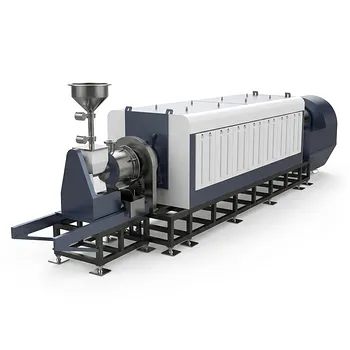
Electric Rotary Kiln Small Rotary Furnace Biomass Pyrolysis Plant
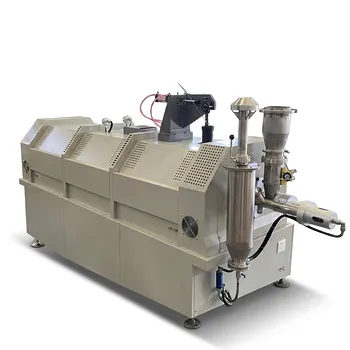
Electric Rotary Kiln Continuous Working Small Rotary Furnace Heating Pyrolysis Plant
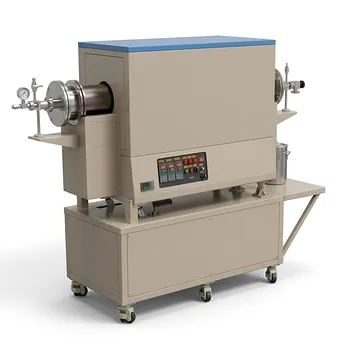
900°C Max Rotary Tube Furnace with 8 Inch 310S Alloy Tube and Optional Multi Zone Heating for Industrial Material Calcination
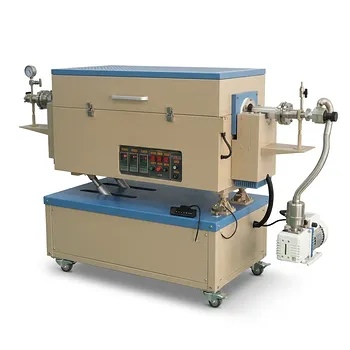
Three Zone Rotary Tube Furnace for High Temperature Powder Processing and Material Research
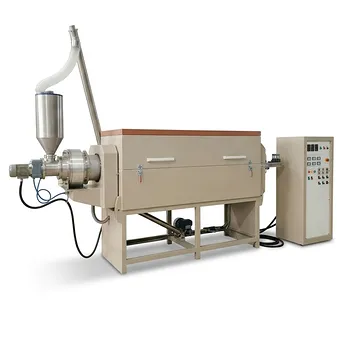
Continuous Feeding Rotary Tube Furnace for Industrial Powder Heat Treatment and Material Research
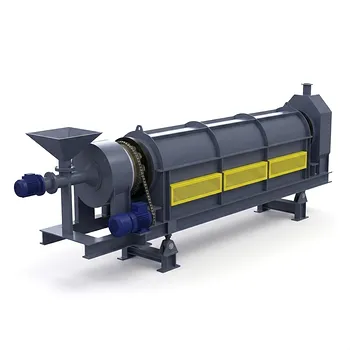
Electric Rotary Kiln Small Rotary Furnace for Activated Carbon Regeneration
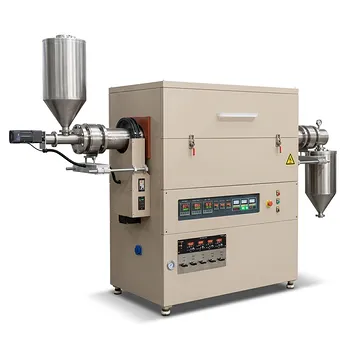
High Temperature Tilting Rotary Tube Furnace with Integrated Mass Flow Control and Multi Zone Heating
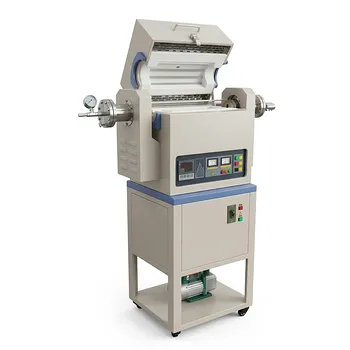
High Temperature Rotary Tilt Tubular Furnaces for Advanced Powder Sintering and Material Processing
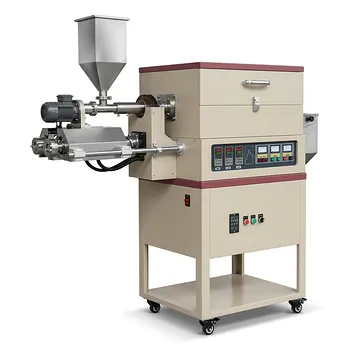
Laboratory Tilting Rotary Tubular Furnaces for Material Science and Industrial Heat Treatment
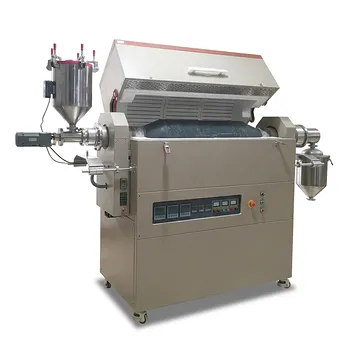
High Temperature Tilting Rotary Tubular Furnace for Continuous Powder Thermal Processing and Controlled Atmosphere Sintering
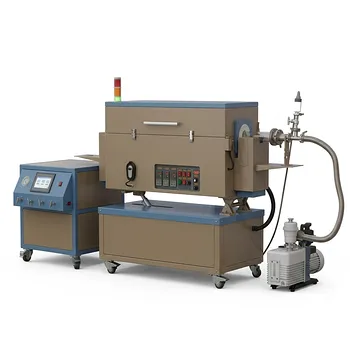
5 Inch Three Zone Rotary Tube Furnace with Integrated Gas Delivery System and 1200C Capability for Advanced Material CVD Processing
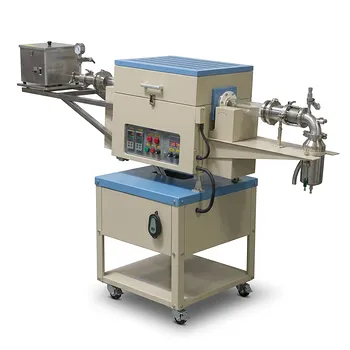
Two Zone Rotary CVD Furnace with Automatic Feeding and Receiving System for Powder Processing
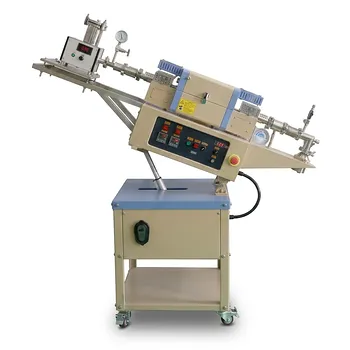
1100°C Dual Zone Rotary Tube Furnace with Automatic Feeding and Collection System for Continuous Powder Processing
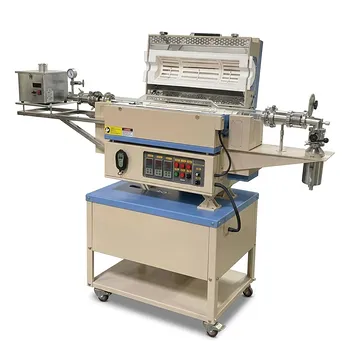
5 Inch Rotary Tube Furnace with Automatic Feeding and Receiving System 1200C Three Zone CVD Powder Processing
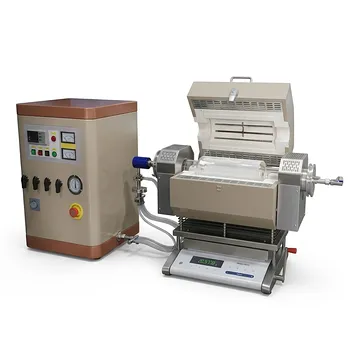
Mini Rotary Tubular Furnaces for Precision Powder Heat Treatment and Thermogravimetric Analysis
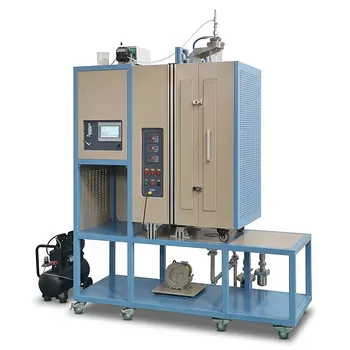
1500C Three Zone Vertical Pyrolysis Furnace for Nanoparticle Synthesis and Advanced Oxide Coating