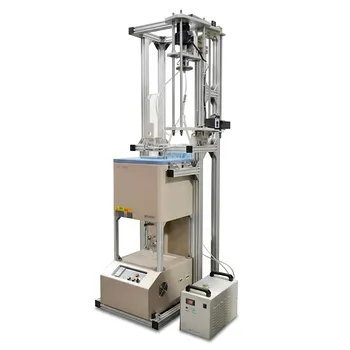
What role do Lorentz forces play in a VIM furnace? Mastering Electromagnetic Stirring for High-Purity Alloys
Updated 5 months ago
Lorentz forces act as the primary engine for electromagnetic stirring within a Vacuum Induction Melting (VIM) furnace. These forces, generated by the interaction between induced eddy currents and the magnetic field ($F = J \times B$), drive a continuous, toroidal circulatory motion of the molten metal. This mechanical action is the critical link that translates the potential of a vacuum environment into actual metallurgical refining by ensuring thermal homogeneity and constant surface renewal for degassing.
Core Takeaway: Lorentz forces provide the kinetic energy necessary to eliminate chemical gradients and move impurities from the depths of the melt to the surface. Without this electromagnetic stirring, the vacuum would only refine the top layer of the metal, leaving the bulk of the material contaminated.
The Physics of Electromagnetic Stirring
The Generation of the Lorentz Force
Lorentz forces are the physical result of alternating electromagnetic fields interacting with conductive molten metal. As the induction coils provide power, they induce eddy currents ($J$) within the melt that interact with the magnetic field ($B$), creating a force vector that pushes the liquid.
Development of Toroidal Flow
The geometry of the induction coil typically creates a dual-loop, toroidal flow pattern within the crucible. This pattern ensures that the molten metal is not just vibrating, but actively circulating from the center of the melt toward the edges and back again.
Impact on Metallurgical Refining
Achieving Chemical and Thermal Homogeneity
The intense stirring eliminates temperature and composition gradients that would otherwise weaken the final alloy. This is particularly vital when adding micro-alloying elements like calcium-silicon or nickel, ensuring they are distributed evenly throughout the entire heat.
Accelerating Mass Transfer and Surface Renewal
Refining in a VIM furnace relies on the "surface renewal" principle, where fresh molten metal is constantly brought to the vacuum-metal interface. Lorentz forces accelerate the mass transfer rate of solute elements, such as copper and tin, allowing them to reach the surface where they can be evaporated.
Enhancing Degassing and Inclusion Removal
By bringing the entire volume of the melt to the surface, Lorentz forces facilitate the rapid desorption of dissolved gases like hydrogen, nitrogen, and oxygen. Under the low pressures of $10^{-2}$ to $10^{-3}$ torr, these gases are pumped out, significantly increasing the microstructural density and purity of the metal.
Synergistic Benefits of the Vacuum Environment
Protection of Reactive Elements
The combination of Lorentz stirring and a high vacuum prevents the oxidation and nitridation of sensitive elements like aluminum, titanium, and hafnium. Because the melt is stirred in an inert or vacuum environment, these elements remain in solution rather than forming unwanted oxides or nitrides.
Volatilization of High-Vapor-Pressure Impurities
The stirring action ensures that tramp metals with high vapor pressures are consistently exposed to the vacuum. This allows for the selective removal of contaminants that would be impossible to eliminate through traditional slag-based refining methods.
Understanding the Trade-offs
Refractory Erosion and Inclusion Pickup
While intense stirring is beneficial for homogeneity, the high-velocity flow driven by Lorentz forces can increase the mechanical wear on the crucible's refractory lining. If the stirring power is too high, it may lead to the "pickup" of ceramic inclusions from the furnace walls, potentially contaminating the melt.
Loss of Volatile Alloying Elements
The same mechanism that removes impurities can also inadvertently remove desirable alloying elements with high vapor pressures. Precise control over the induction power and vacuum levels is required to balance the removal of contaminants with the retention of the intended alloy chemistry.
How to Optimize Lorentz Force Utility
Making the Right Choice for Your Goal
- If your primary focus is Maximum Chemical Purity: Prioritize high stirring power early in the melting cycle to maximize surface renewal and the volatilization of tramp metals.
- If your primary focus is Protecting Reactive Elements: Use moderate stirring power under a partial argon pressure to maintain homogeneity while preventing the excessive loss of volatile alloying additions.
- If your primary focus is Minimizing Inclusions: Reduce the induction frequency or power during the final refining stages to decrease the velocity of the melt against the refractory walls.
By mastering the balance of Lorentz-driven stirring and vacuum kinetics, metallurgists can produce alloys with the exceptional purity and precise chemistry required for mission-critical applications.
Summary Table:
| Key Aspect | Mechanism | Metallurgical Impact |
|---|---|---|
| Stirring Engine | Interaction of eddy currents & magnetic fields | Drives toroidal flow and chemical homogeneity |
| Surface Renewal | Continuous circulation of molten metal | Accelerates degassing and impurity volatilization |
| Mass Transfer | Kinetic energy movement | Ensures even distribution of micro-alloying elements |
| Purity Control | Stirring in a high vacuum | Prevents oxidation while removing tramp metals |
Elevate Your Metallurgical Precision with THERMUNITS
As a global leader in high-temperature laboratory equipment, THERMUNITS specializes in delivering advanced thermal processing solutions for material science and industrial R&D. Our Vacuum Induction Melting (VIM) furnaces are designed to harness Lorentz forces for optimal stirring, ensuring your alloys reach peak purity and homogeneity.
From Vacuum, Atmosphere, and Tube furnaces to specialized CVD/PECVD systems and Vacuum Induction Melting (VIM) units, we provide the tools necessary for mission-critical heat treatment.
Unlock superior material performance today — Contact our technical team to discuss your specific furnace requirements!
Mentioned Products
- 1900C Maximum High Temperature 7KW Vacuum Induction Melting System with 60mm Quartz Tube and Manual Temperature Control for Metallic Alloy Research
- Induction Melting Casting Furnace 1750C Vacuum High Frequency Metal Processing Unit
- Atmosphere Controlled Induction Melting Granulating Casting Furnace 1500C 5kg Capacity
- High Temperature Induction Melting System with Integrated Ultra High Purity Glove Box for Metallic Alloy Processing
- High Pressure 600T Vacuum Induction Hot Press Furnace for Advanced Material Heat Treatment and Sintering
People Also Ask
- What is the primary role of a Vacuum Induction Melting furnace in the smelting of Fe-Cr-N alloys? Ensuring High Purity
- How does a Vacuum Induction Melting furnace heat materials while preventing atmospheric contamination? Achieve High Purity
- What are the key structural components that make up a Vacuum Induction Melting (VIM) furnace system? Full Guide
- How does the skin effect influence VIM frequency selection? Optimize Heat Penetration & Stirring Efficiency
- What technical advantages does Vacuum Induction Melting offer regarding alloy homogeneity and purity? Enhance Performance

Tech Team · ThermUnits
Last updated on Apr 14, 2026
Related Products
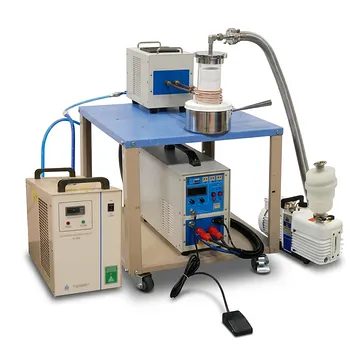
1900C Maximum High Temperature 7KW Vacuum Induction Melting System with 60mm Quartz Tube and Manual Temperature Control for Metallic Alloy Research
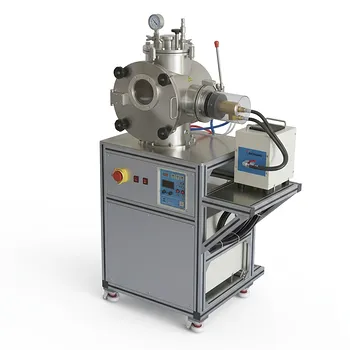
Induction Melting Casting Furnace 1750C Vacuum High Frequency Metal Processing Unit
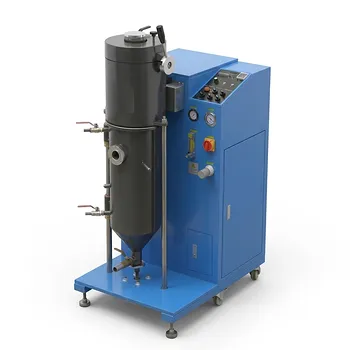
Atmosphere Controlled Induction Melting Granulating Casting Furnace 1500C 5kg Capacity
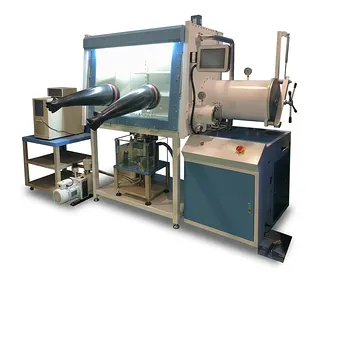
High Temperature Induction Melting System with Integrated Ultra High Purity Glove Box for Metallic Alloy Processing
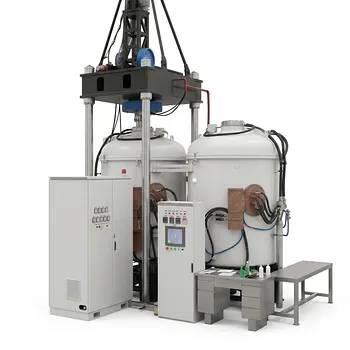
High Pressure 600T Vacuum Induction Hot Press Furnace for Advanced Material Heat Treatment and Sintering
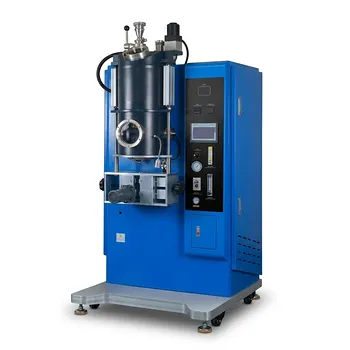
Atmosphere Controlled Continuous Casting Furnace with Secondary Charge Function for Induction Melting and Metal Alloy Wire Production
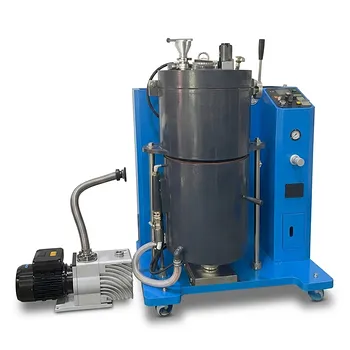
Atmosphere Controlled Induction Melting Casting System 1600C 10L Capacity
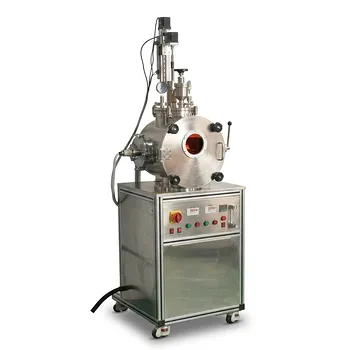
High Vacuum Melting Casting Furnace with Mechanical Stirring and Secondary Charge for Metallic Alloy Research
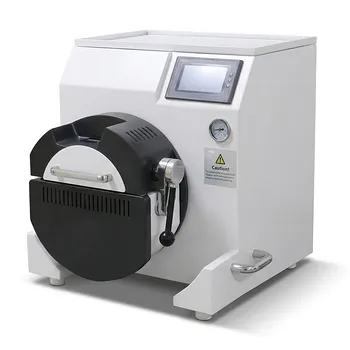
Desktop Induction Melting Furnace with Automatic Rotary Casting Function up to 1700C for Advanced Metal Alloy Research
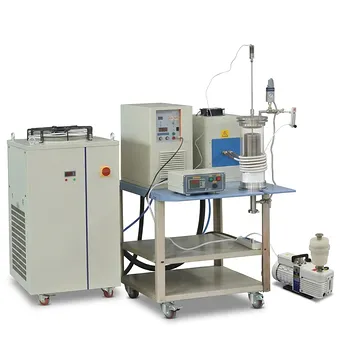
High Temperature Induction Melting System with Multi Cavity Crucible and 15KW Precision Digital Temperature Control
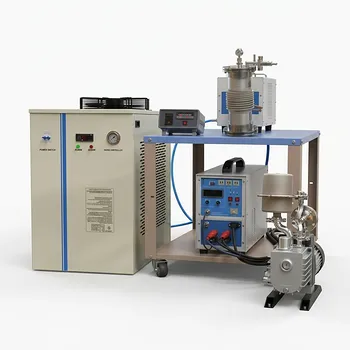
Induction Heating System with Temperature Control for High Temperature Vacuum Sintering and Melting
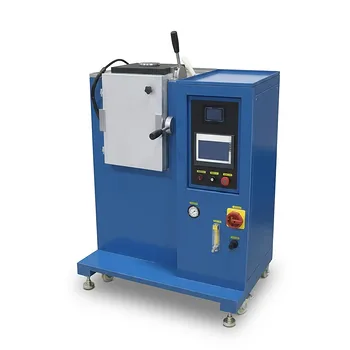
High Throughput Induction Melting and Casting Furnace for Superalloy Research 1700C Atmosphere Controlled Multi Sample System
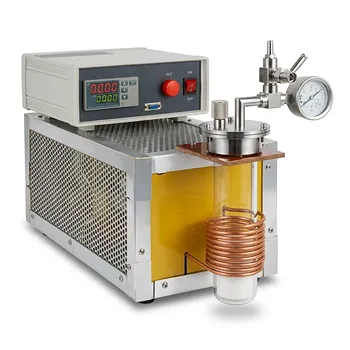
High Temperature Mini Induction Heating Furnace 1600C Laboratory Material Melting System
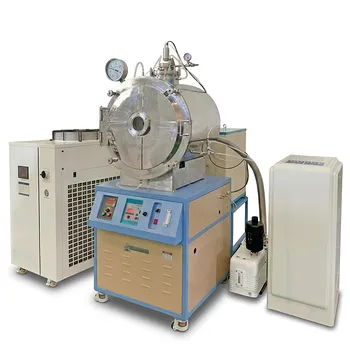
Ultra High Temperature Induction Heated Vacuum Furnace with Molten Salt Electrolysis Capability and 3000 Degree Precision Control
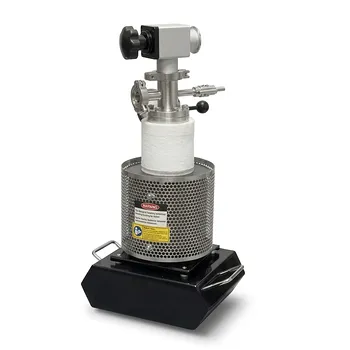
High Temperature 1100C Compact Top Loading Vertical Vacuum Tube Furnace for High Vacuum Noble Metal Melting and Material Research
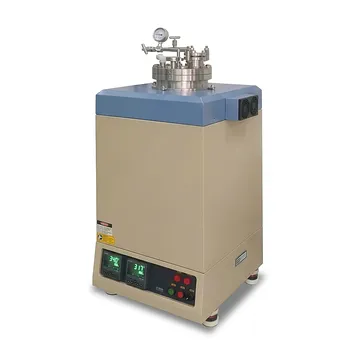
High Temperature 1000C Vacuum Furnace with 8 Inch ID Chamber for Material Sintering and Research Annealing
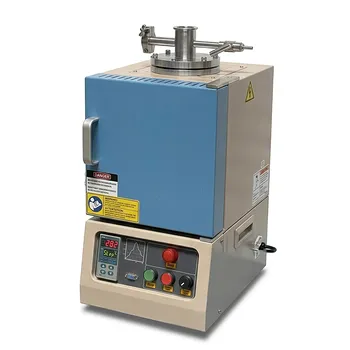
High Temperature Hybrid Muffle and Tube Furnace with Vacuum Capability and PID Control
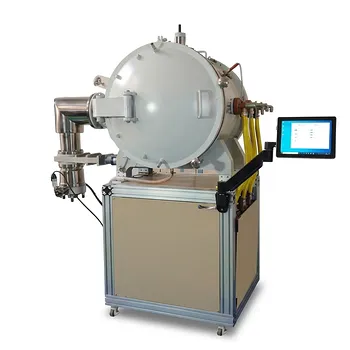
High Temperature Cold Wall Vacuum Furnace for Advanced Material Sintering and Annealing 1600C Heating Area 200x200x300mm
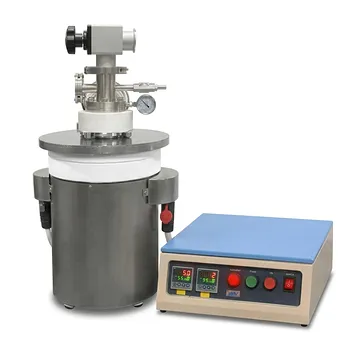
1100C High Temperature Vacuum Crucible Furnace with Quartz Chamber for Thermal Processing and Sintering