What role does a laboratory muffle furnace play in lignin fiber stabilization? Precision Tools for Carbon Fiber R&D
Updated 3 months ago
The laboratory muffle furnace serves as the foundational reactor for transforming raw lignin fibers into a stable, non-melting carbon precursor. It provides the precise oxidative environment and thermal control required to induce cross-linking and molecular rearrangement within the lignin structure. This critical stabilization step ensures the fibers maintain their physical integrity and do not fuse together during subsequent ultra-high-temperature carbonization.
The muffle furnace facilitates a chemical transition where thermoplastic lignin is converted into a thermoset material through slow, controlled oxidation. By raising the glass transition temperature, the furnace prevents structural collapse and ensures the fiber's morphology is preserved throughout the carbonization process.
Inducing Chemical and Structural Transformation
Facilitating Molecular Cross-Linking
The primary role of the muffle furnace is to provide a stable environment for oxidative cross-linking between lignin molecules. This chemical bonding creates a rigid internal network that secures the fiber's shape. Without this furnace-controlled reaction, the fibers would lack the chemical "backbone" needed to survive higher temperatures.
Modifying the Glass Transition Temperature
By providing a consistent heat profile, the furnace eliminates or significantly raises the glass transition temperature ($T_g$) of the lignin. This shift is vital because it prevents the fibers from reaching a softened or liquid state during the next stages of production. This transformation ensures the material remains solid and structurally stable under extreme heat.
Promoting Dehydrogenation and Aromatization
Inside the enclosed chamber, the furnace induces specific chemical reactions such as dehydrogenation, decarboxylation, and aromatization. These reactions systematically remove hydrogen and oxygen while increasing the carbon density of the framework. This process effectively converts the raw biomass into a stable, carbon-rich biochar precursor.
Precise Thermal and Atmospheric Control
Managing Slow Heating Rates
Laboratory muffle furnaces allow for extremely slow heating rates, typically between 1°C and 3°C per minute. This precision is critical because it prevents "thermal runaway," where rapid chemical reactions generate internal heat faster than it can be dissipated. Controlled heating ensures the fibers decompose and stabilize uniformly without internal structural damage.
Maintaining an Oxidative Environment
The furnace maintains a controlled air oxidation environment that is necessary for the stabilization chemistry to occur. By regulating the oxygen availability, the furnace allows oxygen atoms to diffuse into the fiber substrate and react with the lignin. This controlled interaction is what triggers the necessary cross-linking rather than simple combustion.
Removal of Volatile Organics
The furnace facilitates the preliminary decomposition of organic additives, such as Polyvinylpyrrolidone (PVP), used during the fiber spinning process. By slowly burning off these binders at temperatures around 300°C to 400°C, the furnace prevents the fiber structure from collapsing or agglomerating. This clean removal of volatiles is essential for achieving high-quality final carbon materials.
Understanding the Trade-offs and Pitfalls
The Risk of Rapid Heating
If the heating rate is too aggressive, the exothermic nature of the stabilization reaction can cause the fibers to melt or fuse together. This results in a loss of the individual fiber morphology, rendering the final product useless for high-performance applications.
Atmospheric Limitations
While oxidative stabilization is necessary, excessive oxygen exposure at high temperatures can lead to the "burn-off" of the carbon framework itself. If the muffle furnace is not properly sealed or the airflow is not regulated, the yield of the resulting carbon fibers will decrease significantly due to unwanted combustion.
Uniformity and Scale Issues
In a laboratory-scale muffle furnace, achieving thermal uniformity across a large batch of fibers can be challenging. Variations in temperature within the chamber can lead to uneven stabilization, where some fibers are perfectly cross-linked while others remain thermoplastic and susceptible to melting.
How to Apply This to Your Project
Choosing a Protocol Based on Your Goals
To achieve the best results with your lignin fibers, your furnace settings must be tailored to the specific type of lignin and the desired properties of the final carbon material.
- If your primary focus is structural integrity: Prioritize the slowest possible heating rates (1°C/min) to maximize cross-linking and prevent any physical leakage or melting during hot pressing.
- If your primary focus is process efficiency: Optimize the stabilization hold time at 300°C to ensure the removal of all organic binders like PVP before moving to higher temperature calcination.
- If your primary focus is carbon yield: Use the furnace to carefully control the degree of aromatization, ensuring that the carbon framework is sufficiently stable to survive ultra-high temperatures without excessive mass loss.
By treating the muffle furnace as a precision chemical reactor rather than a simple oven, you ensure the successful conversion of lignin into high-value carbon materials.
Summary Table:
| Process Step | Role of Muffle Furnace | Key Parameter/Outcome |
|---|---|---|
| Oxidative Cross-linking | Induces internal chemical bonding | Creates rigid fiber "backbone" |
| Tg Management | Raises the glass transition temperature | Prevents fiber melting and fusion |
| Volatile Removal | Thermal decomposition of binders (e.g., PVP) | Ensures high-purity carbon base |
| Thermal Control | Precise ramping (1°C - 3°C/min) | Prevents thermal runaway and damage |
| Dehydrogenation | Systematic hydrogen/oxygen removal | Increases carbon framework density |
Elevate Your Material Research with THERMUNITS
Precision is the difference between a fused mass and high-performance carbon fiber. THERMUNITS is a leading manufacturer of high-temperature laboratory equipment, providing the exact thermal and atmospheric control required for demanding material science and industrial R&D.
Our comprehensive range of thermal processing solutions—including Muffle, Vacuum, Atmosphere, Tube, and Rotary Furnaces, as well as CVD/PECVD systems and Vacuum Induction Melting (VIM) furnaces—is designed to meet the rigorous standards of modern heat treatment. Whether you are stabilizing biomass-derived fibers or developing advanced ceramics, we provide the tools to ensure uniform, repeatable results.
Ready to optimize your thermal processing? Contact our engineering experts today to find the ideal furnace solution for your laboratory’s specific needs.
References
- Maxime Parot, Tatjana Stevanović. Effect of Iron Chloride Addition on Softwood Lignin Nano-Fiber Stabilization and Carbonization. DOI: 10.3390/polym16060814
Mentioned Products
- High Temperature 1700C Bench Top Muffle Furnace with Alumina Fiber Insulation and 3.6L Chamber Capacity for Precision Sintering and Heat Treatment
- 1800°C Bench Top Ultra High Temperature Muffle Furnace with Sapphire Observation Window and Top Feeding Port for Materials Research and Thermal Processing
- High Temperature 1500C Benchtop Muffle Furnace 3.6L Alumina Fiber Chamber Programmable Controller Sintering Annealing Carbonization Thermal Processing System
- Ultra High Temperature Bench Top Muffle Furnace 1750C Sintering System with Kanthal Super Heating Elements and Precision Digital Control
- 1200C Muffle Furnace 12x8x5 7.2L Heating Chamber with Quartz Observation Window and Vent Port
People Also Ask
- What role does a high-temperature muffle furnace play in evaluating the mineral composition of rock samples? LOI & XRF Guide
- What is the function of a high-temperature muffle furnace in phosphorus-modified zeolite catalyst preparation?
- What is the function of a high-temp muffle furnace in Ni-V oxide synthesis? Optimize your material's performance.
- What is the purpose of using muffle or tube furnaces in glass synthesis? Achieve Precise Melt-Quenching & Homogeneity
- What is the function of a muffle furnace in aluminoborosilicate glass prep? Stabilize Raw Materials for Superior Purity

Tech Team · ThermUnits
Last updated on Jun 02, 2026
Related Products
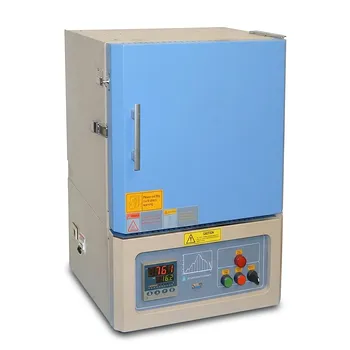
High Temperature 1700C Bench Top Muffle Furnace with Alumina Fiber Insulation and 3.6L Chamber Capacity for Precision Sintering and Heat Treatment
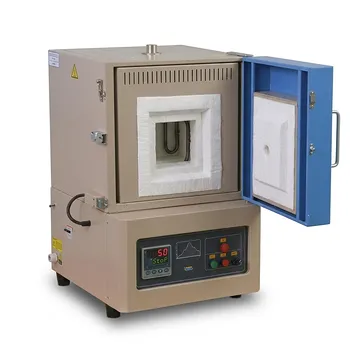
1800°C Bench Top Ultra High Temperature Muffle Furnace with Sapphire Observation Window and Top Feeding Port for Materials Research and Thermal Processing
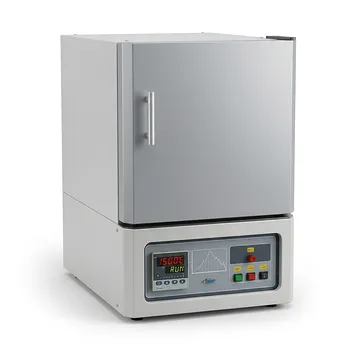
High Temperature 1500C Benchtop Muffle Furnace 3.6L Alumina Fiber Chamber Programmable Controller Sintering Annealing Carbonization Thermal Processing System
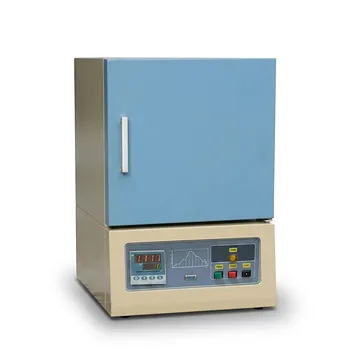
Ultra High Temperature Bench Top Muffle Furnace 1750C Sintering System with Kanthal Super Heating Elements and Precision Digital Control
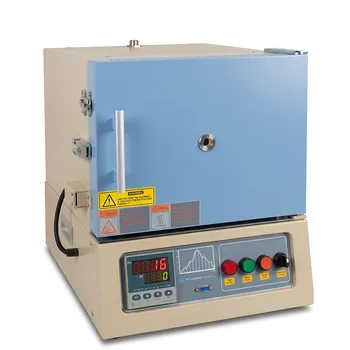
1200C Muffle Furnace 12x8x5 7.2L Heating Chamber with Quartz Observation Window and Vent Port
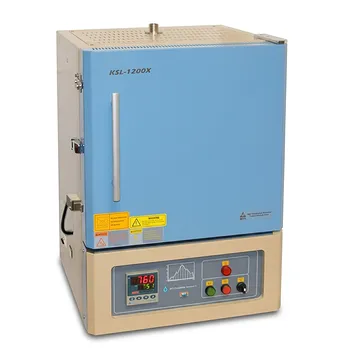
High Temperature 1200C Muffle Furnace 27L Volume 12x12x12 Chamber with Programmable PID Controller for Laboratory Material Science
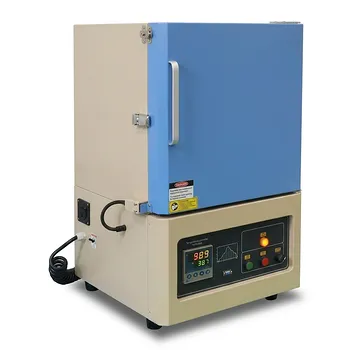
1200°C High Temperature Muffle Furnace 19L Chamber with 50 Segment Programmable Controller
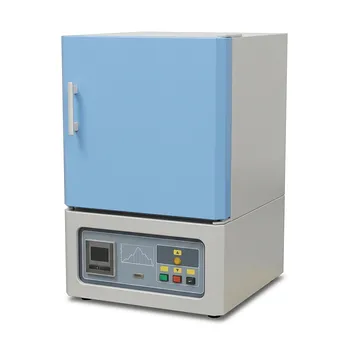
1800C Bench Top Muffle Furnace with Kanthal Super 1900 Heating Elements and 3.6L Alumina Fiber Chamber
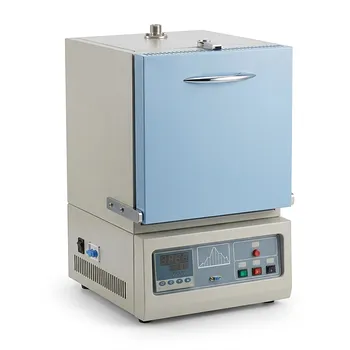
1750C Compact Muffle Furnace 1.7L Ultra High Temperature Laboratory Sintering System for Advanced Ceramics and Material Science Research
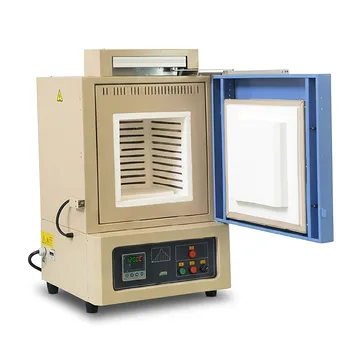
1200C High Temperature Muffle Furnace with Motorized Door and Automated PC Control for Industrial Sintering and Material Processing 27 Liter
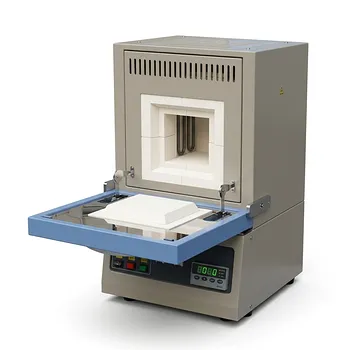
Five Sided Heating Muffle Furnace High Uniformity 1200C Lab Box Furnace 27L Alumina Fiber Chamber
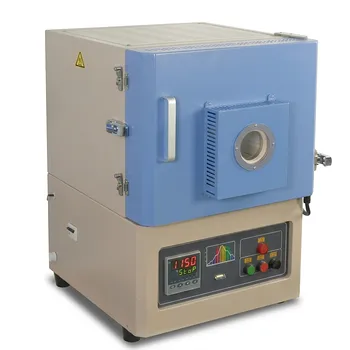
High Temperature Benchtop Muffle Furnace with Quartz Observation Window for Thermal Imaging and Material Analysis
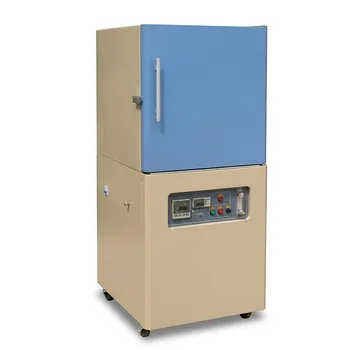
High Temperature Muffle Furnace with Dual Controllers and 36L Large Chamber 1700C Max
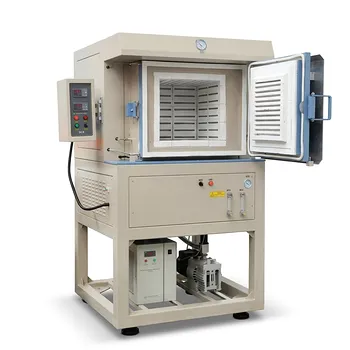
1200°C Five Side Heating Atmosphere Controlled Muffle Furnace 64 Liter High Uniformity Box Furnace for Material Synthesis
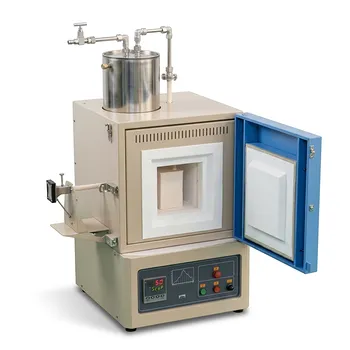
High Temperature Bench Top Muffle Furnace 1700C with Integrated Evaporating Particle Collection and 8x8x8 Alumina Fiber Chamber
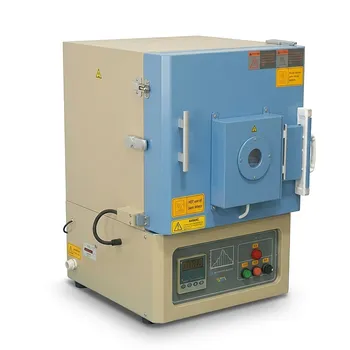
High Temperature Benchtop Muffle Furnace 1500C with 3.6L Chamber and Quartz Observation Window
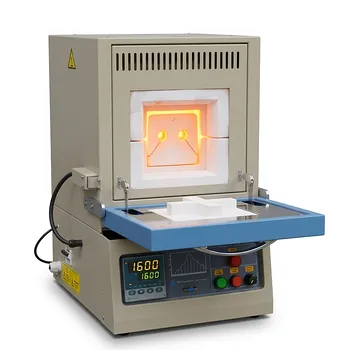
High Temperature Compact Muffle Furnace 1700 C with 30 Segment Programmable Controller and 1.7L Cubic Chamber
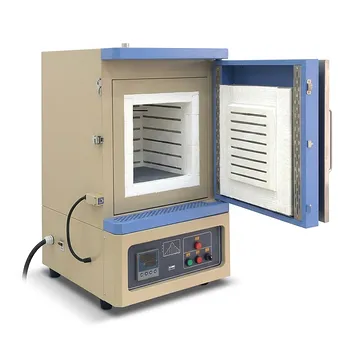
Five Side Heating Muffle Furnace High Purity Alumina Fiber 27L Chamber 1200C High Temperature Thermal Processing System for Sintering Annealing and Materials Research
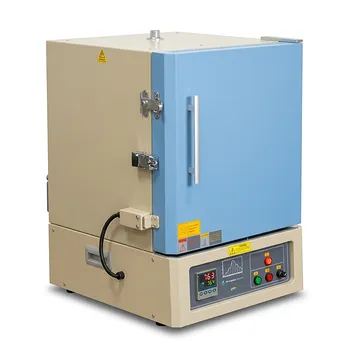
Large Capacity 1200C Muffle Furnace 64 Liter Chamber with Digital PID Controller and Built In Venting Port