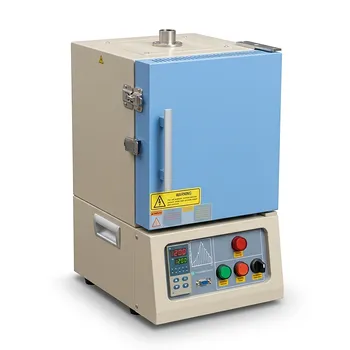
What role does a muffle furnace play in ZnCo2O4 synthesis? Achieve Precision Phase Control and High Crystallinity
Updated 3 months ago
In the synthesis of Zinc Cobalt Oxide ($\text{ZnCo}{2}\text{O}{4}$), the muffle furnace serves as the critical site for oxidative calcination, the process that converts amorphous or intermediate precursors into a high-purity spinel-phase crystal structure. By providing a controlled high-temperature environment (typically 350 °C in air), the furnace drives the chemical reaction necessary to transform hydrothermal precursors into finished nanostructures while preserving their complex hierarchical shapes.
Core Takeaway: The muffle furnace is the engine of phase transformation, using precise thermal energy to convert precursor powders into stable, high-purity $\text{ZnCo}{2}\text{O}{4}$ crystals with the specific spinel structure required for electrochemical performance.
Driving Chemical and Phase Transformation
Transitioning from Precursor to Spinel
The primary role of the muffle furnace is to facilitate the thermal decomposition of precursors, such as zinc and cobalt hydroxides or carbonates. The heat energy breaks chemical bonds in the "green" precursor material, allowing the atoms to reorganize into the cubic spinel structure ($\text{Fd-3m}$ space group).
Oxidation in an Air Atmosphere
For $\text{ZnCo}{2}\text{O}{4}$, the furnace must maintain an oxidative environment. Oxygen from the air reacts with the metal precursors during heating, ensuring the metals reach their required oxidation states and the final oxide attains high chemical purity.
Preserving Morphology and Removing Impurities
Morphology Retention
A critical challenge in nanofabrication is preventing the collapse of delicate shapes during heating. The muffle furnace allows for a steady increase in temperature that maintains hierarchical microsphere morphology, ensuring the final product looks like its precursor but possesses different chemical properties.
Elimination of Volatile Impurities
During calcination, any remaining organic templates, moisture, or volatile byproducts are oxidized and removed. These substances are converted into carbon dioxide and water vapor, leaving behind a clean, porous structure with a high active surface area.
Enhancing Crystallinity and Performance
Perfection of the Crystal Lattice
The stable thermal field within a muffle furnace promotes the rearrangement of atoms, filling vacancies and reducing structural defects. This process increases the crystallinity of the nanoparticles, which is vital for long-term stability in electronic or catalytic applications.
Optimizing Electrochemical Activity
By precisely controlling the furnace temperature at approximately 350 °C, researchers ensure the material achieves its peak electrochemical activity. If the temperature is too low, the phase transition is incomplete; if too high, the particles may fuse, losing the surface area necessary for energy storage or catalysis.
Understanding the Trade-offs
Temperature Sensitivity
The synthesis of $\text{ZnCo}{2}\text{O}{4}$ is highly sensitive to the thermal environment. While the muffle furnace provides stability, small deviations in temperature can lead to sintering, where individual nanoparticles fuse into larger, less effective chunks.
Energy Consumption vs. Quality
Achieving high crystallinity often requires extended periods (e.g., 2–4 hours) at high temperatures. This creates a trade-off between the purity of the crystal phase and the energy efficiency of the production process.
Atmosphere Limitations
Standard muffle furnaces operate in ambient air. If a specific oxygen-deficient or inert atmosphere were required for a different phase of zinc oxide, a standard muffle furnace would be insufficient without specialized gas-venting modifications.
How to Apply This to Your Synthesis Project
Strategic Recommendations
- If your primary focus is High Electrochemical Capacity: Maintain the muffle furnace at 350 °C for at least 2 hours to ensure complete spinel phase formation without causing particle aggregation.
- If your primary focus is Structural Purity: Ensure the precursor is completely dry before entering the furnace to prevent rapid steam evolution, which can fracture hierarchical microspheres.
- If your primary focus is Surface Area: Use a slow heating ramp rate (e.g., 2 °C/min) to allow organic impurities to outgas gently, preserving the internal porosity of the nanostructure.
Proper utilization of the muffle furnace ensures that Zinc Cobalt Oxide moves from a mere chemical mixture to a high-performance, crystalline material ready for technical application.
Summary Table:
| Key Process Factor | Mechanism in Muffle Furnace | Impact on ZnCo2O4 Nanostructure |
|---|---|---|
| Oxidative Calcination | Controlled thermal decomposition at ~350°C | Converts amorphous precursors into pure cubic spinel phase. |
| Atmosphere Control | Stable air-oxygen interaction | Drives metal atoms to required oxidation states for chemical purity. |
| Thermal Stability | Uniform heat distribution | Preserves delicate hierarchical microspheres and prevents sintering. |
| Impurity Removal | Gentle outgassing | Removes organic templates/moisture, creating high active surface area. |
Accelerate Your Material Research with THERMUNITS
Precision is paramount when synthesizing complex spinel-phase materials like Zinc Cobalt Oxide. At THERMUNITS, we understand that even a slight temperature deviation can compromise your nanostructure's electrochemical performance. As a leading manufacturer of high-temperature laboratory equipment for material science and industrial R&D, we provide the tools you need for repeatable, high-purity results.
Our comprehensive thermal processing solutions include:
- Muffle & Atmosphere Furnaces for precise oxidative calcination.
- Vacuum, Tube, and Rotary Furnaces for specialized material synthesis.
- CVD/PECVD Systems & Vacuum Induction Melting (VIM) for advanced thin-film and alloy research.
- Dental Furnaces, Hot Press Systems, and Electric Rotary Kilns for diverse heat treatment applications.
Whether you are perfecting a catalytic lattice or scaling up battery material research, THERMUNITS delivers the uniform thermal fields and programmable accuracy your projects demand.
Ready to elevate your lab's capabilities? Contact our Engineering Experts Today to find the ideal thermal solution for your specific application!
References
- Kiran Kumar Reddy Reddygunta, Aruna Ivaturi. Sheet-like ZnCo<sub>2</sub>O<sub>4</sub> microspheres and pomelo peel waste-derived activated carbon for high performance solid state asymmetric supercapacitors. DOI: 10.1039/d4se00182f
Mentioned Products
- Anti Corrosive Muffle Furnace with Sintered Corundum Chamber and 1050C Operating Range for Corrosive Material Calcination
- High Temperature 1500C Benchtop Muffle Furnace 3.6L Alumina Fiber Chamber Programmable Controller Sintering Annealing Carbonization Thermal Processing System
- 1200C High Temperature Muffle Furnace with Motorized Door and Automated PC Control for Industrial Sintering and Material Processing 27 Liter
- High Temperature 1200C Muffle Furnace 27L Volume 12x12x12 Chamber with Programmable PID Controller for Laboratory Material Science
- Large Bench Top 1700C High Temperature Muffle Furnace with 19L Chamber for Advanced Material Sintering and Annealing
People Also Ask
- Why is a corrosion-resistant high-temperature muffle furnace required for the chemical activation of lignocellulose?
- What role does a muffle furnace play in NiMo/gamma-Al2O3 catalyst prep? Optimize Your Synthesis Process
- Why is a high-temperature muffle furnace used for the preliminary calcination of Titanium Dioxide (TiO2) precursors?
- Why must spinel samples be rapidly moved to open air for quenching? Lock in Phase Purity and Structural Integrity
- Why is a muffle furnace necessary for the post-treatment of silicalite-1 zeolite? Unlock Pore Activity & Stability

Tech Team · ThermUnits
Last updated on Jun 03, 2026
Related Products
Anti Corrosive Muffle Furnace with Sintered Corundum Chamber and 1050C Operating Range for Corrosive Material Calcination

High Temperature 1500C Benchtop Muffle Furnace 3.6L Alumina Fiber Chamber Programmable Controller Sintering Annealing Carbonization Thermal Processing System
1200C High Temperature Muffle Furnace with Motorized Door and Automated PC Control for Industrial Sintering and Material Processing 27 Liter
High Temperature 1200C Muffle Furnace 27L Volume 12x12x12 Chamber with Programmable PID Controller for Laboratory Material Science
Large Bench Top 1700C High Temperature Muffle Furnace with 19L Chamber for Advanced Material Sintering and Annealing
High Temperature Compact Muffle Furnace 1700 C with 30 Segment Programmable Controller and 1.7L Cubic Chamber
1200C Muffle Furnace 12x8x5 7.2L Heating Chamber with Quartz Observation Window and Vent Port
High Temperature Muffle Furnace with Dual Controllers and 36L Large Chamber 1700C Max
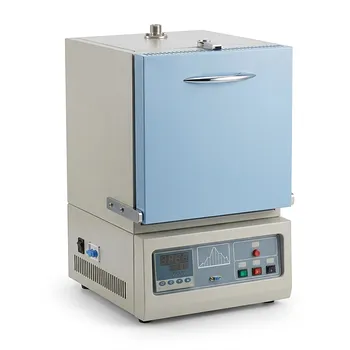
1750C Compact Muffle Furnace 1.7L Ultra High Temperature Laboratory Sintering System for Advanced Ceramics and Material Science Research
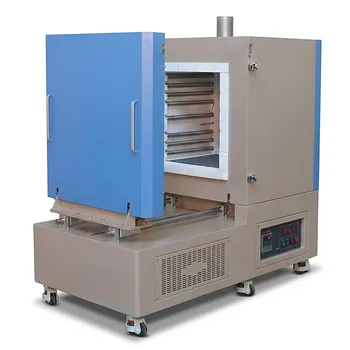
1200C Five Side Heating Muffle Furnace with Sliding Door 125L Volume High Temperature Heat Treatment System for Large Scale Sintering and Annealing
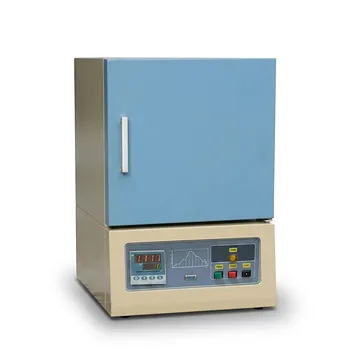
Ultra High Temperature Bench Top Muffle Furnace 1750C Sintering System with Kanthal Super Heating Elements and Precision Digital Control
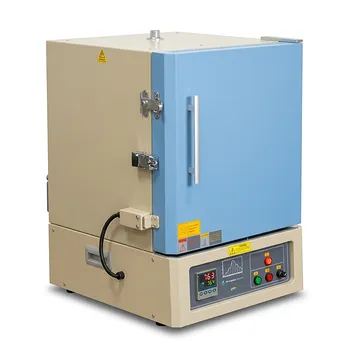
Large Capacity 1200C Muffle Furnace 64 Liter Chamber with Digital PID Controller and Built In Venting Port
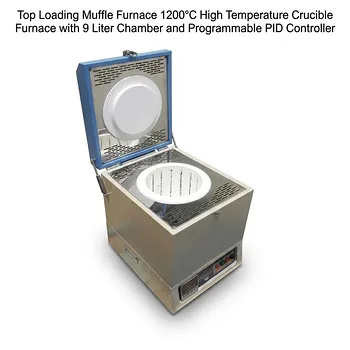
Top Loading Muffle Furnace 1200°C High Temperature Crucible Furnace with 9 Liter Chamber and Programmable PID Controller
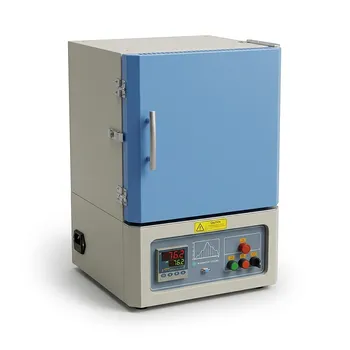
1750C Bench Top Muffle Furnace 3.6L High Grade Molybdenum Disilicide Heating Elements Laboratory Heat Treatment Equipment
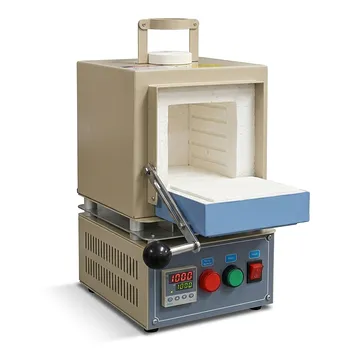
Compact 1000C Muffle Furnace with Programmable Controller and 2 Inch Top Port for Vacuum and Atmosphere Material Research
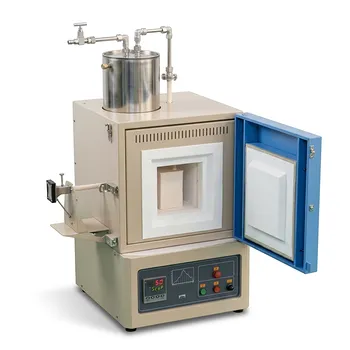
High Temperature Bench Top Muffle Furnace 1700C with Integrated Evaporating Particle Collection and 8x8x8 Alumina Fiber Chamber
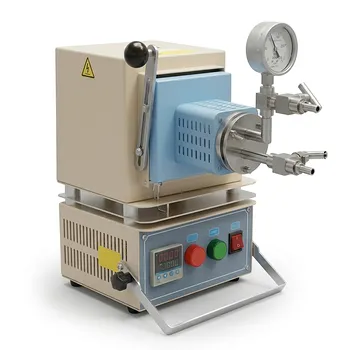
Compact Hybrid Muffle and Tube Furnace for 1000C Controlled Atmosphere Laboratory Material Sintering
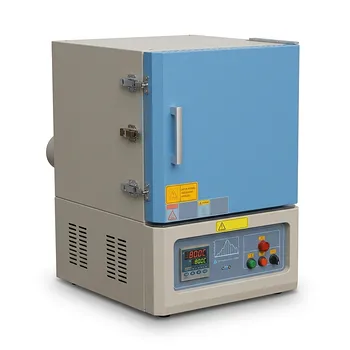
1800C Bench Top Muffle Furnace 18 Liters with Kanthal Super 1900 Heating Elements for High Purity Ceramic Sintering and Material Research
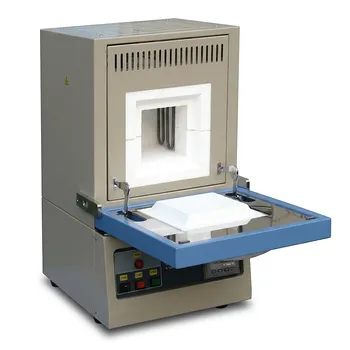
High Temperature 1800C Compact Muffle Furnace with Kanthal Super 1900 Heating Elements and 1.7L Alumina Chamber