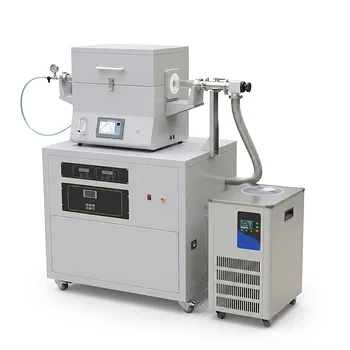
What role does a tube furnace play in the synthesis of peanut skin-derived carbon nanospheres (GS-CNSs)? Pyrolysis Guide.
Updated 3 months ago
In the synthesis of peanut skin-derived carbon nanospheres (GS-CNSs), the tube furnace serves as the reactive chamber for high-temperature pyrolysis. By maintaining a strictly controlled, oxygen-deficient environment at 800 °C, the furnace facilitates the dehydration and decarbonization of the peanut skin's lignocellulosic components. This process triggers a structural reorganization that transforms raw biomass into spherical carbon nanomaterials defined by high active sites and mesoporous architectures.
The tube furnace acts as a precision thermal reactor that prevents oxidative combustion while enabling the chemical decomposition and morphological shaping of biomass into functional carbon nanostructures. It is the essential tool for balancing carbon yield with the development of high-surface-area porosity.
The Mechanism of Thermal Transformation
Dehydration and Decarbonization
The primary role of the tube furnace is to provide the thermal energy required to break chemical bonds within the peanut skin precursor. At the target temperature of 800 °C, the lignocellulosic framework undergoes dehydration and decarbonization, stripping away non-carbon elements.
This thermal breakdown is the fundamental step in converting organic matter into a concentrated carbon skeleton. Without the precise heat field of a tube furnace, the material would not achieve the necessary level of carbonization required for high-performance applications.
Structural Reorganization
Beyond simple decomposition, the furnace provides the environment for structural reorganization. As volatile components are driven off, the remaining carbon atoms rearrange into a stable, spherical morphology.
This transition is critical for creating GS-CNSs, as it determines the final "nanosphere" shape. The stability of the furnace's heat zone ensures that this reorganization happens uniformly across the entire sample.
Atmospheric Control and Pore Engineering
Prevention of Oxidative Loss
A standard furnace would allow oxygen to incinerate the peanut skin, reducing it to ash. The tube furnace maintains an oxygen-deficient or inert atmosphere (such as nitrogen or argon), which is vital for preserving the carbon structure.
By excluding oxygen, the furnace ensures that the precursor undergoes pyrolysis rather than combustion. This allows the material to retain its mass and transform into a highly conductive carbon structure rather than being lost to the atmosphere as CO2.
Developing Mesoporous Networks
The controlled heating environment facilitates the creation of mesoporous structures. As gases escape the material during heating, they leave behind a network of pores that increase the material's surface area.
These high active sites are essential for the material's functionality in energy storage or catalysis. The tube furnace allows researchers to tune these properties by adjusting the ramp rate and dwell time of the heating cycle.
Understanding the Trade-offs
Temperature Sensitivity and Yield
Choosing the correct temperature is a critical trade-off; while 800 °C is optimal for peanut skin-derived spheres, higher temperatures (e.g., 1000 °C) can increase conductivity but may cause the pore structure to collapse. Conversely, lower temperatures (e.g., 350 °C) may result in incomplete carbonization, leaving behind organic residues that degrade performance.
Atmosphere vs. Cost
Maintaining a strictly inert atmosphere requires a continuous flow of high-purity gases like nitrogen or argon. While this is necessary to prevent oxidative combustion, it adds to the operational cost and complexity of the synthesis compared to open-air calcination.
How to Apply This to Your Project
Making the Right Choice for Your Goal
- If your primary focus is maximizing surface area: Utilize the tube furnace to maintain a steady temperature of 800 °C with a slow heating ramp to allow for the uniform development of mesopores.
- If your primary focus is structural purity: Ensure a strict nitrogen or argon flow to create an oxygen-free environment, preventing the formation of unwanted oxides or ash.
- If your primary focus is high conductivity: Consider increasing the residence time in the furnace to promote better graphitization and a more robust carbon framework.
The tube furnace is the definitive tool for transforming raw biomass into high-value carbon nanostructures through the precise manipulation of heat and atmosphere.
Summary Table:
| Furnace Function | Technical Process | Impact on GS-CNSs |
|---|---|---|
| Pyrolysis Chamber | 800°C high-temp reactor | Facilitates dehydration and decarbonization |
| Atmosphere Control | Inert gas flow (N2/Ar) | Prevents oxidative combustion and mass loss |
| Structural Shaping | Uniform thermal field | Triggers rearrangement into stable spheres |
| Pore Engineering | Controlled degassing | Develops high-surface-area mesoporous networks |
Elevate Your Advanced Material Research with THERMUNITS
Are you looking to achieve precise structural control in your carbon synthesis or material R&D? THERMUNITS is a leading manufacturer of high-temperature laboratory equipment designed specifically for material science and industrial innovation.
We provide a comprehensive range of thermal processing solutions that ensure the atmosphere stability and temperature uniformity your projects demand. Our expert-engineered systems include:
- High-Performance Furnaces: Tube, Muffle, Vacuum, Atmosphere, Rotary, and Hot Press models.
- Advanced Systems: CVD/PECVD units, Dental Furnaces, and Electric Rotary Kilns.
- Specialized Equipment: Vacuum Induction Melting (VIM) furnaces and high-quality Thermal Elements.
From biomass carbonization to semiconductor development, our equipment empowers you to reach the highest levels of structural purity and conductivity.
Ready to optimize your thermal processes? Contact us today to discuss your custom solution!
References
- Aman Sharma, Gurumurthy Hegde. Efficient cationic dye removal from water through <i>Arachis hypogaea</i> skin-derived carbon nanospheres: a rapid and sustainable approach. DOI: 10.1039/d4na00254g
Mentioned Products
- 5 Inch Two Zone Rotary Tube Furnace 1100C for Powder CVD and Material Synthesis
- Two Zone Rotary Tube Furnace for Powder CVD Coating and Core Shell Material Synthesis 1100C
- High Temperature Dual Zone Rotating Tube Furnace 1500C Silicon Carbide Heating for Advanced Material Synthesis
- 1500C 3-Zone Rotary Tube Furnace 60mm with Automatic Powder Feeding and Receiving System for Continuous Material Synthesis
- Compact Hybrid Muffle and Tube Furnace for 1000C Controlled Atmosphere Laboratory Material Sintering
People Also Ask
- Why is a Tube Furnace typically utilized for CVD? Achieve Precision in Graphene and 2D Material Synthesis
- How does a rotary tube furnace improve the processing of granular materials? Enhance Uniformity and Reaction Kinetics
- In what ways do rotary tube furnaces enhance chemical and specialty mineral processing? Drive Precision and Uniformity.
- Why is the precise optimization of residence time essential in the catalyst calcination process? Maximize Your Yields.
- Why use a rotary tube furnace for FACS carbonization? Ensure uniform morphology and prevent sphere agglomeration.

Tech Team · ThermUnits
Last updated on Jun 03, 2026
Related Products
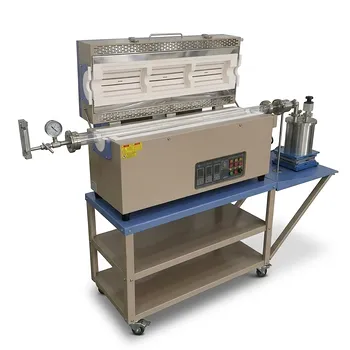
5 Inch Two Zone Rotary Tube Furnace 1100C for Powder CVD and Material Synthesis
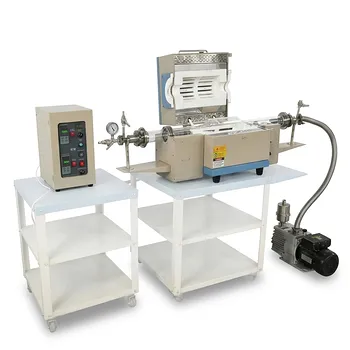
Two Zone Rotary Tube Furnace for Powder CVD Coating and Core Shell Material Synthesis 1100C
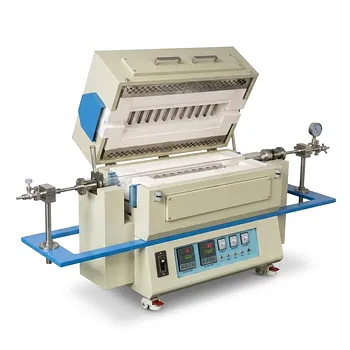
High Temperature Dual Zone Rotating Tube Furnace 1500C Silicon Carbide Heating for Advanced Material Synthesis
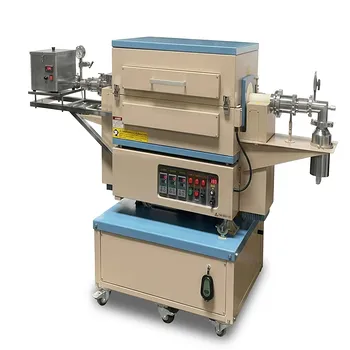
1500C 3-Zone Rotary Tube Furnace 60mm with Automatic Powder Feeding and Receiving System for Continuous Material Synthesis
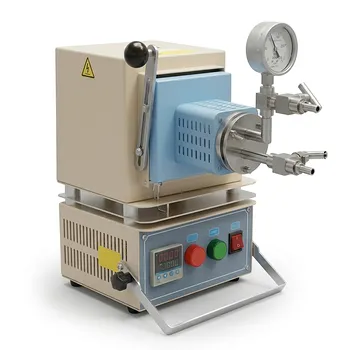
Compact Hybrid Muffle and Tube Furnace for 1000C Controlled Atmosphere Laboratory Material Sintering
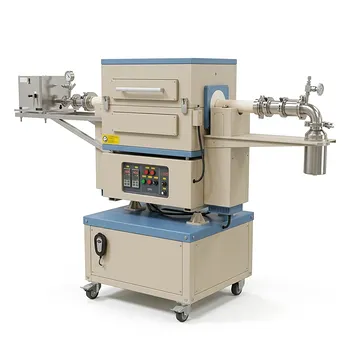
1500C Max Dual Zone Rotary Tube Furnace with 60 mm OD Alumina Tube for High Temperature Material Synthesis

High Temperature 1700C Vertical Tube Furnace for Powder Spherification and Material Sintering
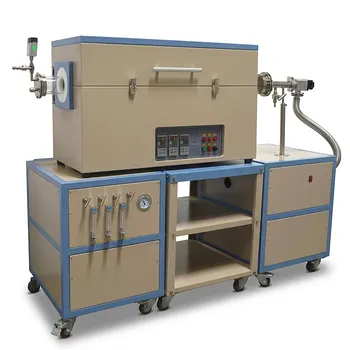
Three Zone Quartz Tube Furnace with 3 Channel Gas Mixer Vacuum Pump and Anti Corrosive Vacuum Gauge

Compact High Temperature 1600C Tube Furnace with 50mm Alumina Tube and Vacuum Flanges for Material Sintering
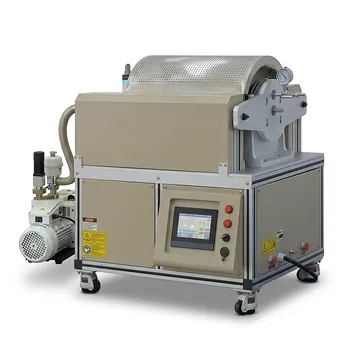
Automated 1200 C Tube Furnace for AI Material Research with 6 Inch OD and Sliding Flange
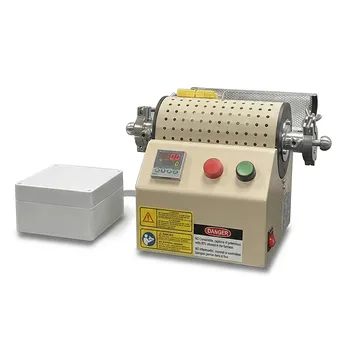
1000C Mini Tube Furnace with 20mm Quartz Tube and Vacuum Flanges for Material Science Research and Controlled Atmosphere Small Sample Processing
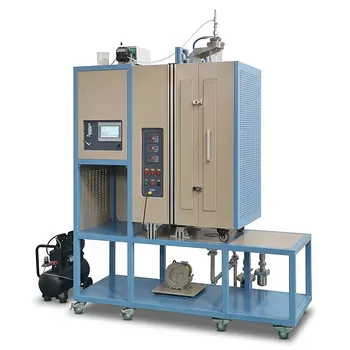
1500C Three Zone Vertical Pyrolysis Furnace for Nanoparticle Synthesis and Advanced Oxide Coating
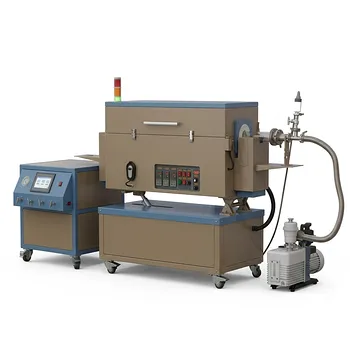
5 Inch Three Zone Rotary Tube Furnace with Integrated Gas Delivery System and 1200C Capability for Advanced Material CVD Processing
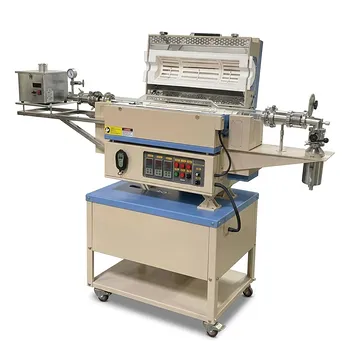
5 Inch Rotary Tube Furnace with Automatic Feeding and Receiving System 1200C Three Zone CVD Powder Processing

High Temperature Automated 5 Inch Tube Furnace for Autonomous Material Research and Advanced Laboratory R&D
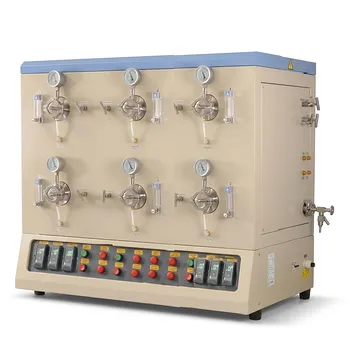
1200C High Throughput Multi Channel Tube Furnace with 50mm Quartz Tubes for Annealing and Material Phase Diagram Research
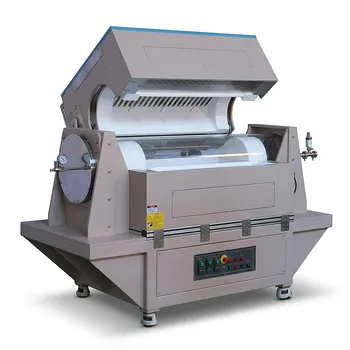
Three Zone Tube Furnace with 11 Inch or 15 Inch Quartz Tube and Hinged Flanges for Vacuum Atmosphere Heat Treatment
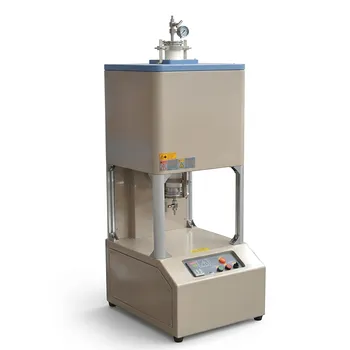
Vertical 1700C Vacuum and Atmosphere Tube Furnace with 80mm Alumina Tube
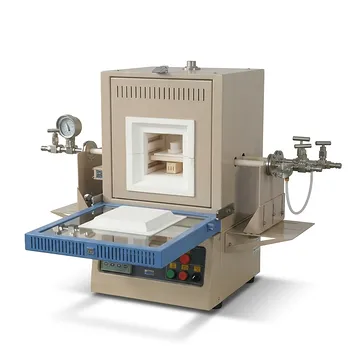
1700C Compact Hybrid Furnace with Dual Layer Box Sintering and Controlled Atmosphere Alumina Tubes