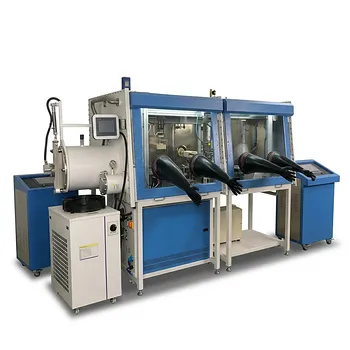
Why are corundum crucibles or boats selected for reduction roasting of oolitic hematite? Ensure High Purity & Stability
Updated 3 months ago
Corundum crucibles and boats are the standard choice for the reduction roasting of oolitic hematite because they provide a unique combination of high-temperature thermal stability and exceptional chemical inertness. In the harsh environment of magnetization roasting, these containers remain non-reactive, ensuring that the iron ore sample is not contaminated by the vessel itself, which preserves the accuracy of the final compositional analysis.
The selection of corundum (high-purity alumina) is driven by the need to maintain sample purity at temperatures reaching 850°C and above. Its resistance to both the iron ore raw materials and the carbon monoxide reducing gas makes it the definitive material for high-fidelity metallurgical experiments.
The Necessity of Chemical Inertness in Reducing Atmospheres
Resistance to Reducing Gases
During the reduction roasting of oolitic hematite, carbon monoxide (CO) is typically used as the reducing agent to transform hematite into magnetite. Corundum is chemically stable in these strong reducing atmospheres and will not react with the CO gas or the iron oxides.
Preventing Sample Contamination
Because corundum is primarily composed of high-purity alumina (Al2O3), it does not leach metallic impurities into the iron ore. This prevents external elements from altering the chemical profile of the sample, which is critical for obtaining precise experimental data.
Stability Against Mineral Erosion
Oolitic hematite can contain complex mineral structures and gangue materials that become reactive at high temperatures. Corundum's exceptional refractoriness allows it to resist erosion from these minerals, ensuring the crucible does not degrade during the roasting cycle.
Thermal Performance and Structural Integrity
High-Temperature Resistance
The magnetization roasting process for iron ore often occurs at temperatures around 850°C, but corundum can withstand environments well exceeding 1600°C. This massive thermal overhead ensures the container remains structurally sound and does not soften or deform during the experiment.
Thermal Shock Resistance
High-purity alumina ceramic boats exhibit excellent thermal shock resistance, allowing them to handle the temperature fluctuations inherent in heating and cooling cycles. This prevents the vessel from cracking, which would otherwise lead to sample loss or furnace damage.
Mechanical Strength at Heat
Unlike lower-grade ceramics or metallic containers, corundum maintains high mechanical strength even at peak roasting temperatures. This durability allows for the safe handling and transport of molten or hot powdered samples within the laboratory environment.
Understanding the Trade-offs
Sensitivity to Rapid Heating
While corundum has good thermal shock resistance, it is not invincible; extreme temperature gradients can still cause stress fractures. Users must still manage heating and cooling rates to maximize the lifespan of these relatively expensive consumables.
Potential for Physical Bonding
In some high-temperature scenarios involving flux or molten slags, samples may physically adhere to the surface of the corundum. While the material is chemically inert, the microscopic porosity of the ceramic can make "clean" sample recovery difficult if the material reaches a semi-fluid state.
Cost vs. Utility
Corundum is more expensive than standard clay or porcelain crucibles. However, the cost is justified by the reliability of the data and the prevention of failed experiments caused by container-sample reactions.
How to Apply This to Your Project
When selecting your sample containers for iron ore roasting or similar metallurgical processes, consider your specific experimental goals:
- If your primary focus is analytical precision: Use high-purity corundum (99% Al2O3) to ensure zero contamination from the crucible walls into your hematite sample.
- If your primary focus is high-volume screening: Standard ceramic boats may suffice for lower temperatures, but corundum remains the baseline for any roasting process exceeding 800°C in a reducing atmosphere.
- If your primary focus is vessel longevity: Ensure you follow gradual ramp-up and cool-down protocols to protect the corundum from thermal fatigue over multiple uses.
Choosing corundum ensures that the results of your reduction roasting reflect the true characteristics of the ore rather than the limitations of the container.
Summary Table:
| Property | Key Advantage | Benefit to Experiment |
|---|---|---|
| Chemical Inertness | Resistance to CO and iron oxides | Prevents sample contamination |
| Thermal Stability | Operation up to 1600°C+ | Maintains integrity at 850°C+ |
| Material Purity | High-purity Al2O3 composition | Ensures accurate compositional data |
| Mechanical Strength | High durability at peak heat | Safe handling of hot mineral samples |
| Thermal Shock | Resists temperature fluctuations | Prevents cracking and sample loss |
Elevate Your Material Research with THERMUNITS
Precision in high-temperature heat treatment starts with the right equipment. As a leading manufacturer of high-temperature laboratory equipment, THERMUNITS provides professional thermal processing solutions tailored for material science and industrial R&D. Our comprehensive range includes:
- Furnaces: Muffle, Vacuum, Atmosphere, Tube, Rotary, and Hot Press furnaces.
- Advanced Systems: CVD/PECVD systems, Vacuum Induction Melting (VIM), and Electric Rotary Kilns.
- Specialized Tools: Dental Furnaces, Thermal Elements, and high-purity laboratory heat treatment equipment.
Whether you are conducting magnetization roasting or complex chemical vapor deposition, our equipment ensures the high-fidelity results your project demands.
Ready to optimize your lab's thermal performance? Contact THERMUNITS today to find the perfect solution!
References
- Mengfei Li, Yu Hong. XPS Investigation of Magnetization Reduction Behavior and Kinetics of Oolitic Hematite in Gas-Based Roasting. DOI: 10.3390/min14050462
Mentioned Products
- Compact Crucible Melting Furnace 1100C Programmable Temperature Controller Metal Sintering Equipment
- 1100C Crucible Melting Furnace with Stirring Function for Glovebox and Air Sensitive Alloy Research
- High Temperature Vertical Crucible Furnace with 22L Heating Chamber and 1200C Maximum Temperature
- Anti Corrosive Muffle Furnace with Sintered Corundum Chamber and 1050C Operating Range for Corrosive Material Calcination
- Vertical Crucible Furnace 1000C High Temperature Laboratory Equipment 4.7 Inch Diameter Chamber SS316 Anti Corrosive Enclosure
People Also Ask
- Why are internal getters such as Titanium used during the synthesis of oxygen-sensitive materials in a melting furnace?
- How should the choice between a Quartz crucible and an Alumina crucible be made for La2O2S? Optimize Material Purity
- What is the function of a programmable high-temperature Laboratory Furnace in evaluating the fire resistance of concrete?
- Why is a laboratory sintering furnace reaching 950°C required for Ho2YSbO7? Ensure Pure Pyrochlore Phase Purity
- What operational efficiencies do programmable dental furnaces provide to high-volume laboratories? Maximize Scalability

Tech Team · ThermUnits
Last updated on Jun 03, 2026
Related Products
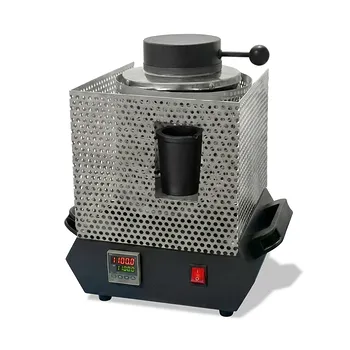
Compact Crucible Melting Furnace 1100C Programmable Temperature Controller Metal Sintering Equipment
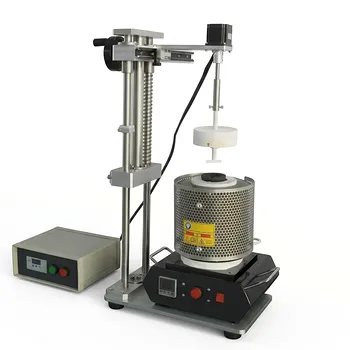
1100C Crucible Melting Furnace with Stirring Function for Glovebox and Air Sensitive Alloy Research
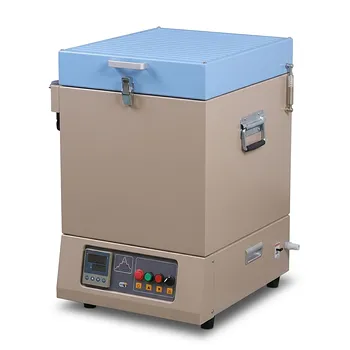
High Temperature Vertical Crucible Furnace with 22L Heating Chamber and 1200C Maximum Temperature
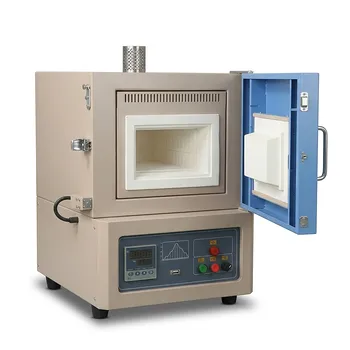
Anti Corrosive Muffle Furnace with Sintered Corundum Chamber and 1050C Operating Range for Corrosive Material Calcination
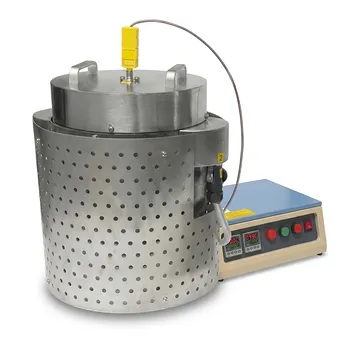
Vertical Crucible Furnace 1000C High Temperature Laboratory Equipment 4.7 Inch Diameter Chamber SS316 Anti Corrosive Enclosure
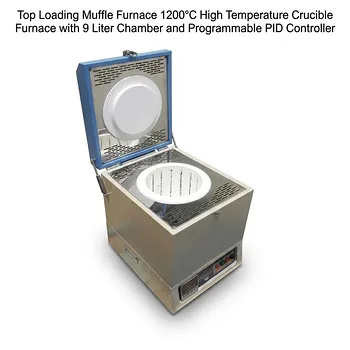
Top Loading Muffle Furnace 1200°C High Temperature Crucible Furnace with 9 Liter Chamber and Programmable PID Controller
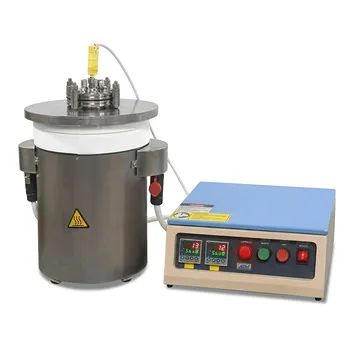
600°C Vertical Crucible Furnace with SS316 Alloy Reactor and 6 Port Vacuum Flange
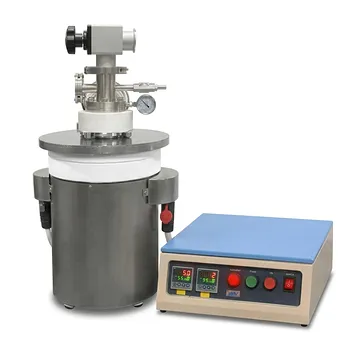
1100C High Temperature Vacuum Crucible Furnace with Quartz Chamber for Thermal Processing and Sintering
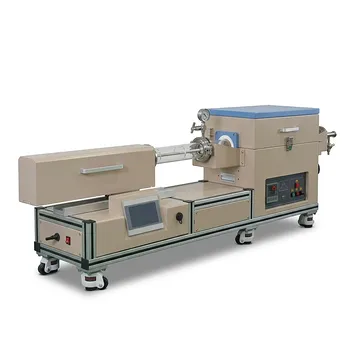
1200C Sliding Internal Crucible Tube Furnace for Controlled Atmosphere Thin Film Deposition and Material Sublimation Research