Why are high-purity quartz or ceramic boats used for Mangifera indica pyrolysis? Ensure Purity & Thermal Stability
Updated 3 months ago
High-purity quartz and ceramic boats are the industry standard for biomass pyrolysis because they provide a chemically inert and thermally stable environment necessary for synthesizing high-performance electrode materials. These containers withstand temperatures exceeding 725°C and resist the corrosive effects of chemical activators like KOH, ensuring that the resulting Mangifera indica-derived carbon remains free from metallic contamination and structural impurities.
Core Takeaway: Quartz and ceramic boats act as a "neutral stage" for pyrolysis, preventing chemical reactions between the container and the biomass while maintaining structural integrity under extreme thermal stress and chemical activation.
Ensuring Chemical Purity in Carbon Synthesis
Protection Against Elemental Migration
High-purity quartz and ceramic materials prevent the migration of impurities, such as metals or metal oxides, from the container into the carbonized material. This is critical for electrode materials, as even trace amounts of foreign elements can alter the electrochemical performance and surface area of the porous carbon.
Resistance to Aggressive Activators
The activation of Mangifera indica often involves KOH (potassium hydroxide), a strong alkaline agent that becomes highly corrosive in vapor form at high temperatures. Quartz and ceramics resist this chemical erosion, whereas metal containers would likely leach impurities or degrade rapidly under such harsh conditions.
Neutralizing Volatile Reactions
During the thermal degradation of biomass, various volatile components and gases are released. High-purity containers ensure that these volatile byproducts do not react with the vessel itself, which maintains the predictable chemical environment necessary for repeatable experimental results.
Thermal Resilience and Structural Integrity
Superior Thermal Stability
Pyrolysis of biomass-derived materials occurs at intense heat, often reaching levels between 700°C and 1000°C. Ceramic and quartz boats possess extremely high refractoriness, meaning they retain their strength and do not deform or melt during these high-temperature carbonization cycles.
Managing Thermal Shock
Experimental procedures often require moving containers in and out of a furnace quickly, leading to rapid temperature fluctuations. High-purity quartz glass, in particular, has an exceptionally low coefficient of thermal expansion, allowing it to withstand severe thermal shock without cracking or rupturing.
Facilitating Gas Exchange
The open, stable structure of these boats—especially alumina ceramic varieties—allows for the efficient removal of small gas molecules generated during the reaction. This maintains reaction equilibrium and ensures that the carrier gas can effectively purge the environment of unwanted oxygen or byproducts.
Understanding the Trade-offs and Limitations
Material Fragility
While thermally robust, both quartz and ceramic boats are mechanically brittle. They are susceptible to physical breakage from drops or improper handling, which can be an expensive risk in high-throughput laboratory settings.
Porosity and Cleaning Challenges
Certain ceramic boats can be slightly porous, leading to the retention of carbon residue or activators between uses. If not cleaned meticulously using appropriate acids or high-heat cycles, cross-contamination between different biomass batches can occur.
Cost vs. Longevity
High-purity quartz is generally more expensive than standard ceramic. While quartz offers superior visibility and thermal shock resistance, it may devitrify (become cloudy and brittle) over time if exposed to certain alkaline salts repeatedly, necessitating eventual replacement.
How to Select a Container for Your Process
Deciding between quartz and ceramic depends on your specific temperature requirements and the chemical agents involved in your activation process.
- If your primary focus is extreme thermal shock resistance: Use high-purity quartz boats, as they are less likely to crack during rapid heating and cooling cycles.
- If your primary focus is cost-effective high-temperature carbonization: Choose alumina ceramic boats, which offer excellent refractoriness and chemical stability at a lower price point than quartz.
- If your primary focus is chemical activation with KOH at 700°C+: Prioritize high-purity ceramic or specific quartz grades that are rated for alkaline resistance to ensure the longevity of the vessel.
Choosing the right vessel ensures that the unique properties of the Mangifera indica biomass are preserved and enhanced during its transformation into a high-utility electrode material.
Summary Table:
| Feature | High-Purity Quartz Boats | Alumina Ceramic Boats |
|---|---|---|
| Thermal Shock Resistance | Excellent (prevents cracking during rapid cycles) | Moderate |
| Max Temperature | Up to ~1200°C | Up to 1800°C (depending on grade) |
| Chemical Resistance | High resistance to acids and volatiles | Superior resistance to KOH and alkaline agents |
| Purity Level | Exceptional (minimizes metallic migration) | Very High (standard for industrial R&D) |
| Best Use Case | Rapid heating/cooling & visual monitoring | High-temperature carbonization & cost-efficiency |
Elevate Your R&D with THERMUNITS Thermal Solutions
Precision in pyrolysis starts with the right equipment. THERMUNITS is a leading manufacturer of high-temperature laboratory equipment tailored for material science and industrial R&D. Whether you are synthesizing carbon-based electrode materials from Mangifera indica or developing next-generation ceramics, we provide the thermal stability and chemical purity your research demands.
Our Comprehensive Product Range Includes:
- Furnaces: Muffle, Vacuum, Atmosphere, Tube, Rotary, and Hot Press Furnaces.
- Advanced Systems: CVD/PECVD systems, Vacuum Induction Melting (VIM), and Dental Furnaces.
- Essential Components: High-purity Thermal Elements and laboratory heat treatment accessories.
Don't settle for inconsistent results. Let our experts help you select the ideal furnace and container setup for your specific atmospheric and chemical requirements.
Contact THERMUNITS Today to Optimize Your Process
References
- Shreeganesh Subraya Hegde, Badekai Ramachandra Bhat. Sustainable energy storage: <i>Mangifera indica</i> leaf waste-derived activated carbon for long-life, high-performance supercapacitors. DOI: 10.1039/d3ra08910j
Mentioned Products
- 1500C Three Zone Vertical Pyrolysis Furnace for Nanoparticle Synthesis and Advanced Oxide Coating
- 1100C High Temperature Vacuum Crucible Furnace with Quartz Chamber for Thermal Processing and Sintering
- 1100°C High Temperature Quartz Chamber Furnace 8 Inch OD with 7.6 Liter Capacity and Vacuum Atmosphere Capability
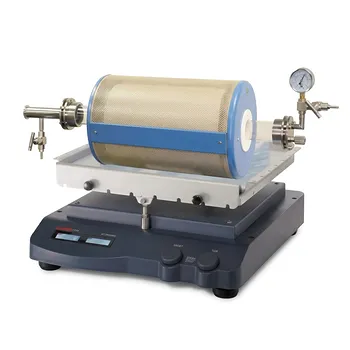
- High Temperature Rocking Tube Furnace with Quartz Tube and Vacuum Flange for Materials Synthesis
People Also Ask
- Why is high-precision temperature control essential in a pyrolysis furnace? Master Pd NPs/NO-C Catalyst Synthesis
- Why is Nitrogen (N2) required for 3D carbon electrodes? Ensure material purity and structural integrity.
- What is the technical necessity of multiple high-temperature thermocouples in a pyrolysis furnace? Precision Control
- Why is it necessary to maintain a strict nitrogen (N2) atmosphere during the operation of a pyrolysis furnace? (Pro Tips)
- Why are precise nitrogen supply systems and flow meters necessary in the pyrolysis process? Optimize Purity & Yield.

Tech Team · ThermUnits
Last updated on Jun 02, 2026
Related Products
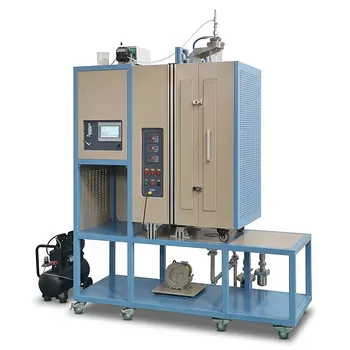
1500C Three Zone Vertical Pyrolysis Furnace for Nanoparticle Synthesis and Advanced Oxide Coating
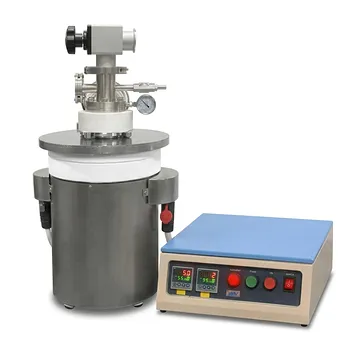
1100C High Temperature Vacuum Crucible Furnace with Quartz Chamber for Thermal Processing and Sintering
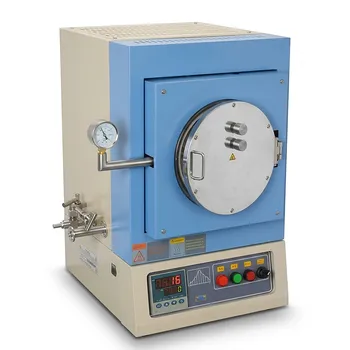
1100°C High Temperature Quartz Chamber Furnace 8 Inch OD with 7.6 Liter Capacity and Vacuum Atmosphere Capability