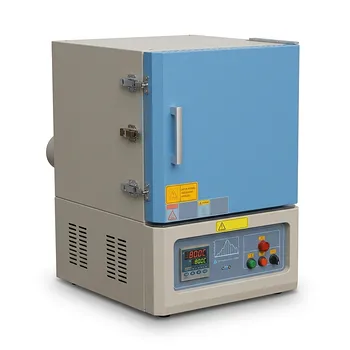
Why are high-purity quartz crucibles preferred for nickel slag experiments? Ensure max purity and data integrity.
Updated 3 months ago
High-purity quartz crucibles are the preferred vessels for nickel slag experiments because they provide a unique combination of extreme thermal stability and chemical inertness at temperatures reaching 1350°C. These properties ensure the crucible does not react with corrosive slag components, preventing external impurities from leaching into the melt and compromising the accuracy of the resulting analytical data.
The core advantage of high-purity quartz is its role as a "neutral" container that maintains its structural integrity while resisting chemical erosion. By preventing secondary contamination, it allows researchers to isolate the behavior of the nickel slag and obtain precise measurements of its chemical composition.
Superior Material Stability in Corrosive Environments
Resistance to Chemical Erosion
Nickel slag is inherently corrosive at high temperatures, often reacting with and dissolving lower-quality vessel materials. High-purity quartz is selected specifically for its chemical inertness, which prevents it from participating in the smelting reaction or altering the slag’s chemistry.
High-Temperature Thermal Stability
In simulated smelting environments, temperatures frequently reach or exceed 1350°C. Quartz crucibles maintain their shape and structural safety at these levels, resisting deformation and preventing the failure of the experiment during critical heating phases.
Exceptional Thermal Shock Resistance
Experimental protocols often involve rapid heating or cooling cycles that can cause standard ceramics to crack. Quartz possesses excellent thermal shock stability, ensuring the vessel remains intact despite sudden temperature fluctuations during the loading or quenching of the melt.
Protection of Analytical Data Integrity
Prevention of Impurity Leaching
The primary goal of slag cleaning experiments is to analyze the movement of elements within the system. High-purity quartz minimizes the risk of secondary contamination, ensuring that any elements detected in the final analysis originated from the slag itself rather than the crucible walls.
Preservation of High-Purity Raw Materials
When working with materials that require 99.9% purity, even minor leaching of ions like aluminum or calcium can invalidate the results. Quartz acts as a barrier, maintaining the chemical integrity of the melt and ensuring that subsequent microstructural analysis is reliable and reproducible.
Supporting Isothermal Reduction
During prolonged heat treatments, the stability of the vessel is paramount to the isothermal reduction process. Because quartz resists dissolution, it prevents interference with the evolution of the slag’s viscosity and chemical composition, which are critical metrics for smelting efficiency.
Understanding the Trade-offs
While quartz is ideal for many nickel slag applications, it has a definite thermal ceiling around 1350°C. For experiments requiring "extreme" environments—such as those ranging from 1450°C to 1550°C—researchers must often transition to high-purity alumina (corundum) crucibles, which offer higher refractoriness.
Furthermore, while quartz is inert to many acidic and neutral slags, it may face increased erosion when exposed to strong alkaline fluxes or specific metallurgical slags like CaO-SiO2-Al2O3. In these instances, the chemical compatibility between the slag chemistry and the crucible material must be carefully re-evaluated to prevent crucible dissolution.
Making the Right Choice for Your Goal
Selecting the appropriate vessel depends entirely on the temperature range and the chemical aggressiveness of your simulated slag.
- If your primary focus is standard nickel slag cleaning (up to 1350°C): Use high-purity quartz to ensure maximum chemical inertness and prevent impurity leaching into your samples.
- If your primary focus is extreme high-temperature smelting (above 1450°C): Opt for high-purity alumina or corundum crucibles, which provide the necessary refractoriness to survive higher thermal loads.
- If your primary focus is preventing contamination from alkali activators: Utilize high-purity quartz or specialized ceramic tubes that can specifically withstand chemical erosion from agents like KOH.
By matching the crucible material to the specific thermal and chemical demands of your experiment, you ensure both the safety of your equipment and the absolute precision of your data.
Summary Table:
| Key Feature | Advantage in Slag Smelting | Temperature Performance |
|---|---|---|
| Chemical Inertness | Prevents secondary contamination and reaction with corrosive slag. | Stable up to 1350°C |
| Thermal Stability | Maintains structural integrity and resists deformation during heating. | Ideal for long-duration isothermal reduction |
| Thermal Shock Resistance | Prevents crucible cracking during rapid loading or quenching. | Excellent resilience to temperature flux |
| High Purity Level | Minimizes ion leaching (Al, Ca) that would invalidate detection results. | Essential for 99.9%+ analytical accuracy |
Achieve Superior Experimental Results with THERMUNITS
Optimize your material science research with THERMUNITS, a leading manufacturer specializing in high-temperature laboratory equipment. Our professional thermal solutions are meticulously designed to meet the rigorous demands of industrial R&D and advanced metallurgical simulations.
We offer a comprehensive range of high-performance heat treatment equipment, including:
- Muffle, Vacuum, and Atmosphere Furnaces
- Tube, Rotary, and Hot Press Furnaces
- CVD/PECVD Systems and Dental Furnaces
- Electric Rotary Kilns and Vacuum Induction Melting (VIM) Furnaces
- Premium Thermal Elements and Lab Accessories
Maintain the chemical integrity of your samples and ensure the reliability of your analytical data. Contact the THERMUNITS team today to discuss the perfect furnace configuration for your laboratory needs!
References
- Anna Klemettinen, Rodrigo Serna-Guerrero. Towards Integration of Ni-Slag Cleaning Process and Lithium-Ion Battery Recycling for an Efficient Recovery of Valuable Metals. DOI: 10.1007/s11663-024-03185-0
Mentioned Products
- 1100C High Temperature Vacuum Crucible Furnace with Quartz Chamber for Thermal Processing and Sintering
- 1100C Crucible Melting Furnace with Stirring Function for Glovebox and Air Sensitive Alloy Research
- High Temperature Induction Melting System with Integrated Ultra High Purity Glove Box for Metallic Alloy Processing
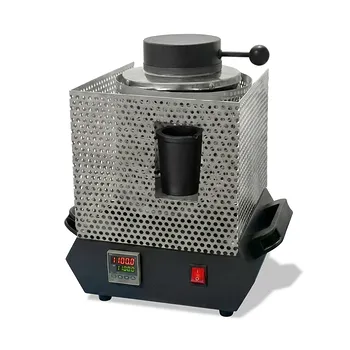
- Compact Crucible Melting Furnace 1100C Programmable Temperature Controller Metal Sintering Equipment
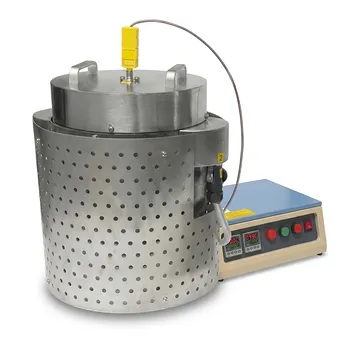
- Vertical Crucible Furnace 1000C High Temperature Laboratory Equipment 4.7 Inch Diameter Chamber SS316 Anti Corrosive Enclosure
People Also Ask
- How does the temperature control precision of a high-temperature sintering furnace affect Na1+xLa1-xZr2O6-δ ceramics?
- How does a high-temperature sintering furnace environment enhance NdFeB magnets? Achieve 98%+ density with precision.
- Why is a high-temperature sintering furnace required for the preparation of Li(Nb,Ta)O3 precursors? Essential Insights
- How does a high-temperature sintering furnace contribute to the interfacial strengthening of SS316L and zirconia?
- What is the function of high-vacuum furnaces in (Mo2/3V1/3)n+1AlCn MAX phase synthesis? Ensure Purity & Diffusion.

Tech Team · ThermUnits
Last updated on Jun 02, 2026
Related Products
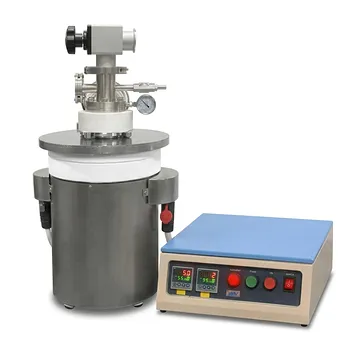
1100C High Temperature Vacuum Crucible Furnace with Quartz Chamber for Thermal Processing and Sintering
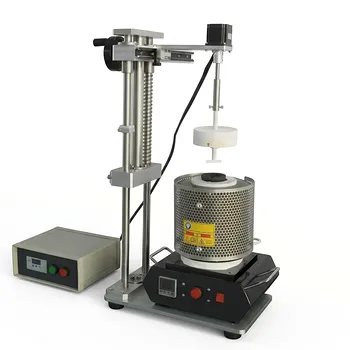
1100C Crucible Melting Furnace with Stirring Function for Glovebox and Air Sensitive Alloy Research
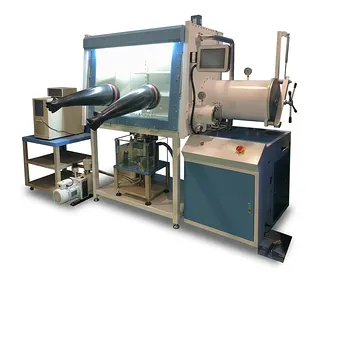
High Temperature Induction Melting System with Integrated Ultra High Purity Glove Box for Metallic Alloy Processing
Compact Crucible Melting Furnace 1100C Programmable Temperature Controller Metal Sintering Equipment
Vertical Crucible Furnace 1000C High Temperature Laboratory Equipment 4.7 Inch Diameter Chamber SS316 Anti Corrosive Enclosure
High Temperature Vertical Crucible Furnace with 22L Heating Chamber and 1200C Maximum Temperature
600°C Vertical Crucible Furnace with SS316 Alloy Reactor and 6 Port Vacuum Flange