Why are high-purity quartz or alumina crucibles used for NCM and PET co-pyrolysis? Ensure Purity & Stability
Updated 3 months ago
High-purity quartz and alumina crucibles are utilized because they provide the necessary chemical inertness and thermal stability to withstand the aggressive environment of NCM and PET co-pyrolysis. During the process—typically occurring between 550°C and 1000°C—these materials remain non-reactive with active cathode powders and the strongly reducing decomposition products of PET. This lack of reactivity ensures that the recovered metal products are not contaminated by the container material, preserving the integrity of the experimental results.
The selection of quartz or alumina is a strategic choice to ensure that the sample container remains a neutral observer rather than a participant in the chemical reaction. By resisting both thermal shock and chemical erosion, these materials protect the purity of the recovered metals and the structural safety of the laboratory equipment.
Thermal Integrity under Extreme Conditions
Exceptional Resistance to High Temperatures
The co-pyrolysis of NCM (Lithium Nickel Cobalt Manganese Oxide) and PET requires sustained temperatures that would cause standard glass or metal containers to melt or deform. Alumina crucibles are particularly valued for their ability to maintain structural rigidity at temperatures exceeding 1350°C.
Stability Against Thermal Shock
High-purity quartz is uniquely capable of withstanding severe temperature fluctuations without cracking or shattering. This thermal shock resistance is critical during the heating and cooling phases of pyrolysis, providing a stable environment for biomass or polymer degradation.
Maintenance of Vacuum and Atmospheric Control
Alumina possesses low permeability, which is essential for experiments conducted under specific atmospheric conditions or vacuum. This property prevents gas leakage and ensures that the oxygen content or reducing environment within the crucible remains precisely controlled.
Chemical Inertness in Reactive Environments
Resistance to Reducing Decomposition Products
As PET decomposes, it releases volatile components that create a strongly reducing environment. High-purity quartz and alumina are chemically "blind" to these products, ensuring the container does not degrade or leach silicon or aluminum into the sample.
Prevention of Ion Leaching and Contamination
Active cathode powders like NCM are sensitive to impurities that can interfere with crystal structure evolution or metal recovery. Using high-purity materials prevents the introduction of foreign ions, such as aluminum or iron, which could otherwise compromise the phase analysis of the recovered materials.
Durability Against Corrosive Agents
In many high-temperature processes, samples may produce or be treated with corrosive activators like potassium hydroxide (KOH). Alumina and quartz resist chemical erosion from these strong alkalis, protecting both the sample purity and the long-term health of the heating equipment.
Understanding the Trade-offs
Material Limitations and Devitrification
While quartz is excellent for thermal shock, it can undergo devitrification (transitioning from a glass to a crystalline state) when used repeatedly at very high temperatures. This can lead to brittleness and eventual failure of the container after multiple cycles.
Fragility and Handling Constraints
Alumina, despite its superior temperature ceiling, is more susceptible to cracking if subjected to extremely rapid temperature changes compared to quartz. Both materials are ceramic-based and brittle, requiring careful handling to avoid mechanical breakage during loading and unloading.
Cost and Purity Requirements
High-purity variants are significantly more expensive than standard industrial grades. However, using lower-purity alternatives often introduces trace elements (like iron or calcium) that can catalyze unwanted side reactions or skew the analytical data of the NCM recovery process.
How to Apply This to Your Project
When selecting a container for high-temperature pyrolysis, your choice should be dictated by your peak temperature and the chemical nature of your reactants.
- If your primary focus is extreme temperature stability (above 1100°C): Use high-purity alumina crucibles, as they maintain structural strength and chemical inertness at levels where quartz may begin to soften.
- If your primary focus is rapid heating/cooling cycles: Opt for high-purity quartz to take advantage of its superior thermal shock resistance and lower risk of cracking during quick transitions.
- If your primary focus is preventing trace metal contamination: Ensure you are using "high-purity" (99%+) grades of either material to prevent leaching of secondary elements into your NCM or metal samples.
By matching the container material to the specific thermal and chemical demands of the co-pyrolysis reaction, you ensure both the accuracy of your data and the safety of your laboratory operations.
Summary Table:
| Feature | High-Purity Quartz | High-Purity Alumina |
|---|---|---|
| Max Temperature | ~1100°C - 1200°C | Up to 1750°C+ |
| Thermal Shock | Excellent (Rapid cycling) | Moderate (Requires slow cooling) |
| Chemical Inertness | High (Acid/Reducing resistant) | High (Alkali/Refractory resistant) |
| Best Application | Rapid heating/cooling cycles | Extreme high-temp stability |
Elevate Your Material Research with THERMUNITS
At THERMUNITS, we understand that the integrity of your research depends on precision and reliability. As a leading manufacturer of high-temperature laboratory equipment for material science and industrial R&D, we provide the advanced thermal solutions necessary for complex processes like NCM and PET co-pyrolysis.
Our comprehensive product range is designed to meet the most demanding laboratory requirements:
- Advanced Furnaces: Muffle, Vacuum, Atmosphere, Tube, Rotary, and Hot Press Furnaces.
- Specialized Systems: CVD/PECVD systems, Dental Furnaces, and Electric Rotary Kilns.
- Industrial Solutions: Vacuum Induction Melting (VIM) furnaces and high-quality Thermal Elements.
Whether you are refining battery materials or exploring new chemical synthesis pathways, our equipment ensures uniform heat distribution and precise atmospheric control. Contact our technical team today to discuss how our thermal processing solutions can optimize your lab's performance.
References
- Zhe Meng, Yuanyuan Tang. Synergetic pyrolysis of lithium-ion battery cathodes with polyethylene terephthalate for efficient metal recovery and battery regeneration. DOI: 10.1038/s44172-024-00317-x
Mentioned Products
- Automatic 10 Crucible Induction Melting and Casting System with Stirring Function and Glovebox Integration 2000C
- 1500C Three Zone Vertical Pyrolysis Furnace for Nanoparticle Synthesis and Advanced Oxide Coating
- 1100C Crucible Melting Furnace with Stirring Function for Glovebox and Air Sensitive Alloy Research
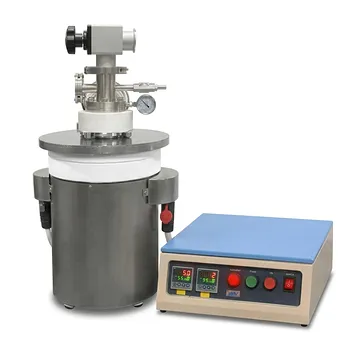
- 1100C High Temperature Vacuum Crucible Furnace with Quartz Chamber for Thermal Processing and Sintering
People Also Ask
- Why must high-purity argon gas be used as a protective atmosphere during high-temperature reduction smelting experiments?
- How should the choice between a Quartz crucible and an Alumina crucible be made for La2O2S? Optimize Material Purity
- How does Vacuum Induction Melting mitigate hydrogen embrittlement? Ensure Structural Integrity for Critical Alloys
- What role does Vacuum Induction Melting play in medical implants? Ensure High-Purity Alloys for Superior Performance
- Why is Vacuum Induction Melting preferred for manufacturing corrosion-resistant alloys? Ensure Ultra-High Purity

Tech Team · ThermUnits
Last updated on Jun 03, 2026
Related Products
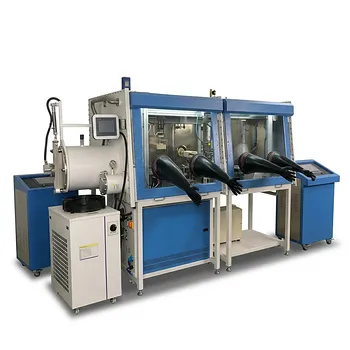
Automatic 10 Crucible Induction Melting and Casting System with Stirring Function and Glovebox Integration 2000C
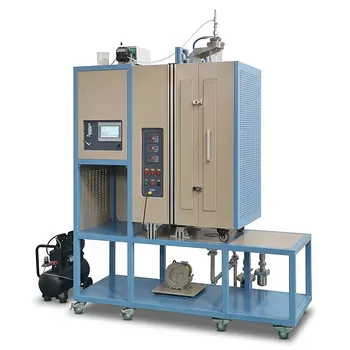
1500C Three Zone Vertical Pyrolysis Furnace for Nanoparticle Synthesis and Advanced Oxide Coating
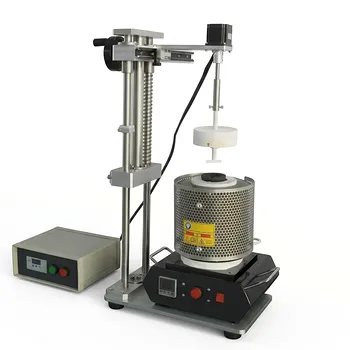
1100C Crucible Melting Furnace with Stirring Function for Glovebox and Air Sensitive Alloy Research