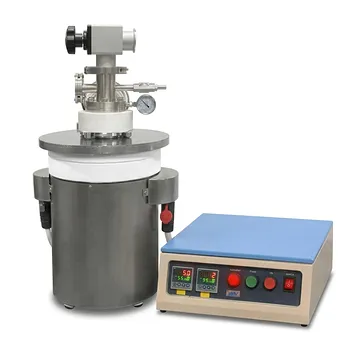
Why are nickel crucibles preferred for KOH activation? Ensure High Purity and Durability at 800°C
Updated 3 months ago
Nickel crucibles are the preferred choice for high-temperature chemical activation because of their superior resistance to alkaline corrosion and high thermal conductivity. At activation temperatures reaching 800°C, potassium hydroxide (KOH) becomes extremely aggressive, causes rapid erosion in standard ceramic containers, and risks contaminating the carbon sample. Nickel provides a stable, non-reactive environment that ensures both the purity of the activated carbon and the longevity of the laboratory equipment.
Core Takeaway: Nickel crucibles are essential for KOH activation because they withstand strong alkaline erosion at 800°C better than ceramics, ensuring a high-purity carbon product and facilitating uniform heat transfer during the activation reaction.
Resistance to Extreme Alkaline Erosion
The Reactive Nature of KOH at High Temperatures
Chemical activation involves mixing carbon precursors with strong alkalis like potassium hydroxide (KOH) or sodium hydroxide (NaOH). When these mixtures are heated to 800°C, the activator becomes highly corrosive and will chemically attack most common laboratory materials.
Why Nickel Outperforms Ceramic
Standard ceramic crucibles often contain silica or alumina, which can react with molten KOH to form silicates or aluminates. Nickel is chemically stable in these strong alkaline environments, preventing the crucible walls from thinning or through-wall failure during repeated thermal cycles.
Protecting the Furnace Environment
Using a nickel crucible also safeguards the furnace tube from damage. By containing the aggressive chemical reaction effectively, nickel prevents corrosive vapors and slag from leaking out and etching the internal components of the heating system.
Maintaining Product Purity and Structural Integrity
Preventing Metal Leaching and Impurities
A primary goal of activation is producing high-purity carbon with a specific pore structure. Because nickel is resistant to the chemical activation agents, it prevents metal impurities or ceramic fragments from leaching into the carbon sample.
Ensuring Uniform Heat Transfer
Nickel is a metallic conductor with superior thermal conductivity compared to insulating ceramic materials. This ensures that heat is distributed uniformly throughout the reactants, resulting in a consistent degree of activation and a more homogeneous pore size distribution.
Stability in Reducing Atmospheres
Carbonization and activation typically occur in inert or reducing atmospheres (such as nitrogen or argon). Nickel crucibles excel in these conditions, as they do not react with the pyrolysis products or the carbon precursors at high temperatures, unlike some specialized oxides.
Understanding the Trade-offs and Limitations
Vulnerability to Oxidative Environments
While nickel is excellent in inert atmospheres, it is susceptible to oxidation if exposed to oxygen at high temperatures. In oxidative environments, a layer of nickel oxide (NiO) will form on the surface, which could flake off and contaminate the sample.
Comparison with Ceramic for Quantitative Analysis
Ceramic crucibles are often preferred for ash content analysis or oxidative combustion because of their mass stability in air. In these specific applications, nickel would gain weight due to oxidation, making accurate quantitative measurements impossible.
Cost and Initial Investment
High-purity nickel crucibles generally represent a higher upfront cost than standard alumina or porcelain boats. However, their extended lifespan in corrosive KOH environments often makes them more cost-effective for long-term research or production.
Making the Right Choice for Your Goal
- If your primary focus is high-temperature KOH activation: Use a nickel crucible to ensure maximum resistance to chemical erosion and to maintain the purity of your nitrogen-doped or porous carbon.
- If your primary focus is carbonization in a non-corrosive, oxidative environment: Select a high-purity ceramic crucible to benefit from its chemical inertness to oxygen and its excellent mass stability.
- If your primary focus is protecting sensitive tube furnace components: Utilize nickel containers to prevent the migration of alkaline vapors that can lead to costly furnace tube degradation.
Choosing a nickel crucible for alkaline activation provides the necessary durability to handle extreme chemical stress while guaranteeing a high-quality, uncontaminated final carbon product.
Summary Table:
| Feature | Nickel Crucible | Ceramic Crucible |
|---|---|---|
| KOH Resistance | Excellent (Chemically Stable) | Poor (Reacts/Erodes) |
| Thermal Conductivity | High (Uniform Heating) | Low (Insulating) |
| Product Purity | High (No metal leaching) | Risk of silica/alumina impurities |
| Best Atmosphere | Inert or Reducing | Oxidizing (Air) |
| Equipment Safety | Protects furnace tubes from vapors | High risk of leakage/cracking |
Optimize Your Thermal Processing with THERMUNITS
At THERMUNITS, we specialize in providing high-performance laboratory equipment tailored for material science and industrial R&D. Choosing the right container is only half the battle—powering your research requires precise and reliable heating environments.
We offer a comprehensive selection of advanced thermal solutions, including:
- Furnaces: Muffle, Vacuum, Atmosphere, Tube, Rotary, and Hot Press Furnaces.
- Advanced Systems: CVD/PECVD systems, Vacuum Induction Melting (VIM) furnaces, and Electric Rotary Kilns.
- Specialized Gear: Dental Furnaces and high-quality Thermal Elements.
Whether you are performing complex chemical activations or advanced material synthesis, our equipment ensures uniform heat distribution and long-term durability. Enhance your lab's efficiency and guarantee superior results today.
Contact Our Experts at THERMUNITS
References
- Sara Almasi, J. Aubin. Calcium oxide anchored on magnetic waste-based activated carbon (MAC@CaO): A sustainable green heterogeneous catalyst for bio-based fuel and lubricant production. DOI: 10.1016/j.biombioe.2024.107071
Mentioned Products
- Compact Crucible Melting Furnace 1100C Programmable Temperature Controller Metal Sintering Equipment
- 1100C Crucible Melting Furnace with Stirring Function for Glovebox and Air Sensitive Alloy Research
- High Temperature Vertical Crucible Furnace with 22L Heating Chamber and 1200C Maximum Temperature
- 600°C Vertical Crucible Furnace with SS316 Alloy Reactor and 6 Port Vacuum Flange
- Vertical Crucible Furnace 1000C High Temperature Laboratory Equipment 4.7 Inch Diameter Chamber SS316 Anti Corrosive Enclosure
People Also Ask
- Why are internal getters such as Titanium used during the synthesis of oxygen-sensitive materials in a melting furnace?
- How should the choice between a Quartz crucible and an Alumina crucible be made for La2O2S? Optimize Material Purity
- What is the function of a programmable high-temperature Laboratory Furnace in evaluating the fire resistance of concrete?
- Why is a laboratory sintering furnace reaching 950°C required for Ho2YSbO7? Ensure Pure Pyrochlore Phase Purity
- What operational efficiencies do programmable dental furnaces provide to high-volume laboratories? Maximize Scalability

Tech Team · ThermUnits
Last updated on Jun 02, 2026
Related Products
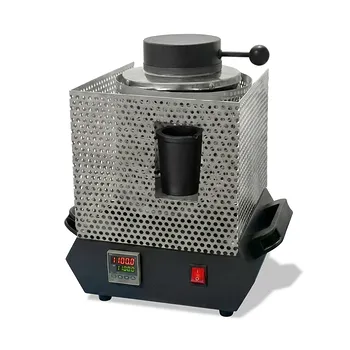
Compact Crucible Melting Furnace 1100C Programmable Temperature Controller Metal Sintering Equipment
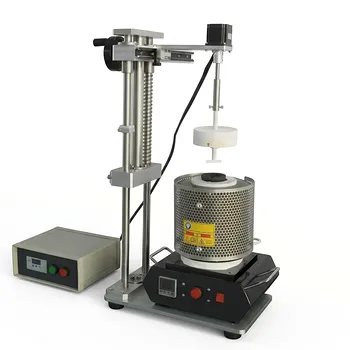
1100C Crucible Melting Furnace with Stirring Function for Glovebox and Air Sensitive Alloy Research
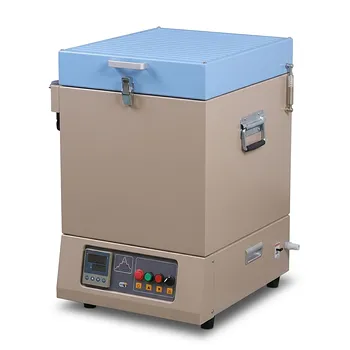
High Temperature Vertical Crucible Furnace with 22L Heating Chamber and 1200C Maximum Temperature
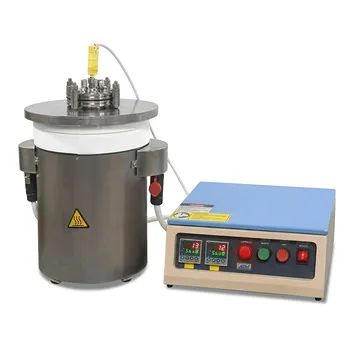
600°C Vertical Crucible Furnace with SS316 Alloy Reactor and 6 Port Vacuum Flange
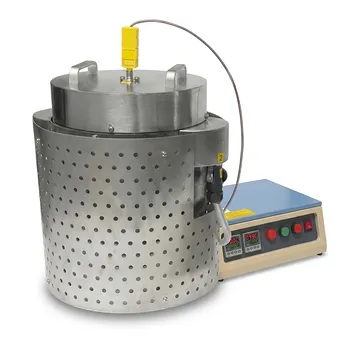
Vertical Crucible Furnace 1000C High Temperature Laboratory Equipment 4.7 Inch Diameter Chamber SS316 Anti Corrosive Enclosure
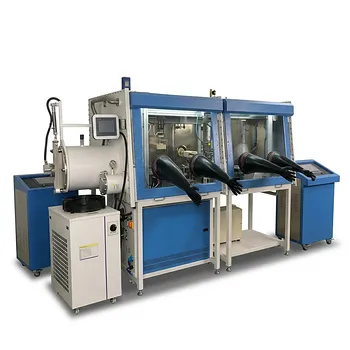
Automatic 10 Crucible Induction Melting and Casting System with Stirring Function and Glovebox Integration 2000C
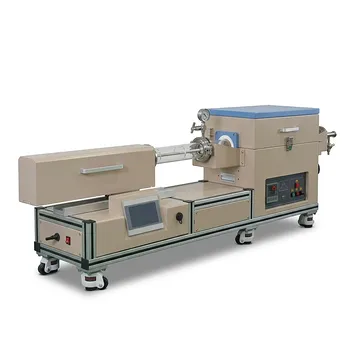
1200C Sliding Internal Crucible Tube Furnace for Controlled Atmosphere Thin Film Deposition and Material Sublimation Research