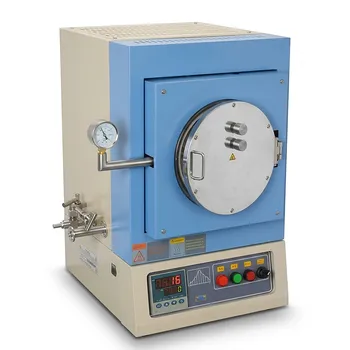
Why is a B-type thermocouple necessary for 1400 °C experiments? Key to Precision and Stability in Extreme Heat.
Updated 3 months ago
A B-type thermocouple is the standard for 1400 °C equilibrium experiments because it maintains structural integrity and thermoelectric stability where other sensors fail. At temperatures exceeding 1400 °C, most base-metal sensors oxidize or suffer from rapid calibration drift. The Platinum-Rhodium composition of the Type B thermocouple provides the oxidation resistance and high precision (within ±3 K) required to ensure the reproducibility of complex thermodynamic data.
Type B thermocouples are indispensable for high-temperature research because their noble metal composition prevents degradation in oxidizing environments, ensuring that thermal data remains accurate over the long durations required to reach chemical equilibrium.
Material Integrity in Extreme Environments
Superior Oxidation Resistance
The Type B thermocouple is composed of two different platinum-rhodium alloys (typically Pt-Rh 30% and Pt-Rh 6%). This noble metal construction allows the sensor to operate in air and oxidizing atmospheres at temperatures where other materials would rapidly corrode or melt.
Structural Stability at 1400 °C
While other thermocouples may function briefly at high temperatures, the Type B is specifically designed for long-term stability between 1300 °C and 1800 °C. This stability is vital for equilibrium experiments, which often require holding a constant temperature for hours or days to allow chemical reactions to stabilize.
Protective Shielding Requirements
To maintain its high precision, the thermocouple is typically encased in a recrystallized alumina protection tube. This shield protects the platinum wires from mechanical damage and chemical contamination from the furnace environment, ensuring the sensor's longevity.
Impact on Experimental Data Quality
Precision in Thermodynamic Measurements
Equilibrium variables, such as liquidus temperatures or activity coefficients, are extremely sensitive to thermal fluctuations. The Type B thermocouple provides an accuracy margin as tight as ±3 K, which minimizes experimental uncertainty and ensures that the physical state of the sample is correctly identified.
Real-Time Feedback and Control
When positioned in the center of the furnace "hot zone" immediately adjacent to the sample, the Type B thermocouple provides real-time feedback. This allows high-precision temperature controllers to maintain a stable environment with minimal fluctuations, which is critical for measuring sensitive properties like slag viscosity.
Consistency Across High-Heat Applications
Whether used in nickel-based alloy casting at 1650 °C or slag reduction studies, the Type B thermocouple captures critical thermophysical data, such as the liquidus plateau. This data is a prerequisite for verifying heat transfer models and ensuring the reliability of diffusion simulations.
Understanding the Trade-offs
Sensitivity at Lower Temperatures
The primary drawback of the Type B thermocouple is its near-zero voltage output below 50 °C and very low sensitivity below 600 °C. It is strictly a high-temperature tool and is ineffective for monitoring processes that begin at room temperature.
Material and Calibration Costs
Because they are made of precious metals (platinum and rhodium), Type B sensors are significantly more expensive than Type K or Type J sensors. Additionally, while they are stable, they still require careful handling to avoid "poisoning" the platinum wires with impurities, which can cause subtle calibration drift over time.
Response Time vs. Durability
To protect the sensor at 1400 °C, heavy ceramic sheathing is required, which increases the thermal lag. This means the sensor may not react instantly to rapid temperature spikes, making it better suited for steady-state equilibrium studies than for measuring high-speed thermal transients.
Choosing the Right Sensor for Your Goal
How to Apply This to Your Project
- If your primary focus is long-term equilibrium stability: Utilize a Type B thermocouple encased in high-purity alumina to ensure the sensor does not drift during extended dwell times.
- If your primary focus is measuring temperatures above 1700 °C: The Type B is the safest choice, as its melting point and oxidation resistance allow for reliable data collection up to 1800 °C.
- If your primary focus is fast-response local monitoring: Consider a dual-thermocouple approach, using a Type B for furnace control and a thinner Type C sensor (if the atmosphere allows) closer to the sample for faster feedback.
Selecting a Type B thermocouple ensures that your high-temperature data is a reflection of true material behavior rather than an artifact of sensor degradation.
Summary Table:
| Feature | Specification | Experimental Benefit |
|---|---|---|
| Composition | Platinum-Rhodium (30%/6%) | Superior oxidation resistance in high-heat air atmospheres. |
| Optimal Range | 1300°C to 1800°C | Maintains structural integrity where base-metal sensors fail. |
| Precision | Accuracy within ±3 K | Ensures reproducibility of complex thermodynamic data. |
| Shielding | Recrystallized Alumina | Protects against chemical contamination and mechanical damage. |
Elevate Your Material Research with THERMUNITS
Precision at 1400°C and beyond requires more than just the right sensor—it requires a thermal environment designed for stability. THERMUNITS is a leading manufacturer of high-performance laboratory equipment, providing the foundation for advanced material science and industrial R&D.
From Muffle and Vacuum Furnaces to Tube, Rotary, and Hot Press systems, our equipment is engineered to work in harmony with high-precision tools like Type B thermocouples. Whether you are developing CVD/PECVD processes or conducting vacuum induction melting, we deliver the thermal processing solutions necessary for reliable, repeatable results.
Ready to optimize your high-temperature heat treatment?
Contact our experts today to find your solution.
References
- Georgii Khartcyzov, Evgueni Jak. Distribution of Pb, Zn, Fe, As, Sn, Sb, Bi, and Ni Between Oxide Liquid and Metal in the ‘CuO0.5’-CaO-AlO1.5 System in Equilibrium with Cu Metal at 1400 °C. DOI: 10.1007/s40831-024-00952-w
Mentioned Products
- 1500C High Temperature Compact Tube Furnace 2 Inch OD with Vacuum Flanges and Complete Accessories
- High Temperature Tube Furnace 1500C with Sliding Flanges and 50mm OD for Rapid Thermal Processing Fast Heating and Cooling
- High Temperature Benchtop Muffle Furnace 1500C with 3.6L Chamber and Quartz Observation Window
- 1100°C High Temperature Quartz Chamber Furnace 8 Inch OD with 7.6 Liter Capacity and Vacuum Atmosphere Capability
People Also Ask
- Why is a high-temperature vacuum tube furnace required for C@TiC nanoparticle synthesis? Key Design Factors Explained
- What technical considerations are critical when selecting a process tube for high-temperature operations? Expert Guide
- Why do CF membranes need 1500°C atmosphere tube furnaces? Unlock High Purity and Superior Conductivity
- What critical function does a high-precision tube furnace perform in desulfurization experiments? Key to Material Activation
- What are the primary functions of a high-precision tube furnace in chromium vapor reactive condensation experiments? Key Roles

Tech Team · ThermUnits
Last updated on Jun 03, 2026
Related Products
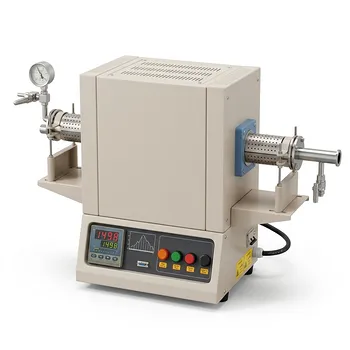
1500C High Temperature Compact Tube Furnace 2 Inch OD with Vacuum Flanges and Complete Accessories
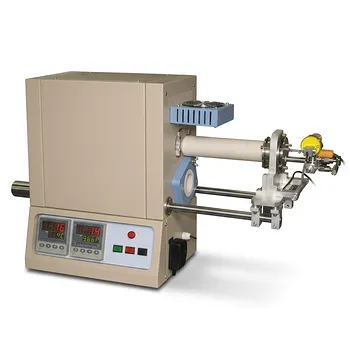
High Temperature Tube Furnace 1500C with Sliding Flanges and 50mm OD for Rapid Thermal Processing Fast Heating and Cooling
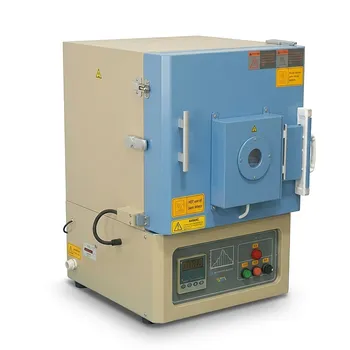
High Temperature Benchtop Muffle Furnace 1500C with 3.6L Chamber and Quartz Observation Window