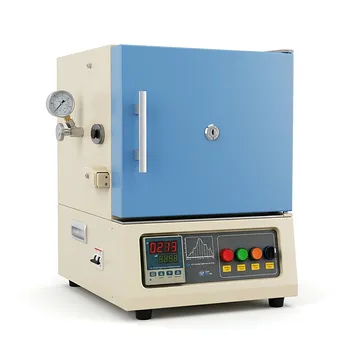
Why do CF membranes need 1500°C atmosphere tube furnaces? Unlock High Purity and Superior Conductivity
Updated 3 months ago
The preparation of high-performance carbon fiber (CF) membranes requires 1500°C atmosphere tube furnaces to facilitate deep carbonization and the structural rearrangement of carbon atoms. These extreme temperatures are necessary to remove non-carbon elements, increase fixed carbon content to over 98.5 wt%, and promote a dense graphitized structure. This transformation is the fundamental driver behind a membrane's superior electrical conductivity, mechanical strength, and electromagnetic interference (EMI) shielding capabilities.
Central Takeaway: High-temperature atmosphere tube furnaces provide the essential combination of extreme thermal energy and a strictly controlled inert environment. This dual-functionality allows polymer precursors to transform into high-purity, graphitized carbon structures while preventing the oxidative degradation that would otherwise destroy the material.
The Role of Extreme Temperature in Carbonization
Achieving High Carbon Purity
Operating at temperatures up to 1500°C is critical for the deep removal of oxygen-containing functional groups, such as carboxyl and hydroxyl groups. As these impurities are purged, the fixed carbon content increases significantly, often exceeding 98.5 wt%, which stabilizes the material's chemical structure.
Promoting Atomic Rearrangement and Graphitization
Within the 800°C to 1500°C range, the thermal energy is sufficient to force the rearrangement of carbon atoms into more ordered patterns. This process increases the degree of graphitization and creates a dense stacking structure, which is the primary factor in enhancing the membrane's intrinsic electrical conductivity.
Enhancing Mechanical and Shielding Properties
The dense, graphitized skeleton formed at these temperatures provides the high aspect ratio and structural integrity needed for advanced applications. This foundation is what enables the membrane to achieve high-performance EMI shielding effectiveness and robust mechanical strength for industrial use.
The Necessity of Precise Atmospheric Control
Preventing Oxidative Degradation
At temperatures exceeding 500°C, carbon will readily react with oxygen and burn off if not protected. Atmosphere tube furnaces use a continuous flow of high-purity inert gases (such as Argon or Nitrogen) to create an oxygen-free environment, ensuring the carbon skeleton remains intact during treatment.
Efficient Removal of Volatile Pyrolysis Products
The unique tubular structure of these furnaces facilitates the rapid removal of volatile components generated during pyrolysis. By constantly flushing the tube with inert gas, the furnace prevents the re-deposition of by-products, ensuring a cleaner and more consistent carbonization process.
Surface Modification and Sizing Removal
In the early stages of heating, typically around 550°C, the controlled atmosphere allows for the thorough removal of commercial sizing agents. This ensures a clean fiber surface that is better suited for subsequent nanoscale modifications or interface bonding in composite materials.
Structural Tailoring for Advanced Applications
Regulating Pore Size and Distribution
For membranes used in gas separation (such as Hydrogen recovery), the precise temperature control of the furnace is used to tune ultra-micropore size. Even slight variations in the heating rate, such as maintaining 10°C/min, can significantly impact the final selectivity and permeability of the carbon molecular sieve.
Creating Complex Hollow Architectures
By using specific thermal profiles, researchers can induce the decomposition of sacrificial components like PMMA to create multi-channel hollow structures. These "lotus-root-like" architectures are essential for increasing storage space in applications like selenium-carbon batteries.
Understanding the Trade-offs and Pitfalls
Energy Consumption and Equipment Wear
Operating consistently at 1500°C places extreme stress on the furnace's heating elements (typically silicon carbide or molybdenum disilicide) and the refractory lining. This results in higher operational costs and a requirement for more frequent maintenance compared to lower-temperature processes.
Material Brittleness
While increasing the temperature enhances conductivity and purity, it can also lead to increased brittleness in the carbon fiber membrane. Over-graphitization may improve electrical performance but can make the membrane difficult to handle or integrate into flexible electronic components.
Complexity of Gas Sealing
Maintaining a "strictly controlled" inert environment at 1500°C requires high-quality vacuum flanges and seals. Any oxygen leakage at these temperatures will lead to immediate oxidative loss of the carbon matrix, potentially ruining the entire batch of material.
How to Apply This to Your Project
Choosing the Right Thermal Profile
- If your primary focus is Maximum Conductivity: Prioritize a furnace capable of the full 1500°C range to maximize graphitization and carbon density.
- If your primary focus is Gas Separation (CMS Membranes): Focus on a furnace with a highly precise temperature controller to manage the delicate formation of ultra-micropores.
- If your primary focus is Surface Modification: A furnace capable of 550°C to 800°C with excellent atmosphere purging is sufficient for sizing removal and stabilization.
The high-temperature atmosphere tube furnace is not merely a heater, but a sophisticated chemical reactor that dictates the final molecular architecture and performance of carbon fiber membranes.
Summary Table:
| Process Phase | Temperature Range | Key Benefit to CF Membranes |
|---|---|---|
| Sizing Removal | 500°C - 550°C | Removes commercial coatings for clean fiber surfaces. |
| Carbonization | 800°C - 1200°C | Eliminates non-carbon elements; increases carbon content >98.5%. |
| Graphitization | Up to 1500°C | Promotes atomic rearrangement for peak electrical/mechanical strength. |
| Atmosphere Control | Constant | Uses inert gases (Ar/N2) to prevent oxidation and remove pyrolysis waste. |
Elevate Your Material Research with THERMUNITS Precision Furnaces
Achieving the perfect graphitized structure for high-performance carbon fiber membranes requires more than just heat—it requires the uncompromising precision of THERMUNITS. As a leading manufacturer of high-temperature laboratory equipment, we provide the advanced thermal processing solutions essential for material science and industrial R&D.
Whether you need an Atmosphere Tube Furnace for deep carbonization, a Vacuum Induction Melting Furnace (VIM), or specialized CVD/PECVD systems, our equipment is engineered to deliver uniform heating and strict atmospheric integrity.
Why choose THERMUNITS?
- Comprehensive Range: From Muffle and Rotary furnaces to Hot Press and Dental solutions.
- Expert Support: Tailored advice for carbon fiber, battery materials, and advanced ceramics.
- Proven Reliability: Built for 1500°C+ operations with advanced thermal elements.
Contact our experts today to discuss your project requirements and discover how our thermal solutions can accelerate your breakthroughs!
References
- Feifei Zhang, Changyu Shen. Asymmetric hybrid carbonaceous membranes with exceptional electromagnetic interference shielding and superior electro-photo-thermal performance. DOI: 10.1007/s42114-024-01097-w
Mentioned Products
- High Temperature Split Tube Furnace 1500C for Material Research Vacuum and Atmosphere Thermal Processing
- 1500°C Split Tube Furnace with Alumina Tube and Vacuum Sealing Flanges for Material Research
- High Temperature Tube Furnace 1500C with Sliding Flanges and 50mm OD for Rapid Thermal Processing Fast Heating and Cooling
- Hybrid High Temperature Muffle and Tube Furnace with 1500C Capability and Vacuum Flange Assembly
- 1500C High Temperature Compact Tube Furnace 2 Inch OD with Vacuum Flanges and Complete Accessories
People Also Ask
- What is the primary function of a high-temperature split tube furnace in nitrogen metastable particle research? Expert Guide
- What core conditions does a high-temperature tube furnace provide for rGO aerogels? Mastering Precision Synthesis.
- How does a tube furnace facilitate CrMnFeCoCu alloy conversion? Master High-Entropy Oxide Synthesis with THERMUNITS.
- What are the primary functions of a high-temperature tube furnace for Inconel 718? Master Debinding & Pre-sintering.
- What is the function of a high-temperature tube furnace in NC support preparation? Achieve Precise Pyrolysis & Doping

Tech Team · ThermUnits
Last updated on Jun 03, 2026
Related Products
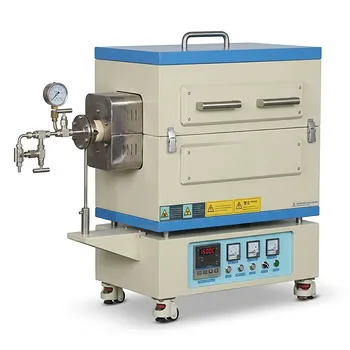
High Temperature Split Tube Furnace 1500C for Material Research Vacuum and Atmosphere Thermal Processing
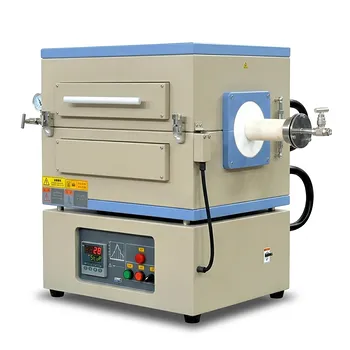
1500°C Split Tube Furnace with Alumina Tube and Vacuum Sealing Flanges for Material Research

High Temperature Tube Furnace 1500C with Sliding Flanges and 50mm OD for Rapid Thermal Processing Fast Heating and Cooling
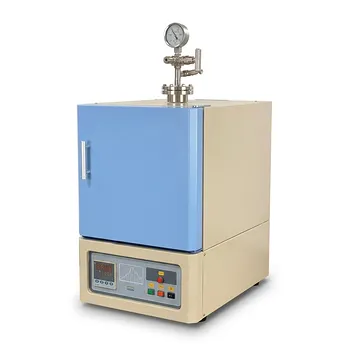
Hybrid High Temperature Muffle and Tube Furnace with 1500C Capability and Vacuum Flange Assembly
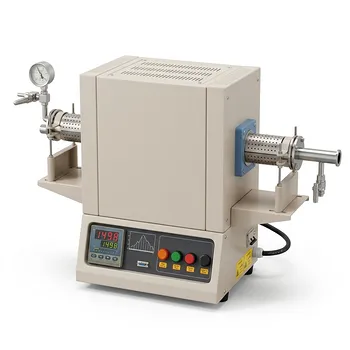
1500C High Temperature Compact Tube Furnace 2 Inch OD with Vacuum Flanges and Complete Accessories
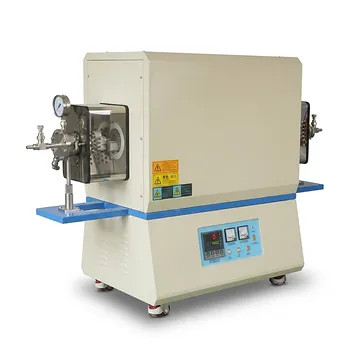
High Temperature 1800C Atmosphere Tube Furnace for CVD Research and Vacuum Sintering Precision Heat Treatment
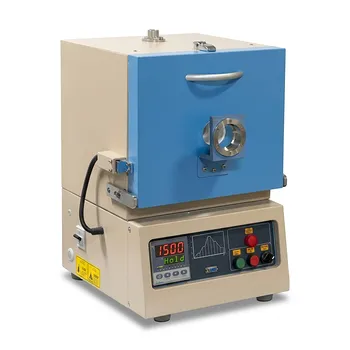
1500C Hybrid Muffle Tube Furnace 1.7L Box with 2 Inch Mullite Tube and Programmable PID Controller
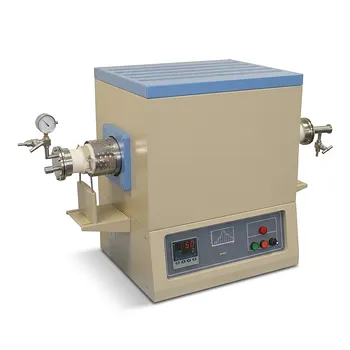
1700C High Temperature Alumina Tube Furnace with 18 Inch Heated Zone and Vacuum Sealing Flanges
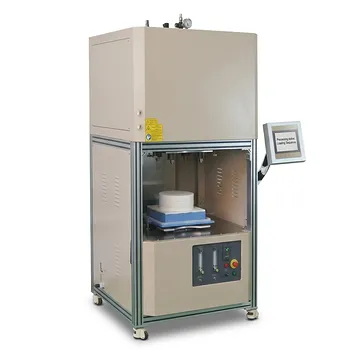
High Temperature Vertical Atmosphere Controlled Furnace with Automatic Bottom Loading and 1700°C Capacity for Advanced Material Research

Vertical 1700C Vacuum and Atmosphere Tube Furnace with 80mm Alumina Tube

1750°C High Temperature Benchtop Vacuum Atmosphere Tube Furnace with Kanthal Super 1800 Heating Elements and 60mm Alumina Processing Tube
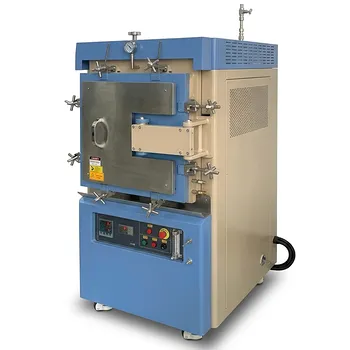
Atmosphere Controlled Muffle Furnace 1700C Maximum Temperature 80L High Capacity Vacuum Inert Gas Box Furnace

Compact High Temperature 1600C Tube Furnace with 50mm Alumina Tube and Vacuum Flanges for Material Sintering

1800C High Temperature Compact Vacuum Tube Furnace with 60mm OD Alumina Tube and Kanthal MoSi2 Heating Elements

High Temperature 1700C Vertical Tube Furnace for Powder Spherification and Material Sintering

High Temperature 1700C Tube Furnace with High Vacuum Turbomolecular Pump System and Multi Channel Mass Flow Controller Gas Mixer
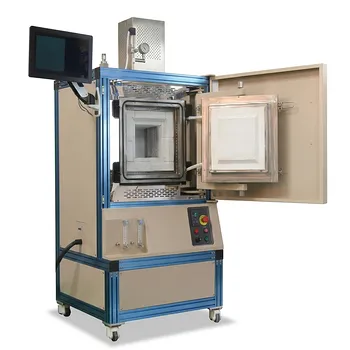
High Temperature Hydrogen Atmosphere Box Furnace 1650C Max Reducing Environment Material Synthesis System 8x8x8 Chamber

High Temperature 1700C Benchtop Tube Furnace with 5 Inch Heating Zone High Purity Alumina Tube and Vacuum Sealing Flanges
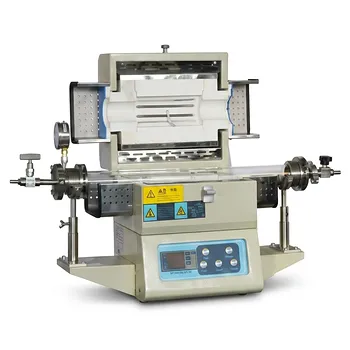
High Temperature 1200C Split Tube Furnace for CVD Research and Vacuum Atmosphere Heat Treatment