Why is a high-temperature vacuum tube furnace required for C@TiC nanoparticle synthesis? Key Design Factors Explained
Updated 3 months ago
The synthesis of C@TiC core-shell nanoparticles requires a high-temperature vacuum tube furnace primarily to provide a stable 1500 °C environment while simultaneously isolating the materials from atmospheric oxygen. This specific equipment enables the pyrolysis of Ti-MOF (Titanium-based Metal-Organic Framework) precursors, ensuring that a carbon shell completely encapsulates the titanium carbide core. Without the combination of extreme heat and a high-vacuum seal, the precursors would oxidize, failing to achieve the precise core-shell morphology necessary for electromagnetic wave-absorbing applications.
A high-temperature vacuum tube furnace acts as a controlled thermal reactor that triggers the carbothermal reduction and phase transformation of titanium precursors. By maintaining a high vacuum, it prevents oxygen contamination and removes gaseous by-products, ensuring the purity and structural integrity of the final C@TiC nanoparticles.
Thermal Requirements for Phase Transformation
Reaching the 1500 °C Pyrolysis Threshold
The conversion of Ti-MOF precursors into titanium carbide requires extreme thermal energy that standard laboratory ovens cannot provide. A temperature of 1500 °C is essential to trigger the pyrolysis process and the subsequent crystallization of the titanium carbide (TiC) core.
Driving the Carbothermal Reduction Reaction
At these elevated temperatures, a carbothermal reduction occurs where the carbon source reacts with the titanium components. The furnace provides the sustained heat needed to break chemical bonds in the precursor and facilitate the in-situ growth of the carbide structure.
Defining Crystallinity and Purity
The precise temperature control programs of a tube furnace allow for specific heating rates and soak times. This precision ensures that the nanoparticles achieve the desired crystallinity and phase purity, which directly influences their electromagnetic performance.
The Necessity of a Vacuum Environment
Total Isolation of Atmospheric Oxygen
The presence of even trace amounts of oxygen during high-temperature processing would lead to the formation of titanium dioxide (TiO2) instead of the desired carbide. The vacuum system effectively isolates the reaction, ensuring the carbon shell remains intact and the core does not oxidize.
Removal of Gaseous By-products
As the precursors decompose and react, they release gaseous by-products that can interfere with the synthesis or stall the reaction. An integrated vacuum system efficiently removes these gases, driving the chemical equilibrium toward the complete formation of TiC.
Maintaining a Controlled Reducing Atmosphere
In addition to a vacuum, these furnaces can introduce inert or reducing gases to further protect the sample. This environment is fundamental for ensuring the carbon shell fully encapsulates the core, providing a stable protective barrier for the nanoparticle.
Structural Integrity and Morphological Control
Protecting the Core-Shell Architecture
The core-shell structure is delicate and can be destroyed by uneven heating or atmospheric contamination. The stable thermal environment of the tube furnace ensures that the morphological integrity of the nanoparticles is maintained throughout the transformation from precursor to final product.
Achieving Uniform Particle Distribution
By accurately adjusting temperature gradients within the tube, the equipment ensures uniform heat distribution across the precursor material. This uniformity is critical for producing a batch of nanoparticles with consistent size and shell thickness.
Understanding the Trade-offs and Challenges
High Energy Consumption and Operating Costs
Operating a furnace at 1500 °C requires significant energy and specialized heating elements, such as molybdenum disilicide. These high operating costs make the process more expensive than lower-temperature chemical synthesis methods.
Material Stress and Equipment Wear
The extreme temperature cycles place significant thermal stress on the alumina or quartz tubes used within the furnace. Over time, this can lead to tube degradation or cracking, requiring regular maintenance and replacement of specialized components.
Extended Processing Timelines
High-temperature vacuum synthesis is not a rapid process, as it requires slow heating and cooling phases to prevent thermal shock to the materials. This results in long duty cycles, which can limit the throughput of nanoparticle production in a research or industrial setting.
Applying This Knowledge to Your Project
Recommendations Based on Your Objectives
- If your primary focus is achieving maximum purity: Prioritize a furnace with a high-performance vacuum pump (diffusion or turbomolecular) to ensure oxygen levels are minimized during the 1500 °C soak.
- If your primary focus is morphological consistency: Utilize a multi-zone tube furnace to eliminate temperature gradients, ensuring every nanoparticle experiences the exact same thermal profile.
- If your primary focus is scaling for production: Invest in industrial-grade vacuum tube furnaces that offer larger tube diameters and automated gas handling to maintain the required carbothermal reduction environment at scale.
The high-temperature vacuum tube furnace is the indispensable "thermal laboratory" that makes the existence of high-performance C@TiC nanoparticles possible by masterfully balancing extreme heat with atmospheric purity.
Summary Table:
| Feature | Requirement for C@TiC Synthesis | Impact on Final Product |
|---|---|---|
| Temperature | 1500 °C Stable Environment | Triggers Ti-MOF pyrolysis and TiC core crystallization. |
| Atmosphere | High Vacuum / Inert Gas | Prevents oxidation (TiO2) and preserves the carbon shell. |
| Reaction Type | Carbothermal Reduction | Facilitates in-situ growth of the carbide structure. |
| Control | Precise Heating & Soak Time | Ensures uniform particle size and high crystallinity. |
| By-product Management | Continuous Gas Removal | Shifts equilibrium to favor complete TiC formation. |
Elevate Your Material Research with THERMUNITS Precision
Achieving the delicate core-shell architecture of C@TiC nanoparticles requires more than just heat—it requires total environmental control. THERMUNITS is a leading manufacturer of high-temperature laboratory equipment, providing the specialized thermal solutions necessary for cutting-edge material science and industrial R&D.
Whether you are synthesizing advanced nanoparticles or performing complex phase transformations, our comprehensive range of equipment is designed to meet your strictest tolerances:
- Precision Furnaces: Tube, Vacuum, Atmosphere, Muffle, and Rotary furnaces.
- Advanced Systems: CVD/PECVD systems, Hot Press furnaces, and Vacuum Induction Melting (VIM) units.
- Specialized Tools: Dental Furnaces, electric rotary kilns, and high-purity Thermal Elements.
Ready to optimize your heat treatment process? Our technical experts are here to help you select the perfect system for your specific research goals.
Contact THERMUNITS Today to Request a Quote
References
- Yan Wang, Junyang Jin. Influence of Absorber Contents and Temperatures on the Dielectric Properties and Microwave Absorbing Performances of C@TiC/SiO2 Composites. DOI: 10.3390/nano14242033
Mentioned Products
- High Temperature Split Tube Furnace 1500C for Material Research Vacuum and Atmosphere Thermal Processing
- 1500°C Split Tube Furnace with Alumina Tube and Vacuum Sealing Flanges for Material Research
- 1500C High Temperature Compact Tube Furnace 2 Inch OD with Vacuum Flanges and Complete Accessories
- High Temperature Tube Furnace 1500C with Sliding Flanges and 50mm OD for Rapid Thermal Processing Fast Heating and Cooling
- 1800C High Temperature Compact Vacuum Tube Furnace with 60mm OD Alumina Tube and Kanthal MoSi2 Heating Elements
People Also Ask
- What is the primary function of a high-temperature split tube furnace in nitrogen metastable particle research? Expert Guide
- What core conditions does a high-temperature tube furnace provide for rGO aerogels? Mastering Precision Synthesis.
- How does a tube furnace facilitate CrMnFeCoCu alloy conversion? Master High-Entropy Oxide Synthesis with THERMUNITS.
- What are the primary functions of a high-temperature tube furnace for Inconel 718? Master Debinding & Pre-sintering.
- What is the function of a high-temperature tube furnace in NC support preparation? Achieve Precise Pyrolysis & Doping

Tech Team · ThermUnits
Last updated on Jun 03, 2026
Related Products
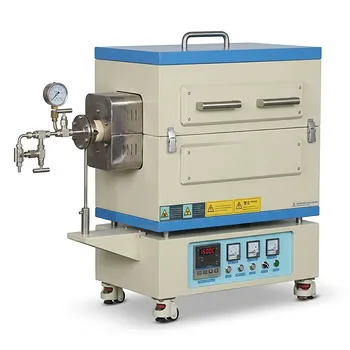
High Temperature Split Tube Furnace 1500C for Material Research Vacuum and Atmosphere Thermal Processing
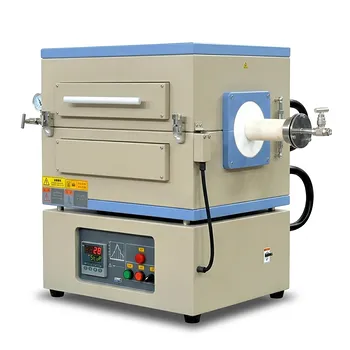
1500°C Split Tube Furnace with Alumina Tube and Vacuum Sealing Flanges for Material Research
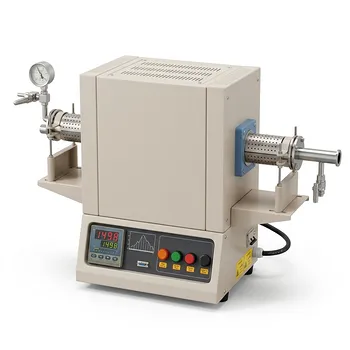
1500C High Temperature Compact Tube Furnace 2 Inch OD with Vacuum Flanges and Complete Accessories
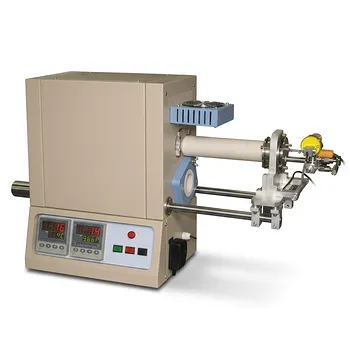
High Temperature Tube Furnace 1500C with Sliding Flanges and 50mm OD for Rapid Thermal Processing Fast Heating and Cooling

1800C High Temperature Compact Vacuum Tube Furnace with 60mm OD Alumina Tube and Kanthal MoSi2 Heating Elements
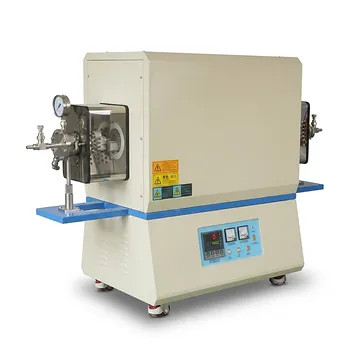
High Temperature 1800C Atmosphere Tube Furnace for CVD Research and Vacuum Sintering Precision Heat Treatment

High Temperature 1700C Tube Furnace with High Vacuum Turbomolecular Pump System and Multi Channel Mass Flow Controller Gas Mixer

High Temperature 1700C Benchtop Tube Furnace with 5 Inch Heating Zone High Purity Alumina Tube and Vacuum Sealing Flanges

1750°C High Temperature Benchtop Vacuum Atmosphere Tube Furnace with Kanthal Super 1800 Heating Elements and 60mm Alumina Processing Tube
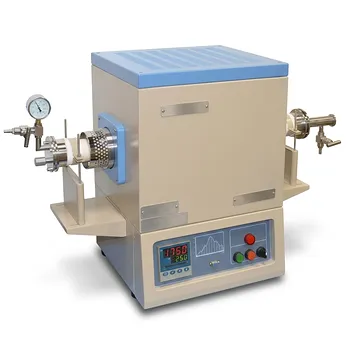
High Temperature Compact Vacuum Tube Furnace 1750C Max 60mm OD Alumina Tube
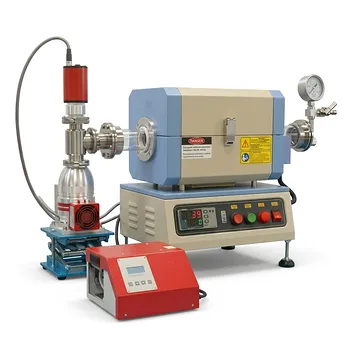
High Vacuum Compact Tube Furnace 1200C with Integrated Turbo Pump System and 8 Inch Heating Zone
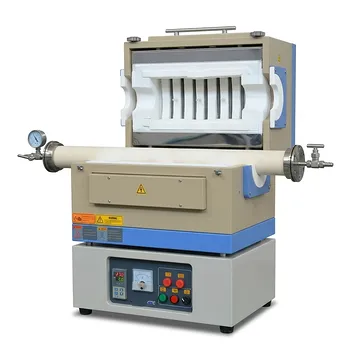
High Temperature 1600C Split Tube Furnace Vacuum Flanges Valves Optional 60mm 80mm Alumina Tube
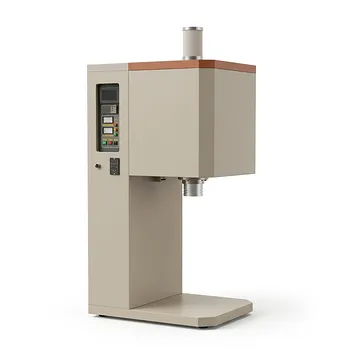
Vertical Openable Tube Furnace 0-1700c High Temperature Laboratory System for CVD and Vacuum Heat Treatment

High Temperature 1700C Six Zone Split Tube Furnace with Alumina Tube and Water Cooled Flanges

Vertical 1700C Vacuum and Atmosphere Tube Furnace with 80mm Alumina Tube
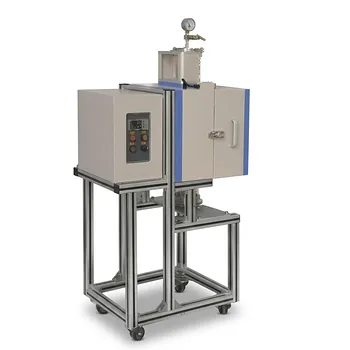
1200°C 5 Inch Vertical Quartz Tube Furnace with Stainless Steel Vacuum Flanges
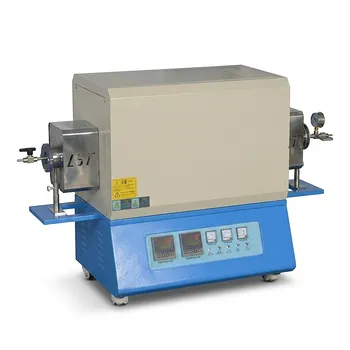
High Temperature Dual Zone Vacuum Tube Furnace for Material Research and CVD Processing
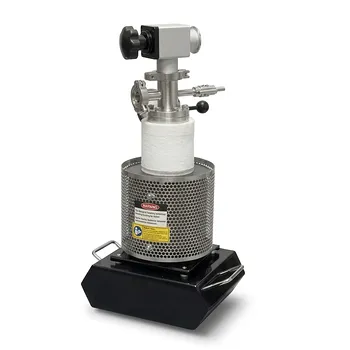
High Temperature 1100C Compact Top Loading Vertical Vacuum Tube Furnace for High Vacuum Noble Metal Melting and Material Research
High Temperature Vertical Atmosphere Controlled Furnace with Automatic Bottom Loading and 1700°C Capacity for Advanced Material Research
