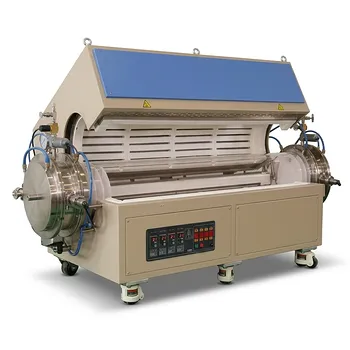
What is the primary role of a high-precision tube furnace in material synthesis experiments? Ensure Precision & Purity.
Updated 3 months ago
The primary role of a high-precision tube furnace is to provide a highly controlled thermal and atmospheric environment for material synthesis. This specialized equipment enables researchers to execute precise temperature curves and maintain constant thermal zones, ensuring that precursors transform under exact physical and chemical conditions to produce nanomaterials with specific crystal structures and morphologies.
Core Takeaway: A high-precision tube furnace acts as a stable reactor that guarantees repeatability in material synthesis by isolating samples from contaminants while providing uniform heat and specific gas environments necessary for desired phase purity.
Achieving Structural Precision through Thermal Control
Uniformity and Radial Heating
The cylindrical geometry of a tube furnace provides superior radial heating, ensuring that the sample is subjected to a uniform temperature field. This uniformity is critical because even minor thermal gradients can lead to uneven crystalline growth or inconsistent phase distribution within the material.
Programmable Temperature Curves
Synthesis often requires multi-stage heating, where precursors must be held at specific temperatures for precise durations to allow for sufficient diffusion. High-precision furnaces use programmable controllers to manage these heating curves, which is a fundamental requirement for complex solid-state reactions.
Maintaining Constant Thermal Zones
A "stable thermal zone" refers to the specific length within the tube where the temperature remains perfectly consistent. By placing samples within this zone, researchers can ensure repeatable preparation of complex inorganic materials and superconducting compounds that are sensitive to thermal fluctuations.
Regulating Gas Environments and Atmospheres
Prevention of Oxidation and Hydrolysis
Many advanced materials are sensitive to oxygen and moisture; high-precision tube furnaces allow for the introduction of high-purity inert gases (like Argon or Nitrogen). This isolates the raw materials from the air, preventing unwanted chemical reactions and ensuring the final chemical composition meets research requirements.
Facilitating Reducing and Oxidizing Reactions
The ability to regulate the flow of reducing gases (such as Hydrogen) enables specific chemical transformations, such as the reduction of metal oxides to pure metallic nanoparticles. This precise atmosphere control ensures that reactions occur at the exact stoichiometric ratios intended by the researcher.
Support for Chemical Vapor Deposition (CVD)
In CVD processes, the tube furnace provides the thermal energy needed to decompose gaseous precursors which then deposit as thin films or nanomaterials on a substrate. The combination of high-vacuum compatibility and gas-flow control makes the tube furnace the industry standard for nanocarbon synthesis and 2D material growth.
Transforming Precursors into Active Materials
Calcination and Thermal Decomposition
Tube furnaces are essential for the calcination of catalyst precursors, such as converting cobalt nitrate into active cobalt oxide nanoparticles. This process defines the initial dimensions and chemical states of catalytic sites, which are vital for the material’s eventual performance.
Annealing and Phase Purity
Post-synthesis annealing in a tube furnace is used to relieve internal stresses and improve crystallinity. By precisely adjusting the cooling rate, researchers can select for specific crystalline phases, directly influencing the electronic and mechanical properties of the material.
Understanding the Trade-offs and Constraints
Spatial and Geometry Limitations
The primary limitation of a tube furnace is its cylindrical volume, which restricts the size and shape of the samples or substrates that can be processed. While excellent for powders and small wafers, it is not suitable for large-scale industrial components or bulky materials.
Cooling and Heating Rate Lag
While high-precision furnaces offer great control, the thermal mass of the ceramic tube can lead to a lag in heating and cooling rates compared to the programmed settings. Achieving "ultra-fast" quenching often requires specialized modifications, such as sliding mechanisms, rather than relying on the furnace's natural cooling cycle.
Making the Right Choice for Your Goal
To maximize the effectiveness of a tube furnace in your research, align the furnace specifications with your specific material requirements:
- If your primary focus is Nanomaterial Synthesis (CVD): Prioritize a furnace with multi-channel mass flow controllers and high-vacuum seals to ensure a pure growth environment.
- If your primary focus is Catalyst Preparation: Select a model with a long, stable thermal zone to ensure uniform calcination of precursor batches.
- If your primary focus is Solid-State Chemistry: Opt for a furnace with high-precision, multi-stage programmable controllers to manage long-duration diffusion processes.
The high-precision tube furnace remains an indispensable tool because it transforms the unpredictability of chemical reactions into a repeatable, engineered process.
Summary Table:
| Application | Key Function | Impact on Material |
|---|---|---|
| Nanomaterials (CVD) | Gas-flow control & thermal decomposition | Precise 2D material growth & morphology |
| Catalyst Prep | Controlled calcination of precursors | Uniform chemical state & particle size |
| Solid-State Chemistry | Multi-stage programmable heating | High phase purity & improved crystallinity |
| Advanced Annealing | Precise cooling & atmosphere isolation | Optimized electronic & mechanical properties |
Unlock Precision in Your Material Synthesis with THERMUNITS
Elevate your research outcomes with industry-leading thermal technology. THERMUNITS is a specialized manufacturer of high-precision laboratory equipment designed for the rigorous demands of material science and industrial R&D.
Whether you require specialized Tube furnaces and CVD/PECVD systems for carbon nanotubes, or Vacuum, Atmosphere, and Muffle furnaces for advanced heat treatment, our solutions guarantee the thermal uniformity and atmospheric control your experiments demand. From catalysts to superconducting compounds, we provide the tools necessary for repeatable, high-purity results.
Ready to enhance your lab’s efficiency? Contact our expert team today to discuss your specific requirements and explore our comprehensive range of thermal processing solutions!
References
- Qingbo Yu, Zishe Xu. The Effects of Modified Fly Ash on the Structure and Photocatalytic Performance of G‐C <sub>3</sub> N <sub>4</sub> ‐based Materials. DOI: 10.1002/slct.202400718
Mentioned Products
- 1200C High Throughput Multi Channel Tube Furnace with 50mm Quartz Tubes for Annealing and Material Phase Diagram Research
- High Temperature Tube Furnace 1500C with Sliding Flanges and 50mm OD for Rapid Thermal Processing Fast Heating and Cooling
- High Temperature 1700C Benchtop Tube Furnace with 5 Inch Heating Zone High Purity Alumina Tube and Vacuum Sealing Flanges
- Compact High Temperature 1600C Tube Furnace with 50mm Alumina Tube and Vacuum Flanges for Material Sintering
- 1100C High Pressure Rocking Tube Furnace with 2 Inch Super Alloy Processing Tube for Material Synthesis
People Also Ask
- Why is high-purity alumina selected for sample trays? Key to High-Throughput Sintering Success
- How does a high-throughput tube furnace achieve precise sulfurization? Expert Control for CoS2–Co(OH)F Nanostructures
- How does the precise temperature control of a tube furnace influence the formation of V2AlC MAX phase? Expert Insights.
- What is the function of argon gas flow within a tube furnace during the selenization of MOFs? Essential Process Guide
- What is the effect of introducing camphor as a carbon source in a tube furnace CVD? Boost CNT Density and Growth

Tech Team · ThermUnits
Last updated on Jun 02, 2026
Related Products
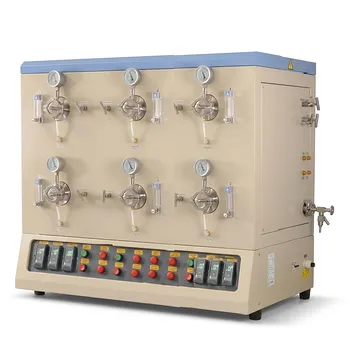
1200C High Throughput Multi Channel Tube Furnace with 50mm Quartz Tubes for Annealing and Material Phase Diagram Research
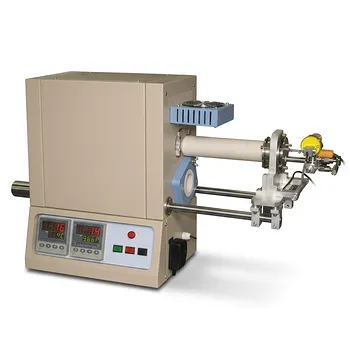
High Temperature Tube Furnace 1500C with Sliding Flanges and 50mm OD for Rapid Thermal Processing Fast Heating and Cooling

High Temperature 1700C Benchtop Tube Furnace with 5 Inch Heating Zone High Purity Alumina Tube and Vacuum Sealing Flanges

Compact High Temperature 1600C Tube Furnace with 50mm Alumina Tube and Vacuum Flanges for Material Sintering
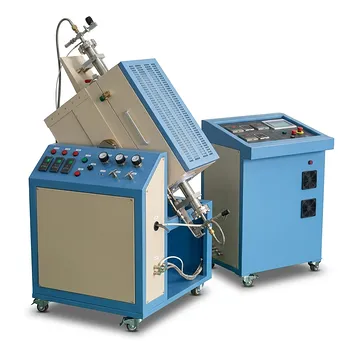
1100C High Pressure Rocking Tube Furnace with 2 Inch Super Alloy Processing Tube for Material Synthesis

High Temperature Automated 5 Inch Tube Furnace for Autonomous Material Research and Advanced Laboratory R&D
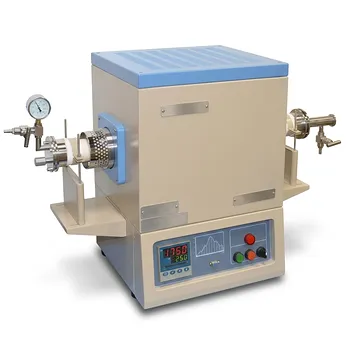
High Temperature Compact Vacuum Tube Furnace 1750C Max 60mm OD Alumina Tube

High Temperature 1700C Vertical Tube Furnace for Powder Spherification and Material Sintering
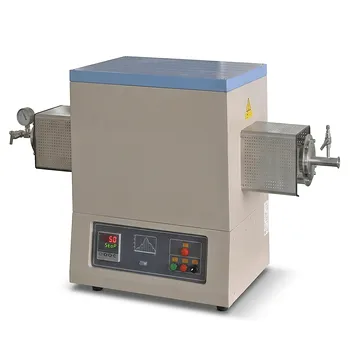
High Temperature 1700C Tube Furnace with 4 Inch OD Alumina Tube and Vacuum Sealing Flanges
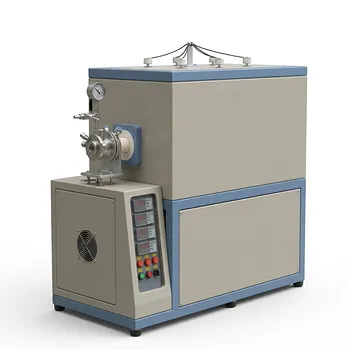
High Temperature 1700C Three Zone Tube Furnace with Alumina Tube 50mm 60mm 80mm OD for Material Research and Industrial Heat Treatment

1800C High Temperature Compact Vacuum Tube Furnace with 60mm OD Alumina Tube and Kanthal MoSi2 Heating Elements
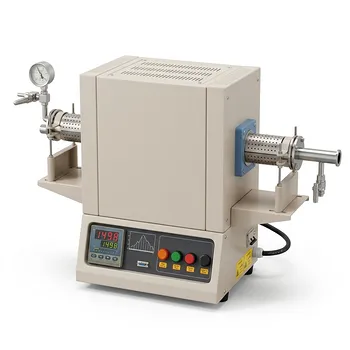
1500C High Temperature Compact Tube Furnace 2 Inch OD with Vacuum Flanges and Complete Accessories
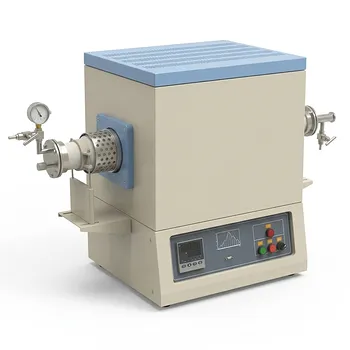
1750°C High Temperature Benchtop Vacuum Atmosphere Tube Furnace with Kanthal Super 1800 Heating Elements and 60mm Alumina Processing Tube
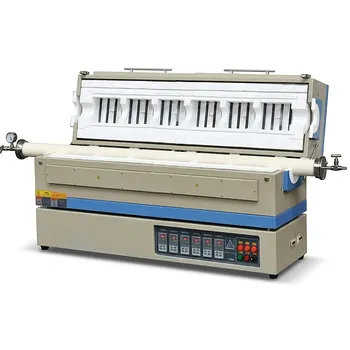
High Temperature 1700C Six Zone Split Tube Furnace with Alumina Tube and Water Cooled Flanges
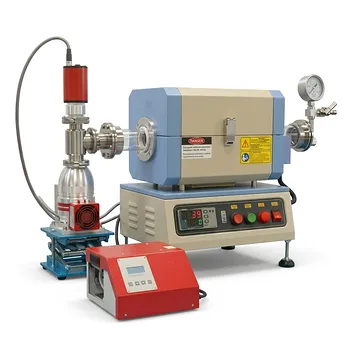
High Vacuum Compact Tube Furnace 1200C with Integrated Turbo Pump System and 8 Inch Heating Zone
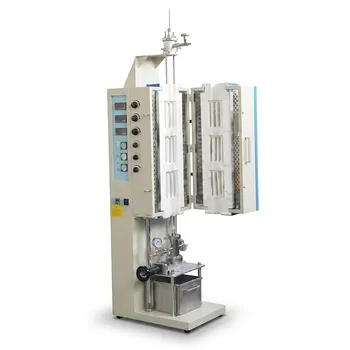
High Temperature Dual Zone Tube Furnace for Material Science Research and Professional Thermal Processing
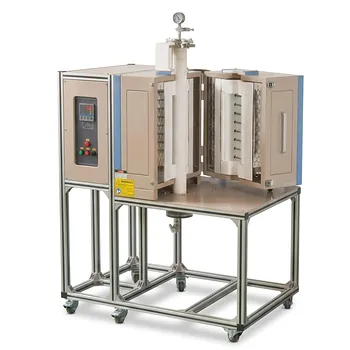
High Temperature 1700C Vertical Split Tube Furnace for Material Quenching and Single Crystal Growth
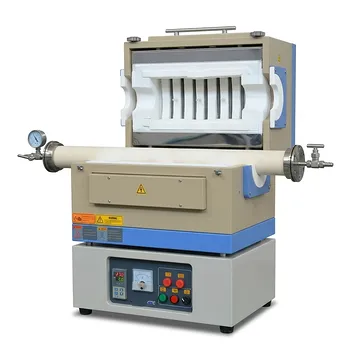
High Temperature 1600C Split Tube Furnace Vacuum Flanges Valves Optional 60mm 80mm Alumina Tube
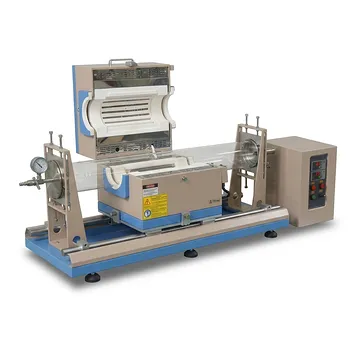
1200C High Temperature 5 Inch Sliding Tube Furnace for Rapid Thermal Processing RTP and Wafer Annealing