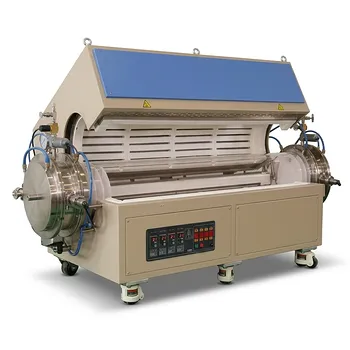
What critical function does a high-precision tube furnace perform in desulfurization experiments? Key to Material Activation
Updated 3 months ago
In desulfurization experiments, a high-precision tube furnace functions as the primary thermal regulator that ensures the physical and chemical activation of desulfurizing agents. It provides the stable, high-temperature environment required to remove moisture, induce pore formation through partial decomposition, and maintain the precise thermodynamic conditions necessary for sulfur capture.
The high-precision tube furnace is the critical enabler of reaction kinetics, providing both the thermal energy to break stable chemical bonds and the atmospheric control to prevent unwanted oxidation or side reactions.
Establishing the Thermal Foundation for Desulfurization
Pre-Treatment and Material Activation
Before a desulfurization reaction begins, the furnace is used for preheating and oxygen removal. This process eliminates adsorbed and crystalline water that could otherwise interfere with the chemical integrity of the experiment.
By precisely controlling the temperature, the furnace induces the partial decomposition of components such as zinc carbonate. This specific transformation is vital for creating high-activity pores within the material, significantly increasing the surface area available for sulfur capture.
Thermodynamic Stability and Reaction Control
Maintaining a constant temperature, often precisely at 300 Celsius for specific zinc-based agents, is essential for keeping the sulfidation reaction within its thermodynamically favorable range. This precision ensures that the energy input is sufficient to drive the reaction without overshooting into ranges that might cause sintering or material degradation.
In high-temperature applications, such as the desulfurization of petroleum coke, the furnace provides the extreme heat (900°C to 1500°C) necessary to break stable carbon-sulfur (C-S) bonds. This allows for the conversion of organic sulfur into gaseous forms that can be effectively removed.
Advanced Atmospheric and Gradient Management
Preventing Unwanted Side Reactions
High-precision furnaces often utilize inert gas protection, such as argon, to isolate the sample from the surrounding environment. This prevents the uncontrolled oxidation of specimens before the actual experiment begins, ensuring the scientific integrity of the material’s initial state.
Modern systems use multi-channel gas flow regulation to switch between inert and reactive gases, like oxygen. This allows researchers to distinguish between mass loss caused by thermal volatilization and mass loss caused by actual oxidation reactions.
Simulating Complex Industrial Environments
Using multi-zone temperature control, researchers can simulate the complex gradients found in industrial chimneys or reactors. For example, a three-zone furnace can vaporize elemental sulfur in one zone while facilitating a deep reduction reaction in another.
By integrating gas distribution systems, these furnaces can simulate industrial flue gas by precisely mixing nitrogen and oxygen. This setup is critical for determining the oxidation kinetic parameters of materials like calcium sulfite within desulfurization ash.
Understanding the Trade-offs
Thermal Lag and Gradient Challenges
Despite high precision, there is often a thermal lag between the furnace heating element and the core of the sample. In large-scale experiments, the temperature at the center of the tube may differ slightly from the edges, potentially leading to uneven desulfurization rates.
Gas Flow vs. Temperature Uniformity
High gas flow rates, necessary for simulating industrial conditions, can introduce cooling effects that disrupt the uniform temperature field. Researchers must carefully balance the velocity of the gas with the furnace’s power output to maintain a stable thermal environment.
Applying This to Your Desulfurization Project
Recommendations Based on Research Goals
- If your primary focus is zinc-based desulfurizer activation: Prioritize a furnace with high stability at 300°C to ensure proper pore formation without over-decomposing the substrate.
- If your primary focus is petroleum coke desulfurization: Select a high-temperature unit capable of reaching 1500°C to facilitate the breaking of stubborn carbon-sulfur bonds.
- If your primary focus is industrial flue gas simulation: Ensure the system includes a calibrated multi-channel gas distribution system to accurately model nitrogen-to-oxygen ratios.
- If your primary focus is studying reaction mechanisms: Utilize a multi-zone tube furnace to create distinct temperature gradients for vaporization, reaction, and condensation.
The high-precision tube furnace transforms desulfurization from a simple heating process into a controlled, reproducible chemical synthesis and analysis environment.
Summary Table:
| Function | Description | Key Research Benefit |
|---|---|---|
| Material Activation | Preheating & partial decomposition (e.g., zinc carbonate) | Creates high-activity pores for maximum sulfur capture. |
| Thermodynamic Control | Precise maintenance of temperatures from 300°C to 1500°C | Drives reaction kinetics while preventing material sintering. |
| Atmospheric Control | Multi-channel gas regulation (Argon, Oxygen, Nitrogen) | Prevents unwanted oxidation and simulates industrial flue gas. |
| Gradient Management | Multi-zone temperature regulation | Simulates complex industrial reactor environments and gradients. |
Elevate Your Desulfurization Research with THERMUNITS
Precision is paramount in desulfurization and material science. As a leading manufacturer of high-temperature laboratory equipment, THERMUNITS provides the advanced thermal processing solutions required for reproducible, high-impact results. We empower industrial R&D and material science researchers with a comprehensive range of equipment, including Tube, Muffle, Vacuum, Atmosphere, Rotary, and Hot Press furnaces, CVD/PECVD systems, Dental Furnaces, electric rotary kilns, vacuum induction melting furnaces (VIM), and high-quality Thermal Elements.
Why Choose THERMUNITS?
- Precise Control: Achieve exact thermodynamic conditions for material activation.
- Versatility: Customizable multi-zone and atmospheric settings to simulate industrial environments.
- Durability: Robust engineering designed for high-temperature stability up to 1500°C+.
Ready to optimize your laboratory heat treatment process? Contact our technical experts today to find the perfect furnace solution for your specific application!
References
- Clarisse Lorreyte, Patrick Perré. New Approach for Sulfidation Process in Packed Bed with Hi-Fuel A310 Sorbent—Thermodynamical Studies. DOI: 10.3390/chemengineering8020038
Mentioned Products
- 1200C High Throughput Multi Channel Tube Furnace with 50mm Quartz Tubes for Annealing and Material Phase Diagram Research
- High Temperature Tube Furnace 1500C with Sliding Flanges and 50mm OD for Rapid Thermal Processing Fast Heating and Cooling
- High Temperature 1700C Benchtop Tube Furnace with 5 Inch Heating Zone High Purity Alumina Tube and Vacuum Sealing Flanges
- Compact High Temperature 1600C Tube Furnace with 50mm Alumina Tube and Vacuum Flanges for Material Sintering
- 1100C High Pressure Rocking Tube Furnace with 2 Inch Super Alloy Processing Tube for Material Synthesis
People Also Ask
- Why is high-purity alumina selected for sample trays? Key to High-Throughput Sintering Success
- How does a high-throughput tube furnace achieve precise sulfurization? Expert Control for CoS2–Co(OH)F Nanostructures
- How does the precise temperature control of a tube furnace influence the formation of V2AlC MAX phase? Expert Insights.
- What is the function of argon gas flow within a tube furnace during the selenization of MOFs? Essential Process Guide
- What is the effect of introducing camphor as a carbon source in a tube furnace CVD? Boost CNT Density and Growth

Tech Team · ThermUnits
Last updated on Jun 02, 2026
Related Products

1200C High Throughput Multi Channel Tube Furnace with 50mm Quartz Tubes for Annealing and Material Phase Diagram Research

High Temperature Tube Furnace 1500C with Sliding Flanges and 50mm OD for Rapid Thermal Processing Fast Heating and Cooling

High Temperature 1700C Benchtop Tube Furnace with 5 Inch Heating Zone High Purity Alumina Tube and Vacuum Sealing Flanges

Compact High Temperature 1600C Tube Furnace with 50mm Alumina Tube and Vacuum Flanges for Material Sintering
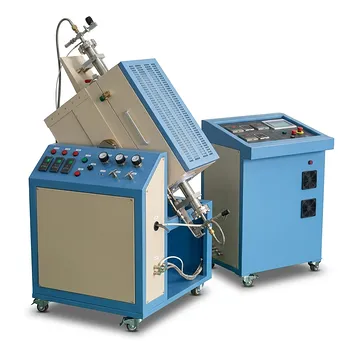
1100C High Pressure Rocking Tube Furnace with 2 Inch Super Alloy Processing Tube for Material Synthesis

High Temperature Automated 5 Inch Tube Furnace for Autonomous Material Research and Advanced Laboratory R&D
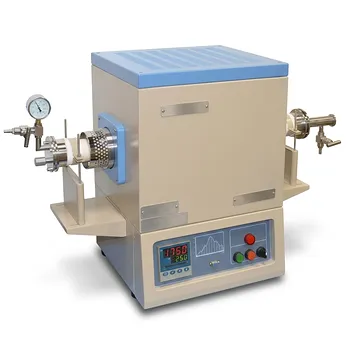
High Temperature Compact Vacuum Tube Furnace 1750C Max 60mm OD Alumina Tube

High Temperature 1700C Vertical Tube Furnace for Powder Spherification and Material Sintering
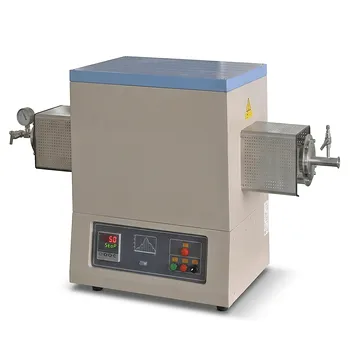
High Temperature 1700C Tube Furnace with 4 Inch OD Alumina Tube and Vacuum Sealing Flanges
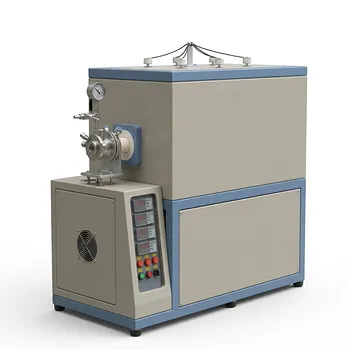
High Temperature 1700C Three Zone Tube Furnace with Alumina Tube 50mm 60mm 80mm OD for Material Research and Industrial Heat Treatment

1800C High Temperature Compact Vacuum Tube Furnace with 60mm OD Alumina Tube and Kanthal MoSi2 Heating Elements
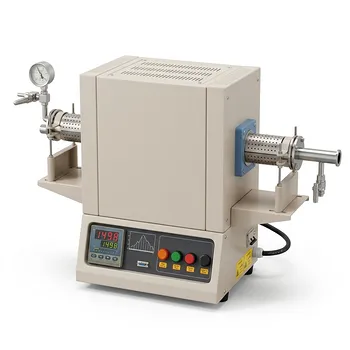
1500C High Temperature Compact Tube Furnace 2 Inch OD with Vacuum Flanges and Complete Accessories
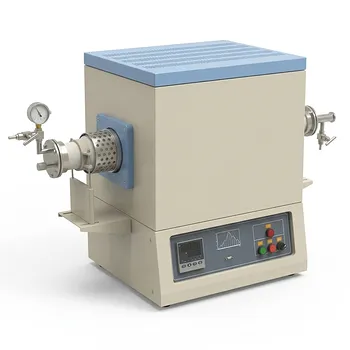
1750°C High Temperature Benchtop Vacuum Atmosphere Tube Furnace with Kanthal Super 1800 Heating Elements and 60mm Alumina Processing Tube

High Temperature 1700C Six Zone Split Tube Furnace with Alumina Tube and Water Cooled Flanges
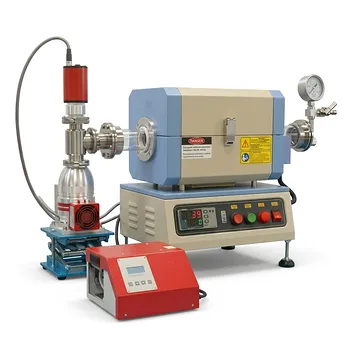
High Vacuum Compact Tube Furnace 1200C with Integrated Turbo Pump System and 8 Inch Heating Zone
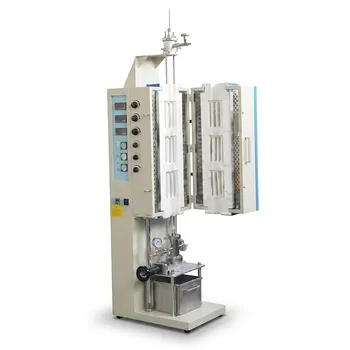
High Temperature Dual Zone Tube Furnace for Material Science Research and Professional Thermal Processing
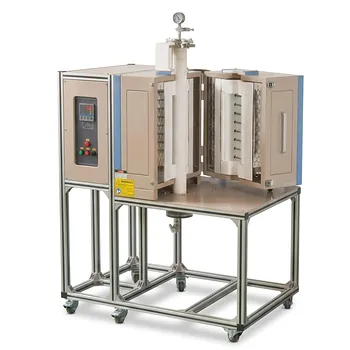
High Temperature 1700C Vertical Split Tube Furnace for Material Quenching and Single Crystal Growth
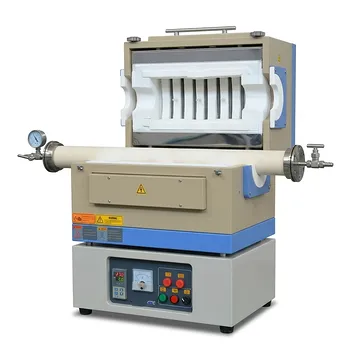
High Temperature 1600C Split Tube Furnace Vacuum Flanges Valves Optional 60mm 80mm Alumina Tube
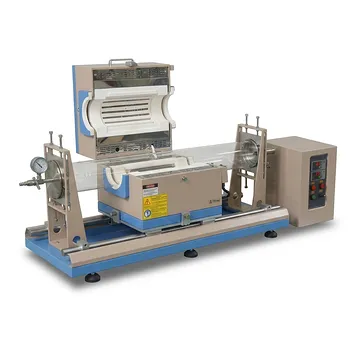
1200C High Temperature 5 Inch Sliding Tube Furnace for Rapid Thermal Processing RTP and Wafer Annealing