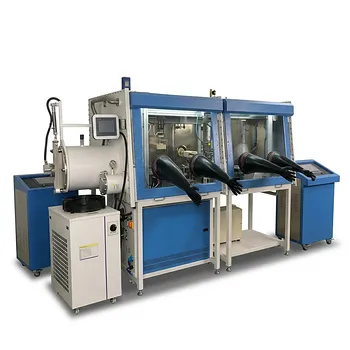
Why is a corundum crucible preferred as the containment vessel in molten salt carburizing experiments? Purity & Stability
Updated 3 months ago
Corundum crucibles are the preferred containment vessel because they offer a unique combination of extreme thermochemical stability and superior corrosion resistance. This allows them to withstand the highly aggressive LiCl-KCl-KF molten salt systems at temperatures as high as 1050 °C without degrading or contaminating the experiment.
Core Takeaway: The selection of a corundum crucible is driven by its high-purity alumina composition, which ensures that the molten salt environment remains chemically isolated. This prevents the introduction of external metal impurities, thereby protecting the integrity of both the carburized layer and the underlying alloy substrate.
Maintaining Chemical Purity and Integrity
Prevention of Metal Contamination
High-purity alumina (corundum) is essentially inert, meaning it does not react with the alloy samples or the molten salt. This is critical during long reaction periods where even trace amounts of dissolved container material could alter the carbon diffusion process.
By using corundum, researchers ensure that the performance consistency of the carburized layer is maintained. The absence of unwanted metal ions prevents the formation of secondary phases that could weaken the alloy's surface properties.
Preservation of the Alloy Substrate
The primary goal of carburizing is to modify the surface of an alloy without compromising its core characteristics. Corundum's stability prevents the crucible material from leaching into the melt and migrating into the substrate.
This level of purity is particularly vital in aerospace or high-performance applications. In these fields, nitrogen, oxygen, and carbon levels must be strictly controlled to meet rigorous industry standards.
Withstanding Hostile Chemical Environments
Resistance to Molten Salt Erosion
Molten salts, particularly the LiCl-KCl-KF system used at 1050 °C, are notoriously corrosive to most traditional materials. Corundum resists this chemical attack, maintaining its physical form where metals or lower-quality ceramics would fail.
This resistance is not limited to halides; corundum also withstands erosion from zinc-containing mineral slags and complex slag-metal systems. Its dense structure prevents the melt from penetrating the crucible walls.
Stability in Reducing Atmospheres
Carburizing experiments often involve strong reducing atmospheres that can trigger chemical reactions in lesser materials. Corundum remains stable in these environments at temperatures exceeding 1300 °C.
This thermochemical stability ensures that any mass changes or chemical shifts recorded during the experiment are a result of the carburizing process itself. It eliminates experimental "noise" or errors caused by container-sample interactions.
Mechanical and Thermal Performance
High-Temperature Structural Strength
Corundum retains its structural integrity at extreme temperatures, often rated for use well above 1650 °C. It does not deform or soften under the weight of the molten salt and the metal samples.
This rigidity is essential for maintaining the geometry of the reaction environment. A stable vessel ensures that the immersion depth and salt-to-sample ratio remain constant throughout the treatment.
Thermal Shock Resistance
Modern corundum crucibles are engineered to handle the thermal stresses associated with heating and cooling cycles. This resistance prevents cracking or "spalling" when the crucible is moved into or out of the hot zone of a furnace.
Reliable thermal shock resistance extends the life of the vessel and protects the furnace from leaks. A crucible failure during a molten salt experiment could result in catastrophic damage to the heating elements and insulation.
Understanding the Trade-offs
While corundum is an industry standard, it is not without limitations that researchers must consider. Its core weakness lies in its susceptibility to specific chemical alkaline attacks and its inherent brittleness.
- Sensitivity to Strong Bases: While resistant to many salts, corundum can be attacked by strong alkaline fluxes or materials with high concentrations of sodium and potassium hydroxides.
- Mechanical Fragility: As a ceramic, corundum is prone to brittle fracture if dropped or subjected to localized mechanical impact.
- Cost vs. Performance: High-purity corundum is significantly more expensive than standard clay or graphite crucibles, making it a specialized choice rather than a general-purpose one.
How to Apply This to Your Project
Select your containment material based on the specific chemistry and temperature requirements of your experiment to ensure data accuracy.
- If your primary focus is extreme purity: Use a high-purity (99.9%) corundum crucible to eliminate any risk of metal ion migration.
- If your primary focus is halide salt stability: Corundum should be your first choice due to its proven resistance to LiCl and KCl systems at temperatures over 1000 °C.
- If your primary focus is cost-efficiency for low-temp runs: Consider alternative materials if your temperatures are below 600 °C and your salt system is non-corrosive, as corundum may be over-engineered.
By choosing the right containment vessel, you ensure that your experimental results reflect the true behavior of your materials rather than the limitations of your hardware.
Summary Table:
| Feature | Characteristic | Benefit for Carburizing |
|---|---|---|
| Material Purity | 99.9% High-purity Alumina | Prevents metal ion contamination and protects alloy integrity. |
| Corrosion Resistance | Stable in halide salt systems | Withstands aggressive LiCl-KCl-KF salts at 1050°C+. |
| Thermal Strength | Structural integrity up to 1650°C+ | No deformation or softening during long heat treatment cycles. |
| Chemical Inertness | Stable in reducing atmospheres | Ensures results reflect material behavior, not vessel reactions. |
Elevate Your Material Research with THERMUNITS
Precise carburizing and heat treatment require more than just the right crucible—they require reliable, high-performance thermal systems. THERMUNITS is a leading manufacturer of high-temperature laboratory equipment specifically designed for material science and industrial R&D.
From advanced Muffle, Vacuum, and Atmosphere Furnaces to specialized CVD/PECVD systems and Vacuum Induction Melting (VIM) units, we provide the tools necessary to ensure your experiments are accurate and repeatable. Our product range also includes:
- Specialized Furnaces: Tube, Rotary, Hot Press, and Dental Furnaces.
- Industrial Solutions: Electric rotary kilns and professional heat treatment equipment.
- Critical Components: High-quality Thermal Elements and lab-grade containers.
Ready to enhance your lab's efficiency and experimental integrity? Contact us today to discuss your thermal processing needs!
References
- Mohamed A. Ismail, Jiakai Zhang. Carburization-induced surface modification of Ti-6Al-7Nb alloy and its characterization. DOI: 10.1016/j.jallcom.2024.175436
Mentioned Products
- Compact Crucible Melting Furnace 1100C Programmable Temperature Controller Metal Sintering Equipment
- 1100C Crucible Melting Furnace with Stirring Function for Glovebox and Air Sensitive Alloy Research
- High Temperature Vertical Crucible Furnace with 22L Heating Chamber and 1200C Maximum Temperature
- Anti Corrosive Muffle Furnace with Sintered Corundum Chamber and 1050C Operating Range for Corrosive Material Calcination
- Vertical Crucible Furnace 1000C High Temperature Laboratory Equipment 4.7 Inch Diameter Chamber SS316 Anti Corrosive Enclosure
People Also Ask
- Why are internal getters such as Titanium used during the synthesis of oxygen-sensitive materials in a melting furnace?
- How should the choice between a Quartz crucible and an Alumina crucible be made for La2O2S? Optimize Material Purity
- What is the function of a programmable high-temperature Laboratory Furnace in evaluating the fire resistance of concrete?
- Why is a laboratory sintering furnace reaching 950°C required for Ho2YSbO7? Ensure Pure Pyrochlore Phase Purity
- What operational efficiencies do programmable dental furnaces provide to high-volume laboratories? Maximize Scalability

Tech Team · ThermUnits
Last updated on Jun 02, 2026
Related Products
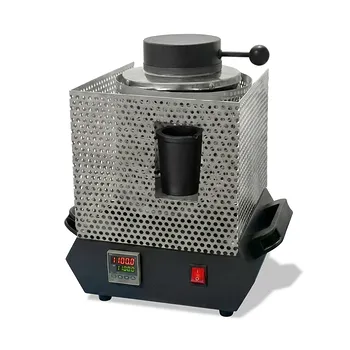
Compact Crucible Melting Furnace 1100C Programmable Temperature Controller Metal Sintering Equipment
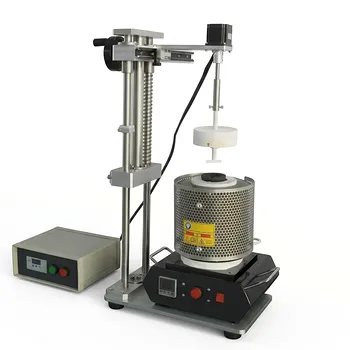
1100C Crucible Melting Furnace with Stirring Function for Glovebox and Air Sensitive Alloy Research
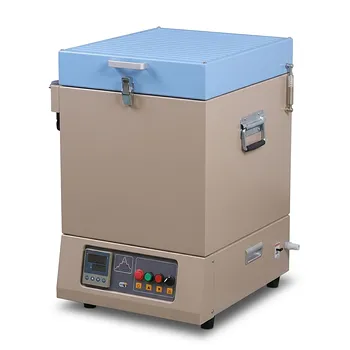
High Temperature Vertical Crucible Furnace with 22L Heating Chamber and 1200C Maximum Temperature
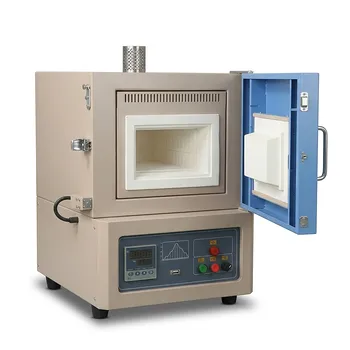
Anti Corrosive Muffle Furnace with Sintered Corundum Chamber and 1050C Operating Range for Corrosive Material Calcination
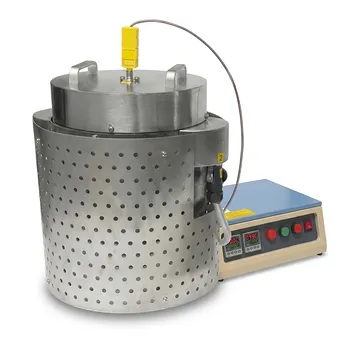
Vertical Crucible Furnace 1000C High Temperature Laboratory Equipment 4.7 Inch Diameter Chamber SS316 Anti Corrosive Enclosure
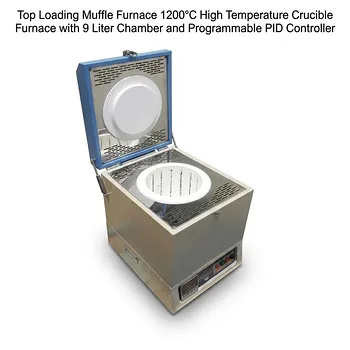
Top Loading Muffle Furnace 1200°C High Temperature Crucible Furnace with 9 Liter Chamber and Programmable PID Controller
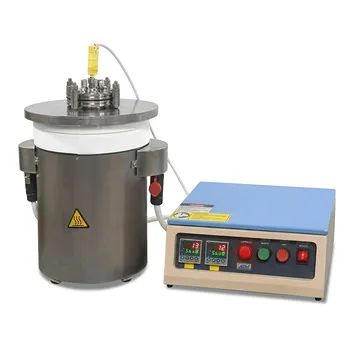
600°C Vertical Crucible Furnace with SS316 Alloy Reactor and 6 Port Vacuum Flange
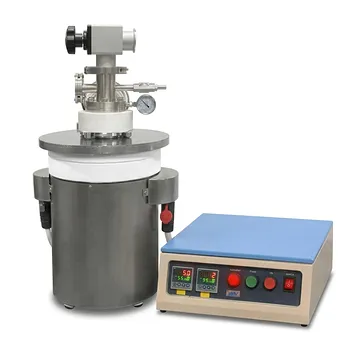
1100C High Temperature Vacuum Crucible Furnace with Quartz Chamber for Thermal Processing and Sintering
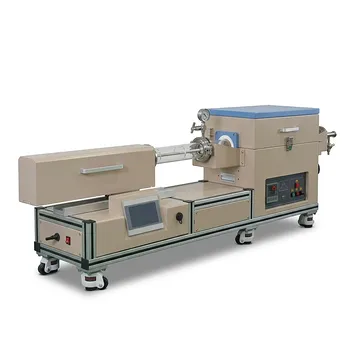
1200C Sliding Internal Crucible Tube Furnace for Controlled Atmosphere Thin Film Deposition and Material Sublimation Research