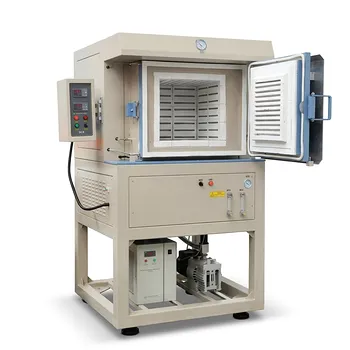
Why is a high-precision muffle furnace necessary for Bi2O3–Mn2O3–M2O3 powders? Master Precursor Purity and Grain Growth
Updated 3 months ago
The success of high-performance ceramic sintering is determined long before the final firing stage. High-precision muffle furnaces are required to ensure the absolute decomposition of nitrates, citrates, and organic residues at specific temperature intervals, such as 210°C and 400°C. This rigorous thermal processing produces a high-purity precursor powder, which is the non-negotiable prerequisite for a successful high-temperature solid-state reaction.
High-precision heat treatment acts as a "chemical purification" and "structural stabilization" phase for precursor powders. By maintaining strict temperature control and thermal uniformity, these furnaces eliminate volatile impurities and regulate initial grain growth, ensuring the material possesses the chemical reactivity necessary for high-density sintering.
Ensuring Chemical Purity and Phase Integrity
Complete Removal of Volatile Residues
Precursor powders like Bi2O3–Mn2O3–M2O3 often contain organic binders, citrates, and nitrate ions from the synthesis process. High-precision equipment ensures these are fully decomposed at specific stages, such as 210°C and 400°C, preventing "carbon trapping" or residual gas pockets.
Prevention of Impurity Phases
Precise temperature control prevents the formation of undesirable impurity phases that can occur if the thermal field is uneven. A stable environment ensures the powder reaches a stable chemical state, establishing the correct crystalline foundation (such as the perovskite structure) before final sintering begins.
Atmospheric Control for Oxidation
Many precursors, such as those involving titanium or manganese, require a stable oxygen-rich atmosphere during decomposition. High-precision furnaces maintain this environment to ensure full oxidation of organic components, converting precursors into high-surface-area matrices ready for reaction.
Precision Control of Microstructure
Strict Limitation of Grain Growth
High-precision furnaces strictly limit initial grain growth during the pre-calcination stage. By preventing premature coarsening, the furnace ensures the raw material powders maintain high reactivity and a uniform chemical composition.
Uniform Thermal Fields
A muffle furnace provides a uniform and stable thermal field that facilitates simultaneous chemical transformation throughout the entire powder batch. This uniformity is essential for producing powders that will eventually achieve high-density sintering without internal stress.
Controlled Cooling and Defect Engineering
Specific applications require precise cooling rates, such as 20°C per hour, to develop or prevent structural defects. This level of control is necessary to produce clear and distinguishable contrast peaks in sensitive measurements like the Thermally Stimulated Depolarization Current (TSDC) energy spectrum.
Understanding the Trade-offs and Pitfalls
The Risk of Temperature Overshoot
Even a minor temperature overshoot during the decomposition of citrates or nitrates can lead to uncontrolled particle agglomeration. Once particles fuse prematurely, the surface area decreases, significantly reducing the driving force required for the subsequent sintering stage.
Chemical Inhomogeneity from Poor Uniformity
If the thermal field is not high-precision, different zones within the furnace may result in varying degrees of decomposition. This creates a powder with localized chemical imbalances, which often leads to cracking, warping, or secondary phase formation in the final ceramic product.
Residence Time vs. Purity
While longer calcination times at lower temperatures can ensure purity, they may also lead to the volatilization of sensitive elements (like Bismuth). High-precision equipment allows for the "sweet spot"—the shortest time and lowest temperature necessary for full decomposition without losing stoichiometric balance.
How to Apply This to Your Project
Making the Right Choice for Your Goal
To achieve the best results with your precursor powders, align your furnace settings with your specific material objectives:
- If your primary focus is high chemical purity: Use a multi-stage ramp with long hold times at 210°C and 400°C to ensure the complete exit of organic gasses.
- If your primary focus is nano-scale grain retention: Utilize high-precision control to maintain the lowest possible calcination temperature that still allows for full phase transformation.
- If your primary focus is electrical performance (TSDC): Implement a strictly controlled, slow cooling rate (e.g., 20°C/h) to manage the formation of structural defects.
- If your primary focus is avoiding structural cracks: Ensure the furnace atmosphere is stable and the heating rate is slow enough to allow decomposition gasses to escape without building internal pressure in the powder bed.
By mastering the precision of the pre-sintering stage, you secure the chemical and structural integrity required for advanced material synthesis.
Summary Table:
| Feature | Role in Precursor Treatment | Benefit of High Precision |
|---|---|---|
| Volatile Removal | Decomposes nitrates/citrates (210°C/400°C) | Prevents carbon trapping & porosity |
| Microstructure | Strict limitation of grain growth | Retains high reactivity for sintering |
| Thermal Uniformity | Consistent field across the batch | Prevents cracking & secondary phases |
| Cooling Control | Regulated rates (e.g., 20°C/h) | Manages defects for electrical performance |
Elevate Your Material Research with THERMUNITS Precision
As a leading manufacturer of high-temperature laboratory equipment, THERMUNITS provides the advanced thermal processing solutions needed for rigorous material science and industrial R&D. Our high-precision Muffle, Vacuum, Atmosphere, and Tube furnaces ensure the strict temperature control and thermal uniformity required to eliminate volatile impurities and stabilize precursor structures.
From CVD/PECVD systems to Dental and Rotary furnaces, we offer the tools to optimize your high-density sintering results. Contact our experts today to discuss how our heat treatment solutions can bring superior purity and performance to your ceramic synthesis projects.
References
- Srečo D. Škapin, Danilo Suvorov. Phase relations in the Bi <sub>2</sub> O <sub>3</sub> –Mn <sub>2</sub> O <sub>3</sub> –M <sub>2</sub> O <sub>3</sub> (MFe, Al, and Ga) pseudoternary systems. DOI: 10.1111/jace.20323
Mentioned Products
- High Temperature 1700C Bench Top Muffle Furnace with Alumina Fiber Insulation and 3.6L Chamber Capacity for Precision Sintering and Heat Treatment
- Ultra High Temperature Bench Top Muffle Furnace 1750C Sintering System with Kanthal Super Heating Elements and Precision Digital Control
- 1200C High Temperature Muffle Furnace with Motorized Door and Automated PC Control for Industrial Sintering and Material Processing 27 Liter
- High Temperature 1500C Benchtop Muffle Furnace 3.6L Alumina Fiber Chamber Programmable Controller Sintering Annealing Carbonization Thermal Processing System
- High Temperature 1800C Compact Muffle Furnace with Kanthal Super 1900 Heating Elements and 1.7L Alumina Chamber
People Also Ask
- What role does a high-temperature muffle furnace play in evaluating the mineral composition of rock samples? LOI & XRF Guide
- What is the function of a high-temperature muffle furnace in phosphorus-modified zeolite catalyst preparation?
- What is the function of a high-temp muffle furnace in Ni-V oxide synthesis? Optimize your material's performance.
- What is the purpose of using muffle or tube furnaces in glass synthesis? Achieve Precise Melt-Quenching & Homogeneity
- What is the function of a muffle furnace in aluminoborosilicate glass prep? Stabilize Raw Materials for Superior Purity

Tech Team · ThermUnits
Last updated on Jun 03, 2026
Related Products
High Temperature 1700C Bench Top Muffle Furnace with Alumina Fiber Insulation and 3.6L Chamber Capacity for Precision Sintering and Heat Treatment
Ultra High Temperature Bench Top Muffle Furnace 1750C Sintering System with Kanthal Super Heating Elements and Precision Digital Control
1200C High Temperature Muffle Furnace with Motorized Door and Automated PC Control for Industrial Sintering and Material Processing 27 Liter
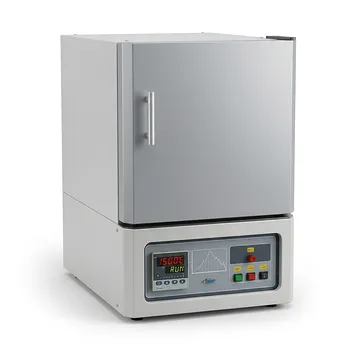
High Temperature 1500C Benchtop Muffle Furnace 3.6L Alumina Fiber Chamber Programmable Controller Sintering Annealing Carbonization Thermal Processing System
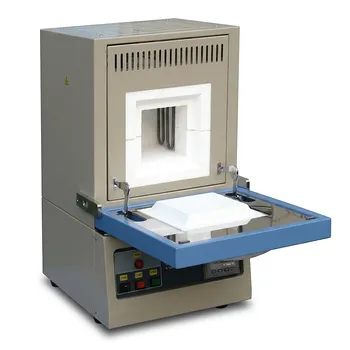
High Temperature 1800C Compact Muffle Furnace with Kanthal Super 1900 Heating Elements and 1.7L Alumina Chamber
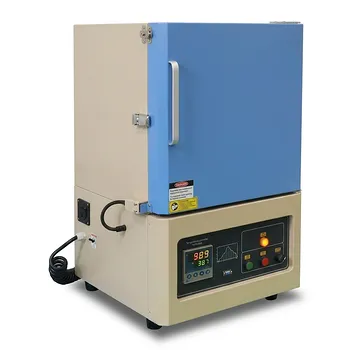
1200°C High Temperature Muffle Furnace 19L Chamber with 50 Segment Programmable Controller
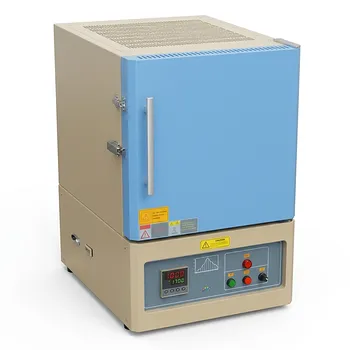
Large Bench Top 1700C High Temperature Muffle Furnace with 19L Chamber for Advanced Material Sintering and Annealing
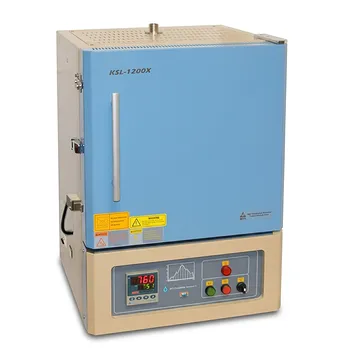
High Temperature 1200C Muffle Furnace 27L Volume 12x12x12 Chamber with Programmable PID Controller for Laboratory Material Science
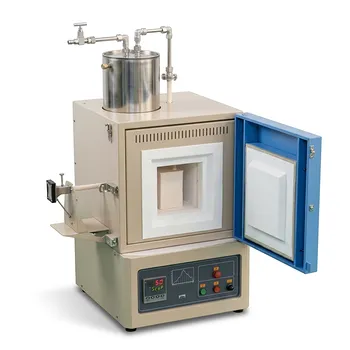
High Temperature Bench Top Muffle Furnace 1700C with Integrated Evaporating Particle Collection and 8x8x8 Alumina Fiber Chamber
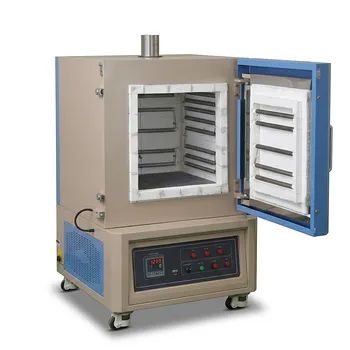
1200C High Temperature 125L Muffle Furnace 5 Side Heating for Large Batch Sintering with Optional Alloy Debinding Chamber
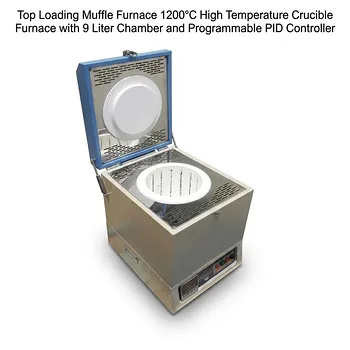
Top Loading Muffle Furnace 1200°C High Temperature Crucible Furnace with 9 Liter Chamber and Programmable PID Controller
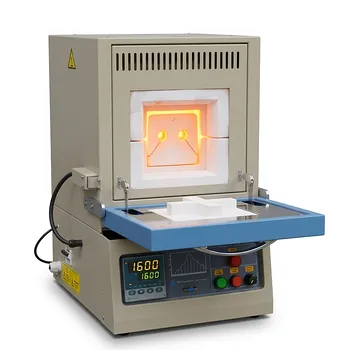
High Temperature Compact Muffle Furnace 1700 C with 30 Segment Programmable Controller and 1.7L Cubic Chamber
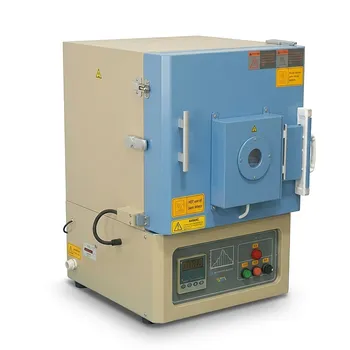
High Temperature Benchtop Muffle Furnace 1500C with 3.6L Chamber and Quartz Observation Window
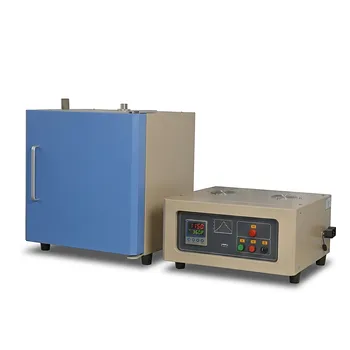
High Temperature Muffle Furnace with Alloy Chamber for Debinding and Sintering Applications
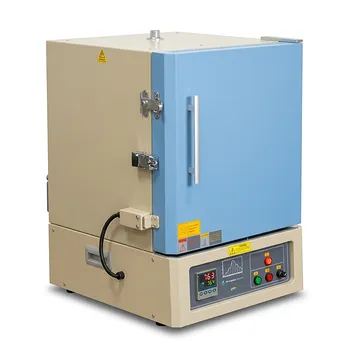
Large Capacity 1200C Muffle Furnace 64 Liter Chamber with Digital PID Controller and Built In Venting Port
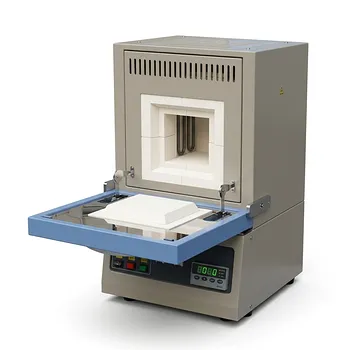
Five Sided Heating Muffle Furnace High Uniformity 1200C Lab Box Furnace 27L Alumina Fiber Chamber
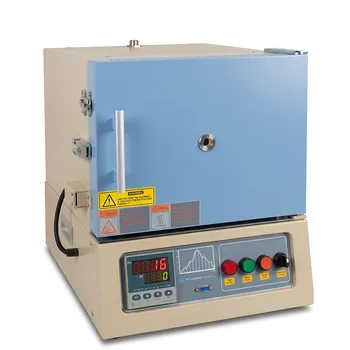
1200C Muffle Furnace 12x8x5 7.2L Heating Chamber with Quartz Observation Window and Vent Port
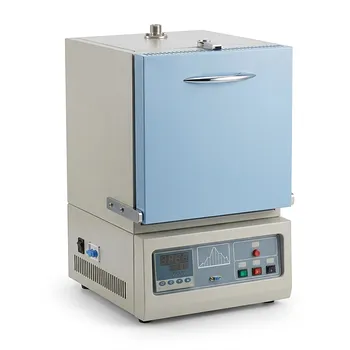
1750C Compact Muffle Furnace 1.7L Ultra High Temperature Laboratory Sintering System for Advanced Ceramics and Material Science Research
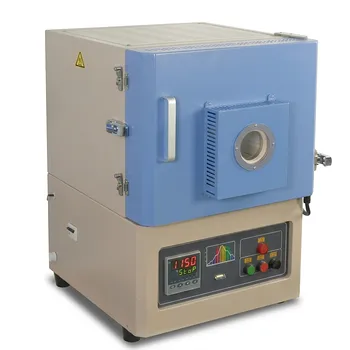
High Temperature Benchtop Muffle Furnace with Quartz Observation Window for Thermal Imaging and Material Analysis