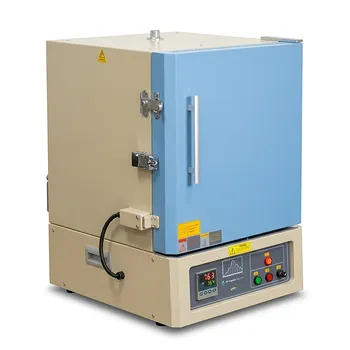
Why is a high-precision muffle furnace or oven required for the calcination process of Fischer-Tropsch catalysts? Ensure Purity
Updated 6 months ago
High-precision muffle furnaces are indispensable for Fischer-Tropsch catalyst preparation because they provide the exact thermal stability and uniformity required to transform metal precursors into active oxide phases. This specialized equipment ensures that heating rates and isothermal conditions are strictly controlled to prevent irreversible structural damage, such as grain sintering, which would otherwise compromise the catalyst's performance.
The core necessity of a high-precision furnace lies in its ability to manage the delicate transition from precursor salts to stable catalytic sites. By maintaining a uniform thermal field, the furnace protects the catalyst's porous architecture and ensures the formation of the specific crystalline phases required for efficient chemical conversion.
Ensuring Precise Chemical and Phase Transformation
Complete Decomposition of Precursors
The primary role of the furnace is to facilitate the complete thermal decomposition of metal nitrate precursors or organic components like oxalates. In Fischer-Tropsch applications, this typically involves converting substances like cobalt nitrate into the target cobalt(II,III) oxide (Co3O4) or iron precursors into Fe2O3.
Regulated Phase Transition
High-precision control allows for the formation of stable crystalline structures in the carrier, such as anatase or rutile TiO2. Precise temperature regulation—often around 500 °C to 550 °C—ensures that the transition to these active states occurs without the formation of unwanted side-phases that could reduce catalytic activity.
Removal of Volatile Impurities
The calcination process effectively eliminates residual impurities and organic structure-directing agents (OSDAs) from the catalyst's framework. This cleaning process is essential for releasing microporous space within zeolite channels or molecular sieves, making the internal surface area accessible for reactions.
Preserving Physical and Pore Architecture
Preventing Grain Sintering
Local overheating is a significant risk during the exothermic decomposition of precursors. A high-precision furnace prevents grain sintering by maintaining a uniform thermal field, which protects the high specific surface area of carriers like alumina or silica.
Facilitating Molecular Diffusion
By utilizing controlled heating rates (typically 5 °C/min to 7 °C/min), the furnace promotes the formation of mesoporous structures. These structures are vital for the efficient diffusion of reactant and product molecules, such as methane or long-chain hydrocarbons, during the Fischer-Tropsch process.
Strengthening Mechanical Integrity
The thermal treatment determines the final mechanical strength and initial activity of the catalyst particles. Consistent heating ensures that the active metal components are properly anchored to the support, preventing the catalyst from breaking down under the high-pressure conditions of industrial reactors.
Optimizing Metal-Support Interactions
Strong Metal-Support Interaction (SMSI)
Precision heating triggers a thermochemical transformation that fosters a Strong Metal-Support Interaction (SMSI). This interaction is critical for constructing efficient catalytic interfaces and regulating the concentration of oxygen vacancies, which directly influence the catalyst's selectivity.
Homogeneous Dispersion of Active Sites
A stable thermal environment ensures that active species, such as platinum (Pt) or vanadium oxide (VOx), are uniformly dispersed across the carrier surface. This high dispersion maximizes the number of available active sites, significantly increasing the overall efficiency of the catalytic reaction.
Understanding the Trade-offs and Pitfalls
The Risk of Rapid Heating
While faster heating might seem more efficient, it often leads to severe agglomeration of catalyst particles. This reduction in surface area directly translates to a loss of catalytic power and a shorter operational lifespan for the material.
Consequences of Thermal Gradient
In lower-quality ovens, thermal gradients (uneven heat distribution) cause non-uniform catalyst batches. This results in a "mixed-bag" of catalyst activity, where some particles are over-calcined and sintered while others remain partially decomposed and unstable.
Balancing Atmosphere and Airflow
Many calcination processes require a controlled static air atmosphere to properly oxidize metal components. A high-precision furnace must balance temperature control with the chemical environment to ensure the desired high-valent oxide species are formed correctly.
Applying Thermal Precision to Your Project
Recommendations for Catalyst Calcination
To achieve the best results in Fischer-Tropsch catalyst preparation, your approach should be tailored to your specific material goals.
- If your primary focus is maximizing surface area: Utilize a slow heating rate of 5 °C/min to prevent local hot spots and preserve the delicate pore structure of the carrier.
- If your primary focus is phase purity: Ensure the furnace can maintain a constant isothermal hold at 500-550 °C for at least 5 hours to guarantee complete chemical conversion.
- If your primary focus is catalyst longevity: Prioritize equipment with high thermal uniformity to foster Strong Metal-Support Interactions that anchor active components securely.
Effective catalyst synthesis is a direct reflection of the precision and stability of the thermal environment provided during the critical calcination stage.
Summary Table:
| Key Parameter | Requirement for F-T Catalysts | Impact on Performance |
|---|---|---|
| Temperature Range | 500 °C – 550 °C | Ensures complete precursor decomposition and phase purity. |
| Heating Rate | 5 °C/min – 7 °C/min | Prevents grain sintering and preserves high specific surface area. |
| Thermal Uniformity | High Precision | Optimizes metal-support interactions (SMSI) and active site dispersion. |
| Atmosphere Control | Controlled Air/Static Air | Facilitates correct oxidation of metal species (e.g., Co3O4, Fe2O3). |
Elevate Your Catalyst Research with THERMUNITS Precision
Achieving the perfect Fischer-Tropsch catalyst requires more than just heat—it requires absolute thermal control. THERMUNITS is a leading manufacturer of high-temperature laboratory equipment dedicated to supporting material science and industrial R&D.
We provide the tools you need to prevent sintering, optimize phase transitions, and ensure catalyst longevity through our comprehensive range of solutions:
- Advanced Furnaces: Muffle, Vacuum, Atmosphere, Tube, Rotary, and Hot Press furnaces.
- Specialized Systems: CVD/PECVD systems, Dental Furnaces, Electric Rotary Kilns, and Vacuum Induction Melting (VIM) furnaces.
- Support Equipment: High-quality Thermal Elements and custom heat treatment solutions.
Whether you are scaling up industrial R&D or perfecting a laboratory synthesis, our expert team is ready to help you select the ideal equipment for your specific calcination needs.
Contact THERMUNITS Today to Discuss Your Project
References
- Mohamed Amine Lwazzani, Jordi Guilera. Unveiling the Influence of Activation Protocols on Cobalt Catalysts for Sustainable Fuel Synthesis. DOI: 10.3390/catal14120920
Mentioned Products
- High Temperature 1700C Bench Top Muffle Furnace with Alumina Fiber Insulation and 3.6L Chamber Capacity for Precision Sintering and Heat Treatment
- Ultra High Temperature Bench Top Muffle Furnace 1750C Sintering System with Kanthal Super Heating Elements and Precision Digital Control
- 1200C High Temperature Muffle Furnace with Motorized Door and Automated PC Control for Industrial Sintering and Material Processing 27 Liter
- High Temperature 1500C Benchtop Muffle Furnace 3.6L Alumina Fiber Chamber Programmable Controller Sintering Annealing Carbonization Thermal Processing System
- High Temperature 1800C Compact Muffle Furnace with Kanthal Super 1900 Heating Elements and 1.7L Alumina Chamber
People Also Ask
- What role does a high-temperature muffle furnace play in evaluating the mineral composition of rock samples? LOI & XRF Guide
- What is the function of a muffle furnace in aluminoborosilicate glass prep? Stabilize Raw Materials for Superior Purity
- What is the purpose of using muffle or tube furnaces in glass synthesis? Achieve Precise Melt-Quenching & Homogeneity
- What is the function of a high-temp muffle furnace in Ni-V oxide synthesis? Optimize your material's performance.
- What is the function of a high-temperature muffle furnace in phosphorus-modified zeolite catalyst preparation?

Tech Team · ThermUnits
Last updated on Apr 14, 2026
Related Products
High Temperature 1700C Bench Top Muffle Furnace with Alumina Fiber Insulation and 3.6L Chamber Capacity for Precision Sintering and Heat Treatment
Ultra High Temperature Bench Top Muffle Furnace 1750C Sintering System with Kanthal Super Heating Elements and Precision Digital Control
1200C High Temperature Muffle Furnace with Motorized Door and Automated PC Control for Industrial Sintering and Material Processing 27 Liter
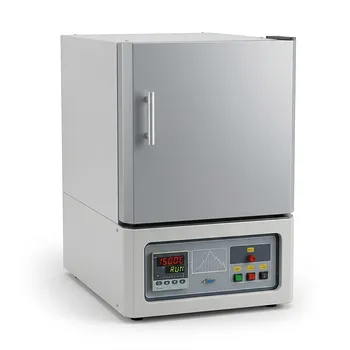
High Temperature 1500C Benchtop Muffle Furnace 3.6L Alumina Fiber Chamber Programmable Controller Sintering Annealing Carbonization Thermal Processing System
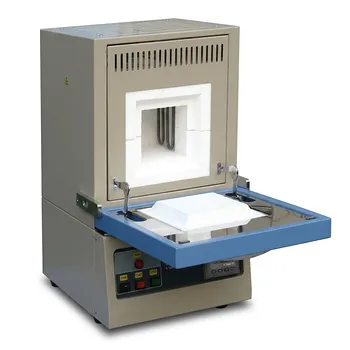
High Temperature 1800C Compact Muffle Furnace with Kanthal Super 1900 Heating Elements and 1.7L Alumina Chamber
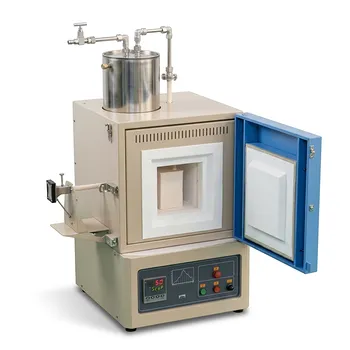
High Temperature Bench Top Muffle Furnace 1700C with Integrated Evaporating Particle Collection and 8x8x8 Alumina Fiber Chamber
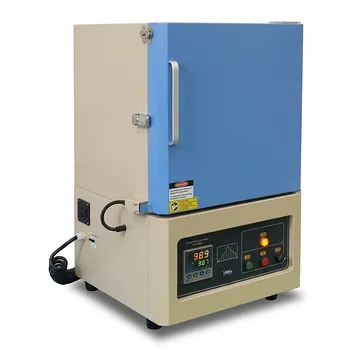
1200°C High Temperature Muffle Furnace 19L Chamber with 50 Segment Programmable Controller
Large Bench Top 1700C High Temperature Muffle Furnace with 19L Chamber for Advanced Material Sintering and Annealing
High Temperature 1200C Muffle Furnace 27L Volume 12x12x12 Chamber with Programmable PID Controller for Laboratory Material Science
1200C High Temperature 125L Muffle Furnace 5 Side Heating for Large Batch Sintering with Optional Alloy Debinding Chamber
High Temperature Compact Muffle Furnace 1700 C with 30 Segment Programmable Controller and 1.7L Cubic Chamber
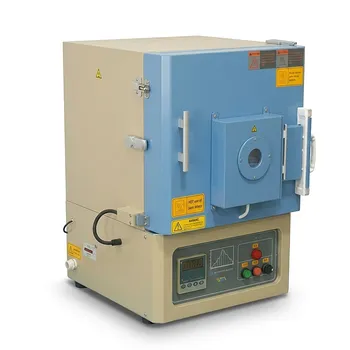
High Temperature Benchtop Muffle Furnace 1500C with 3.6L Chamber and Quartz Observation Window
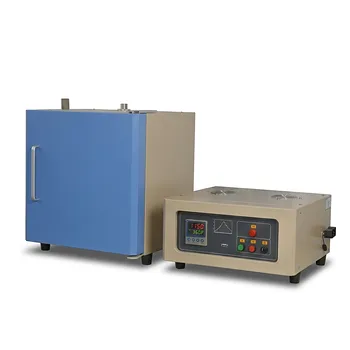
High Temperature Muffle Furnace with Alloy Chamber for Debinding and Sintering Applications
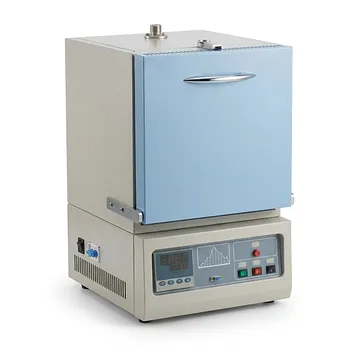
1750C Compact Muffle Furnace 1.7L Ultra High Temperature Laboratory Sintering System for Advanced Ceramics and Material Science Research
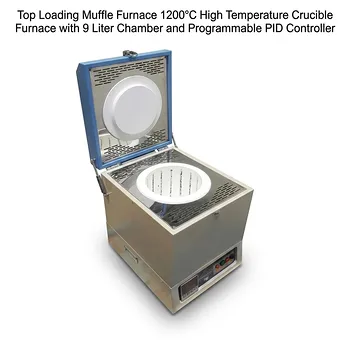
Top Loading Muffle Furnace 1200°C High Temperature Crucible Furnace with 9 Liter Chamber and Programmable PID Controller
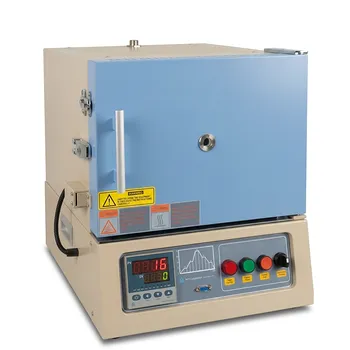
1200C Muffle Furnace 12x8x5 7.2L Heating Chamber with Quartz Observation Window and Vent Port
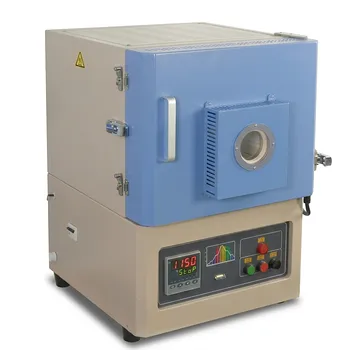
High Temperature Benchtop Muffle Furnace with Quartz Observation Window for Thermal Imaging and Material Analysis
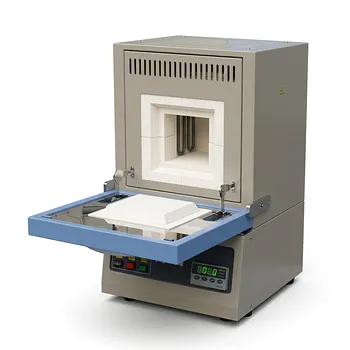
Five Sided Heating Muffle Furnace High Uniformity 1200C Lab Box Furnace 27L Alumina Fiber Chamber
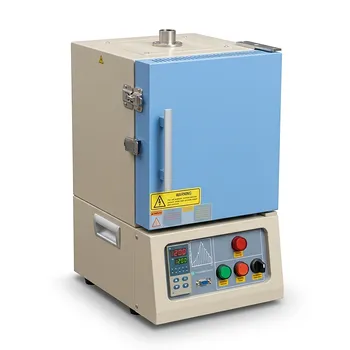
1200°C Small Box Furnace 4.2 Liter Programmable Muffle Furnace with High Purity Alumina Insulation and PID Control