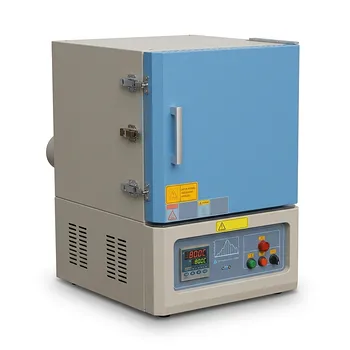
Why is a laboratory muffle furnace used for the calcination of mixed metal oxide anodes? Optimize Crystal Structures
Updated 3 months ago
A laboratory muffle furnace is used for the calcination of mixed metal oxide anodes because it provides the precise temperature programming and uniform thermal field required for thorough decomposition and phase transformation. By maintaining a stable, high-temperature environment, the furnace ensures that precursors—such as oxalates or hydroxides—are fully oxidized into stable crystalline structures. This controlled process is essential for achieving the uniform microstructure and electrochemical stability necessary for high-performance battery or catalytic materials.
Core Takeaway: The muffle furnace serves as a controlled thermal reactor that converts amorphous chemical precursors into highly ordered, crystalline mixed metal oxides. It ensures structural uniformity and active site formation, which are the primary drivers of an anode's electrochemical efficiency and longevity.
Achieving Phase Stability and Crystalline Integrity
Facilitating Complete Thermal Decomposition
A muffle furnace provides the sustained high temperatures (typically 400°C to 600°C) required to break down metal oxalate or hydroxide intermediates. This decomposition removes volatile components, leaving behind a pure metal oxide framework.
Driving Phase Transformation
The uniform thermal field enables materials to transition from an amorphous state to a stable crystalline phase. This crystallization is critical because the specific crystal lattice of the mixed metal oxide dictates how ions move through the anode during operation.
Ensuring Chemical Uniformity
Through precise temperature control, the furnace prevents localized overheating, which could lead to phase separation. This results in a homogeneous mixed metal oxide where different metallic elements are distributed evenly throughout the oxide skeleton.
Morphological Control and Surface Engineering
Template Removal and Pore Formation
In advanced anode synthesis, muffle furnaces are used to burn away surfactants or templates (like F127). This process leaves behind a mesoporous framework with a specific pore size distribution, which is vital for maximizing the active surface area.
Nucleation and Grain Growth
The furnace allows for "insulation" or "soaking" periods where the temperature is held constant to facilitate crystal nucleation. By controlling the duration of this heat treatment, researchers can fine-tune the grain size and morphology of the nanocrystals.
Creation of Active Interfacial Layers
In some applications, the furnace induces the formation of a nanostructured hierarchical morphology. This helps create a key interfacial layer between the active oxide and the substrate, significantly improving the kinetics of ion transport.
Understanding the Trade-offs and Limitations
Thermal Gradients and Mass Loading
While muffle furnaces provide a "uniform" field, large batches of material can experience internal thermal gradients. If the material is packed too densely, the center of the sample may not reach the target temperature as quickly as the exterior, leading to inconsistent crystallization.
Atmospheric Constraints
Standard muffle furnaces are typically oxidative environments due to the presence of air. If a specific mixed metal oxide requires a reducing or inert atmosphere to prevent over-oxidation, a standard muffle furnace may require a specialized retort or gas-tight modification.
Energy Efficiency and Ramp Rates
These furnaces are designed for stability rather than speed. Rapid heating or cooling (quenching) is difficult to achieve in a box-type furnace, which may limit the ability to "freeze" certain metastable phases that could be beneficial for specific electrochemical reactions.
How to Apply This to Your Project
When selecting a calcination protocol for mixed metal oxide anodes, your choice should be driven by the specific requirements of your precursor and the desired final morphology.
- If your primary focus is high specific surface area: Use a multi-stage temperature program to slowly decompose templates before ramping to the final crystallization temperature.
- If your primary focus is phase purity: Prioritize a longer "soaking" time at a constant temperature to ensure the entire bulk of the material has completed the phase transition.
- If your primary focus is electrode adhesion: Focus on the annealing stage (around 400°C) to promote the growth of the interfacial layer between the oxide and the current collector.
The laboratory muffle furnace remains the definitive tool for transforming raw chemical precursors into the sophisticated crystalline structures required for modern electrochemical energy storage.
Summary Table:
| Key Calcination Stage | Function in Muffle Furnace | Impact on Anode Performance |
|---|---|---|
| Thermal Decomposition | Breaks down oxalates/hydroxides (400-600°C) | Removes impurities; creates pure oxide framework |
| Phase Transformation | Uniform heating for amorphous-to-crystalline transition | Dictates ion mobility and electrochemical stability |
| Template Removal | Controlled burning of surfactants/templates | Creates mesoporous structures and high surface area |
| Nucleation & Growth | Precise 'soaking' or insulation periods | Fine-tunes grain size and nanostructure morphology |
| Interfacial Bonding | High-temperature annealing on substrates | Improves electrode adhesion and ion transport kinetics |
Elevate Your Material Research with THERMUNITS Precision
At THERMUNITS, we understand that achieving the perfect crystalline structure for mixed metal oxide anodes requires absolute thermal control. As a leading manufacturer of high-temperature laboratory equipment, we provide the tools necessary for cutting-edge material science and industrial R&D.
Our comprehensive thermal processing solutions are engineered for uniformity and reliability, including:
- Muffle, Vacuum, and Atmosphere Furnaces for precise calcination.
- Tube, Rotary, and Hot Press Furnaces for specialized material synthesis.
- CVD/PECVD Systems and Vacuum Induction Melting (VIM) Furnaces.
- Dental Furnaces, Electric Rotary Kilns, and high-quality Thermal Elements.
Whether you are scaling up battery production or refining nanostructured catalysts, THERMUNITS delivers the expertise and equipment to ensure your success.
Ready to optimize your heat treatment workflow?
Contact our technical experts today to find the ideal furnace solution for your application.
References
- Anjali V. Nair, Dhamodaran Santhanagopalan. Environment-friendly acids for leaching transition metals from spent-NMC532 cathode and sustainable conversion to potential anodes. DOI: 10.1039/d4su00209a
Mentioned Products
- 1200C Muffle Furnace 12x8x5 7.2L Heating Chamber with Quartz Observation Window and Vent Port
- Anti Corrosive Muffle Furnace with Sintered Corundum Chamber and 1050C Operating Range for Corrosive Material Calcination
- 1750C Compact Muffle Furnace 1.7L Ultra High Temperature Laboratory Sintering System for Advanced Ceramics and Material Science Research
- 1200C High Temperature Muffle Furnace with Motorized Door and Automated PC Control for Industrial Sintering and Material Processing 27 Liter
- High Temperature 1200C Muffle Furnace 27L Volume 12x12x12 Chamber with Programmable PID Controller for Laboratory Material Science
People Also Ask
- Why is a muffle furnace required for MoO2@HCNF pre-oxidation? Crucial Steps for High-Performance Composites
- What is the function of a high-temperature Muffle furnace in removing residual solvents? Essential Bismuth Synthesis
- What are the primary functions of a Muffle furnace in oxide calcination? Achieve high purity and phase control.
- What is the function of Muffle furnace calcination? Essential steps for Pr-doped SrFeMoO6 Perovskite synthesis.
- What is the function of an experimental muffle furnace in the conversion of FeOOH to α-Fe2O3? Optimize Phase Transition

Tech Team · ThermUnits
Last updated on Jun 03, 2026
Related Products
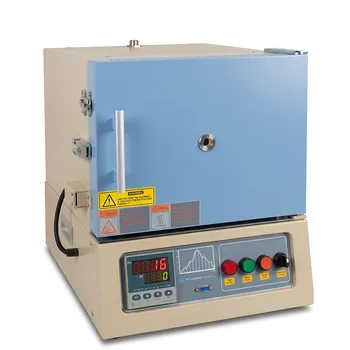
1200C Muffle Furnace 12x8x5 7.2L Heating Chamber with Quartz Observation Window and Vent Port
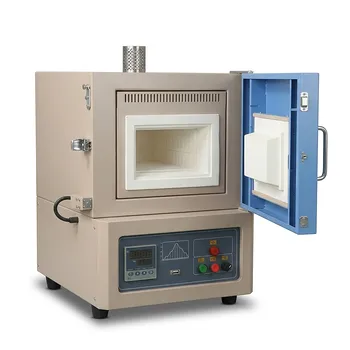
Anti Corrosive Muffle Furnace with Sintered Corundum Chamber and 1050C Operating Range for Corrosive Material Calcination
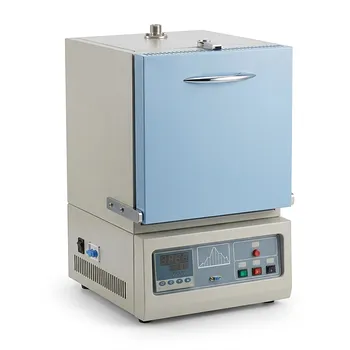
1750C Compact Muffle Furnace 1.7L Ultra High Temperature Laboratory Sintering System for Advanced Ceramics and Material Science Research
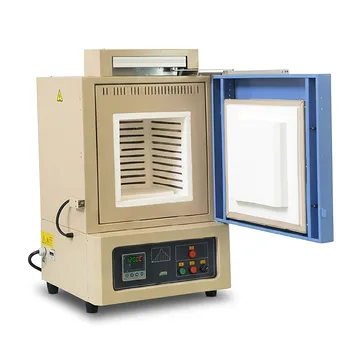
1200C High Temperature Muffle Furnace with Motorized Door and Automated PC Control for Industrial Sintering and Material Processing 27 Liter
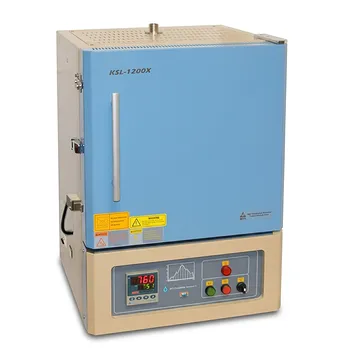
High Temperature 1200C Muffle Furnace 27L Volume 12x12x12 Chamber with Programmable PID Controller for Laboratory Material Science
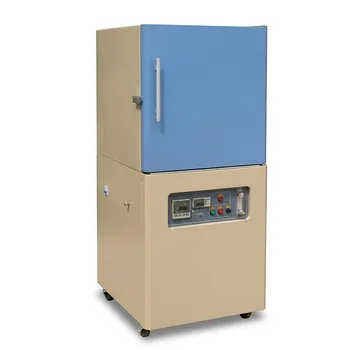
High Temperature Muffle Furnace with Dual Controllers and 36L Large Chamber 1700C Max
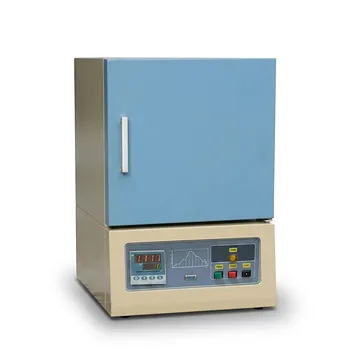
Ultra High Temperature Bench Top Muffle Furnace 1750C Sintering System with Kanthal Super Heating Elements and Precision Digital Control
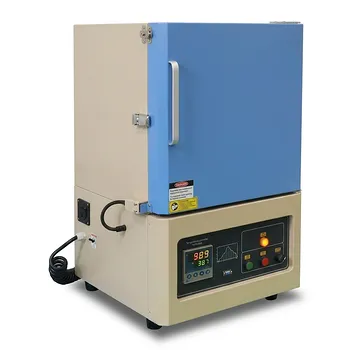
1200°C High Temperature Muffle Furnace 19L Chamber with 50 Segment Programmable Controller
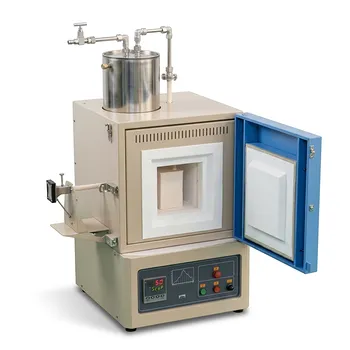
High Temperature Bench Top Muffle Furnace 1700C with Integrated Evaporating Particle Collection and 8x8x8 Alumina Fiber Chamber
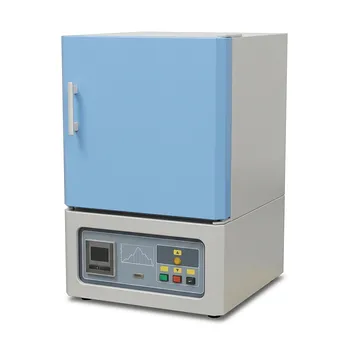
1800C Bench Top Muffle Furnace with Kanthal Super 1900 Heating Elements and 3.6L Alumina Fiber Chamber
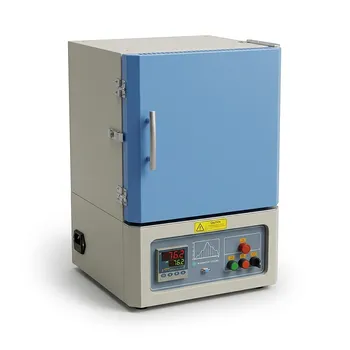
1750C Bench Top Muffle Furnace 3.6L High Grade Molybdenum Disilicide Heating Elements Laboratory Heat Treatment Equipment
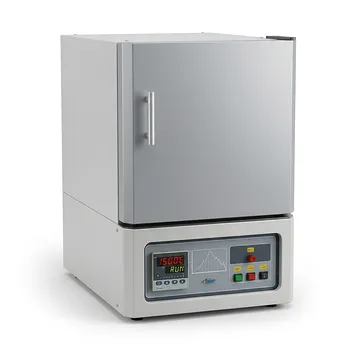
High Temperature 1500C Benchtop Muffle Furnace 3.6L Alumina Fiber Chamber Programmable Controller Sintering Annealing Carbonization Thermal Processing System
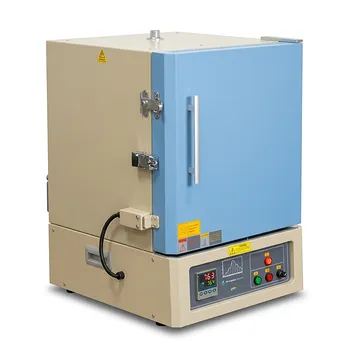
Large Capacity 1200C Muffle Furnace 64 Liter Chamber with Digital PID Controller and Built In Venting Port
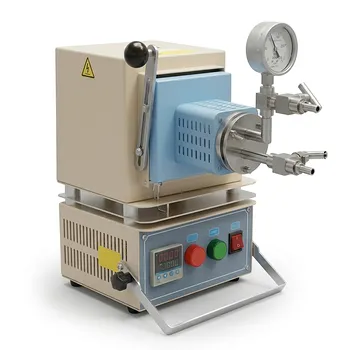
Compact Hybrid Muffle and Tube Furnace for 1000C Controlled Atmosphere Laboratory Material Sintering
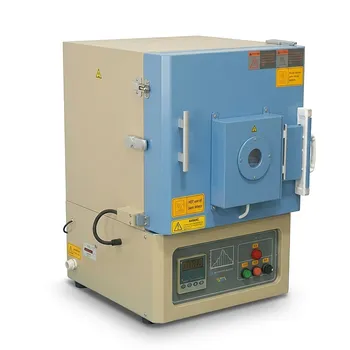
High Temperature Benchtop Muffle Furnace 1500C with 3.6L Chamber and Quartz Observation Window
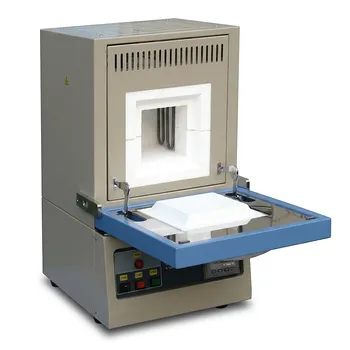
High Temperature 1800C Compact Muffle Furnace with Kanthal Super 1900 Heating Elements and 1.7L Alumina Chamber
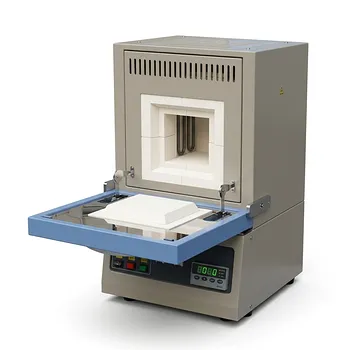
Five Sided Heating Muffle Furnace High Uniformity 1200C Lab Box Furnace 27L Alumina Fiber Chamber
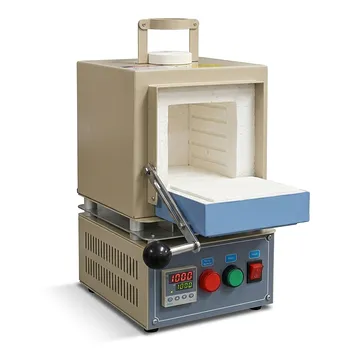
Compact 1000C Muffle Furnace with Programmable Controller and 2 Inch Top Port for Vacuum and Atmosphere Material Research
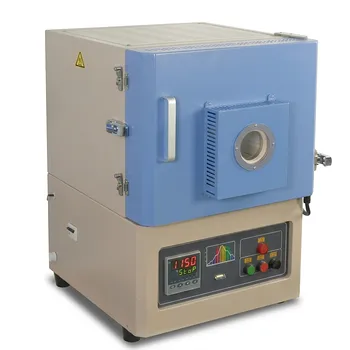
High Temperature Benchtop Muffle Furnace with Quartz Observation Window for Thermal Imaging and Material Analysis