Why is a laboratory vacuum drying oven essential for sodium-ion battery electrode plates? Optimize Battery Stability
Updated 3 months ago
The laboratory vacuum drying oven is the final safeguard against moisture-driven failure in sodium-ion battery (SIB) production. It facilitates the complete removal of trace moisture and residual solvents—such as N-Methyl-2-pyrrolidone (NMP)—through a combination of low atmospheric pressure and controlled thermal energy. This step is critical because active sodium is exceptionally reactive; even infinitesimal amounts of water can trigger parasitic side reactions that permanently degrade the battery's capacity and long-term stability.
Core Takeaway: Vacuum drying is essential because it enables the deep dehydration of electrode plates at temperatures low enough to preserve the sensitive chemical structure and mechanical adhesion of the active materials. By operating in a low-pressure environment, the oven eliminates contaminants that would otherwise compromise the battery’s Coulombic efficiency and safety.
Preventing Chemical Degradation and Side Reactions
Neutralizing Extreme Moisture Sensitivity
Sodium-ion batteries are significantly more sensitive to moisture than many other energy storage chemistries. The vacuum oven ensures electrodes achieve a state of high dryness before assembly in a glove box, preventing the active sodium from reacting with water molecules.
Eliminating Residual Solvents
High-boiling-point solvents like N-Methyl-2-pyrrolidone (NMP) are commonly used in the slurry coating process and must be entirely removed. If these solvents remain within the electrode pores, they can react with the electrolyte after assembly, causing gas evolution and performance decay.
Protecting Material Integrity and Structure
Lowering Boiling Points for Thermal Safety
The vacuum environment effectively lowers the boiling point of water and organic solvents, allowing them to evaporate rapidly at moderate temperatures (e.g., 60°C to 120°C). This prevents the need for extreme heat that could cause the degradation of polymer binders or damage the delicate crystal structure of materials like Na4Fe3(PO4)2(P2O7).
Preventing Surface Oxidation
Sensitive materials, including carbon-based anodes and MXene nanosheets, are highly susceptible to oxidation when heated in the presence of oxygen. By evacuating the chamber, the vacuum oven isolates these materials from oxygen, ensuring they maintain their electrical conductivity and unique 2D layered structures.
Optimizing Mechanical and Electrochemical Performance
Enhancing Adhesion and Adhesion Strength
Complete removal of residual liquids through vacuum thermal treatment strengthens the bond between the active material layer and the current collector (such as copper or aluminum foil). This prevents the electrode from peeling or delaminating during the physical stresses of subsequent charge-discharge cycles.
Ensuring Proper Electrolyte Wetting
A thoroughly dried electrode features "clean" micropores that are free from solvent vapor or moisture blockages. This allows the liquid electrolyte to fully infiltrate the pores, maximizing the active surface area and improving the specific capacitance and rate capability of the cell.
Understanding the Trade-offs
Thermal Management and Binder Embrittlement
While heat is necessary for drying, excessive temperatures can make the electrode brittle, leading to cracks during the calendering or cell-winding processes. Operators must carefully calibrate the temperature to balance drying speed with the mechanical flexibility of the binder.
Throughput vs. Depth of Vacuum
Achieving a high-vacuum state and maintaining it for extended periods (often up to 12 hours) creates a bottleneck in the laboratory workflow. However, rushing this process often results in "skinning," where the surface dries but moisture remains trapped deep within the electrode coating.
How to Apply This to Your Battery Project
Making the Right Choice for Your Goal
To ensure the highest quality electrode post-processing, consider your primary research or production objective:
- If your primary focus is maximizing cycle life: Prioritize longer drying durations at lower temperatures (e.g., 60°C to 80°C) to ensure the complete removal of moisture without stressing the chemical bonds of the active material.
- If your primary focus is increasing energy density: Utilize a high-vacuum environment to ensure every micropore is evacuated, allowing for total electrolyte infiltration and maximum active material utilization.
- If your primary focus is preventing mechanical failure: Monitor the adhesion strength post-drying to ensure that the vacuum thermal treatment has not compromised the interface between the active layer and the current collector.
By meticulously controlling the vacuum drying environment, you transform a sensitive chemical coating into a robust, high-performance electrode ready for stable electrochemical cycling.
Summary Table:
| Feature | Function in SIB Processing | Key Benefit |
|---|---|---|
| Deep Dehydration | Removes trace moisture | Prevents parasitic reactions & capacity loss |
| Solvent Removal | Eliminates residual NMP | Stops gas evolution and performance decay |
| Low-Temp Boiling | Evaporates liquids at <120°C | Protects polymer binders and crystal structures |
| Oxygen Isolation | Vacuum atmosphere | Prevents oxidation of carbon anodes & MXenes |
| Pore Cleaning | Clears micropores | Ensures full electrolyte wetting & rate capability |
Elevate Your Battery Research with THERMUNITS Precision Engineering
Success in sodium-ion battery R&D depends on the meticulous control of moisture and thermal environments. THERMUNITS is a leading manufacturer of high-temperature laboratory equipment specifically designed for material science and industrial R&D. Our vacuum drying ovens ensure your electrode plates achieve the highest dryness levels without compromising structural integrity.
Beyond drying, we offer a comprehensive suite of thermal processing solutions to support your entire workflow, including:
- Furnaces: Muffle, Vacuum, Atmosphere, Tube, Rotary, and Hot Press furnaces.
- Advanced Systems: CVD/PECVD systems and Vacuum Induction Melting (VIM) furnaces.
- Specialized Equipment: Dental Furnaces, electric rotary kilns, and premium Thermal Elements.
Ready to enhance your lab's efficiency and battery performance? Contact our technical experts today to discuss a customized solution for your heat treatment needs!
References
- Alexander Rützler, Anna Fischer. Mesoporous N‐Doped Carbon Nanospheres as Anode Material for Sodium Ion Batteries with High Rate Capability and Superior Power Densities. DOI: 10.1002/adfm.202401188
Mentioned Products
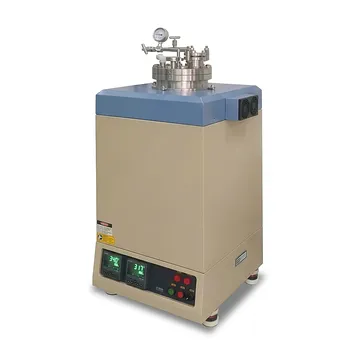
- High Temperature 1000C Vacuum Furnace with 8 Inch ID Chamber for Material Sintering and Research Annealing
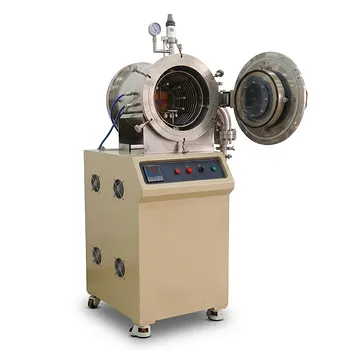
- High Temperature Cold Wall High Vacuum Chamber Furnace 1400C for Advanced Material Processing
People Also Ask
- How does the temperature control precision of a high-temperature sintering furnace affect Na1+xLa1-xZr2O6-δ ceramics?
- How does a high-temperature sintering furnace environment enhance NdFeB magnets? Achieve 98%+ density with precision.
- What role does a high-temperature annealing furnace play in forming ordered Pt3(CoNi) intermetallic catalysts?
- What is the function of high-vacuum furnaces in (Mo2/3V1/3)n+1AlCn MAX phase synthesis? Ensure Purity & Diffusion.
- How does a vacuum or atmosphere sintering furnace contribute to the congener-welding process of carbon nitride membranes?

Tech Team · ThermUnits
Last updated on Jun 02, 2026