All Questions
How Does A Low-Pressure Vacuum System Contribute To The Quality Of Synthesized Alpha-Ga2Se3 Flakes? Optimize 2D Purity.
Discover how low-pressure vacuum systems optimize alpha-Ga2Se3 synthesis by lowering growth temperatures and ensuring uniform crystal morphology.
What Is The Specific Function Of A Vacuum Pyrolysis Furnace In The Treatment Of Waste Tires Or Plastics? Maximize Oil Yield
Learn how vacuum pyrolysis furnaces maximize liquid oil yield from waste tires and plastics by preventing over-cracking through reduced pressure.
Why Is A High-Vacuum Oven Required For The Final Treatment Of Supercapacitor Electrode Sheets? Boost Material Purity.
Learn how high-vacuum ovens remove solvents and moisture from supercapacitor electrodes to prevent oxidation and ensure peak electrochemical performance.
What Is The Importance Of Combining High Vacuum Systems With Argon Gas Flow Control? Optimize Perovskite Film Purity.
Explore the synergy of vacuum and argon in CVD for perovskite thin films. Enhance film uniformity and crystallinity with precise thermal processing.
How Does A Modified Spark Plasma Sintering (Sps) System Differ From Traditional Vacuum Furnaces? Faster Ras Heat Cycles.
Learn how modified SPS for Radiation-Assisted Sintering (RAS) reduces 20-hour cycles to minutes and suppresses grain growth via non-contact heating.
What Is The Role Of A High-Vacuum Arc Melting Furnace In The Initial Melting Stage Of Fe-Pd Binary Alloys? Explained
Learn how high-vacuum arc melting furnaces ensure chemical homogeneity and prevent oxidation when synthesizing high-purity Fe-Pd binary alloys.
How Does A High Vacuum Sintering Furnace At 600 Celsius Affect The Microstructure Of Al-Tic Composites? Expert Analysis
Learn how 600°C high vacuum sintering optimizes Al-TiC microstructure by improving density and preventing brittle Al4C3 phase formation.
Why Is Graphite Foil Added To The Inner Wall Of A Quartz Tube In A Vacuum Sublimation Furnace? Protect Quartz & Purity
Discover why graphite foil is used in vacuum sublimation to protect quartz tubes, simplify product recovery, and maintain high material purity.
Why Use Vacuum Or Argon For Ti5553 Heat Treatment? Ensure Peak Performance For Additive-Manufactured Components.
Discover why vacuum or argon environments are essential for Ti5553 heat treatment to prevent oxidation and optimize microstructural performance.
Why Is Vacuum Annealing Necessary For Hexagonal Boron Nitride (Hbn) Samples? Achieve Atomically Clean Surfaces
Discover why vacuum annealing is essential for removing PMMA residues from hBN to enable sub-angstrom imaging and high-performance electronics.
What Role Does The Vacuum Control System Play In The Phase Transformation Of 2D Snse? Master Precision Growth
Learn how vacuum control systems regulate chemical potential and atomic dynamics to drive the phase transformation from SnSe2 to SnSe in 2D materials.
Why Must Mos2 Samples Undergo High Vacuum Dehydration? Key To A-Igzo Heterojunction Stability
Learn why high vacuum dehydration of MoS2 is vital for a-IGZO heterojunctions to prevent charge trapping and ensure device stability and performance.
What Is The Function Of High-Vacuum Furnaces In (Mo2/3V1/3)N+1Alcn Max Phase Synthesis? Ensure Purity & Diffusion.
Learn how high-vacuum furnaces prevent oxidation and facilitate atomic diffusion for high-purity (Mo2/3V1/3)n+1AlCn MAX phase precursor synthesis.
What Is The Necessity Of Using A Laboratory Vacuum Oven When Preparing Si@Rgo Composite Negative Electrode Plates? Expert Guide
Discover why vacuum ovens are vital for Si@rGO anode prep. Learn how to prevent oxidation, improve adhesion, and ensure deep drying for peak capacity.
What Is The Purpose Of Using A Vacuum Annealing Furnace During The Ageing Treatment Of W-Mmc? Achieve Peak Performance
Discover how vacuum annealing furnaces optimize W-MMC ageing (400-500°C) to prevent oxidation, refine microstructure, and balance material toughness.
W-Mmc Sintering: How Vacuum And Atmosphere Furnaces Enable High-Density Liquid Phase Composites
Learn how high-temperature furnaces drive densification in tungsten-based multi-metal composites through precise liquid phase control and oxidation.
Why Is Vacuum Heating Equipment Required For Drying Na3V2(Po4)3/C (Nvp/C) Precursor Gels? Ensure Battery Material Integrity.
Discover why vacuum heating is essential for NVP/C precursor gels to prevent structural damage and ensure high-performance battery material synthesis.
Why Must A Vacuum System Be Configured For High-Temp Wettability Tests On Al 6061? Ensure True Surface Data Integrity.
Discover why a vacuum system is crucial for Al 6061 high-temp wettability tests to prevent oxidation and ensure precise material surface data.
Why Perform Homogenization Annealing On Zircaloy-4 In A Vacuum Furnace? Achieve Uniform Hydride Distribution & Purity.
Learn why vacuum homogenization annealing is vital for Zircaloy-4 to ensure uniform hydrogen distribution and prevent oxidation for accurate testing.
What Role Does A Horizontal Vacuum Annealing Furnace Play In The Recrystallization Of Zircaloy-4? Ensure Purity & Stability
Learn how horizontal vacuum annealing furnaces optimize Zircaloy-4 recrystallization by preventing oxidation and ensuring a uniform microstructure.
Why Is A Graphite Resistance Furnace Used In The Synthesis Of High-Purity Feo? Achieve 99% Purity & Superior Stability
Discover how graphite resistance furnaces enable high-purity FeO synthesis through precise atmospheric control and extreme temperature stability.
Why Is A Vacuum Drying Oven Used Before The Preparation Of Mxene Thick-Film Electrodes? Prevent Oxidation & Boost Quality
Discover how vacuum drying prevents MXene oxidation, removes solvents at low temperatures, and ensures high-conductivity thick-film electrodes.
How Do Quenching And Tempering Furnaces Improve Nab Composites? Unlock Superior Hardness And Wear Resistance
Discover how the synergy of quenching and tempering furnaces enhances NAB composites through martensite formation and kappa phase precipitation.
Why Is The Programmed Temperature Control Of A Vacuum Furnace Essential For Nab? Ensure Phase Stability & Density.
Master NAB composite sintering: how precise temperature control in vacuum furnaces ensures gas evacuation, phase stability, and high-density results.
Why Use High-Purity Gas Or Vacuum For Potassium Azide (Kn3) Treatment? Ensure Pure Polymeric Nitrogen Synthesis.
Learn why high-purity gas or vacuum is vital for Potassium Azide (KN3) thermal treatment to prevent oxidation and ensure polymeric nitrogen synthesis.
Why Is High-Temperature Vacuum Baking Required For Prussian Blue (Pb) Cathode Materials Before Battery Assembly? Key For Stability
Discover why vacuum baking at 120°C is critical for Prussian Blue cathodes to eliminate moisture, prevent lattice collapse, and ensure high performance.
Why Is A Vacuum Oven Preferred For Heating Bimetallic Gel Precursors? Preserve Purity And Structural Integrity
Learn why vacuum ovens are essential for drying iron/cobalt bimetallic gels by preventing oxidation and protecting delicate microporous structures.
What Conditions Does A Graphitization Furnace Provide For Pitch-Based Carbon? Achieve Superior Crystalline Quality
Learn the essential furnace conditions for pitch-based carbon graphitization, including 2500°C thermal fields and inert atmosphere requirements.
What Are The Advantages Of A Vacuum Oven For Drying Catalysts? Preserve Purity And Micro-Morphology
Discover how vacuum ovens protect sensitive catalysts like g-C3N4/ZnIn2S4 by preventing oxidation and preserving delicate structural integrity.
How Vacuum Furnaces Heat Treat Fe32Cr33Ni29Al3Ti3? Optimizing Hea Microstructure & Stability
Learn how vacuum and atmosphere furnaces optimize Fe32Cr33Ni29Al3Ti3 HEAs by preventing oxidation and facilitating microstructural homogenization.
What Is The Primary Purpose Of Using A Vacuum Heating Furnace For 900°C Annealing Of Fe-Co-Mo Alloys? Ensure Purity.
Learn why vacuum furnaces are crucial for 900°C Fe-Co-Mo alloy annealing to prevent oxidation, relieve HIP stresses, and enhance magnetic properties.
Why Is An Industrial-Grade Vacuum Annealing Furnace System Required For Sacs? Scale Production With Precision
Discover how industrial vacuum annealing furnaces enable large-scale single-atom catalyst production through temperature uniformity and dispersion.
Why Is A Laboratory Vacuum Drying Oven Essential For Sodium-Ion Battery Electrode Plates? Optimize Battery Stability
Discover why vacuum drying is critical for sodium-ion batteries to remove moisture, eliminate NMP solvents, and prevent material degradation.
What Are The Technical Advantages Of Using A High-Vacuum Oven Compared To A Conventional Oven For Drying Electrode Sheets?
Discover how high-vacuum ovens enhance electrode drying by lowering solvent boiling points, preventing oxidation, and improving battery performance.
How Does A High-Temperature Sintering Furnace Environment Enhance Ndfeb Magnets? Achieve 98%+ Density With Precision.
Explore how atmosphere and thermal control in sintering furnaces maximize NdFeB magnet density and performance through liquid phase sintering.
Why Must A High-Purity Argon Or Vacuum Environment Be Used When Synthesizing V2Alc Max Phase? Ensure Phase Purity.
Discover why argon or vacuum is essential for V2AlC MAX phase synthesis in tube furnaces to prevent oxidation and achieve high phase purity.
Why Is Vacuum Critical In Cu-Cu Bonding? Prevention Of Oxidation & Secrets To Atomic-Level Bonding Success
Discover how vacuum environments prevent copper oxidation and facilitate atomic diffusion for high-strength Cu-Cu bonding in thermal processing.
What Is The Critical Role Of A High-Vacuum Oven In The Processing Of Battery Electrode Coatings? Maximize Cell Stability.
Learn why high-vacuum ovens are vital for removing NMP and moisture from battery electrodes to boost safety, adhesion, and electrochemical stability.
Why Is An Integrated Vacuum Furnace Necessary For Rheas? Ensure Data Integrity And Prevent Oxidative Embrittlement.
Understand why vacuum furnaces are critical for RHEAs to prevent oxidation, ensure data integrity, and simulate aerospace environments effectively.
What Is The Primary Role Of A Vacuum Muffle Furnace In Sintering? Achieve High-Density And Oxide-Free Materials.
Discover how vacuum muffle furnaces enable densification by preventing oxidation and removing trapped gases for high-performance ceramics and metals.
What Is The Purpose Of Using A Benchtop Vacuum Drying Oven For Electrode Sheets? Enhance Purity & Stability
Discover how vacuum drying removes solvents and prevents oxidation in electrode sheets to ensure high-performance energy storage devices.
What Is The Function Of A Vacuum Annealing Furnace In Enhancing A-Itzo/Bi2Se3 Heterojunctions? Reduce Resistivity 73%.
Learn how vacuum annealing improves a-ITZO/Bi2Se3 heterojunctions by inducing band bending and reducing resistivity by 73.57% for superior R&D.
Why Is A Vacuum Oven Required For Si-C Composite Drying? Achieve Total Decontamination & Prevent Oxidation.
Learn why vacuum drying is essential for Si-C composites to remove moisture from micropores, prevent oxidation, and ensure electrochemical purity.
What Are The Advantages Of Using A Laboratory Vacuum Oven For Prfeo3? Ensure High Phase Purity & Chemical Homogeneity
Learn why vacuum ovens are essential for PrFeO3 synthesis. Prevent oxidation and component segregation while ensuring high phase purity for catalysts.
What Environmental Conditions Does A Laboratory Vacuum Oven Provide For Bonding Polystyrene? Learn Key Parameters
Learn how laboratory vacuum ovens use 170°C heat and oxygen-free environments to create stable, hydrophobic polystyrene brush coatings.
Why Is High-Vacuum Annealing Treatment Essential In The Preparation Of Multilayer Composite Separation Membranes Such As Pd/Ti?
Learn how high-vacuum annealing prevents oxidation and stabilizes Pd/Ti membranes for superior hydrogen separation and structural integrity.
What Role Does A Vacuum Sintering Furnace Play In Ni-Mn-Ga Alloy Fabrication? Optimizing Porous Structures
Learn how vacuum sintering furnaces enable pore formation, prevent oxidation, and ensure mechanical integrity in Ni-Mn-Ga shape memory alloys.
How Does A Vacuum Sintering Furnace Contribute To The Final Densification Of Pisg? Achieve Total Optical Clarity
Learn how vacuum sintering furnaces achieve bubble-free densification of PiSG through viscous flow, ensuring maximum transparency and protection.
What Are The Advantages Of Vacuum Sealing Technology For Bi2Te3 Annealing? Boost Thermoelectric Efficiency Today
Discover why vacuum sealing technology outperforms atmosphere furnaces for Bi2Te3 post-annealing by preventing oxidation and elemental Te loss.
How Does A Vacuum Or Atmosphere Sintering Furnace Contribute To The Congener-Welding Process Of Carbon Nitride Membranes?
Learn how vacuum sintering furnaces enable congener-welding of carbon nitride membranes through molecular reorganization and covalent bond formation.
Why Is Maintaining A High Vacuum Environment Crucial For La2O2S Sintering? Unlock Purity & Infrared Transparency
Discover why high vacuum is essential for La2O2S sintering to prevent oxidation, maintain stoichiometry, and achieve high-density infrared transparency.
Why Is Vacuum Sealing Necessary For Catalyst Annealing? Prevent Oxidation & Ensure High Phase Purity
Learn why vacuum sealing in quartz tubes is vital for intermetallic catalyst annealing to prevent oxidation and ensure ordered crystal structures.
What Are The Technical Advantages Of Using A Vacuum Furnace Over A Traditional Atmosphere Furnace? Maximize Purity
Learn how vacuum furnaces eliminate oxidation, improve surface finish, and ensure material integrity compared to traditional atmosphere furnaces.
How Does Material Vapor Pressure Affect The Operating Limits Of A Vacuum Furnace? Optimize Your Thermal Processes
Understand how vapor pressure limits vacuum furnace performance. Learn to prevent sublimation, alloy depletion, and equipment contamination.
How Does The Cooling And Quenching System Function In A Vacuum Furnace? Achieve Precision Heat Treatment Results
Discover how vacuum furnace cooling systems utilize high-pressure inert gases and heat exchangers to control hardness and prevent material oxidation.
What Are The Stages Involved In The Vacuum Generation System Of A Vacuum Furnace? Optimize Your Thermal Processing
Learn about the roughing, booster, and high-vacuum stages of vacuum furnaces. Explore how rotary vane, Roots, and diffusion pumps achieve deep vacuum.
Which Materials Are Typically Used For The Heating Elements And Insulation In A Vacuum Furnace Hot Zone? Expert Guide
Compare graphite, molybdenum, and tungsten for vacuum furnace hot zones. Discover the best materials for purity, cost, and high-temp performance.
What Is The Structural Significance Of The Cold-Wall Design In A Vacuum Furnace? Enhance Safety & Performance
Explore the structural benefits of cold-wall vacuum furnace design, including safety, thermal isolation, and rapid cooling for high-temp processing.
How Is Heat Transferred Within A Vacuum Furnace? Master Radiation And Convection For Uniform Thermal Processing.
Learn how vacuum furnaces use radiation and gas backfilling convection to achieve precise heat uniformity for advanced material R&D and processing.
What Are The Primary Functions And Applications Of A Vacuum Furnace? Enhance Purity And Precision In Processing
Learn how vacuum furnaces prevent oxidation and enable precision heat treatment, brazing, and sintering for high-purity material processing.
How Does The Choice Of Hot-Zone Materials, Such As Graphite Or Refractory Metals, Affect Vacuum Furnace Performance? Guide
Compare graphite vs. refractory metal hot-zones. Learn how material choice impacts purity, thermal limits, and cost in vacuum furnace performance.
What Are The Advantages Of Vacuum Sintering In Powder Metallurgy? Achieve Superior Purity And Near-Theoretical Density
Discover how vacuum sintering improves material density, prevents oxidation, and ensures high-purity components in advanced powder metallurgy.
How Do Vacuum Furnaces Facilitate High Purity In The Electronics And Semiconductor Industry? Elevate Material Standards
Explore how ultra-low pressure vacuum furnaces eliminate contaminants like oxygen and carbon to ensure high-purity semiconductor material processing.
What Are The Benefits Of Lpc In Vacuum Furnaces For Automotive? Enhance Precision And Reduce Post-Machining Costs
Discover how Low-Pressure Carburizing (LPC) in vacuum furnaces improves part durability, reduces distortion, and lowers automotive production costs.
Why Is Vacuum Processing Critical For The Manufacturing Of Medical Implants? Ensure Purity And Biocompatibility
Learn how vacuum processing prevents oxidation and embrittlement in medical implants, ensuring biological safety and long-term mechanical durability.
What Role Does Vacuum Furnace Technology Play In The Aerospace And Aviation Industry? | Advanced Heat Treatment
Discover how vacuum furnace technology ensures material integrity, fatigue resistance, and propulsion efficiency in aerospace & aviation manufacturing.
How Do Vacuum Furnaces Compare To Atmosphere Or Salt-Bath Furnaces In Terms Of Material Properties? Gain Peak Purity
Compare vacuum vs. atmosphere furnaces. Learn how vacuum processing enhances material purity, fatigue resistance, and surface integrity for R&D.
What Are The Metallurgical Advantages Of Using A Vacuum Environment For Thermal Processing? Maximize Material Purity
Learn how vacuum thermal processing eliminates oxidation, facilitates deep degassing, and ensures superior material purity and surface integrity.
What Is The Typical Operating Temperature Range For Vacuum Furnaces? Expert Guide To High-Precision Heat Treatment
Vacuum furnaces operate from 800°C to 3,000°C. Learn how to balance vapor pressure and temperature for superior material processing and R&D.
What Is A Vacuum Furnace And What Are Its Primary Functions? Master High-Purity Thermal Processing & Metallurgy
Learn how vacuum furnaces prevent oxidation, improve material purity, and enable precision sintering, brazing, and heat treatment for advanced R&D.
What Are The Core Technical Advantages Of Vacuum Levels Between 10^-3 And 10^-6 Torr? Ensure Superior Material Purity.
Learn how 10^-3 to 10^-6 Torr vacuum levels prevent oxidation and preserve material integrity in high-temperature thermal processing.
Featured Products
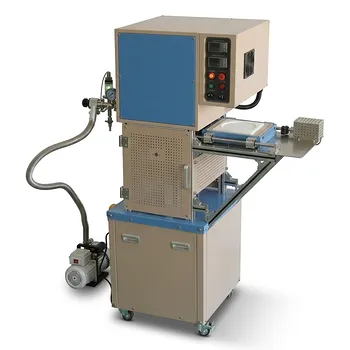
1200°C Bottom Loading Vacuum Furnace with Rapid Gas Cooling and 8.6 Inch Diameter Quartz Chamber
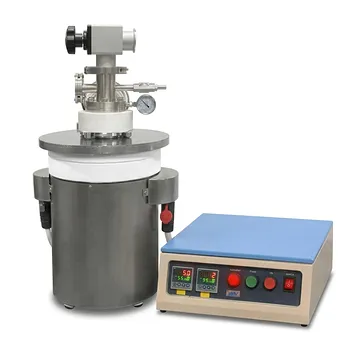
1100C High Temperature Vacuum Crucible Furnace with Quartz Chamber for Thermal Processing and Sintering
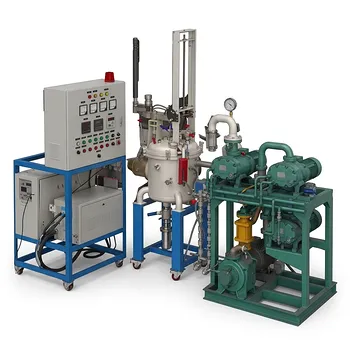
High Corrosion Vacuum Melting Furnace
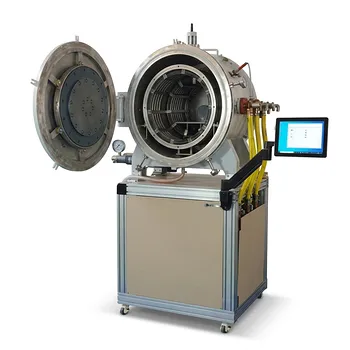
1600°C Cold Wall High Vacuum Chamber Furnace with Molybdenum Heating and 400mm Cube Work Zone
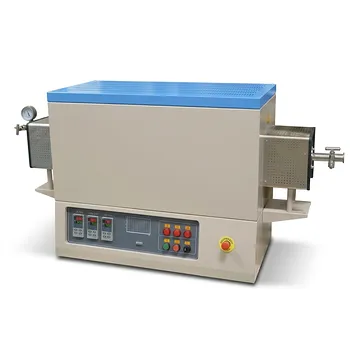
Three Zone Alumina Tube Furnace with Vacuum Flanges High Temperature 1700C Thermal Gradient CVD System