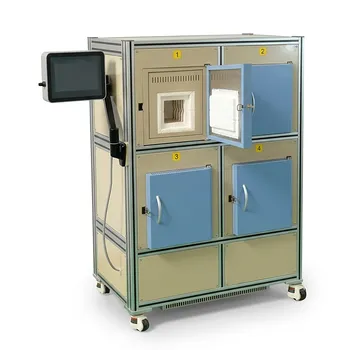
What role does a high-temperature annealing furnace play in forming ordered Pt3(CoNi) intermetallic catalysts?
Updated 5 months ago
The high-temperature annealing furnace serves as the critical thermal engine for atomic restructuring in catalyst synthesis. It provides the precise energy—typically ranging from 600°C to 1000°C—required to overcome the activation barriers that prevent atoms from moving into their ideal positions. By maintaining these temperatures alongside controlled gas environments, the furnace enables disordered metal mixtures to reorganize into the highly ordered crystalline lattices necessary for superior catalytic performance.
The furnace facilitates a phase transition from a disordered atomic arrangement to an ordered intermetallic structure by providing the thermal dynamics required for long-range atomic diffusion. This precise control over temperature and atmosphere is the deciding factor in achieving the specific stoichiometry and structural stability that defines high-performance Pt3(CoNi) catalysts.
Driving Atomic Diffusion and Structural Transition
Overcoming the Energy Barrier for Migration
At room temperature, metal atoms in a precursor are often trapped in a disordered, "random" state due to insufficient energy. The annealing furnace provides the specific thermal dynamics required to break these local bonds, allowing platinum, cobalt, and nickel atoms to migrate across the lattice.
Transitioning from Disordered to Ordered Phases
The primary role of the furnace is to facilitate the transition from a solid solution alloy to an ordered intermetallic phase. By precisely regulating the cooling and heating curves, the furnace ensures that atoms settle into a specific stoichiometric ratio (like the L10 structure), rather than remaining in a chaotic, amorphous arrangement.
Refining Crystalline Grain Growth
High-temperature environments promote the growth of crystalline grains and the repair of lattice defects. This process transforms low-crystallinity initial films or particles into highly crystalline structures, which significantly optimizes the catalyst’s optical and electrochemical properties.
Environmental Control and Chemical Reduction
Providing a Precise Reducing Atmosphere
The furnace acts as a sealed reaction chamber for introducing reducing gases such as hydrogen (H2) or H2/Ar mixtures. This environment is essential for reducing metal precursors in-situ, ensuring that the metals are in their zero-valent state before they begin the ordering process.
Facilitating Atomically Dispersed Active Sites
In specialized catalyst frameworks, the furnace uses thermal energy to drive cobalt species into nitrogen-defect sites within a carbon support. This creates atomically dispersed Co-N4 sites, which work synergistically with platinum to enhance the overall catalytic efficiency.
Removing Surface Impurities
Beyond structural ordering, the furnace performs a "cleaning" function by reaching temperatures that trigger the chemical decomposition of organic precursors and the removal of adsorbed water. This ensures that the final intermetallic phase is free from surface contaminants that would otherwise block active catalytic sites.
Understanding the Trade-offs and Constraints
The Risk of Particle Sintering
While high temperatures are necessary for ordering, excessive heat can lead to sintering, where small nanoparticles fuse into larger clumps. This reduces the total active surface area, potentially negating the benefits gained from the ordered intermetallic structure.
Atmospheric Sensitivity
If the furnace's atmosphere control is imprecise, oxygen traces can lead to the formation of metal oxides rather than the desired intermetallic phase. Achieving a truly ordered Pt3(CoNi) structure requires a rigorous balance between temperature and the partial pressure of reducing gases.
Energy and Time Demands
The transition to a highly ordered L10 structure often requires extended soaking times at high temperatures. This increases the energy footprint of the production process and requires furnace hardware capable of maintaining extreme stability over many hours.
How to Apply This to Your Catalyst Synthesis
To achieve the best results when forming ordered intermetallic phases, your furnace parameters should be tailored to your specific performance goals:
- If your primary focus is Maximum Electrochemical Stability: Use higher annealing temperatures (closer to 900°C-1000°C) and longer durations to ensure a complete transition to the most stable ordered phase.
- If your primary focus is High Mass Activity: Target the lower end of the effective annealing range (approx. 600°C-700°C) to promote atomic ordering while minimizing the loss of surface area through sintering.
- If your primary focus is Precision Stoichiometry: Prioritize a furnace with high-precision heating curves and a strictly controlled H2/Ar atmosphere to prevent the formation of secondary oxide phases.
By mastering the thermal environment of the annealing furnace, researchers can transform simple metal mixtures into highly durable and efficient intermetallic powerhouses.
Summary Table:
| Key Function | Mechanism | Impact on Catalyst Performance |
|---|---|---|
| Atomic Diffusion | Overcomes energy barriers for migration | Transitions disordered alloys to ordered L10 structures |
| Phase Transition | Precise heating/cooling curves | Ensures exact stoichiometry and long-range ordering |
| Atmosphere Control | In-situ H2/Ar reduction | Maintains zero-valent metal states and removes impurities |
| Structural Growth | Repair of lattice defects | Optimizes electrochemical stability and mass activity |
| Thermal Precision | High-temp soaking (600°C–1000°C) | Balances atomic ordering against the risk of sintering |
Elevate Your Catalyst Research with THERMUNITS
Achieving the perfect ordered intermetallic phase for Pt3(CoNi) catalysts requires more than just heat—it requires absolute control over temperature uniformity and atmospheric purity. THERMUNITS is a leading manufacturer of high-temperature laboratory equipment specifically designed for material science and industrial R&D.
Our comprehensive range of thermal solutions, including Vacuum, Atmosphere, Tube, and Rotary furnaces, as well as specialized CVD/PECVD systems, provides the precise thermal dynamics needed to overcome activation barriers without the risk of particle sintering.
Why choose THERMUNITS for your catalyst synthesis?
- Precision Control: Master your cooling and heating curves to achieve specific stoichiometric ratios.
- Atmospheric Integrity: Rigorous gas management (H2, Ar, N2) for flawless chemical reduction.
- Versatility: From Muffle and Hot Press furnaces to Vacuum Induction Melting (VIM), we support every stage of heat treatment.
Ready to transform your metal precursors into high-durability intermetallic powerhouses?
Contact our experts today to find the ideal furnace for your lab!
References
- Shiqi Song, Jianyong Zheng. Pt3(CoNi) Ternary Intermetallic Nanoparticles Immobilized on N-Doped Carbon Derived from Zeolitic Imidazolate Frameworks for Oxygen Reduction. DOI: 10.3390/ma17194775
Mentioned Products
- High Temperature 1000C Vacuum Furnace with 8 Inch ID Chamber for Material Sintering and Research Annealing
- High Temperature 1500C Benchtop Muffle Furnace 3.6L Alumina Fiber Chamber Programmable Controller Sintering Annealing Carbonization Thermal Processing System
- Large Bench Top 1700C High Temperature Muffle Furnace with 19L Chamber for Advanced Material Sintering and Annealing
- High Temperature Vertical Atmosphere Controlled Furnace with Automatic Bottom Loading and 1700°C Capacity for Advanced Material Research
- 1200C Five Side Heating Muffle Furnace with Sliding Door 125L Volume High Temperature Heat Treatment System for Large Scale Sintering and Annealing
People Also Ask
- How does the temperature control precision of a high-temperature sintering furnace affect Na1+xLa1-xZr2O6-δ ceramics?
- How does a high-temperature sintering furnace environment enhance NdFeB magnets? Achieve 98%+ density with precision.
- What is the function of high-vacuum furnaces in (Mo2/3V1/3)n+1AlCn MAX phase synthesis? Ensure Purity & Diffusion.
- How does a vacuum or atmosphere sintering furnace contribute to the congener-welding process of carbon nitride membranes?
- What Role Does a Vacuum Sintering Furnace Play in Ni-Mn-Ga Alloy Fabrication? Optimizing Porous Structures

Tech Team · ThermUnits
Last updated on Apr 14, 2026
Related Products
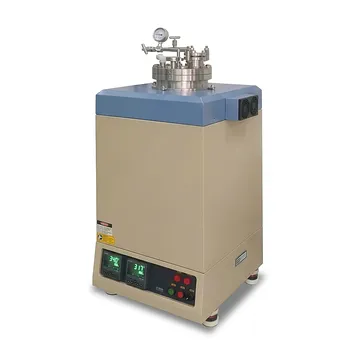
High Temperature 1000C Vacuum Furnace with 8 Inch ID Chamber for Material Sintering and Research Annealing
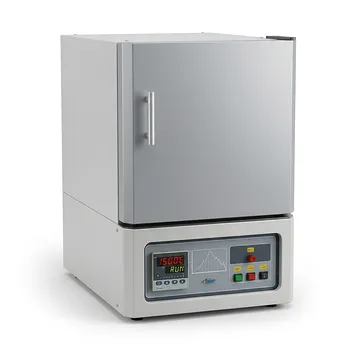
High Temperature 1500C Benchtop Muffle Furnace 3.6L Alumina Fiber Chamber Programmable Controller Sintering Annealing Carbonization Thermal Processing System
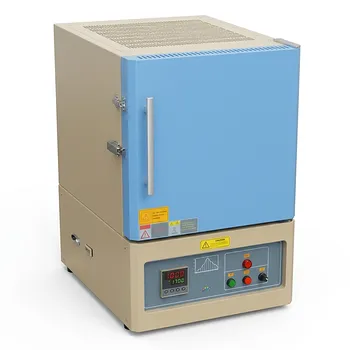
Large Bench Top 1700C High Temperature Muffle Furnace with 19L Chamber for Advanced Material Sintering and Annealing
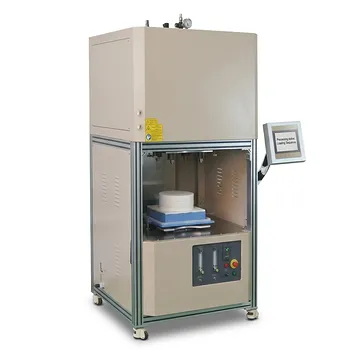
High Temperature Vertical Atmosphere Controlled Furnace with Automatic Bottom Loading and 1700°C Capacity for Advanced Material Research
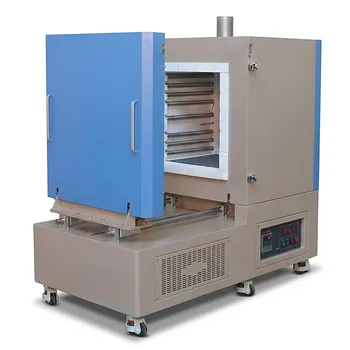
1200C Five Side Heating Muffle Furnace with Sliding Door 125L Volume High Temperature Heat Treatment System for Large Scale Sintering and Annealing
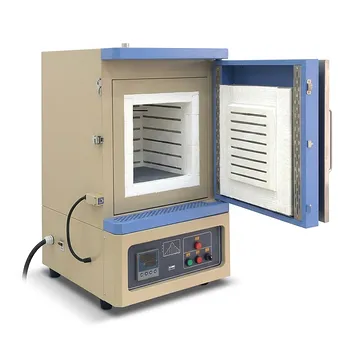
Five Side Heating Muffle Furnace High Purity Alumina Fiber 27L Chamber 1200C High Temperature Thermal Processing System for Sintering Annealing and Materials Research
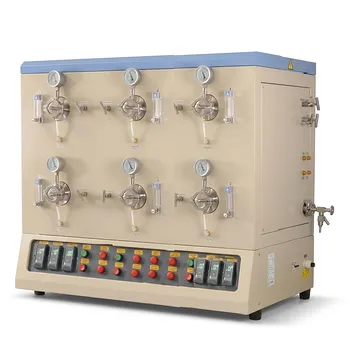
1200C High Throughput Multi Channel Tube Furnace with 50mm Quartz Tubes for Annealing and Material Phase Diagram Research
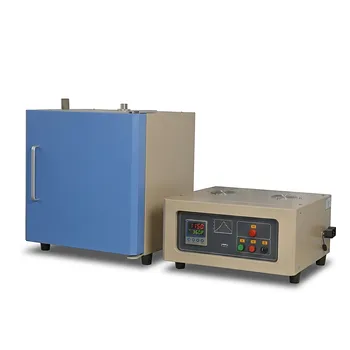
High Temperature Muffle Furnace with Alloy Chamber for Debinding and Sintering Applications

High Temperature Tube Furnace 1500C with Sliding Flanges and 50mm OD for Rapid Thermal Processing Fast Heating and Cooling

High Temperature 1700C Benchtop Tube Furnace with 5 Inch Heating Zone High Purity Alumina Tube and Vacuum Sealing Flanges
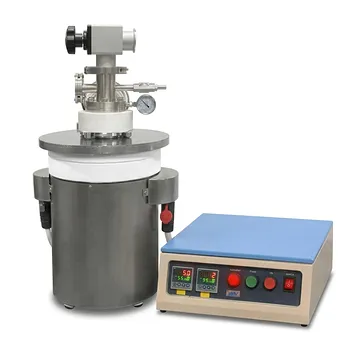
1100C High Temperature Vacuum Crucible Furnace with Quartz Chamber for Thermal Processing and Sintering
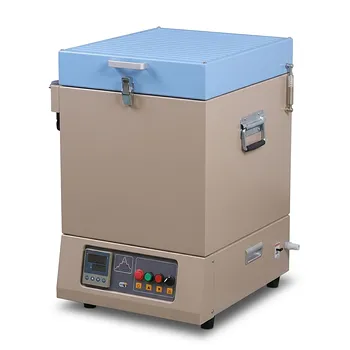
High Temperature Vertical Crucible Furnace with 22L Heating Chamber and 1200C Maximum Temperature
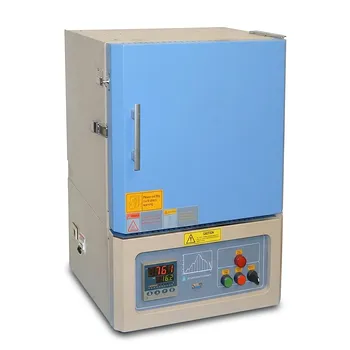
High Temperature 1700C Bench Top Muffle Furnace with Alumina Fiber Insulation and 3.6L Chamber Capacity for Precision Sintering and Heat Treatment

1750°C High Temperature Benchtop Vacuum Atmosphere Tube Furnace with Kanthal Super 1800 Heating Elements and 60mm Alumina Processing Tube
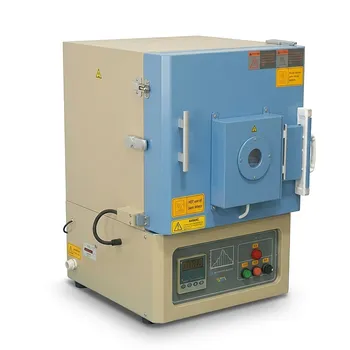
High Temperature Benchtop Muffle Furnace 1500C with 3.6L Chamber and Quartz Observation Window

High Temperature 1700C Tube Furnace with High Vacuum Turbomolecular Pump System and Multi Channel Mass Flow Controller Gas Mixer
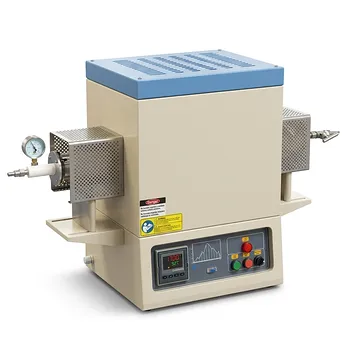
High Temperature Three Zone Tube Furnace 1700C with Alumina Tube and Water Cooled Flanges
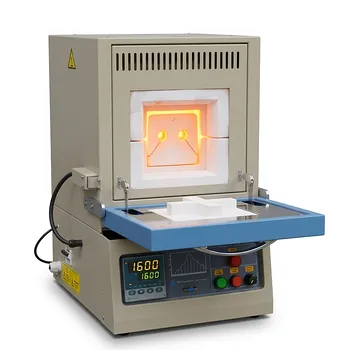
High Temperature Compact Muffle Furnace 1700 C with 30 Segment Programmable Controller and 1.7L Cubic Chamber
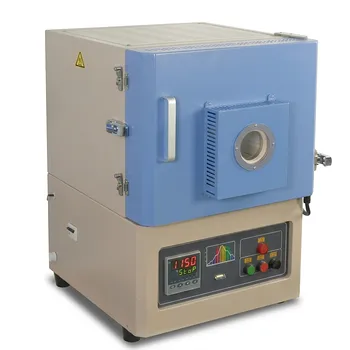
High Temperature Benchtop Muffle Furnace with Quartz Observation Window for Thermal Imaging and Material Analysis