Why is a nickel crucible preferred for high-temperature pyrolysis of porous carbon? Essential for KOH activation.
Updated 3 months ago
Nickel crucibles are the preferred choice for high-temperature pyrolysis because they provide exceptional chemical stability and corrosion resistance in reducing environments. They specifically prevent unwanted reactions with carbon precursors like ZIF-8 and withstand the aggressive erosion caused by alkaline activators such as potassium hydroxide (KOH). This ensures the resulting porous carbon remains high in purity and structurally consistent.
Core Takeaway: Nickel crucibles offer a specialized combination of thermal uniformity and chemical inertness that protects the sample from contamination during carbonization. Unlike standard ceramic vessels, they are uniquely resistant to the corrosive chemical activators required to create high-surface-area porous carbon.
The Advantage of Chemical Inertness
Resistance to Reducing Atmospheres
During the pyrolysis of materials like ZIF-8, the environment is typically reducing or inert. Nickel is highly stable under these specific conditions, ensuring that the crucible does not react with the sample or its gaseous decomposition products at temperatures up to 800°C.
Maintaining Sample Purity
Because nickel remains non-reactive during the carbonization process, it prevents the introduction of metallic or mineral impurities into the sample. This is critical for synthesizing nitrogen-doped porous carbon, where the precise chemical composition determines the material's final performance.
Superior Durability Against Corrosive Activators
Handling Molten Alkaline Agents
The production of porous carbon often involves chemical activation using strong bases like potassium hydroxide (KOH). At high temperatures (approx. 800°C), KOH becomes extremely corrosive to standard ceramic or quartz crucibles, whereas nickel maintains its structural integrity and resists erosion.
Uniform Heat Transfer
Nickel possesses excellent thermal conductivity compared to ceramic alternatives. This ensures that heat is distributed evenly throughout the sample, leading to a more consistent activation process and a more uniform pore structure in the final carbon product.
Extended Container Lifespan
While ceramic crucibles may crack or degrade after repeated exposure to thermal shock and chemical attack, nickel crucibles are more mechanically robust. Their ability to withstand the melting and decomposition of various precursors without deformation makes them a more reliable long-term investment for laboratory environments.
Understanding the Trade-offs
Temperature Limitations
Nickel crucibles are generally limited to applications below 800°C to 900°C. Beyond these temperatures, the metal may begin to soften or become more susceptible to alloying with certain sample components, which could compromise the experiment.
Sensitivity to Oxidizing Environments
Unlike ceramic materials, nickel is prone to oxidation when heated in the presence of oxygen. If the furnace environment is not strictly controlled (e.g., if there is a leak in the inert gas flow), a layer of nickel oxide will form, which may flake off and contaminate the sample.
High Initial Cost
High-purity nickel crucibles are typically more expensive than standard alumina or clay crucibles. This higher upfront cost must be balanced against their specialized resistance to alkaline corrosion and their longer lifespan in specific pyrolysis applications.
Making the Right Choice for Your Goal
How to Apply This to Your Project
Selecting the right vessel depends entirely on your specific chemical environment and thermal requirements.
- If your primary focus is KOH activation of carbon: Use a nickel crucible to prevent container erosion and ensure the purity of your high-surface-area product.
- If your primary focus is pyrolysis in an oxidative (air) atmosphere: Avoid nickel and opt for a high-purity alumina or ceramic crucible to prevent the formation of metal oxide contaminants.
- If your primary focus is temperatures exceeding 1000°C: Utilize quartz or specialized alumina vessels, as nickel will reach its thermal limit and may deform or react with the sample.
- If your primary focus is synthesizing nitrogen-doped carbon from MOFs: Stick with nickel to take advantage of its stability in the reducing gases naturally released during metal-organic framework decomposition.
Choosing a nickel crucible is a strategic decision that prioritizes chemical purity and container longevity in the harsh environments of alkaline carbon activation.
Summary Table:
| Feature | Benefit | Ideal Application |
|---|---|---|
| Chemical Stability | Resists aggressive KOH and alkaline erosion | Chemical activation of porous carbon |
| Sample Purity | Prevents metallic and mineral contamination | Synthesis of nitrogen-doped carbon |
| Thermal Conductivity | Ensures uniform heat distribution | Creating consistent pore structures |
| Mechanical Robustness | High resistance to thermal shock and cracking | Long-term laboratory reuse |
| Atmosphere Support | Stable in reducing or inert gas environments | Pyrolysis of MOFs like ZIF-8 |
Elevate Your Material Research with THERMUNITS
Are you looking to optimize your high-temperature pyrolysis or chemical activation processes? THERMUNITS is a leading manufacturer of high-temperature laboratory equipment for material science and industrial R&D. We provide the precision and reliability required for advanced carbon synthesis and thermal processing.
Our comprehensive range of solutions includes:
- Laboratory Furnaces: Muffle, Vacuum, Atmosphere, Tube, Rotary, and Hot Press furnaces.
- Advanced Systems: CVD/PECVD systems and Vacuum Induction Melting (VIM) furnaces.
- Specialized Equipment: Dental Furnaces, electric rotary kilns, and premium Thermal Elements.
Whether you are working with MOF decomposition or aggressive alkaline activators, our equipment is designed to ensure consistent results and superior durability.
Contact THERMUNITS Today to discuss your specific heat treatment requirements with our technical experts!
References
- Xiaobo Han, Shicheng Zhang. ZIF-8-Based Nitrogen and Monoatomic Metal Co-Doped Pyrolytic Porous Carbon for High-Performance Supercapacitor Applications. DOI: 10.3390/nano14161367
Mentioned Products
- Compact Crucible Melting Furnace 1100C Programmable Temperature Controller Metal Sintering Equipment
- 1100C Crucible Melting Furnace with Stirring Function for Glovebox and Air Sensitive Alloy Research
- High Temperature Vertical Crucible Furnace with 22L Heating Chamber and 1200C Maximum Temperature
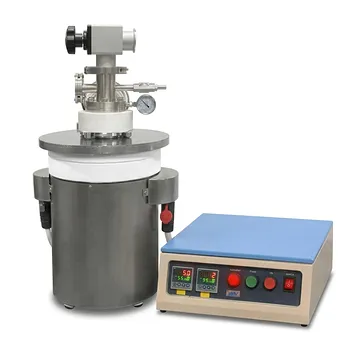
- 600°C Vertical Crucible Furnace with SS316 Alloy Reactor and 6 Port Vacuum Flange
- Vertical Crucible Furnace 1000C High Temperature Laboratory Equipment 4.7 Inch Diameter Chamber SS316 Anti Corrosive Enclosure
People Also Ask
- Why are internal getters such as Titanium used during the synthesis of oxygen-sensitive materials in a melting furnace?
- How should the choice between a Quartz crucible and an Alumina crucible be made for La2O2S? Optimize Material Purity
- What is the function of a programmable high-temperature Laboratory Furnace in evaluating the fire resistance of concrete?
- Why is a laboratory sintering furnace reaching 950°C required for Ho2YSbO7? Ensure Pure Pyrochlore Phase Purity
- What operational efficiencies do programmable dental furnaces provide to high-volume laboratories? Maximize Scalability

Tech Team · ThermUnits
Last updated on Jun 03, 2026
Related Products
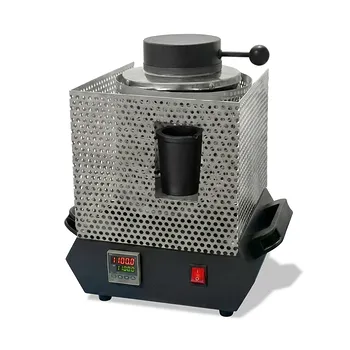
Compact Crucible Melting Furnace 1100C Programmable Temperature Controller Metal Sintering Equipment
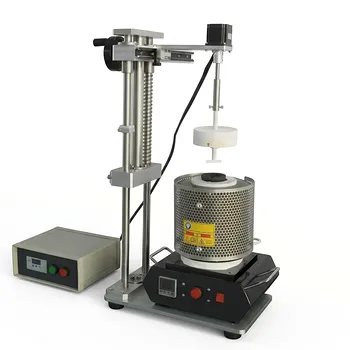
1100C Crucible Melting Furnace with Stirring Function for Glovebox and Air Sensitive Alloy Research
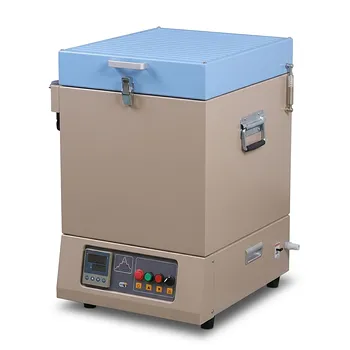
High Temperature Vertical Crucible Furnace with 22L Heating Chamber and 1200C Maximum Temperature
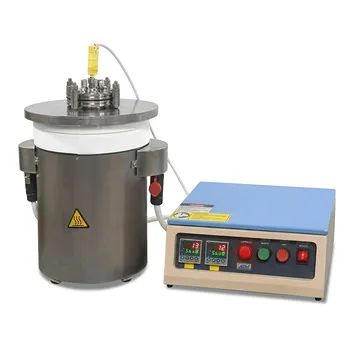
600°C Vertical Crucible Furnace with SS316 Alloy Reactor and 6 Port Vacuum Flange
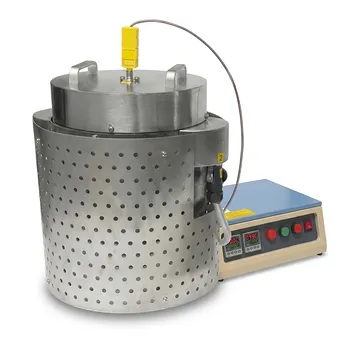
Vertical Crucible Furnace 1000C High Temperature Laboratory Equipment 4.7 Inch Diameter Chamber SS316 Anti Corrosive Enclosure
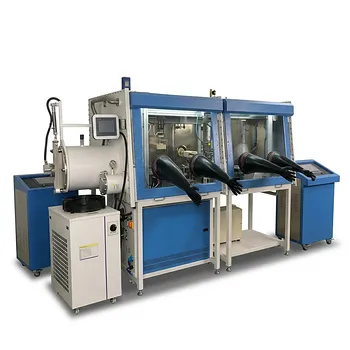
Automatic 10 Crucible Induction Melting and Casting System with Stirring Function and Glovebox Integration 2000C
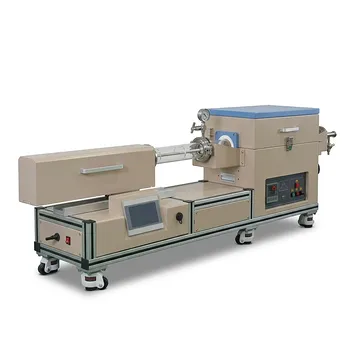
1200C Sliding Internal Crucible Tube Furnace for Controlled Atmosphere Thin Film Deposition and Material Sublimation Research