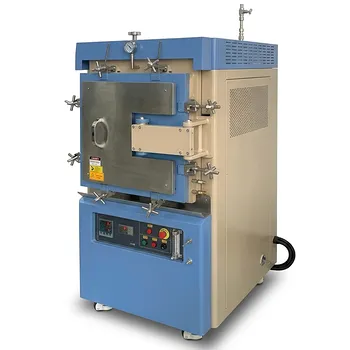
Why is a precise flow-controlled inert gas supply system essential during the biomass pyrolysis stage? Ensure High Yield.
Updated 3 months ago
Precise flow control is the critical safeguard that prevents biomass from burning into ash during thermal treatment. By maintaining a strictly anaerobic or oxygen-limited environment, this system ensures that biomass undergoes thermal decomposition (pyrolysis) rather than oxidative combustion. This allows for the controlled creation of biochar with specific chemical structures while simultaneously transporting volatile vapors out of the reaction zone.
A precise gas supply system is essential because it simultaneously prevents the destructive oxidation of carbon and regulates the residence time of volatile products, which determines the final quality and yield of the biochar and bio-oil.
Ensuring Chemical Integrity Through Atmosphere Control
Prevention of Oxidative Combustion
At the high temperatures required for pyrolysis (often exceeding 500°C), biomass will instantly ignite if oxygen is present. An inert gas supply, typically using high-purity nitrogen or argon, displaces oxygen to ensure the material decomposes thermally without catching fire.
Establishing a Stable Carbon Skeleton
By excluding oxygen, the system limits thermochemical reactions to devolatilization and solid-phase carbonization. This controlled environment allows carbon elements to undergo dehydrogenation and thermal reorganization, resulting in a stable, aromatic carbon skeleton.
Preservation of Surface Functional Groups
Maintaining a consistent inert atmosphere prevents random oxidation of the biomass surface. This is vital for researchers who need to preserve specific surface functional groups and microscopic morphologies for applications in filtration or catalysis.
Regulating Vapor Dynamics and Secondary Reactions
Efficient Removal of Volatile Components
As biomass heats up, it releases various gases and vapors that can undergo "secondary cracking" if they remain in the hot zone too long. A constant, controlled flow of inert gas acts as a carrier, rapidly transporting these volatiles into condensation systems for recovery.
Controlling Vapor Residence Time
The precision of a Mass Flow Controller (MFC) allows operators to dictate exactly how long vapors stay inside the reactor. Adjusting this residence time is a primary lever for optimizing the yield of bio-oil versus non-condensable gases.
Facilitating Accurate Mass Balance
For industrial and laboratory accuracy, maintaining a constant volume flow rate is essential for mass balance calculations. This precision ensures that the input of carrier gas and the output of product vapors can be measured reliably to determine process efficiency.
Understanding the Trade-offs and Risks
The Risk of Insufficient Flow Rates
If the flow rate is too low, volatile products linger in the reactor, leading to secondary reactions that can deposit soot or heavy tars onto the biochar. This can clog the internal pore structures of the char, significantly reducing its surface area and utility.
The Impact of Excessive Gas Flow
Conversely, a flow rate that is too high can lead to thermal quenching, where the cool inert gas lowers the internal temperature of the furnace. This can result in incomplete pyrolysis and lower-quality yields because the biomass never reaches the required peak temperature.
Equipment and Seal Integrity
Even with a precise flow controller, the system is only as good as its seals. At high temperatures, any leak can allow oxygen ingress via back-pressure, leading to localized combustion and potential damage to the furnace or the sample.
How to Optimize Your Gas Supply System
To achieve the best results in biomass pyrolysis, your approach to gas management should align with your specific material goals.
- If your primary focus is high-surface-area biochar: Maintain a steady, moderate flow rate to ensure all volatiles are removed quickly without cooling the reactor, preventing pore-clogging soot deposition.
- If your primary focus is maximizing bio-oil yield: Use high-precision mass flow controllers to minimize vapor residence time, ensuring volatiles reach the condenser before they can break down into permanent gases.
- If your primary focus is catalyst synthesis (e.g., single-atom catalysts): Utilize high-purity argon and a pre-heating purge cycle to ensure a strictly reductive atmosphere that prevents the oxidation of metal precursors.
A perfectly regulated inert gas stream transforms a simple furnace into a precision chemical reactor capable of engineering advanced carbon materials.
Summary Table:
| Key Function | Benefit of Precise Control | Risk of Poor Control |
|---|---|---|
| Atmosphere Integrity | Prevents combustion; preserves carbon skeleton | Biomass burns to ash; loss of sample integrity |
| Vapor Dynamics | Regulates residence time; removes volatiles | Secondary cracking; soot/tar clogging pores |
| Thermal Stability | Maintains peak reaction temperature | Thermal quenching; incomplete pyrolysis |
| Yield Optimization | Accurate mass balance & product quality | Low-quality bio-oil; reduced surface area |
Maximize Your Pyrolysis Precision with THERMUNITS
Achieving high-quality biochar and bio-oil requires more than just heat—it requires absolute control. THERMUNITS is a leading manufacturer of high-temperature laboratory equipment designed specifically for material science and industrial R&D. We offer a comprehensive range of thermal processing solutions, including Atmosphere, Tube, Vacuum, and Rotary furnaces, as well as advanced CVD/PECVD systems and Vacuum Induction Melting (VIM) furnaces.
Our equipment features high-precision gas management systems to ensure your biomass research is consistent, scalable, and efficient. Whether you are focusing on carbonization, catalyst synthesis, or industrial scaling, our experts are ready to provide the right furnace for your needs.
Contact THERMUNITS today to optimize your laboratory heat treatment!
References
- María Luz Cayuela, Miguel Á. Sánchez-Monedero. Key biochar properties linked to denitrification products in a calcareous soil. DOI: 10.1007/s42773-024-00386-3
Mentioned Products
- Electric Rotary Kiln Small Rotary Furnace Biomass Pyrolysis Plant
- Bottom Loaded Inert Gas Atmosphere Box Furnace 1400C Maximum Temperature 125L High Capacity Laboratory Heat Treatment System
- Gas Pre-Heating Tube Furnace for High Temperature Pyrolysis Reactors and Material Science Research
- Bottom Loaded Inert Gas Atmosphere Box Furnace 1700C 1300C 216L Large Capacity Industrial Thermal Processing System
- 1400C Bottom Loaded Inert Gas Atmosphere Box Furnace with 125L Capacity and Precision Hydraulic Lift
People Also Ask
- How does the electric rotary kiln support environmental compliance and sustainability? Achieve Zero-Emission Production
- What are the maintenance and service life advantages of an electric rotary kiln? 25+ Year Longevity & Low Maintenance
- What thermal efficiency can be expected from an electric rotary kiln compared to fuel-fired alternatives? Gain 95% efficiency.
- How does the use of an electric rotary kiln facilitate CO2 capture in cement and lime production? Achieve High-Purity CCUS
- Which minerals and specialty chemicals are commonly processed using electric rotary kilns? Precision Thermal Processing Guide

Tech Team · ThermUnits
Last updated on Jun 03, 2026
Related Products
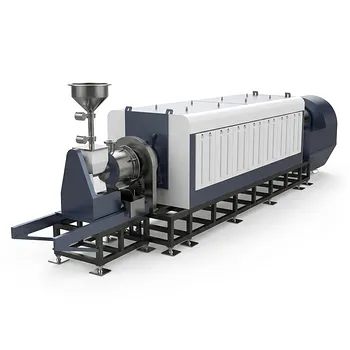
Electric Rotary Kiln Small Rotary Furnace Biomass Pyrolysis Plant
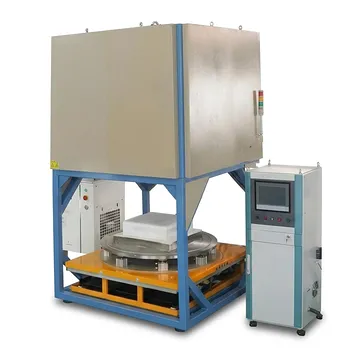
Bottom Loaded Inert Gas Atmosphere Box Furnace 1400C Maximum Temperature 125L High Capacity Laboratory Heat Treatment System
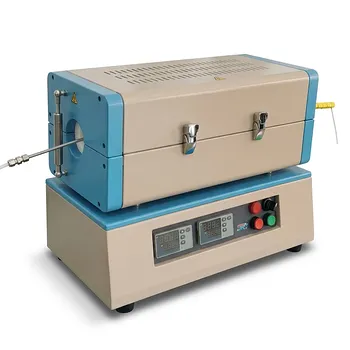
Gas Pre-Heating Tube Furnace for High Temperature Pyrolysis Reactors and Material Science Research
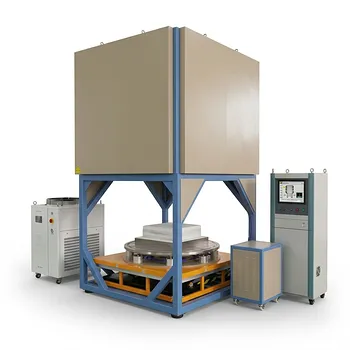
Bottom Loaded Inert Gas Atmosphere Box Furnace 1700C 1300C 216L Large Capacity Industrial Thermal Processing System
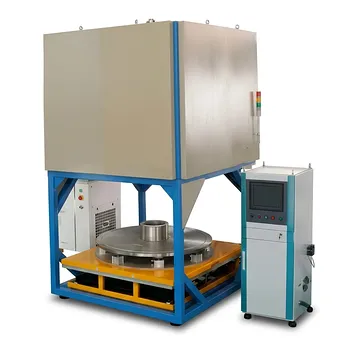
1400C Bottom Loaded Inert Gas Atmosphere Box Furnace with 125L Capacity and Precision Hydraulic Lift
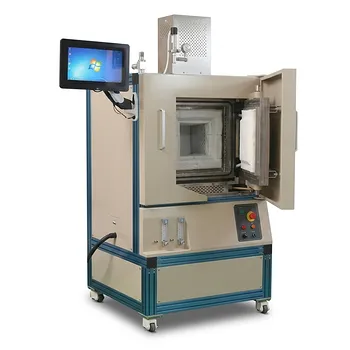
High Temperature Oxygen and Inert Atmosphere Controlled Furnace 8 Liter 1700C Sintering System for Advanced Materials RD