Why is a precise gas flow control system for argon required in tin smelting simulation experiments? Key to Purity.
Updated 3 months ago
In tin smelting simulation, precision is the difference between a controlled reduction reaction and an accidental oxidation event. A precise argon gas flow control system is required to continuously displace air and maintain an inert atmosphere, preventing the unintended secondary oxidation of molten tin and low-valence tin oxides at high temperatures. This ensures that the oxygen partial pressure within the furnace is dictated solely by the reactant components, effectively replicating the thermodynamic environment of industrial metallurgical smelting.
The core takeaway is that a precise argon flow system transforms a furnace into a "closed" thermodynamic system where oxygen levels are chemically controlled rather than environmentally dictated. This precision is vital for preventing oxidation, managing vapor transport, and ensuring the structural integrity of the final metal or oxide product.
Preventing Secondary Oxidation and Ablation
Maintaining Atmospheric Purity
At the high temperatures required for tin smelting—often exceeding 900 °C—metallic tin and its low-valence oxides are highly reactive with oxygen. A continuous, precise flow of high-purity argon acts as a protective blanket that purges air from the furnace. This prevents the "secondary oxidation" of the sample, which would otherwise invalidate results by introducing external oxygen into a system designed to measure reduction.
Protecting Carbon and Shell Structures
In advanced smelting simulations involving carbon layers or silicon oxycarbide (SiOC) shells, an inert environment is critical to prevent "ablation." Without precise argon control, high temperatures would cause the protective carbon structures to burn away (oxidize). Maintaining an oxygen-free atmosphere ensures the chemical purity and structural integrity of these active materials throughout the experiment.
Achieving Thermodynamic Fidelity
Controlling Oxygen Partial Pressure
In metallurgical smelting, the success of the reduction process depends on the specific oxygen partial pressure. By using a precise gas control system to eliminate ambient air, researchers can ensure that the oxygen levels are governed entirely by the reactant components. This allows the experiment to simulate real-world smelting environments where the interaction between the ore and the reducing agent is the only variable.
Simulating Industrial Reduction
A stable flow of argon allows the experiment to reach a "steady state" that mimics the interior of a massive industrial furnace. By removing the randomness of atmospheric leaks or fluctuations, the simulation provides reliable data on the physicochemical properties of the ore in its reduced state. This is essential for measuring behavior like melting points and wettability.
Managing Vapor Transport and Morphology
Regulating Supersaturation and Growth
Beyond protection, flowing argon acts as a carrier gas that transports metallic vapors and volatile by-products away from the reaction zone. The flow rate directly determines the supersaturation levels of vapors; even minor fluctuations can significantly impact the nucleation and growth of the material. For example, in similar metallic syntheses, specific flow rates can dictate whether a material grows as a one-dimensional nanowire or a two-dimensional nanosheet.
Removing Volatile By-products
Smelting reactions often generate volatile by-products that, if left stagnant, could interfere with the chemical equilibrium of the furnace. A continuous, precise flow of argon carries these residuals downstream. This maintains a stable chemical environment and prevents the re-deposition of contaminants onto the purified tin sample.
Understanding the Trade-offs
Flow Rate vs. Temperature Stability
While a high flow rate is excellent for ensuring an inert atmosphere, it can act as a heat sink, inadvertently cooling the sample and creating thermal gradients. A system that lacks precision may introduce "thermal stress," leading to cracks or peeling in the material. Researchers must balance the need for high-purity purging with the need for a stable, uniform temperature field.
The Cost of Precision
Using high-precision mass flow controllers (MFCs) and high-purity argon (99.999%+) increases the complexity and cost of the experimental setup. However, "low-precision" alternatives often lead to minor fluctuations (e.g., changes of only a few sccm), which are enough to alter the morphology of the crystals or allow trace oxidation, ultimately rendering the experimental data non-reproducible.
How to Apply This to Your Project
A precise gas flow control system should be configured based on the specific phase of your smelting simulation.
- If your primary focus is Thermodynamic Accuracy: Maintain a constant, low-velocity flow (e.g., 0.5 Nl/min) to ensure an inert atmosphere without disrupting the chemical equilibrium of the reactants.
- If your primary focus is Material Morphology: Use a high-precision mass flow controller to strictly regulate the carrier gas rate, as this will determine the transport and deposition rate of the metallic vapors.
- If your primary focus is Structural Integrity: Ensure the gas flow is stabilized during the cooling phase to prevent non-uniform cooling, which protects the sample from thermal stress and cracking.
By mastering gas flow precision, you ensure that your experimental results are a product of intended chemistry rather than atmospheric interference.
Summary Table:
| Key Function | Impact on Smelting Simulation | Experimental Outcome |
|---|---|---|
| Atmospheric Purity | Displaces air to prevent secondary oxidation/ablation | Chemical purity and structural integrity |
| Thermodynamic Fidelity | Controls oxygen partial pressure via reactant components | Replicates industrial smelting environments |
| Vapor Management | Regulates supersaturation and carrier gas rate | Controlled morphology (e.g., nanowires) |
| Flow Precision | Balances inert purging with thermal field stability | Reduced thermal stress and cracking |
Optimize Your Smelting Simulations with THERMUNITS
Precision in gas flow is non-negotiable for high-fidelity metallurgical research. THERMUNITS is a leading manufacturer of high-temperature laboratory equipment for material science and industrial R&D. We offer a comprehensive range of thermal processing solutions—including Atmosphere, Tube, and Vacuum furnaces, CVD/PECVD systems, and Rotary kilns—specifically designed to provide the stable, oxygen-free environments required for precise tin smelting and material synthesis.
Our equipment ensures your experiments are governed by intended chemistry, not atmospheric interference. Contact our expert team today to find the perfect thermal solution for your lab!
References
- Afif Nur Iksan, Taufiq Hidayat. Thermodynamic Simulation and Laboratory-Scale Experiments of Tin Smelting at Al<sub>2</sub>O<sub>3</sub> Saturation. DOI: 10.1021/acsomega.4c07621
Mentioned Products
- Induction Heating System with Temperature Control for High Temperature Vacuum Sintering and Melting
- High Throughput Induction Melting and Casting Furnace for Superalloy Research 1700C Atmosphere Controlled Multi Sample System
- Automatic 10 Crucible Induction Melting and Casting System with Stirring Function and Glovebox Integration 2000C
- High Temperature Induction Melting System with Integrated Ultra High Purity Glove Box for Metallic Alloy Processing
- High Temperature Oxygen and Inert Atmosphere Controlled Furnace 8 Liter 1700C Sintering System for Advanced Materials RD
People Also Ask
- What is the role of a vacuum induction melting furnace combined with a water-cooled copper mold? Mastering RHEA Purity
- Explain the physical principle behind heat generation in a Vacuum Induction Melting (VIM) furnace: A Technical Guide
- Why is a VIM furnace essential for high-purity alloys? Achieve unmatched metal purity and structural integrity.
- Why is Vacuum Induction Melting preferred for manufacturing corrosion-resistant alloys? Ensure Ultra-High Purity
- How does Vacuum Induction Melting mitigate hydrogen embrittlement? Ensure Structural Integrity for Critical Alloys

Tech Team · ThermUnits
Last updated on Jun 03, 2026
Related Products
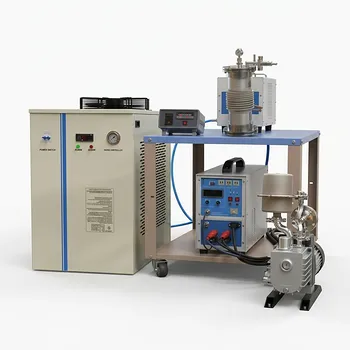
Induction Heating System with Temperature Control for High Temperature Vacuum Sintering and Melting
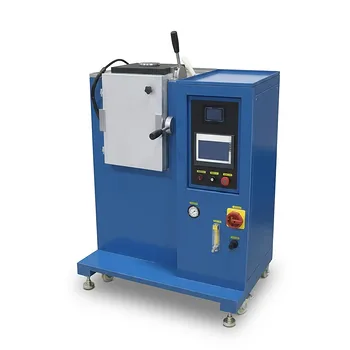
High Throughput Induction Melting and Casting Furnace for Superalloy Research 1700C Atmosphere Controlled Multi Sample System
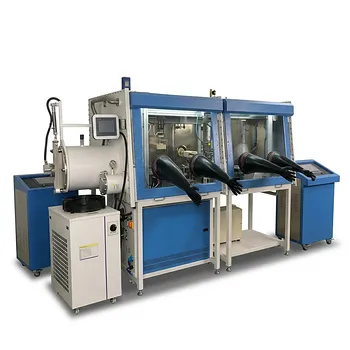
Automatic 10 Crucible Induction Melting and Casting System with Stirring Function and Glovebox Integration 2000C
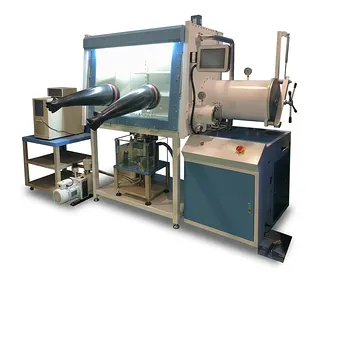
High Temperature Induction Melting System with Integrated Ultra High Purity Glove Box for Metallic Alloy Processing