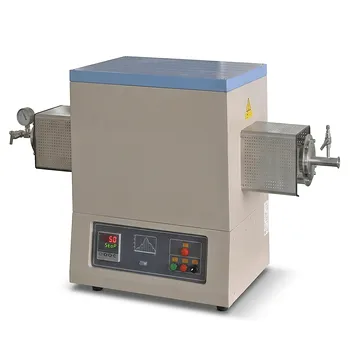
Why is a precise heating rate required for biochar pyrolysis in a Tube Furnace? Optimize Carbon Yield and Porosity.
Updated 3 months ago
Precise heating rate control is the defining factor in the quality of biochar. By maintaining a steady rate, such as 5 °C per minute, a tube furnace ensures that biomass particles undergo uniform thermal decomposition, preventing the violent, uncontrolled cracking of organic matter. This precision allows for the orderly development of aromatic structures and internal functional groups, which directly dictates the final product's yield, chemical stability, and structural integrity.
Core Takeaway: A precise heating rate regulates the speed of volatile release and chemical transformation, preventing structural collapse while maximizing carbon retention. It transforms pyrolysis from a chaotic burn into a controlled molecular assembly.
Facilitating Molecular Order and Chemical Stability
The Development of Aromatic Structures
Precise heating allows the raw material to transition through thermal stages without "thermal shock." This controlled environment facilitates the orderly development of internal functional groups, such as the complex aromatic structures that give biochar its stability.
Regulating Thermal Cracking Pathways
By controlling the temperature gradient, a tube furnace optimizes the thermal cracking pathways of organic molecules. This ensures that phenolic substances and other precursors convert into the desired carbon matrix rather than being lost to excessive gasification.
Production of Persistent Free Radicals (PFRs)
Specific heating rates allow for the controlled formation of persistent free radicals (PFRs). These radicals are critical for biochar used in environmental remediation, as they enhance the material's ability to reduce contaminants like hexavalent chromium.
Preserving Physical Architecture and Porosity
Preventing Pore Wall Collapse
If heating is too rapid, the internal gas pressure from escaping volatiles rises too quickly. Precise control ensures that these gases are released at a steady pace, preventing high internal pressure from causing the structural collapse or "coking" of the pore walls.
Creation of Hierarchical Pore Structures
A stable heating rate promotes the formation of a balanced hierarchical structure consisting of micropores and mesopores. This "honeycomb" architecture is essential for applications requiring high surface area, such as the adsorption of lead ions or other heavy metals.
Enhancing Carbon Retention
Slow, precise heating rates extend the residence time of biomass in lower temperature zones. This promotes solid-phase dehydration and polycondensation, which reduces carbon loss and results in biochar with higher carbon sequestration potential.
Understanding the Trade-offs
Yield vs. Throughput
While a slower, more precise heating rate (like 5 °C/min) produces a higher quality biochar with better carbon retention, it significantly increases the processing time. Industrial applications must often balance the need for high-quality "specialty" biochar against the energy costs and time requirements of slow pyrolysis.
The Risk of Localized Overheating
Even with a set heating rate, localized overheating can occur if the furnace lacks high-precision sensors. Localized overheating can lead to non-uniform batches where some particles are over-carbonized (losing functional groups) while others remain under-processed, ruining the consistency of the final product.
How to Apply This to Your Project
Recommendations Based on Your Objectives
- If your primary focus is carbon sequestration: Use a slow heating rate (under 10 °C/min) to promote polycondensation and maximize solid carbon retention.
- If your primary focus is water filtration or adsorption: Prioritize a precise, moderate heating rate to prevent pore collapse and ensure a high-density micropore structure.
- If your primary focus is chemical reactivity (e.g., PFR production): Carefully monitor the specific temperature intervals during the heating ramp to optimize the conversion of phenolic substances.
- If your primary focus is energy storage composites: Ensure the tube furnace is strictly sealed with an inert gas flow to protect the carbon structure from aerobic combustion during the heating ramp.
Precise thermal control transforms biomass from a simple waste product into a highly engineered technical material.
Summary Table:
| Key Factor | Effect of Precise Heating Rate | Impact on Biochar Quality |
|---|---|---|
| Molecular Structure | Facilitates orderly development of aromatic groups | Enhanced chemical stability and PFR formation |
| Pore Architecture | Regulates volatile release to prevent wall collapse | High surface area for superior adsorption |
| Carbon Retention | Promotes solid-phase polycondensation | Maximized carbon sequestration potential |
| Thermal Uniformity | Prevents localized overheating and "coking" | Consistent batches with uniform functional groups |
| Reaction Path | Optimizes thermal cracking pathways | Controlled conversion from biomass to carbon matrix |
Elevate Your Material Research with THERMUNITS Precision
At THERMUNITS, we specialize in the engineering of high-performance thermal processing solutions that provide the exact temperature control your research demands. As a leading manufacturer for material science and industrial R&D, we offer a comprehensive range of equipment, including Tube, Muffle, Vacuum, Atmosphere, Rotary, and Hot Press furnaces, as well as CVD/PECVD systems and Vacuum Induction Melting (VIM) furnaces.
Don't let imprecise heating compromise your biochar quality or structural integrity. Our advanced heating elements and control systems ensure the stability needed for perfect pyrolysis every time.
Ready to optimize your heat treatment results?
Contact THERMUNITS Expert Team Today to find the ideal furnace solution for your laboratory.
References
- Sha Zhang, Shuge Tian. Spectral characterization of the impact of modifiers and different prepare temperatures on snow lotus medicinal residue-biochar and dissolved organic matter. DOI: 10.1038/s41598-024-57553-6
Mentioned Products
- Gas Pre-Heating Tube Furnace for High Temperature Pyrolysis Reactors and Material Science Research
- 1500C Three Zone Vertical Pyrolysis Furnace for Nanoparticle Synthesis and Advanced Oxide Coating
- Electric Rotary Kiln Small Rotary Furnace Biomass Pyrolysis Plant
- High Temperature 1700C Vertical Tube Furnace for Powder Spherification and Material Sintering
- Electric Rotary Kiln Continuous Working Small Rotary Furnace Heating Pyrolysis Plant
People Also Ask
- What is the function of a preheated high-temperature tube furnace in the rapid pyrolysis synthesis of carbon nitride films?
- What is the role of a high-temperature tube furnace in coal powder pyrolysis benchmarking? Achieve Precise Baselines.
- Why is high-precision temperature control essential in a pyrolysis furnace? Master Pd NPs/NO-C Catalyst Synthesis
- How does a high-temperature tube furnace facilitate the pyrolysis of PR-ZS hybrid aerogels into carbon aerogels?
- How is a laboratory tube heating furnace applied during the evaluation of denitration catalysts? Essential Guide

Tech Team · ThermUnits
Last updated on Jun 02, 2026
Related Products
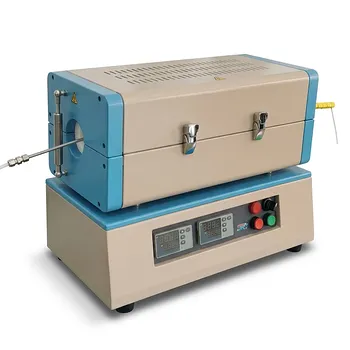
Gas Pre-Heating Tube Furnace for High Temperature Pyrolysis Reactors and Material Science Research
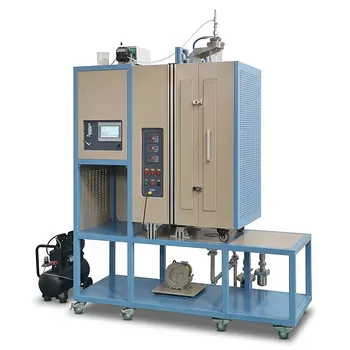
1500C Three Zone Vertical Pyrolysis Furnace for Nanoparticle Synthesis and Advanced Oxide Coating
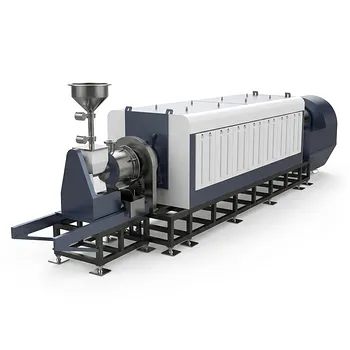
Electric Rotary Kiln Small Rotary Furnace Biomass Pyrolysis Plant

High Temperature 1700C Vertical Tube Furnace for Powder Spherification and Material Sintering
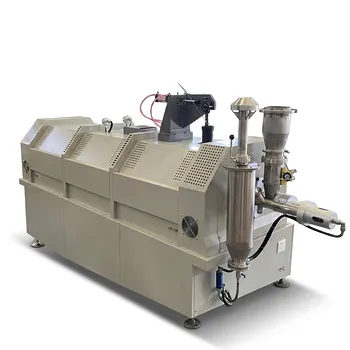
Electric Rotary Kiln Continuous Working Small Rotary Furnace Heating Pyrolysis Plant

Compact Vertical Split Quartz Tube Furnace with Stainless Steel Vacuum Flanges for Rapid Thermal Quenching and Controlled Atmosphere Material Processing

Compact High Temperature 1600C Tube Furnace with 50mm Alumina Tube and Vacuum Flanges for Material Sintering

High Temperature Automated 5 Inch Tube Furnace for Autonomous Material Research and Advanced Laboratory R&D

1100C Tube Furnace with Vacuum Flange and Programmable Temperature Controller for Material Science and Industrial Heat Treatment
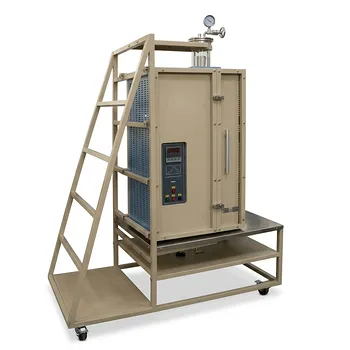
Split Vertical Tube Furnace with 1200C Quartz Tube and Stainless Steel Vacuum Flanges for Rapid Thermal Processing
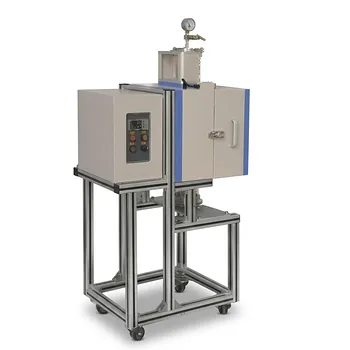
1200°C 5 Inch Vertical Quartz Tube Furnace with Stainless Steel Vacuum Flanges
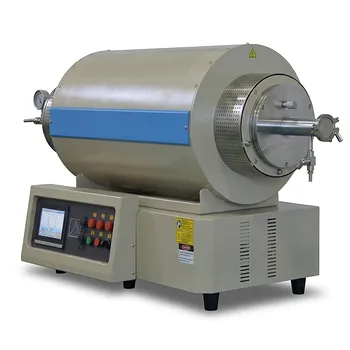
1200C Max Three Zone Tube Furnace 6 Inch OD Max with Tube and Flange
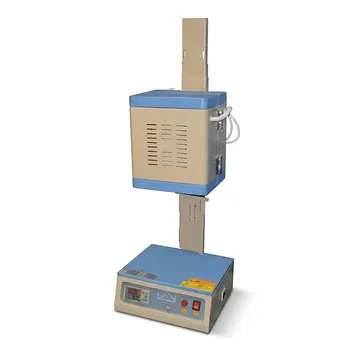
High Temperature Vertical Split Tube Furnace with PID Temperature Controller for 1 and 2 Inch Processing Tubes

Vertical 1700C Vacuum and Atmosphere Tube Furnace with 80mm Alumina Tube

1800C High Temperature Compact Vacuum Tube Furnace with 60mm OD Alumina Tube and Kanthal MoSi2 Heating Elements

1200C High Throughput Multi Channel Tube Furnace with 50mm Quartz Tubes for Annealing and Material Phase Diagram Research
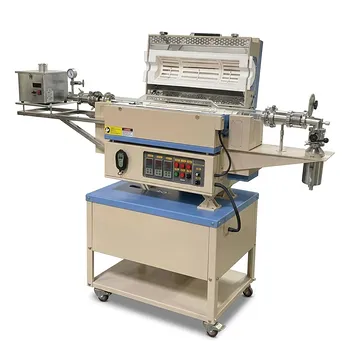
5 Inch Rotary Tube Furnace with Automatic Feeding and Receiving System 1200C Three Zone CVD Powder Processing

High Temperature 1700C Benchtop Tube Furnace with 5 Inch Heating Zone High Purity Alumina Tube and Vacuum Sealing Flanges
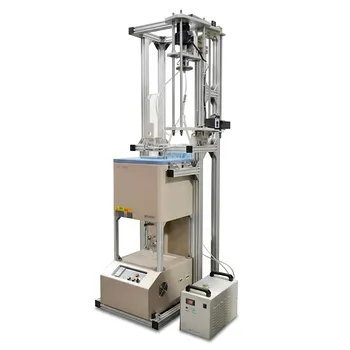
500C Vacuum Vertical Tube Furnace 84mm OD Sample Rotation Lifting System