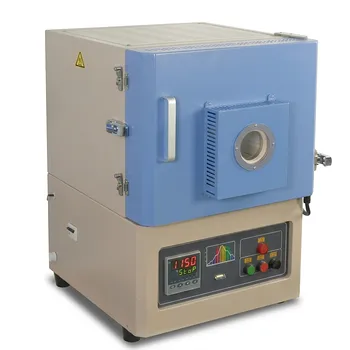
Why is a precision-controlled muffle furnace required for PAN stabilization? Achieve Perfect Chemical Conversion
Updated 3 months ago
A precision-controlled muffle furnace is the essential tool for pre-oxidation because it facilitates the exact chemical conversion of polyacrylonitrile (PAN) from a linear polymer into a heat-resistant ladder structure. By providing a stable air atmosphere and ultra-slow heating rates—often as low as 1°C per minute—the furnace ensures that the nanofibers undergo cyclization and cross-linking without melting. This thermal stabilization is the critical bridge that allows the fibers to maintain their morphology during the subsequent high-temperature carbonization process, which can exceed 1000°C.
The core takeaway is that precision-controlled muffle furnaces prevent the physical collapse of nanofibers by enabling a controlled chemical transition. Without rigorous temperature and atmospheric stability, PAN nanofibers would melt into a formless mass rather than becoming high-performance carbon fibers.
The Role of Thermal Precision in Chemical Transformation
Achieving the "Ladder" Structure
During pre-oxidation, PAN molecules must transition from a linear thermoplastic state to a thermally stable ladder structure. A precision muffle furnace maintains temperatures typically between 250°C and 280°C, triggering specific chemical reactions like cyclization, dehydrogenation, and cross-linking.
Managing the Critical Heating Rate
The furnace must support an extremely slow heating ramp, such as 1°C per minute, to manage the internal heat generated by these chemical reactions. If the temperature rises too quickly, the exothermic nature of cyclization can cause the fibers to overheat internally, leading to structural defects or complete melting.
Ensuring Chemical Uniformity
Uniform heat distribution within the furnace chamber ensures that every nanofiber in a batch undergoes the same degree of oxidation. This consistency is vital for creating fibers with optimal stoichiometric ratios and minimal lattice defects, which directly impacts the mechanical strength of the final product.
Maintaining Fiber Integrity and Morphology
Preventing Melting and Adhesion
Because PAN is originally thermoplastic, it will naturally melt if exposed to high heat without first being stabilized. The muffle furnace provides the controlled environment needed to turn the fibers into a thermoset state, ensuring they do not adhere to each other or lose their delicate electrospun shape during carbonization.
The Importance of a Stable Air Atmosphere
Pre-oxidation requires a constant, stable air atmosphere to provide the oxygen necessary for the cross-linking process. High-quality muffle furnaces offer stable air circulation, which prevents localized oxygen depletion and ensures the fibers are evenly "fixed" throughout their entire volume.
Preparing for High-Temperature Carbonization
The stabilization process essentially "locks" the fiber's morphology in place. This heat-resistant state is what allows the fibers to survive temperatures above 1000°C in later stages without peeling, collapsing, or burning away.
Understanding the Trade-offs and Pitfalls
The Risk of Rapid Heating
While it may be tempting to increase production speed, using a furnace with poor ramp control leads to "fused" fibers. If the heating rate exceeds the fiber's ability to dissipate chemical heat, the nanofibers will merge into a solid film, destroying the high surface area that makes nanofibers valuable.
Atmospheric Inconsistency
Inexpensive furnaces may have "cold spots" or poor air exchange, leading to uneven stabilization. This results in a final carbon fiber product with weak points where the polymer was not fully converted into a ladder structure, causing the material to fail under mechanical stress.
How to Apply This to Your Project
When selecting or operating a furnace for PAN stabilization, your specific research or production goals should dictate your parameters.
- If your primary focus is maximizing mechanical strength: Use a furnace that guarantees a slow ramp of 1°C/min and maintain a dwell time of at least 2 hours at 260°C-280°C to ensure complete cyclization.
- If your primary focus is preserving nanofiber porosity: Ensure the furnace has high-precision air circulation to prevent localized overheating, which can cause fibers to soften and stick together.
- If your primary focus is coating stability: Use the muffle furnace to induce cross-linking at 280°C to prevent the polymer coating from peeling off during subsequent high-heat treatments.
Precision thermal control is the fundamental requirement for transforming a fragile polymer into a robust, high-performance carbon nanostructure.
Summary Table:
| Parameter | Role in PAN Stabilization | Impact on Fiber Quality |
|---|---|---|
| Heating Rate | Ultra-slow ramp (approx. 1°C/min) | Prevents exothermic overheating and melting |
| Temperature Range | Precision control at 250°C – 280°C | Triggers cyclization and ladder structure formation |
| Atmosphere | Stable air/oxygen circulation | Ensures uniform cross-linking and morphology |
| Thermal Uniformity | Consistent heat distribution | Eliminates structural weak points and defects |
Transform Your Material Science R&D with THERMUNITS
Precision is the difference between high-performance carbon fibers and structural failure. As a leading manufacturer of high-temperature laboratory equipment, THERMUNITS provides the advanced thermal solutions necessary for sensitive processes like PAN pre-oxidation.
Our comprehensive range includes Muffle, Vacuum, Atmosphere, Tube, and Rotary furnaces, as well as CVD/PECVD systems and Hot Press furnaces designed specifically for industrial R&D and material science excellence. Whether you are perfecting cyclization rates or scaling carbonization, our equipment delivers the exact temperature control and atmospheric stability your research demands.
Ready to elevate your heat treatment precision?
Contact our technical experts today to find the perfect furnace for your laboratory.
References
- Basma I. Waisi, Mohammed A. Manal. Adsorption Isotherms and Kinetics Studies of Lead on Polyacrylonitrile-Based Activated Carbon Nonwoven Nanofibres. DOI: 10.12912/27197050/186546
Mentioned Products
- High Temperature 1500C Benchtop Muffle Furnace 3.6L Alumina Fiber Chamber Programmable Controller Sintering Annealing Carbonization Thermal Processing System
- 1750C Compact Muffle Furnace 1.7L Ultra High Temperature Laboratory Sintering System for Advanced Ceramics and Material Science Research
- 1200C Muffle Furnace 12x8x5 7.2L Heating Chamber with Quartz Observation Window and Vent Port
- Top Loading Muffle Furnace 1200°C High Temperature Crucible Furnace with 9 Liter Chamber and Programmable PID Controller
- 1200C High Temperature 125L Muffle Furnace 5 Side Heating for Large Batch Sintering with Optional Alloy Debinding Chamber
People Also Ask
- Why is annealing in a high-temperature muffle furnace necessary for SiO2/Si substrate pretreatment before monolayer WS2 synthesis?
- What is the purpose of using muffle or tube furnaces in glass synthesis? Achieve Precise Melt-Quenching & Homogeneity
- What is the role of a high-temperature muffle furnace in the synthesis of graphitic carbon nitride (g-C3N4)? - Guide
- What is the necessity of 950 °C muffle furnace for aluminate spinel supports? Achieve Phase Purity & Lattice Integration
- What is the function of a high-temp muffle furnace in Ni-V oxide synthesis? Optimize your material's performance.

Tech Team · ThermUnits
Last updated on Jun 02, 2026
Related Products
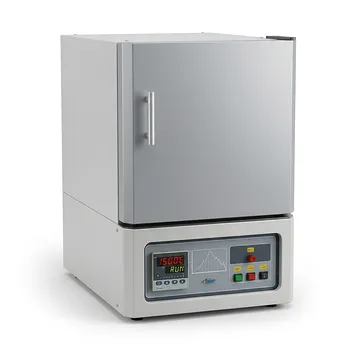
High Temperature 1500C Benchtop Muffle Furnace 3.6L Alumina Fiber Chamber Programmable Controller Sintering Annealing Carbonization Thermal Processing System
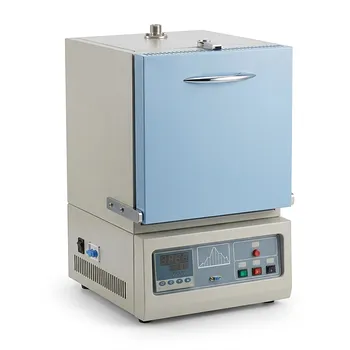
1750C Compact Muffle Furnace 1.7L Ultra High Temperature Laboratory Sintering System for Advanced Ceramics and Material Science Research
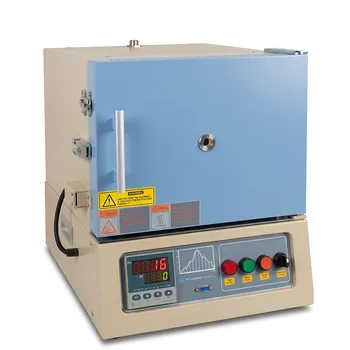
1200C Muffle Furnace 12x8x5 7.2L Heating Chamber with Quartz Observation Window and Vent Port
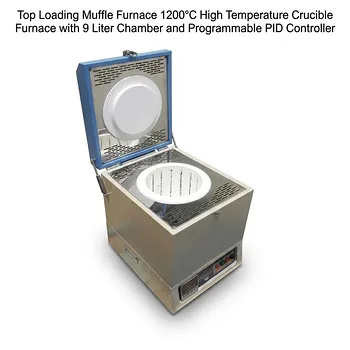
Top Loading Muffle Furnace 1200°C High Temperature Crucible Furnace with 9 Liter Chamber and Programmable PID Controller
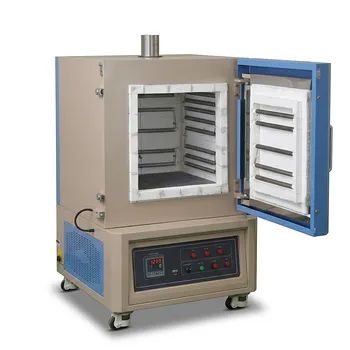
1200C High Temperature 125L Muffle Furnace 5 Side Heating for Large Batch Sintering with Optional Alloy Debinding Chamber
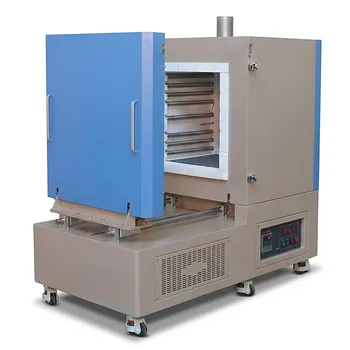
1200C Five Side Heating Muffle Furnace with Sliding Door 125L Volume High Temperature Heat Treatment System for Large Scale Sintering and Annealing
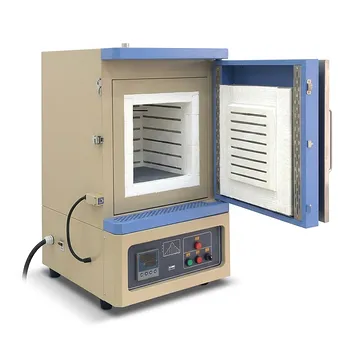
Five Side Heating Muffle Furnace High Purity Alumina Fiber 27L Chamber 1200C High Temperature Thermal Processing System for Sintering Annealing and Materials Research
Five Sided Heating Muffle Furnace High Uniformity 1200C Lab Box Furnace 27L Alumina Fiber Chamber
Large Bench Top 1700C High Temperature Muffle Furnace with 19L Chamber for Advanced Material Sintering and Annealing
High Temperature Bench Top Muffle Furnace 1700C with Integrated Evaporating Particle Collection and 8x8x8 Alumina Fiber Chamber
High Temperature 1200C Muffle Furnace 27L Volume 12x12x12 Chamber with Programmable PID Controller for Laboratory Material Science
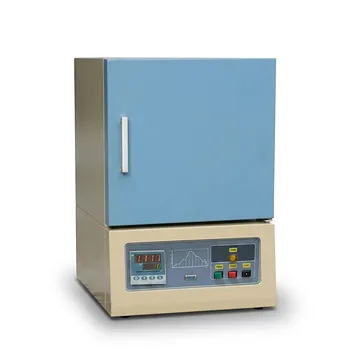
Ultra High Temperature Bench Top Muffle Furnace 1750C Sintering System with Kanthal Super Heating Elements and Precision Digital Control
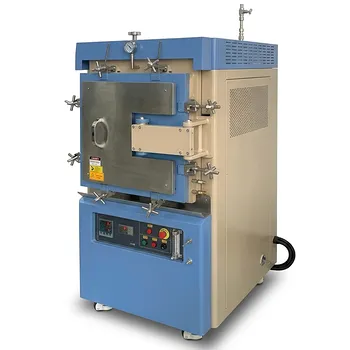
Atmosphere Controlled Muffle Furnace 1700C Maximum Temperature 80L High Capacity Vacuum Inert Gas Box Furnace
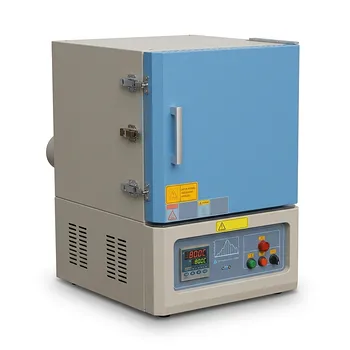
1800C Bench Top Muffle Furnace 18 Liters with Kanthal Super 1900 Heating Elements for High Purity Ceramic Sintering and Material Research
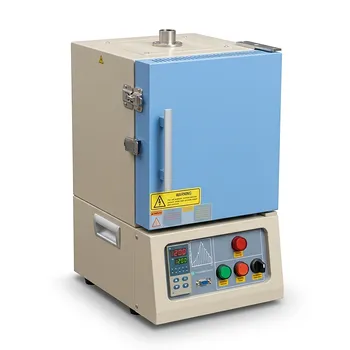
1200°C Small Box Furnace 4.2 Liter Programmable Muffle Furnace with High Purity Alumina Insulation and PID Control
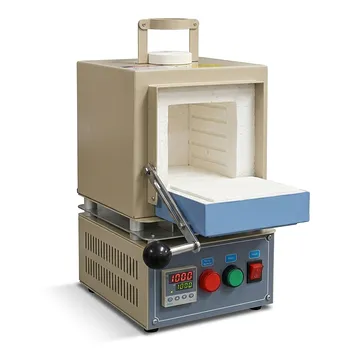
Compact 1000C Muffle Furnace with Programmable Controller and 2 Inch Top Port for Vacuum and Atmosphere Material Research
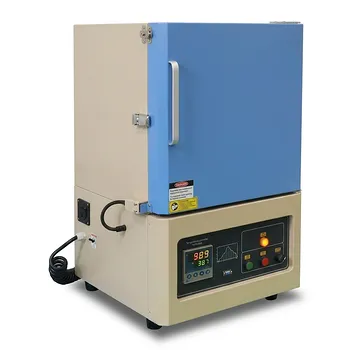
1200°C High Temperature Muffle Furnace 19L Chamber with 50 Segment Programmable Controller
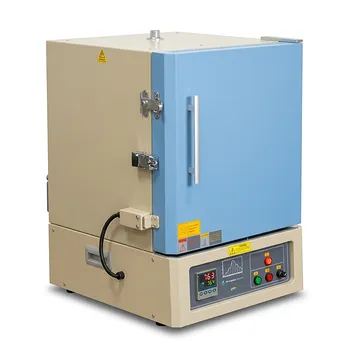
Large Capacity 1200C Muffle Furnace 64 Liter Chamber with Digital PID Controller and Built In Venting Port
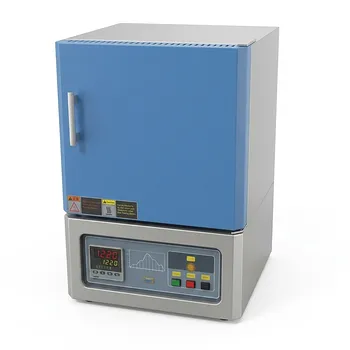
High Temperature Benchtop Muffle Furnace 1700C 10L Chamber Alumina Fiber Insulation MoSi2 Heating Elements