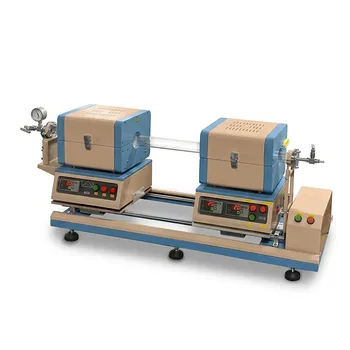
Why is a tube furnace equipped with an inert gas flow required for converting Ce-MOF into CeO2 nanorods? Morphology Control
Updated 3 months ago
The synthesis of CeO2 nanorods from a Metal-Organic Framework (MOF) requires a tube furnace with inert gas flow to facilitate an "in-situ" conversion that preserves morphology while preventing the combustion of the organic framework. This specific setup allows for high-temperature calcination (typically around 800 °C) in an oxygen-free environment, which transforms metal nodes into cerium oxide while carbonizing the organic ligands into a conductive network rather than burning them away.
Core Takeaway: A tube furnace provides the precise thermal control and airtight environment necessary to convert Ce-MOFs into CeO2 without destroying the nanorod structure. The inert gas flow prevents oxidation, ensuring the organic components transform into a stabilizing carbon matrix that keeps active sites highly dispersed.
The Role of the Inert Atmosphere in Carbonization
Preventing Oxidative Combustion
In a standard air-filled furnace, the organic ligands within a Ce-MOF would undergo combustion at high temperatures, turning into CO2 and water vapor. This violent reaction often causes the structural collapse of the nanorod and the uncontrolled aggregation of cerium particles.
Creating a Conductive Carbon Network
An inert flow, such as Argon (Ar) or Nitrogen (N2), displaces oxygen to enable pure pyrolysis. This process transforms the organic framework into a stable, conductive carbon skeleton that supports the cerium oxide nanoparticles.
Regulating Chemical Valence and Vacancies
Controlled atmospheres are critical for managing the chemical state of the resulting oxide. By excluding oxygen, the furnace can promote the generation of oxygen vacancies, which are essential active sites for catalytic and electrochemical applications.
Precision Thermal Management for Morphology Preservation
Topotactic Transformation
The tube furnace allows for a topological transformation, where the final CeO2 product inherits the rod-like shape of the original MOF precursor. Precise control over the heating rate (e.g., 2°C/min) ensures that the decomposition happens slowly enough to maintain structural integrity.
Uniform Temperature Fields
Unlike muffle furnaces, a tube furnace provides a highly uniform temperature field within the sealed work tube. This uniformity ensures that every nanorod in the sample undergoes the same degree of calcination, resulting in a homogeneous material with consistent properties.
Controlled Volatilization
The continuous flow of inert gas does more than just exclude oxygen; it also carries away gaseous decomposition byproducts. This prevents the buildup of pressure or secondary reactions that could interfere with the formation of the CeO2 nanocrystals.
Understanding the Trade-offs and Risks
Atmosphere Integrity
The primary pitfall in this process is a breach in the furnace sealing. Even trace amounts of oxygen leaking into the tube can cause the carbon skeleton to oxidize, leading to "sintering," where the CeO2 nanoparticles fuse together and lose their high surface area.
Flow Rate Sensitivity
While gas flow is necessary, an excessively high flow rate can lead to temperature fluctuations or the physical displacement of light, powdery MOF precursors. Conversely, a flow rate that is too low may fail to sufficiently remove volatile organic residues, leading to impurities in the final nanorods.
Energy and Setup Complexity
Using a tube furnace with inert gas is significantly more resource-intensive than simple air calcination. It requires high-purity gas cylinders, precise flow meters, and specialized glassware that can withstand thermal shock under vacuum or pressure.
How to Apply This to Your Project
When preparing to convert Ce-MOFs or similar materials, your choice of parameters should align with your specific material requirements.
- If your primary focus is high electrical conductivity: Use a high-temperature carbonization (800 °C+) in high-purity Argon to ensure the organic framework is fully converted into a graphitic carbon matrix.
- If your primary focus is maximizing surface area: Prioritize a very slow heating rate (1-2 °C/min) and a moderate calcination temperature to prevent the CeO2 nanoparticles from growing too large.
- If your primary focus is catalytic activity via oxygen vacancies: Ensure the tube furnace is perfectly sealed and consider using a slightly reducing atmosphere if the inert gas alone does not produce sufficient active sites.
The synergy between precise temperature regulation and a strictly controlled chemical atmosphere is what transforms a fragile MOF into a robust, functional CeO2 nanorod composite.
Summary Table:
| Feature | Role in Ce-MOF Conversion | Impact on Final CeO2 Nanorods |
|---|---|---|
| Inert Atmosphere | Prevents oxidative combustion of organic ligands | Preserves nanorod shape & forms carbon matrix |
| Precise Heating | Enables controlled topotactic transformation | Ensures structural integrity & slow decomposition |
| Uniform Temp Field | Provides consistent calcination conditions | Produces homogeneous materials with stable properties |
| Gas Flow Control | Removes gaseous decomposition byproducts | Prevents pressure buildup & secondary reactions |
| Oxygen Exclusion | Promotes oxygen vacancy generation | Enhances catalytic and electrochemical activity |
Elevate Your Material Research with THERMUNITS Precision Furnaces
Achieving the perfect Ce-MOF to CeO2 transformation requires more than just heat—it requires total environmental control. THERMUNITS is a leading manufacturer of high-temperature laboratory equipment specifically designed for material science and industrial R&D. Our precision-engineered Tube Furnaces, Atmosphere Furnaces, and CVD/PECVD systems provide the airtight sealing and uniform thermal fields necessary to maintain delicate morphologies and optimize oxygen vacancies.
From Muffle and Vacuum furnaces to specialized Rotary, Hot Press, and Vacuum Induction Melting (VIM) systems, we offer a comprehensive range of thermal processing solutions to accelerate your innovation.
Ready to enhance your lab’s efficiency and material performance?
Contact THERMUNITS Today for a Professional Consultation
References
- Hao Xiao, Dan Sun. MOF-Derived CeO2 Nanorod as a Separator Coating Enabling Enhanced Performance for Lithium–Sulfur Batteries. DOI: 10.3390/molecules29081852
Mentioned Products
- Compact Hybrid Muffle and Tube Furnace for 1000C Controlled Atmosphere Laboratory Material Sintering
- 1200C Sliding Tube Furnace for Rapid Thermal Processing and CVD Graphene Growth with 100mm OD Capacity
- Two Zone Rotary Tube Furnace for Powder CVD Coating and Core Shell Material Synthesis 1100C
- High Temperature 1700C Vertical Tube Furnace for Powder Spherification and Material Sintering
- 5 Inch Three Zone Rotary Tube Furnace with Integrated Gas Delivery System and 1200C Capability for Advanced Material CVD Processing
People Also Ask
- Why is an atmosphere-controlled tube furnace required for the pre-sulfidation of NiMo/gamma-Al2O3 catalysts?
- Why is an atmosphere-controlled tube furnace required for 800 °C CNF annealing? Essential for Oxidative Protection.
- Why is an atmosphere-controlled tube furnace required for [email protected]/C preparation? Key for Purity & Structure
- Why is an atmosphere-controlled tube furnace required for single-atom sensor calcination? Ensure Atomic Dispersion.
- What is the function of a controlled atmosphere tube furnace in LiGa alloying? Achieving High-Purity Thermal Synthesis

Tech Team · ThermUnits
Last updated on Jun 03, 2026
Related Products
Compact Hybrid Muffle and Tube Furnace for 1000C Controlled Atmosphere Laboratory Material Sintering
1200C Sliding Tube Furnace for Rapid Thermal Processing and CVD Graphene Growth with 100mm OD Capacity
Two Zone Rotary Tube Furnace for Powder CVD Coating and Core Shell Material Synthesis 1100C

High Temperature 1700C Vertical Tube Furnace for Powder Spherification and Material Sintering
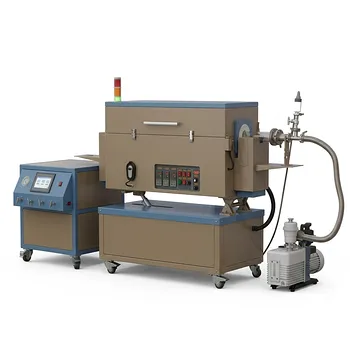
5 Inch Three Zone Rotary Tube Furnace with Integrated Gas Delivery System and 1200C Capability for Advanced Material CVD Processing
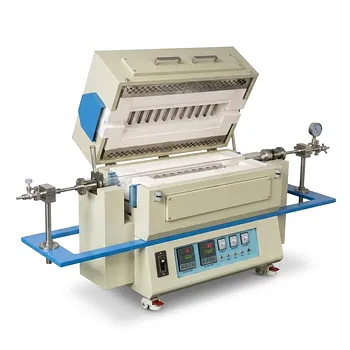
High Temperature Dual Zone Rotating Tube Furnace 1500C Silicon Carbide Heating for Advanced Material Synthesis

1800C High Temperature Compact Vacuum Tube Furnace with 60mm OD Alumina Tube and Kanthal MoSi2 Heating Elements

Compact High Temperature 1600C Tube Furnace with 50mm Alumina Tube and Vacuum Flanges for Material Sintering
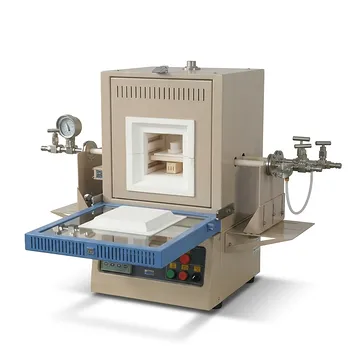
1700C Compact Hybrid Furnace with Dual Layer Box Sintering and Controlled Atmosphere Alumina Tubes
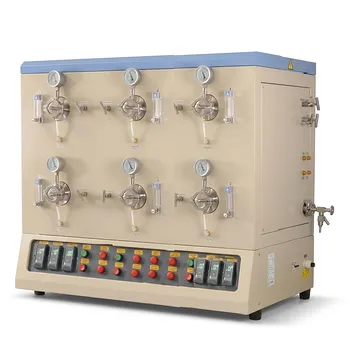
1200C High Throughput Multi Channel Tube Furnace with 50mm Quartz Tubes for Annealing and Material Phase Diagram Research
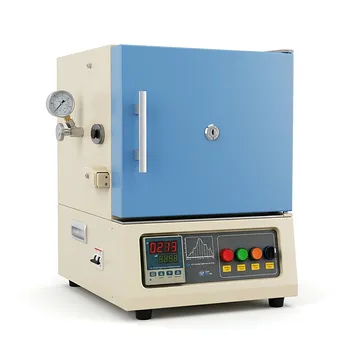
1200C Hybrid Muffle and Tube Furnace for Material Research with Dual Atmosphere Control Quartz Tubes

High Temperature 1700C Tube Furnace with High Vacuum Turbomolecular Pump System and Multi Channel Mass Flow Controller Gas Mixer
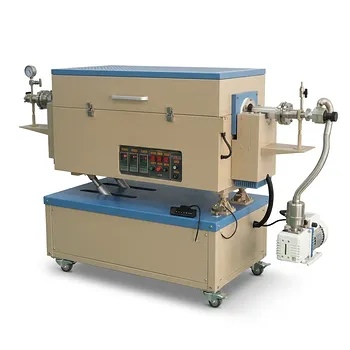
Three Zone Rotary Tube Furnace for High Temperature Powder Processing and Material Research
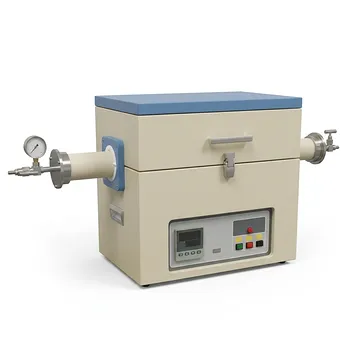
1250C Split Tube Furnace with 3 Inch Mullite Tube and Vacuum Sealing Flanges for Precision Thermal Processing
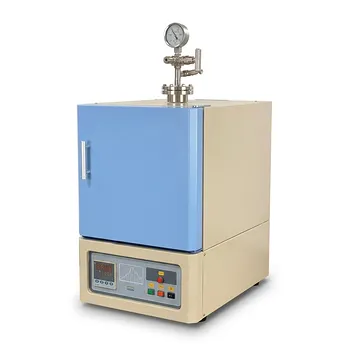
Hybrid High Temperature Muffle and Tube Furnace with 1500C Capability and Vacuum Flange Assembly
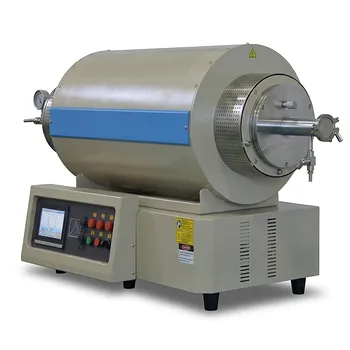
1200C Max Three Zone Tube Furnace 6 Inch OD Max with Tube and Flange
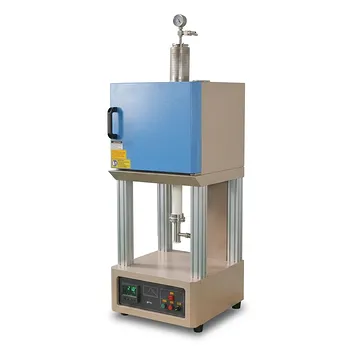
Hybrid High Temperature Tube and Box Furnace 1700C with 2 Inch Alumina Tube for Material Research

Vertical 1700C Vacuum and Atmosphere Tube Furnace with 80mm Alumina Tube
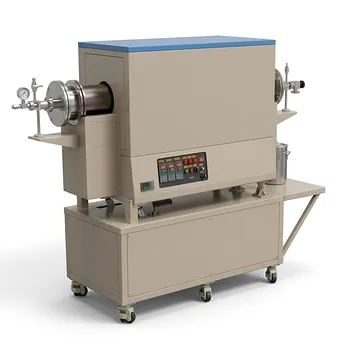
900°C Max Rotary Tube Furnace with 8 Inch 310S Alloy Tube and Optional Multi Zone Heating for Industrial Material Calcination