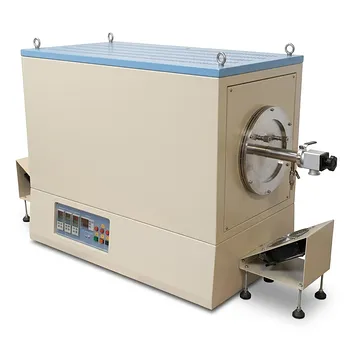
Why is an atmosphere-controlled tube furnace required for [email protected]/C preparation? Key for Purity & Structure
Updated 3 months ago
The atmosphere-controlled tube furnace is the fundamental tool for synthesizing Si@SnS₀.₅Se₀.₅/C composites because it enables the precise chemical conversion of precursors while preventing the degradation of the material's sensitive core. By regulating gas flow and vapor concentrations, the furnace facilitates the simultaneous sulfidation and selenization of the Metal-Organic Framework (MOF) shell into a porous tin sulfoselenide/carbon network. Most critically, it maintains an inert environment that protects the silicon core from oxidation, ensuring the structural integrity of the "core-nest" architecture.
Core Takeaway: An atmosphere-controlled tube furnace provides the dual-functionality of a chemical reactor and a protective shield. It allows for the precise stoichiometry of the tin sulfoselenide layer while ensuring the silicon core remains unreacted and conductive.
The Chemical Necessity of Controlled Environments
Facilitating Precision Sulfidation and Selenization
The preparation of Si@SnS₀.₅Se₀.₅/C requires the introduction of sulfur and selenium vapors into the system at specific ratios. The tube furnace allows for the precise control of vapor concentrations along with heat treatment temperatures, which is essential for achieving the exact 0.5/0.5 stoichiometry in the tin sulfoselenide layer.
Enabling In-Situ MOF Conversion
The furnace environment triggers the in-situ conversion of the MOF shell into a binary network of tin sulfoselenide and carbon. This process must occur in an inert gas flow to ensure the organic components of the MOF decompose into a porous carbon framework rather than combusting into ash.
Maintaining Phase Purity
By controlling the atmosphere, the furnace prevents the formation of unwanted secondary phases, such as tin oxides. This ensures that the resulting material has the high phase purity necessary for optimal performance in energy storage or electronic applications.
Structural Preservation of the Core-Nest Architecture
Preventing Silicon Core Oxidation
Silicon is highly susceptible to forming an insulating oxide layer (SiO₂) when exposed to even trace amounts of oxygen at high temperatures. The tube furnace provides a strict inert environment that isolates the silicon core from oxygen, preserving its high electrical conductivity.
Managing Thermal Decomposition
The controlled heating rate within the furnace is vital for the gradual decomposition of the precursor materials. This measured approach prevents the collapse of the shell and ensures the formation of a stable "nest" structure around the silicon core.
Engineering Porosity and Surface Area
The interaction between the inert gas flow and the decomposing MOF framework results in a porous binary network. This porosity is critical for accommodating the volume expansion of silicon during electrochemical cycles and providing a high surface area for reactions.
Understanding the Trade-offs
The Risk of Atmosphere Contamination
Even a minor leak in the furnace seals can introduce oxygen, leading to the over-oxidation of the carbon network and the silicon core. This contamination drastically reduces the electrochemical performance and mechanical stability of the composite.
Complexity of Vapor Transport
Managing two different vapor sources (sulfur and selenium) simultaneously is technically challenging. Inconsistent vapor flow can lead to non-uniform coating or an incorrect S/Se ratio, which alters the physical properties of the tin sulfoselenide shell.
High Operational Costs
Maintaining high-purity gas flows (such as Argon or Nitrogen) and precise temperature ramps increases the cost and complexity of production. However, these factors are non-negotiable for achieving the specific material characteristics required for high-performance composites.
How to Apply This to Your Project
Making the Right Choice for Your Goal
- If your primary focus is maximizing conductivity: Ensure the furnace maintains a high-purity argon environment to prevent any formation of insulating oxide layers on the silicon core.
- If your primary focus is structural stability: Focus on the precise control of the heating rate to ensure the MOF shell converts into a stable, porous nest without collapsing.
- If your primary focus is stoichiometric accuracy: Use a dual-zone tube furnace to independently control the evaporation temperatures of the sulfur and selenium sources.
The atmosphere-controlled tube furnace is not merely a heater, but a precision instrument that dictates the chemical identity and structural success of the Si@SnS₀.₅Se₀.₅/C composite.
Summary Table:
| Feature | Function in Synthesis | Impact on Material |
|---|---|---|
| Inert Atmosphere | Prevents Silicon/Carbon Oxidation | Preserves electrical conductivity & shell integrity |
| Vapor Control | Manages Sulfur/Selenium concentrations | Ensures precise SnS0.5Se0.5 stoichiometry |
| In-Situ Conversion | Facilitates MOF-to-Carbon transition | Creates a stable, porous "nest" framework |
| Thermal Precision | Regulates heating rates | Prevents structural collapse of the shell architecture |
Master Complex Material Synthesis with THERMUNITS
For high-performance composites like [email protected]/C, precision is non-negotiable. THERMUNITS is a leading manufacturer of high-temperature laboratory equipment, providing the specialized environment required for advanced material science and industrial R&D. Our high-precision Tube Furnaces, CVD/PECVD systems, and Vacuum Atmosphere Furnaces are engineered to deliver the exact atmosphere and thermal stability needed to prevent oxidation and ensure stoichiometric accuracy.
From Muffle and Rotary furnaces to Vacuum Induction Melting (VIM) and Hot Press solutions, we offer a comprehensive range of thermal processing equipment tailored to your specific research goals.
Enhance your lab's efficiency and material quality today. Contact THERMUNITS to find your ideal furnace solution!
References
- Hui Zhang, Jinyun Liu. Rationally engineering a binary SnS<sub>0.5</sub>Se<sub>0.5</sub>/carbon nest-coated Si nanosphere for a high-performance lithium-ion battery anode. DOI: 10.1039/d4sc03780d
Mentioned Products
- 1200°C Atmosphere Controlled Automatic Bottom Loading Furnace with 6 Inch Quartz Tube
- Compact Vertical Split Quartz Tube Furnace with Stainless Steel Vacuum Flanges for Rapid Thermal Quenching and Controlled Atmosphere Material Processing
- Compact Hybrid Muffle and Tube Furnace for 1000C Controlled Atmosphere Laboratory Material Sintering
- 1700C Compact Hybrid Furnace with Dual Layer Box Sintering and Controlled Atmosphere Alumina Tubes
- 1700C High Temperature Alumina Tube Furnace with 18 Inch Heated Zone and Vacuum Sealing Flanges
People Also Ask
- Why is a tube furnace required for FGM-PhG structural color ceramics? Key to Carbon Preservation & Vibrant Color
- Why is an atmosphere-controlled tube furnace required for 800 °C CNF annealing? Essential for Oxidative Protection.
- Why is an atmosphere-controlled tube furnace required for the pre-sulfidation of NiMo/gamma-Al2O3 catalysts?
- Why is an atmosphere-controlled tube furnace required for single-atom sensor calcination? Ensure Atomic Dispersion.
- Why is the sintering process for MS-SOECs typically conducted in a vacuum or atmosphere furnace? Protect Your Materials.

Tech Team · ThermUnits
Last updated on Jun 02, 2026
Related Products
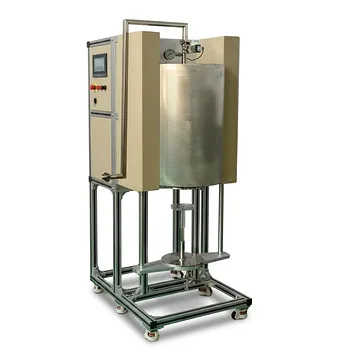
1200°C Atmosphere Controlled Automatic Bottom Loading Furnace with 6 Inch Quartz Tube

Compact Vertical Split Quartz Tube Furnace with Stainless Steel Vacuum Flanges for Rapid Thermal Quenching and Controlled Atmosphere Material Processing
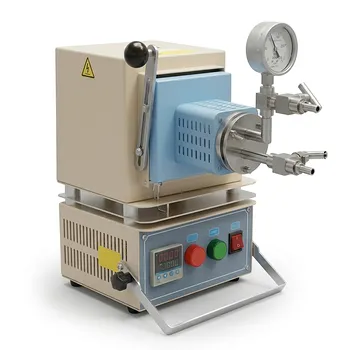
Compact Hybrid Muffle and Tube Furnace for 1000C Controlled Atmosphere Laboratory Material Sintering
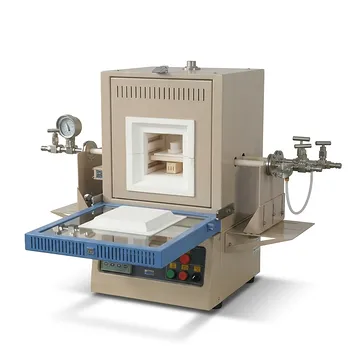
1700C Compact Hybrid Furnace with Dual Layer Box Sintering and Controlled Atmosphere Alumina Tubes
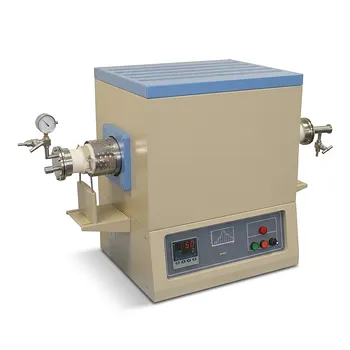
1700C High Temperature Alumina Tube Furnace with 18 Inch Heated Zone and Vacuum Sealing Flanges

Vertical 1700C Vacuum and Atmosphere Tube Furnace with 80mm Alumina Tube
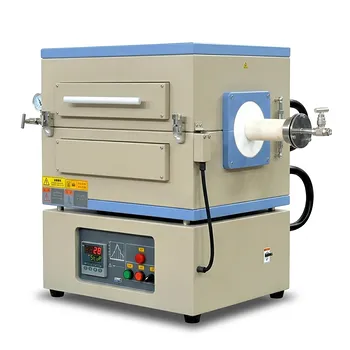
1500°C Split Tube Furnace with Alumina Tube and Vacuum Sealing Flanges for Material Research
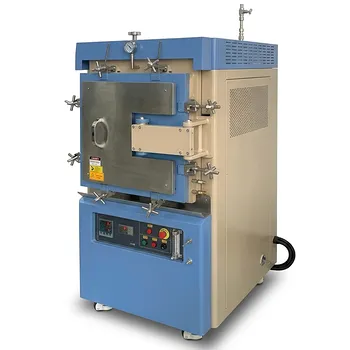
Atmosphere Controlled Muffle Furnace 1700C Maximum Temperature 80L High Capacity Vacuum Inert Gas Box Furnace
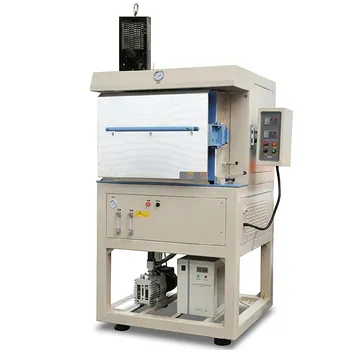
1200C Hydrogen Atmosphere Box Furnace with 5 Heated Sides and 64L Chamber
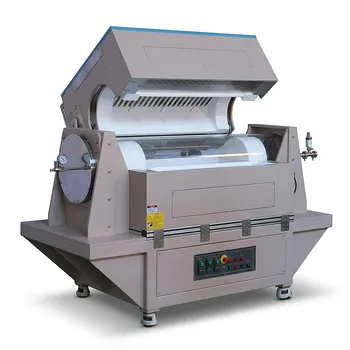
Three Zone Tube Furnace with 11 Inch or 15 Inch Quartz Tube and Hinged Flanges for Vacuum Atmosphere Heat Treatment
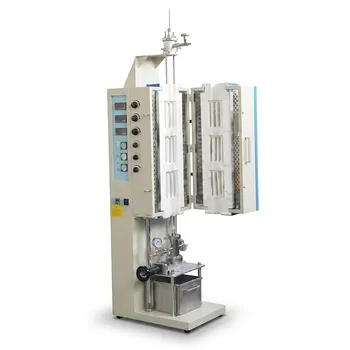
High Temperature Dual Zone Tube Furnace for Material Science Research and Professional Thermal Processing

High Temperature 1700C Tube Furnace with High Vacuum Turbomolecular Pump System and Multi Channel Mass Flow Controller Gas Mixer

High Temperature Automated 5 Inch Tube Furnace for Autonomous Material Research and Advanced Laboratory R&D

High Temperature 1700C Vertical Tube Furnace for Powder Spherification and Material Sintering
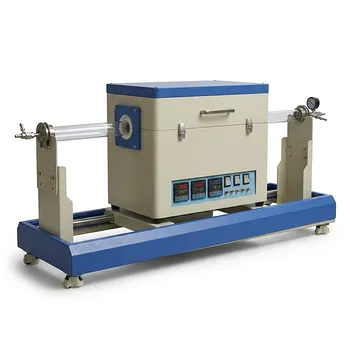
Double Temperature Zone Double Cover Tube Furnace for High Temperature CVD and Vacuum Annealing
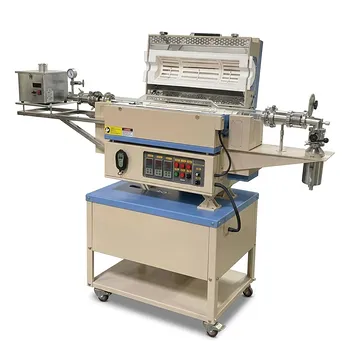
5 Inch Rotary Tube Furnace with Automatic Feeding and Receiving System 1200C Three Zone CVD Powder Processing

High Temperature 1700C Six Zone Split Tube Furnace with Alumina Tube and Water Cooled Flanges

Compact High Temperature 1600C Tube Furnace with 50mm Alumina Tube and Vacuum Flanges for Material Sintering
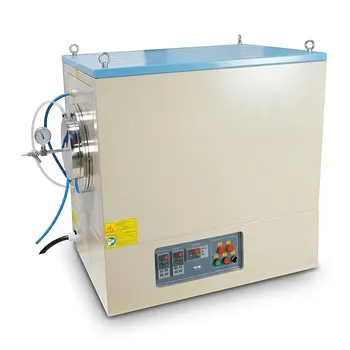
Dual Zone Tube Furnace 1100C with 11 Inch Quartz Tube and Vacuum Flanges for 8 Inch Wafer Processing