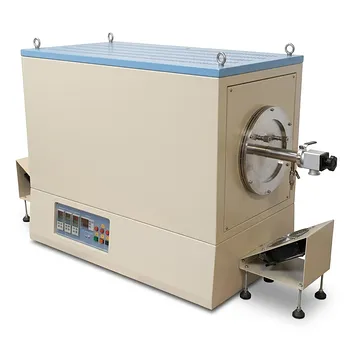
Why is an atmosphere-controlled tube furnace required for 800 °C CNF annealing? Essential for Oxidative Protection.
Updated 3 months ago
The primary purpose of using an atmosphere-controlled tube furnace for annealing Carbon Nanofiber (CNF) nanocomposites at 800 °C is to prevent the immediate oxidative destruction of the carbon material. At temperatures exceeding 450 °C, carbon fibers react with oxygen and undergo combustion, effectively turning the sample into ash. By establishing a strictly inert environment—typically using high-purity argon or nitrogen—the furnace enables the material to reach high temperatures safely, facilitating structural optimization without material loss.
Core Takeaway: An atmosphere-controlled tube furnace is indispensable because it isolates the composite from oxygen, allowing for the pyrolysis, graphitization, and interface strengthening necessary to create highly conductive and stable nanocomposites.
Preventing Oxidative Degradation and Material Loss
The Threat of High-Temperature Combustion
At 800 °C, any presence of oxygen within the heating chamber will trigger the oxidative combustion of the carbon nanofibers. The tube furnace acts as a hermetic seal, continuously supplying inert gases like argon (Ar) or nitrogen (N2) to exclude oxygen. This environment ensures the nanofibers remain chemically stable while undergoing the thermal energy required for structural transition.
Preserving Metal Nanoparticles
In many CNF nanocomposites, metal alloy particles—such as Copper-Nickel (Cu-Ni) or Cobalt—are integrated into the carbon matrix. An oxygen-free atmosphere prevents these metals from forming brittle oxides, which would otherwise diminish their catalytic properties or electrical conductivity. The inert environment can also facilitate the reduction of metal ions into active, metallic nanoparticles during the heating process.
Optimizing Microstructure and Interface Integrity
Enhancing Carbon Crystallinity and Graphitization
Annealing at 800 °C promotes the reorganization of carbon chains and the removal of non-carbon elements. This thermal treatment increases the structural order and crystallinity of the carbon, which is essential for maximizing electrical conductivity and mechanical strength. This process, often referred to as graphitization, transforms amorphous precursors into an efficient, highly conductive carbon skeleton.
Strengthening Heterojunction Interfaces
The high-temperature environment facilitates the tight attachment of nanoparticles to the CNF surface. By optimizing these heterojunction interfaces, the furnace ensures more efficient charge transfer and improved photoelectric responses. This structural bonding is critical for the stability of the final composite, preventing the active materials from detaching during use.
Developing Pore Morphology
Controlled heating in a tube furnace allows for the precise decomposition of polymer precursors, such as PMMA or PAN. As these components decompose and escape as gases, they leave behind specific architectural features like multi-channel hollow structures or ultramicropores. These features are vital for applications like selenium storage or high-surface-area catalysts.
Understanding the Trade-offs
The Cost of Purity and Maintenance
While atmosphere control is essential, it requires a continuous supply of high-purity inert gases, which increases operational costs. Furthermore, any leak in the tube seals or gas lines can introduce trace oxygen, leading to partial oxidation and inconsistent sample quality.
Precision vs. Throughput
Tube furnaces offer precise control over heating rates and soaking times, which is necessary for uniform carbonization. However, the limited internal volume of the tube often restricts the volume of material that can be processed in a single batch compared to larger industrial kilns.
How to Apply This to Your Project
To achieve the best results when annealing CNF nanocomposites, align your furnace parameters with your specific material goals:
- If your primary focus is Maximum Conductivity: Use higher temperatures (toward 900 °C) and longer soaking times to maximize the graphitization of the carbon skeleton.
- If your primary focus is Specific Surface Area: Focus on precise ramp rates and controlled decomposition of pore-forming agents to create developed ultramicropore structures.
- If your primary focus is Interface Stability: Ensure a strictly oxygen-free argon atmosphere to facilitate the tightest possible bonding between metal nanoparticles and the CNF surface.
By meticulously controlling the thermal environment, you transform a fragile polymer precursor into a robust, high-performance carbon nanocomposite.
Summary Table:
| Key Requirement | Technical Mechanism | Impact on CNF Nanocomposites |
|---|---|---|
| Oxidation Prevention | Inert gas (Ar/N2) displacement | Prevents material combustion and sample loss |
| Graphitization | High-temp thermal reorganization | Maximizes electrical conductivity and strength |
| Interface Stability | Oxygen-free environment | Strengthens bonding between nanoparticles and CNF |
| Pore Engineering | Controlled polymer decomposition | Creates high-surface-area and multi-channel structures |
Elevate Your Nanomaterial Research with THERMUNITS
Are you conducting critical material science or industrial R&D? THERMUNITS is a leading manufacturer of high-temperature laboratory equipment designed for precision. We offer a comprehensive range of thermal processing solutions, including Tube, Vacuum, Atmosphere, and Muffle furnaces, as well as CVD/PECVD systems and Vacuum Induction Melting (VIM) units.
Ensure the integrity of your CNF nanocomposites by preventing oxidative degradation and achieving superior structural optimization. Our equipment provides the precise atmosphere control and temperature uniformity required for cutting-edge heat treatment.
Ready to optimize your annealing process? Contact THERMUNITS Today to explore our full range of laboratory solutions and find the perfect fit for your research goals.
References
- Shivam Shukla, S. K. Srivastava. Photoresponse of Carbon Nanofiber-Based Photodetector and Its Enhancement on CuNi Nanoparticle Adsorption. DOI: 10.1021/acsomega.4c01546
Mentioned Products
- 1200°C Atmosphere Controlled Automatic Bottom Loading Furnace with 6 Inch Quartz Tube
- Compact Vertical Split Quartz Tube Furnace with Stainless Steel Vacuum Flanges for Rapid Thermal Quenching and Controlled Atmosphere Material Processing
- Compact Hybrid Muffle and Tube Furnace for 1000C Controlled Atmosphere Laboratory Material Sintering
- 1700C Compact Hybrid Furnace with Dual Layer Box Sintering and Controlled Atmosphere Alumina Tubes
- 1700C High Temperature Alumina Tube Furnace with 18 Inch Heated Zone and Vacuum Sealing Flanges
People Also Ask
- Why is a tube furnace required for FGM-PhG structural color ceramics? Key to Carbon Preservation & Vibrant Color
- Why is an atmosphere-controlled tube furnace required for the pre-sulfidation of NiMo/gamma-Al2O3 catalysts?
- Why is an atmosphere-controlled tube furnace required for [email protected]/C preparation? Key for Purity & Structure
- Why is an atmosphere-controlled tube furnace required for single-atom sensor calcination? Ensure Atomic Dispersion.
- Why is the sintering process for MS-SOECs typically conducted in a vacuum or atmosphere furnace? Protect Your Materials.

Tech Team · ThermUnits
Last updated on Jun 03, 2026
Related Products
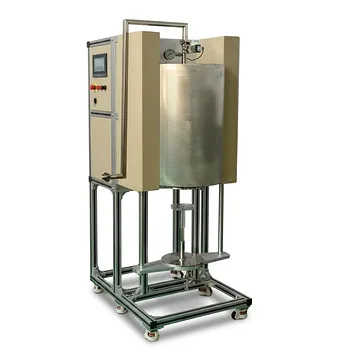
1200°C Atmosphere Controlled Automatic Bottom Loading Furnace with 6 Inch Quartz Tube

Compact Vertical Split Quartz Tube Furnace with Stainless Steel Vacuum Flanges for Rapid Thermal Quenching and Controlled Atmosphere Material Processing
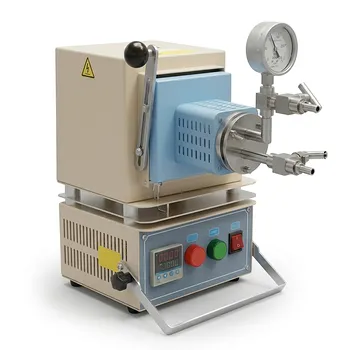
Compact Hybrid Muffle and Tube Furnace for 1000C Controlled Atmosphere Laboratory Material Sintering
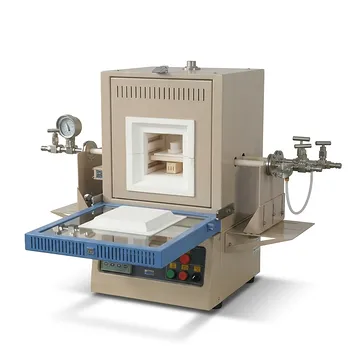
1700C Compact Hybrid Furnace with Dual Layer Box Sintering and Controlled Atmosphere Alumina Tubes
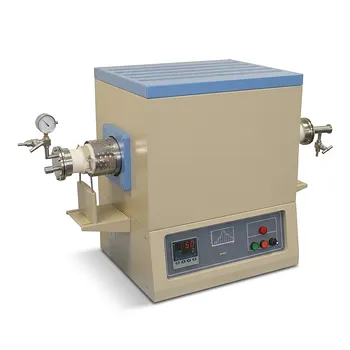
1700C High Temperature Alumina Tube Furnace with 18 Inch Heated Zone and Vacuum Sealing Flanges

Vertical 1700C Vacuum and Atmosphere Tube Furnace with 80mm Alumina Tube
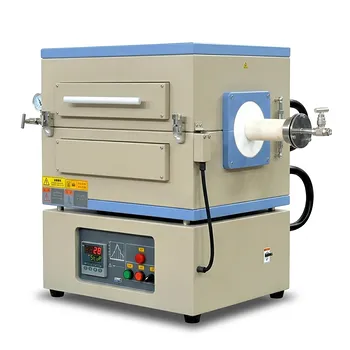
1500°C Split Tube Furnace with Alumina Tube and Vacuum Sealing Flanges for Material Research
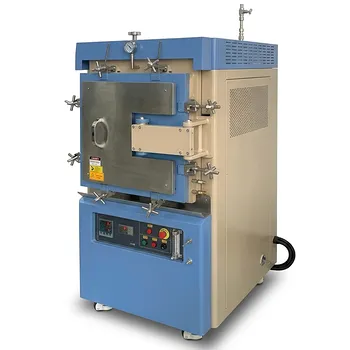
Atmosphere Controlled Muffle Furnace 1700C Maximum Temperature 80L High Capacity Vacuum Inert Gas Box Furnace
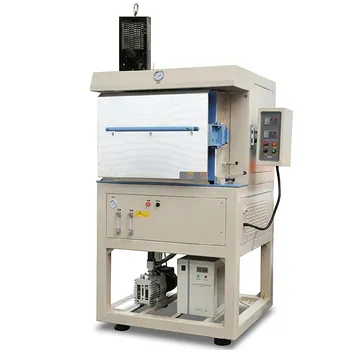
1200C Hydrogen Atmosphere Box Furnace with 5 Heated Sides and 64L Chamber
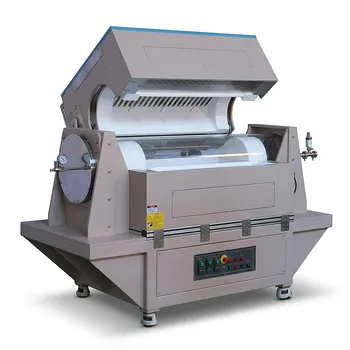
Three Zone Tube Furnace with 11 Inch or 15 Inch Quartz Tube and Hinged Flanges for Vacuum Atmosphere Heat Treatment
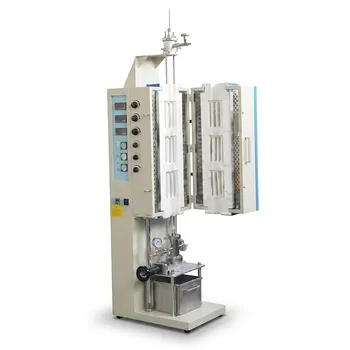
High Temperature Dual Zone Tube Furnace for Material Science Research and Professional Thermal Processing

High Temperature 1700C Tube Furnace with High Vacuum Turbomolecular Pump System and Multi Channel Mass Flow Controller Gas Mixer

High Temperature Automated 5 Inch Tube Furnace for Autonomous Material Research and Advanced Laboratory R&D

High Temperature 1700C Vertical Tube Furnace for Powder Spherification and Material Sintering
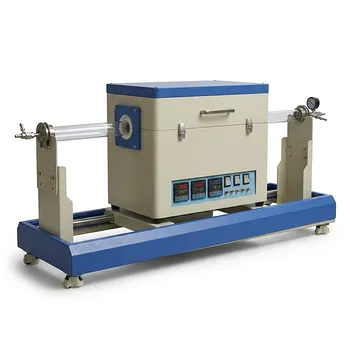
Double Temperature Zone Double Cover Tube Furnace for High Temperature CVD and Vacuum Annealing
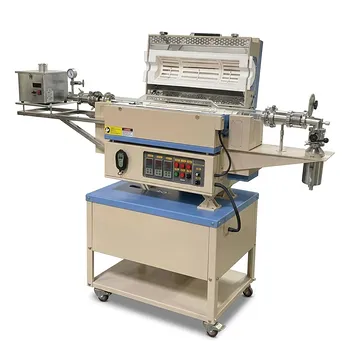
5 Inch Rotary Tube Furnace with Automatic Feeding and Receiving System 1200C Three Zone CVD Powder Processing

High Temperature 1700C Six Zone Split Tube Furnace with Alumina Tube and Water Cooled Flanges

Compact High Temperature 1600C Tube Furnace with 50mm Alumina Tube and Vacuum Flanges for Material Sintering
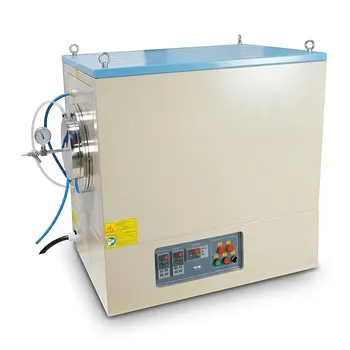
Dual Zone Tube Furnace 1100C with 11 Inch Quartz Tube and Vacuum Flanges for 8 Inch Wafer Processing