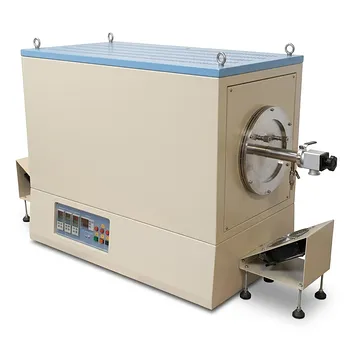
Why is an atmosphere-controlled tube furnace required for single-atom sensor calcination? Ensure Atomic Dispersion.
Updated 3 months ago
Atmosphere-controlled tube furnaces are indispensable for synthesizing single-atom sensors because they provide the chemical isolation and thermal precision required to prevent atomic aggregation and preserve catalytic activity. By replacing ambient air with inert or reducing gases, these furnaces ensure that metal atoms remain individually dispersed on their supports rather than oxidizing or clustering into inactive bulk particles.
The core utility of an atmosphere-controlled tube furnace lies in its ability to manipulate the local chemical environment at the atomic scale, enabling the formation of specific structural defects and preventing the destructive oxidation of highly reactive single-atom sites.
Preventing Oxidation and Material Degradation
Maintaining an Anaerobic Environment
At the high temperatures required for calcination, most metal species and carbon-based supports will oxidize instantly if exposed to oxygen. The tube furnace uses a constant flow of high-purity nitrogen or argon to create a strictly anaerobic environment, protecting sensitive species like silver or iron from becoming inactive oxides.
Effective Removal of Decomposition Byproducts
During the heating process, precursor ligands decompose into gases such as CO2 and SO2. An atmosphere-controlled furnace uses a continuous gas stream to sweep these byproducts away, preventing them from interfering with the surface chemistry or poisoning the newly formed single-atom sites.
Preventing Sample Combustion
Many single-atom sensors utilize carbon-based substrates which are highly flammable at activation temperatures (e.g., 700°C). The nitrogen atmosphere prevents these carbonized frameworks from undergoing combustion, allowing chemical etching agents like KOH to precisely create the necessary microporous structures.
Managing Atomic Dispersion and Stability
Preventing Sintering and Particle Growth
Single atoms are inherently unstable and tend to migrate and "clump" together (sinter) into large particles at high temperatures. The furnace’s precise temperature control and stable atmosphere allow for isothermal treatment at critical nodes, ensuring the metal remains uniformly anchored to the substrate in a single-atom state.
Protecting the Support Substrate
The morphology of the support material, such as titanium dioxide or microbial-derived carbon, is vital for sensor performance. Controlled atmospheres prevent the deformation or sintering of these supports, maintaining the high surface area and specific pore structures needed for effective sensing.
Facilitating In-Situ Chemical Reactions
The furnace environment allows for complex, multi-component reactions, such as the formation of bimetallic sulfide nanoparticles (e.g., FeS-ZnS). By controlling the gas phase, the furnace facilitates the thermal decomposition and reorganization of polymers into conductive frameworks without losing the desired chemical composition.
Activating Sensing Performance via Structural Defects
Inducing Catalytic Vacancies
Single-atom sensors often rely on "defects" to function, such as sulfur or oxygen vacancies. By precisely controlling the heating rate and the chemical atmosphere, the furnace can strip specific atoms from the crystal lattice, creating vacancies that activate the material's feedback regulation system.
Precise Phase and Crystal Control
The use of specific gas mixtures, such as a 10% O2/Ar blend, allows for phase control in complex systems like Bi-Fe-O heterojunctions. This level of atmospheric tuning inhibits the excessive decomposition of precursors, ensuring that different crystalline phases grow synergistically at preset temperatures.
Intercalation and Structural Reorganization
Atmosphere furnaces facilitate the reorganization of polymer structures and the intercalation of ions (like potassium) into crystal channels. This process is critical for establishing the charge accumulation capacity that many single-atom sensors require for high sensitivity.
Understanding the Trade-offs
Equipment Complexity and Cost
The primary drawback of atmosphere-controlled systems is the increased operational complexity and the cost of high-purity gases. Maintaining a perfect seal at high temperatures is technically demanding and requires regular maintenance of vacuum flanges and gas delivery lines.
Risks of Gas Phase Contamination
Even trace amounts of oxygen or moisture in the gas supply can lead to the failure of the synthesis. If the gas flow rate is not perfectly calibrated, the removal of toxic byproducts may be incomplete, leading to "dirty" surfaces that compromise the sensor's detection limits.
Thermal Gradient Limitations
While tube furnaces offer excellent atmosphere control, they can sometimes exhibit thermal gradients along the length of the tube. This can result in slight variations in the degree of calcination between samples placed at the center versus the edges of the heating zone.
How to Apply This to Your Project
Making the Right Choice for Your Goal
- If your primary focus is preventing metal aggregation: Use a high-purity argon environment and a slow heating rate (e.g., 5°C/min) to stabilize the atoms before they reach critical sintering temperatures.
- If your primary focus is activating the sensor surface: Utilize a reducing atmosphere like H2/Ar to intentionally induce vacancies in the substrate lattice at specific temperature nodes.
- If your primary focus is protecting carbon-based frameworks: Ensure a strict nitrogen flow is established well before heating begins to displace all oxygen and prevent sample combustion.
Mastering the atmospheric conditions within the tube furnace is the single most important factor in transforming a bulk precursor into a high-performance single-atom sensor.
Summary Table:
| Feature | Benefit | Impact on Sensor Materials |
|---|---|---|
| Anaerobic Environment | Prevents metal/support oxidation | Preserves catalytic activity |
| Dynamic Gas Flow | Removes decomposition byproducts | Prevents surface poisoning |
| Thermal Precision | Minimizes atomic sintering | Ensures uniform single-atom dispersion |
| Atmosphere Tuning | Induces structural vacancies | Activates sensing feedback systems |
Elevate Your Material Research with THERMUNITS
As a leading manufacturer of high-temperature laboratory equipment, THERMUNITS empowers material science and industrial R&D with advanced thermal processing solutions. Our high-precision Atmosphere and Tube furnaces are engineered to provide the exact chemical isolation and thermal stability required for synthesizing next-generation single-atom sensors.
From CVD/PECVD systems to Vacuum, Rotary, and Hot Press furnaces, we offer the comprehensive tools necessary to prevent atomic aggregation and achieve superior material performance.
Ready to optimize your lab’s heat treatment process? Contact our technical team today to discuss your specific requirements and discover how THERMUNITS can accelerate your innovation.
References
- Xin Jia, Jiaqiang Xu. Building Feedback-Regulation System Through Atomic Design for Highly Active SO2 Sensing. DOI: 10.1007/s40820-024-01350-3
Mentioned Products
- 1200°C Atmosphere Controlled Automatic Bottom Loading Furnace with 6 Inch Quartz Tube
- Compact Vertical Split Quartz Tube Furnace with Stainless Steel Vacuum Flanges for Rapid Thermal Quenching and Controlled Atmosphere Material Processing
- Compact Hybrid Muffle and Tube Furnace for 1000C Controlled Atmosphere Laboratory Material Sintering
- 1700C Compact Hybrid Furnace with Dual Layer Box Sintering and Controlled Atmosphere Alumina Tubes
- 1700C High Temperature Alumina Tube Furnace with 18 Inch Heated Zone and Vacuum Sealing Flanges
People Also Ask
- Why is a tube furnace required for FGM-PhG structural color ceramics? Key to Carbon Preservation & Vibrant Color
- Why is an atmosphere-controlled tube furnace required for the pre-sulfidation of NiMo/gamma-Al2O3 catalysts?
- Why is an atmosphere-controlled tube furnace required for 800 °C CNF annealing? Essential for Oxidative Protection.
- Why is an atmosphere-controlled tube furnace required for [email protected]/C preparation? Key for Purity & Structure
- Why is the sintering process for MS-SOECs typically conducted in a vacuum or atmosphere furnace? Protect Your Materials.

Tech Team · ThermUnits
Last updated on Jun 03, 2026
Related Products
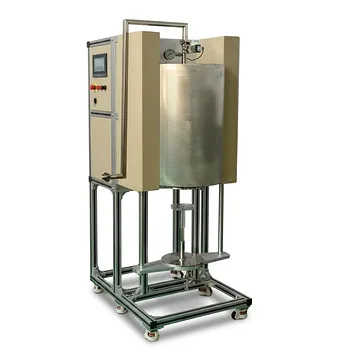
1200°C Atmosphere Controlled Automatic Bottom Loading Furnace with 6 Inch Quartz Tube

Compact Vertical Split Quartz Tube Furnace with Stainless Steel Vacuum Flanges for Rapid Thermal Quenching and Controlled Atmosphere Material Processing
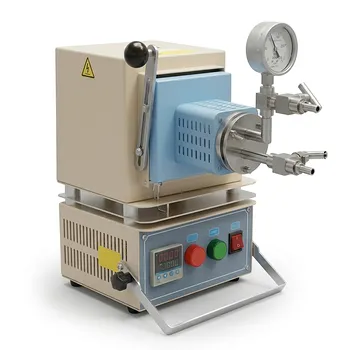
Compact Hybrid Muffle and Tube Furnace for 1000C Controlled Atmosphere Laboratory Material Sintering
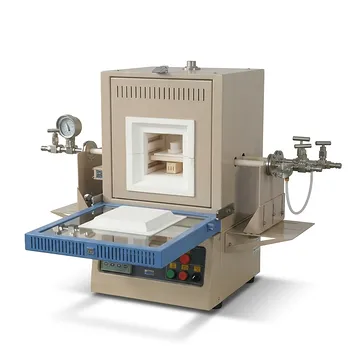
1700C Compact Hybrid Furnace with Dual Layer Box Sintering and Controlled Atmosphere Alumina Tubes
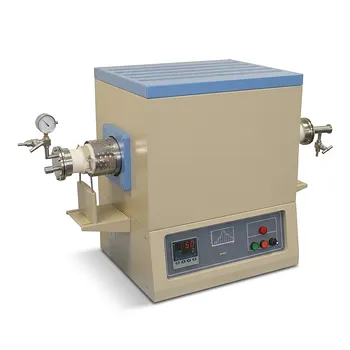
1700C High Temperature Alumina Tube Furnace with 18 Inch Heated Zone and Vacuum Sealing Flanges

Vertical 1700C Vacuum and Atmosphere Tube Furnace with 80mm Alumina Tube
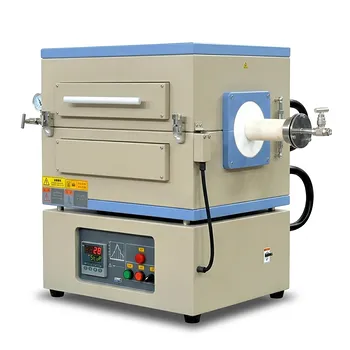
1500°C Split Tube Furnace with Alumina Tube and Vacuum Sealing Flanges for Material Research
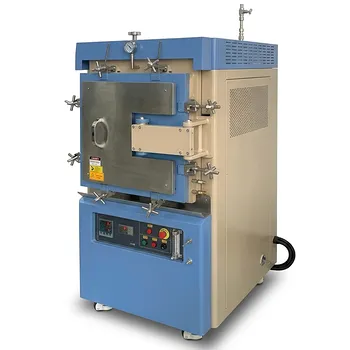
Atmosphere Controlled Muffle Furnace 1700C Maximum Temperature 80L High Capacity Vacuum Inert Gas Box Furnace
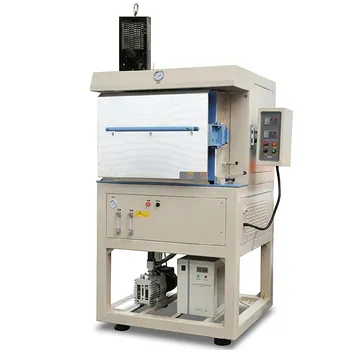
1200C Hydrogen Atmosphere Box Furnace with 5 Heated Sides and 64L Chamber
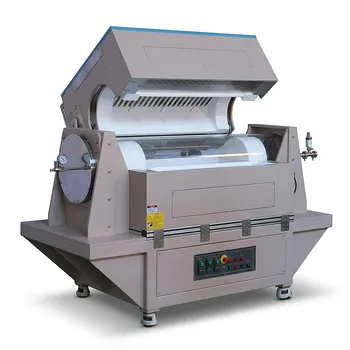
Three Zone Tube Furnace with 11 Inch or 15 Inch Quartz Tube and Hinged Flanges for Vacuum Atmosphere Heat Treatment
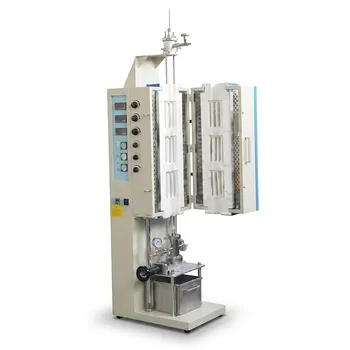
High Temperature Dual Zone Tube Furnace for Material Science Research and Professional Thermal Processing

High Temperature 1700C Tube Furnace with High Vacuum Turbomolecular Pump System and Multi Channel Mass Flow Controller Gas Mixer

High Temperature Automated 5 Inch Tube Furnace for Autonomous Material Research and Advanced Laboratory R&D

High Temperature 1700C Vertical Tube Furnace for Powder Spherification and Material Sintering
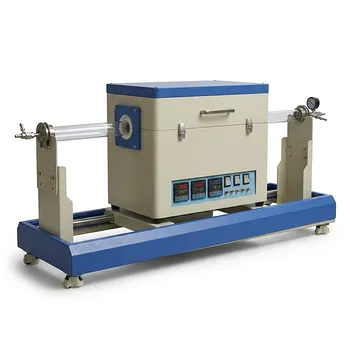
Double Temperature Zone Double Cover Tube Furnace for High Temperature CVD and Vacuum Annealing
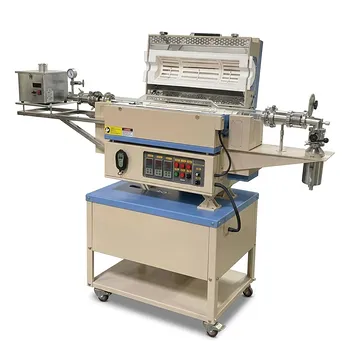
5 Inch Rotary Tube Furnace with Automatic Feeding and Receiving System 1200C Three Zone CVD Powder Processing

High Temperature 1700C Six Zone Split Tube Furnace with Alumina Tube and Water Cooled Flanges

Compact High Temperature 1600C Tube Furnace with 50mm Alumina Tube and Vacuum Flanges for Material Sintering
Dual Zone Tube Furnace 1100C with 11 Inch Quartz Tube and Vacuum Flanges for 8 Inch Wafer Processing