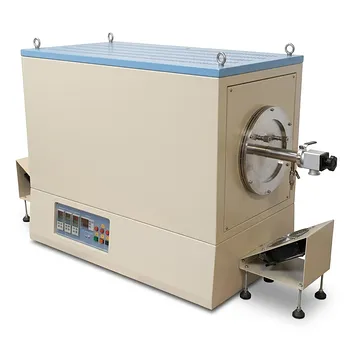
Why is an atmosphere-controlled tube furnace required for the pre-sulfidation of NiMo/gamma-Al2O3 catalysts?
Updated 3 months ago
An atmosphere-controlled tube furnace is the indispensable tool for catalyst activation. It allows for the precise regulation of $H_2S/H_2$ gas mixtures and pressure required to transform $NiMo/\gamma-Al_2O_3$ from an inactive oxide state into the catalytic Ni-Mo-S sulfide phase. By maintaining a stable environment at specific temperatures, typically around 350°C, the furnace ensures the complete chemical conversion necessary for hydrodesulfurization (HDS) activity.
The tube furnace serves as a controlled chemical reactor that manages the "reduction-sulfidation" environment to maximize the density of active sites. Precise control over gas composition and thermal gradients is the only way to ensure the catalyst is fully activated without suffering from premature sintering or structural degradation.
Achieving the Necessary Chemical Transformation
Converting Oxides to the Ni-Mo-S Phase
Nickel and molybdenum are typically loaded onto the alumina carrier in an oxide state, which has no catalytic activity for hydroprocessing. The atmosphere-controlled furnace introduces a reducing and sulfiding environment (using $H_2S$ and $H_2$) to facilitate a phase change. This process builds the specific Ni-Mo-S structure, which is the actual engine of the hydrodesulfurization reaction.
Precise Regulation of Gas Mixtures
The ratio of $H_2S$ to $H_2$ determines the chemical potential of the sulfiding environment. A tube furnace allows for continuous flow management, ensuring that the concentration of $H_2S$ remains constant as it reacts with the metal oxides. Without this steady flow, the chemical reaction could stall, leading to incomplete sulfidation and a significant loss in catalytic performance.
The Critical Role of Thermal Management
Temperature Accuracy and Active Sites
The number of active sites exposed on the catalyst surface is directly sensitive to temperature accuracy. Even minor fluctuations can lead to the coalescence of active phases, reducing the total surface area available for the reaction. A tube furnace provides the uniform thermal zone required to keep these active sites highly dispersed across the $\gamma-Al_2O_3$ support.
Preventing Metal Particle Sintering
High temperatures are necessary for activation, but excessive heat can cause metallic particles to migrate and fuse, a process known as sintering. By managing the temperature ramp rate and the holding temperature (such as 350°C-360°C), the furnace ensures that the nickel and molybdenum particles stay anchored. This creates a stable physical platform that maintains its integrity throughout the subsequent reaction.
Ensuring Uniformity and Contact Efficiency
Uniform Thermal Treatment
In a standard tube furnace, the catalyst bed is subjected to a consistent heat profile that prevents "cold spots" where sulfidation might be incomplete. Some advanced setups use rotary tube furnaces to tumble the catalyst particles during the process. This ensures every individual grain makes full and uniform contact with the sulfiding gas, leading to a more homogenous and predictable catalyst batch.
Inducing Metal-Support Interactions
The furnace environment induces specific metal-support interactions at the interface between the metal sulfide and the alumina carrier. These interactions are decisive factors in creating the specific electronic environment needed for high-efficiency catalysis. Controlled calcination and reduction steps within the furnace help stabilize the crystal phase of the carrier itself, ensuring it can withstand high-pressure reaction conditions.
Understanding the Trade-offs
Equipment Complexity vs. Catalyst Quality
While a simple oven might provide heat, it cannot manage the toxic and corrosive nature of $H_2S$. The specialized materials of a tube furnace are designed to resist "sulfidation" of the equipment itself while containing hazardous gases. Using improper equipment risks both uneven catalyst activation and significant safety hazards due to gas leaks.
The Risk of Over-Sulfidation
Excessive exposure to sulfiding agents or over-shooting the target temperature can lead to a collapse of the pore structure in the $\gamma-Al_2O_3$ carrier. This reduces the diffusion rate of reactants during the actual reaction phase. Balancing the time, temperature, and gas concentration is a delicate trade-off that requires the high-fidelity control only a tube furnace provides.
Applying This to Your Catalyst Preparation
Strategic Recommendations
- If your primary focus is maximum HDS activity: Prioritize a furnace with high-precision mass flow controllers to maintain an exact $H_2S/H_2$ ratio throughout the 350°C hold.
- If your primary focus is catalyst longevity: Focus on the cooling phase and temperature ramp rates to prevent the thermal shock or sintering that can occur during rapid heating.
- If your primary focus is processing large batches: Utilize a rotary tube furnace to ensure that the gas mixture penetrates the center of the catalyst pile uniformly.
By viewing the atmosphere-controlled tube furnace as a precision chemical instrument rather than just a heat source, you ensure the successful transition from raw materials to a high-performance catalyst.
Summary Table:
| Key Factor | Role in Pre-sulfidation | Impact on Catalyst Quality |
|---|---|---|
| Gas Regulation | Manages $H_2S/H_2$ concentration | Ensures complete conversion to Ni-Mo-S phase |
| Thermal Precision | Maintains stable $\approx$350°C environment | Maximizes active sites; prevents metal sintering |
| Atmosphere Control | Provides reducing/sulfiding conditions | Facilitates essential metal-support interactions |
| Uniform Heating | Eliminates thermal gradients | Ensures a homogeneous and predictable catalyst batch |
| Safety Design | Handles corrosive & toxic gases | Protects equipment and laboratory personnel |
Maximize Your Catalyst Performance with THERMUNITS
Are you looking to achieve superior results in catalyst activation and hydroprocessing research? THERMUNITS is a leading manufacturer of high-temperature laboratory equipment for material science and industrial R&D.
We provide specialized Atmosphere-Controlled Tube and Rotary Furnaces specifically engineered to manage the precise gas mixtures and thermal gradients required for the pre-sulfidation of NiMo catalysts. Our comprehensive product line also includes:
- Muffle, Vacuum, and Atmosphere Furnaces
- CVD/PECVD Systems for advanced material synthesis
- Rotary Kilns and Vacuum Induction Melting (VIM) Furnaces
- Dental Furnaces and High-Quality Thermal Elements
Don't compromise on your research quality. Partner with THERMUNITS to access industry-leading heat treatment solutions tailored to your specific R&D needs.
Contact us today to get a professional consultation and quote!
References
- Kun Sun, Chenguang Liu. One–pot solvothermal preparation of the porous NiS2//MoS2 composite catalyst with enhanced low-temperature hydrodesulfurization activity. DOI: 10.1016/j.jcis.2024.01.037
Mentioned Products
- 1200°C Atmosphere Controlled Automatic Bottom Loading Furnace with 6 Inch Quartz Tube
- Compact Vertical Split Quartz Tube Furnace with Stainless Steel Vacuum Flanges for Rapid Thermal Quenching and Controlled Atmosphere Material Processing
- Compact Hybrid Muffle and Tube Furnace for 1000C Controlled Atmosphere Laboratory Material Sintering
- 1700C Compact Hybrid Furnace with Dual Layer Box Sintering and Controlled Atmosphere Alumina Tubes
- 1700C High Temperature Alumina Tube Furnace with 18 Inch Heated Zone and Vacuum Sealing Flanges
People Also Ask
- Why is a tube furnace required for FGM-PhG structural color ceramics? Key to Carbon Preservation & Vibrant Color
- Why is an atmosphere-controlled tube furnace required for 800 °C CNF annealing? Essential for Oxidative Protection.
- Why is an atmosphere-controlled tube furnace required for [email protected]/C preparation? Key for Purity & Structure
- Why is an atmosphere-controlled tube furnace required for single-atom sensor calcination? Ensure Atomic Dispersion.
- Why is the sintering process for MS-SOECs typically conducted in a vacuum or atmosphere furnace? Protect Your Materials.

Tech Team · ThermUnits
Last updated on Jun 03, 2026
Related Products
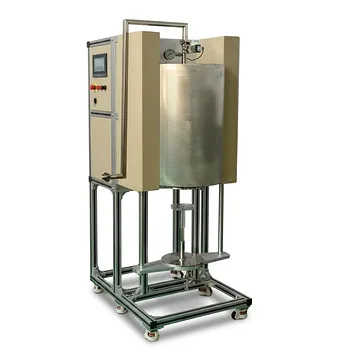
1200°C Atmosphere Controlled Automatic Bottom Loading Furnace with 6 Inch Quartz Tube

Compact Vertical Split Quartz Tube Furnace with Stainless Steel Vacuum Flanges for Rapid Thermal Quenching and Controlled Atmosphere Material Processing
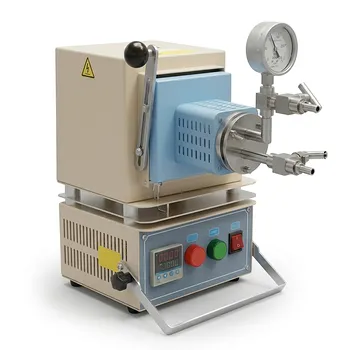
Compact Hybrid Muffle and Tube Furnace for 1000C Controlled Atmosphere Laboratory Material Sintering
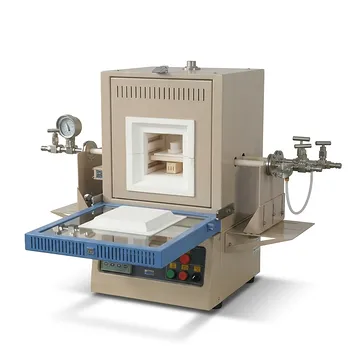
1700C Compact Hybrid Furnace with Dual Layer Box Sintering and Controlled Atmosphere Alumina Tubes
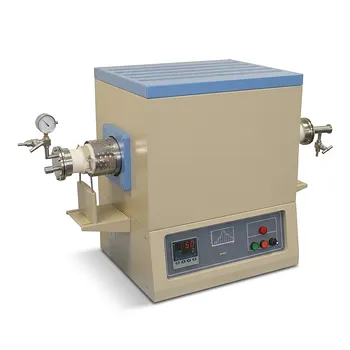
1700C High Temperature Alumina Tube Furnace with 18 Inch Heated Zone and Vacuum Sealing Flanges

Vertical 1700C Vacuum and Atmosphere Tube Furnace with 80mm Alumina Tube
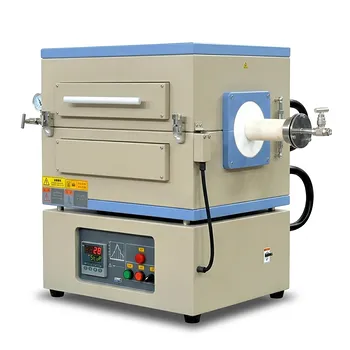
1500°C Split Tube Furnace with Alumina Tube and Vacuum Sealing Flanges for Material Research
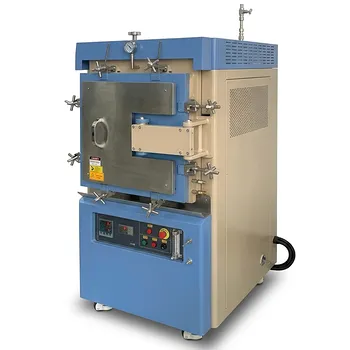
Atmosphere Controlled Muffle Furnace 1700C Maximum Temperature 80L High Capacity Vacuum Inert Gas Box Furnace
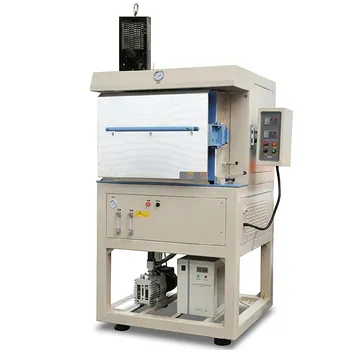
1200C Hydrogen Atmosphere Box Furnace with 5 Heated Sides and 64L Chamber

Three Zone Tube Furnace with 11 Inch or 15 Inch Quartz Tube and Hinged Flanges for Vacuum Atmosphere Heat Treatment
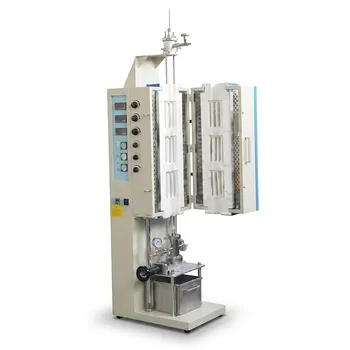
High Temperature Dual Zone Tube Furnace for Material Science Research and Professional Thermal Processing

High Temperature 1700C Tube Furnace with High Vacuum Turbomolecular Pump System and Multi Channel Mass Flow Controller Gas Mixer

High Temperature Automated 5 Inch Tube Furnace for Autonomous Material Research and Advanced Laboratory R&D

High Temperature 1700C Vertical Tube Furnace for Powder Spherification and Material Sintering
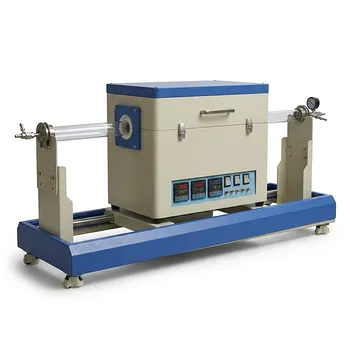
Double Temperature Zone Double Cover Tube Furnace for High Temperature CVD and Vacuum Annealing
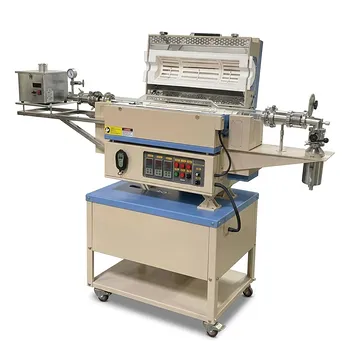
5 Inch Rotary Tube Furnace with Automatic Feeding and Receiving System 1200C Three Zone CVD Powder Processing

High Temperature 1700C Six Zone Split Tube Furnace with Alumina Tube and Water Cooled Flanges

Compact High Temperature 1600C Tube Furnace with 50mm Alumina Tube and Vacuum Flanges for Material Sintering
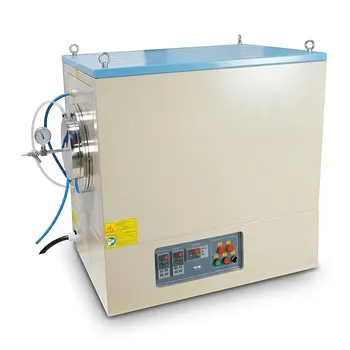
Dual Zone Tube Furnace 1100C with 11 Inch Quartz Tube and Vacuum Flanges for 8 Inch Wafer Processing