What is the function of a controlled atmosphere tube furnace in LiGa alloying? Achieving High-Purity Thermal Synthesis
Updated 3 months ago
The primary function of a controlled atmosphere tube furnace in LiGa alloying is to provide a stable 800°C thermal environment while strictly isolating the reactive metals from oxygen. By introducing high-purity argon through a precision gas path, the furnace prevents the rapid oxidation that lithium and gallium undergo at elevated temperatures. This dual-control mechanism ensures the resulting bulk alloy maintains its required chemical composition and metallic luster.
The controlled atmosphere tube furnace serves as a high-precision chemical reactor that enables direct thermal alloying by balancing extreme heat with an inert environment. It is the critical barrier that prevents reactive metals from degrading into oxides, ensuring the final LiGa alloy meets its exact stoichiometric specifications.
Facilitating Direct Thermal Alloying
Overcoming the Thermal Activation Barrier
The furnace provides the continuous thermal energy necessary to reach 800°C, which is the required temperature for the direct alloying of lithium and gallium. At this temperature, atomic diffusion is sufficiently activated to allow the two metals to bond into a uniform structure.
High-Temperature Field Uniformity
Maintaining a consistent temperature across the sample is vital for homogenization. The tube furnace design ensures that the heat field is uniform, preventing localized hot spots that could lead to compositional segregation or uneven phase distribution.
Programmable Temperature Control
Modern tube furnaces utilize multi-stage programmable controllers to manage heating, soaking, and cooling rates. This precision is essential to follow specific "recipes" that dictate the final crystal structure and mechanical properties of the LiGa alloy.
Atmosphere Management and Oxidation Mitigation
Creating an Inert Reaction Environment
Lithium and gallium are highly susceptible to oxidation, especially when heated. The furnace uses a precision gas path system to replace ambient air with high-purity argon, creating a completely inert atmosphere for the reaction.
Maintaining Stoichiometric Precision
If oxygen were present, it would react with the lithium and gallium to form surface oxide layers, effectively "stealing" metal from the alloy mixture. By eliminating oxygen, the furnace ensures that the exact mass ratio of the starting materials is preserved in the final alloy.
Elimination of Reaction Byproducts
A controlled atmosphere allows for the continuous removal of any residual impurities or moisture. By regulating the gas flow and pressure, the furnace ensures that the chemical reaction remains pure and free from contamination by carbon dioxide or water vapor.
Structural and Microstructural Integrity
Preventing Compositional Segregation
The stable high-temperature environment facilitates the diffusion of solute atoms throughout the melt. This results in a single, uniform solid solution, which is a prerequisite for high-performance alloy applications.
Surface Quality and Luster
The absence of oxidation results in high-quality bulk alloys that exhibit a characteristic metallic luster. This indicates a high level of purity and the absence of brittle intermetallic oxide phases on the surface.
Controlling Grain Growth
Precise temperature soaking allows researchers to evaluate and control the resistance to grain growth. By managing the duration of heat exposure, the furnace helps in achieving the target microstructure necessary for specific technical applications.
Understanding the Trade-offs
Gas Purity and Cost
The effectiveness of the process is entirely dependent on the purity of the argon gas. Utilizing lower-grade inert gases can lead to trace oxidation, which compromises the alloy's performance and purity.
Tube Material Compatibility
At 800°C, the choice of the furnace tube material (e.g., quartz or alumina) is critical. Reactive metals like lithium can sometimes attack the tube walls if the temperature or atmosphere is not perfectly managed, leading to sample contamination and equipment damage.
System Seal Integrity
The most common failure point in these systems is a compromised vacuum seal or gas fitting. Even a microscopic leak can introduce enough oxygen to ruin the stoichiometry of the LiGa alloy, resulting in a dull, oxidized finish rather than a metallic one.
Making the Right Choice for Your Goal
How to Apply This to Your Project
Depending on your specific research or production requirements, the configuration of the tube furnace should be adjusted.
- If your primary focus is absolute chemical purity: Ensure the gas path system includes a high-capacity oxygen and moisture purifier to achieve ultra-pure argon levels.
- If your primary focus is microstructural uniformity: Prioritize a furnace with a longer heating zone and multi-zone temperature control to minimize thermal gradients.
- If your primary focus is high-throughput production: Utilize a programmable system that allows for rapid cooling cycles to increase the number of batches processed per day.
The controlled atmosphere tube furnace is not merely a heater, but a sophisticated environmental chamber that dictates the success of the LiGa alloying process through strict chemical and thermal isolation.
Summary Table:
| Key Feature | Function in LiGa Alloying | Impact on Final Alloy |
|---|---|---|
| 800°C Thermal Environment | Overcomes atomic diffusion barriers | Ensures a uniform, solid solution |
| Inert Gas Path (Argon) | Isolates reactive metals from oxygen | Prevents oxidation and maintains luster |
| Programmable Control | Manages heating and cooling rates | Controls grain growth and microstructure |
| Vacuum-Tight Sealing | Eliminates atmospheric contaminants | Preserves exact chemical stoichiometry |
Optimize Your Material Synthesis with THERMUNITS
THERMUNITS is a leading manufacturer of high-temperature laboratory equipment dedicated to material science and industrial R&D. We provide the precision required for complex processes like LiGa alloying through our advanced thermal solutions.
Our comprehensive product range includes:
- Tube & Atmosphere Furnaces: Perfect for reactive metal processing.
- CVD/PECVD Systems: For advanced thin-film and nanomaterial research.
- Vacuum Induction Melting (VIM) & Hot Press Furnaces: For high-performance alloy production.
- Muffle, Rotary, & Dental Furnaces: Versatile solutions for every laboratory scale.
Whether you need to maintain strict stoichiometry or achieve perfect microstructural integrity, our equipment is designed to deliver consistent, high-quality results.
Ready to upgrade your thermal processing capabilities? Contact our expert engineers today to find the perfect solution for your research needs!
References
- Xingran Wang, Xiaofei Guan. Preparation of the LiGa Intermetallic Alloy by Electrochemical or Thermal Method for Ammonia Synthesis. DOI: 10.1007/s40831-024-00961-9
Mentioned Products
- 1200°C Atmosphere Controlled Automatic Bottom Loading Furnace with 6 Inch Quartz Tube
- Compact Hybrid Muffle and Tube Furnace for 1000C Controlled Atmosphere Laboratory Material Sintering
- Compact Vertical Split Quartz Tube Furnace with Stainless Steel Vacuum Flanges for Rapid Thermal Quenching and Controlled Atmosphere Material Processing
- High Temperature Vertical Atmosphere Controlled Furnace with Automatic Bottom Loading and 1700°C Capacity for Advanced Material Research
- 1700C Compact Hybrid Furnace with Dual Layer Box Sintering and Controlled Atmosphere Alumina Tubes
People Also Ask
- Why is a tube furnace required for FGM-PhG structural color ceramics? Key to Carbon Preservation & Vibrant Color
- Why is an atmosphere-controlled tube furnace required for the pre-sulfidation of NiMo/gamma-Al2O3 catalysts?
- Why is an atmosphere-controlled tube furnace required for 800 °C CNF annealing? Essential for Oxidative Protection.
- Why is an atmosphere-controlled tube furnace required for [email protected]/C preparation? Key for Purity & Structure
- Why is an atmosphere-controlled tube furnace required for single-atom sensor calcination? Ensure Atomic Dispersion.

Tech Team · ThermUnits
Last updated on Jun 03, 2026
Related Products
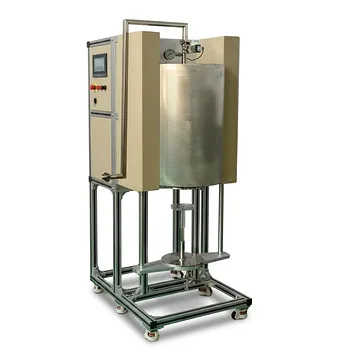
1200°C Atmosphere Controlled Automatic Bottom Loading Furnace with 6 Inch Quartz Tube
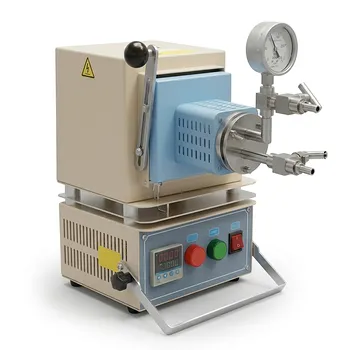
Compact Hybrid Muffle and Tube Furnace for 1000C Controlled Atmosphere Laboratory Material Sintering

Compact Vertical Split Quartz Tube Furnace with Stainless Steel Vacuum Flanges for Rapid Thermal Quenching and Controlled Atmosphere Material Processing
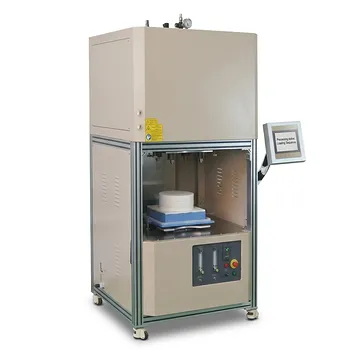
High Temperature Vertical Atmosphere Controlled Furnace with Automatic Bottom Loading and 1700°C Capacity for Advanced Material Research
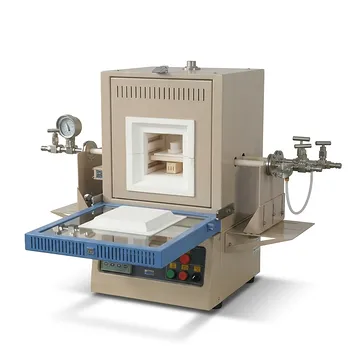
1700C Compact Hybrid Furnace with Dual Layer Box Sintering and Controlled Atmosphere Alumina Tubes
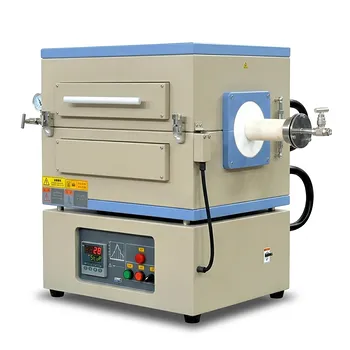
1500°C Split Tube Furnace with Alumina Tube and Vacuum Sealing Flanges for Material Research
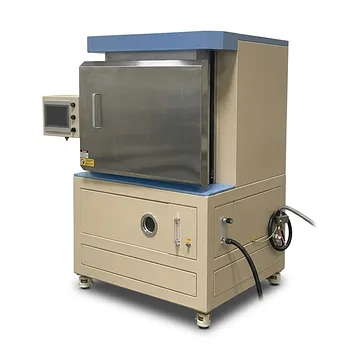
1650C High Temperature Atmosphere Controlled Box Furnace with 65L Chamber for Advanced Material Sintering and Industrial Heat Treatment
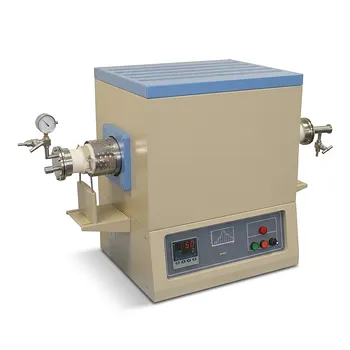
1700C High Temperature Alumina Tube Furnace with 18 Inch Heated Zone and Vacuum Sealing Flanges
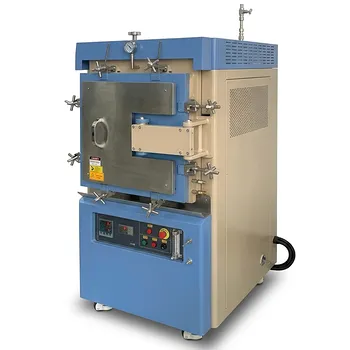
Atmosphere Controlled Muffle Furnace 1700C Maximum Temperature 80L High Capacity Vacuum Inert Gas Box Furnace
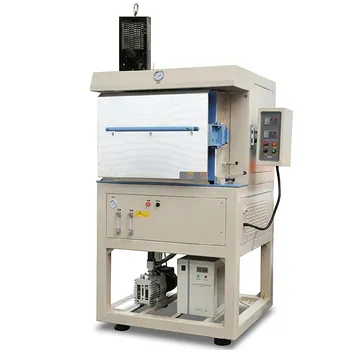
1200C Hydrogen Atmosphere Box Furnace with 5 Heated Sides and 64L Chamber

Vertical 1700C Vacuum and Atmosphere Tube Furnace with 80mm Alumina Tube
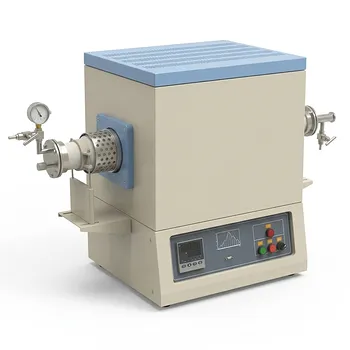
1750°C High Temperature Benchtop Vacuum Atmosphere Tube Furnace with Kanthal Super 1800 Heating Elements and 60mm Alumina Processing Tube

Three Zone Tube Furnace with 11 Inch or 15 Inch Quartz Tube and Hinged Flanges for Vacuum Atmosphere Heat Treatment
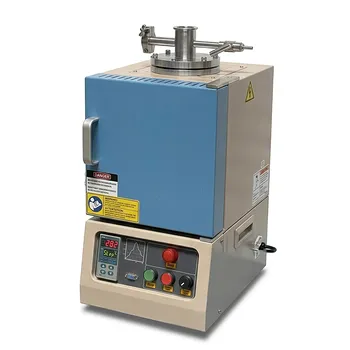
High Temperature Hybrid Muffle and Tube Furnace with Vacuum Capability and PID Control

High Temperature 1700C Tube Furnace with High Vacuum Turbomolecular Pump System and Multi Channel Mass Flow Controller Gas Mixer
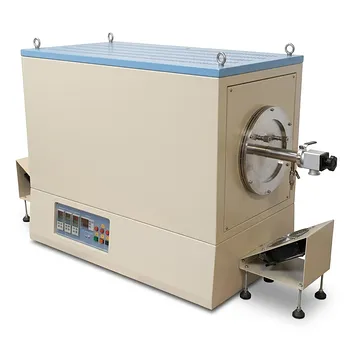
Four Zone Tube Furnace 1100C with 600mm Large Diameter Quartz Tube and Vacuum Flanges
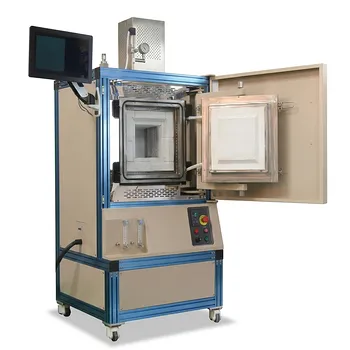
High Temperature Hydrogen Atmosphere Box Furnace 1650C Max Reducing Environment Material Synthesis System 8x8x8 Chamber
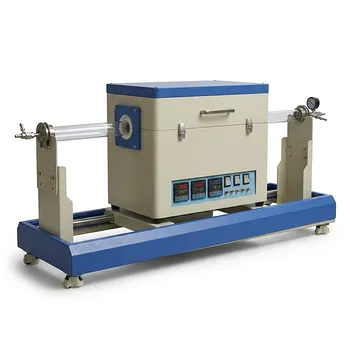
Double Temperature Zone Double Cover Tube Furnace for High Temperature CVD and Vacuum Annealing
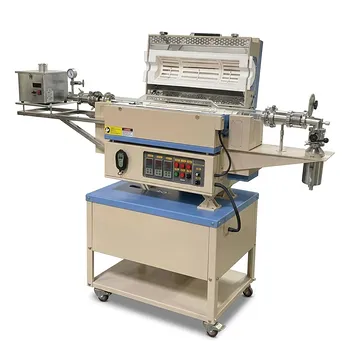
5 Inch Rotary Tube Furnace with Automatic Feeding and Receiving System 1200C Three Zone CVD Powder Processing
