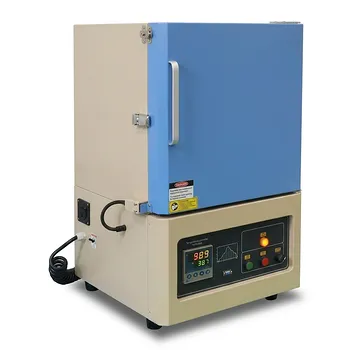
Why is an atmosphere-controlled muffle furnace required for lemon peel carbonization? Prevent Ashing & Optimize Porosity
Updated 3 months ago
The necessity of an atmosphere-controlled muffle furnace lies in its ability to prevent the raw biomass from burning into ash. At 400°C, lemon peel would undergo rapid combustion if exposed to oxygen. By creating a strictly anaerobic environment, the furnace facilitates pyrolysis, a process that thermally decomposes organic matter into a stable carbon skeleton rather than destroying it through oxidation.
Core Takeaway: Atmosphere control is required to replace oxygen with inert gases like Argon or Nitrogen, ensuring the lemon peel undergoes controlled carbonization instead of combustion. This preservation is critical for building the foundational carbon framework and porosity necessary for high-performance activated carbon.
Preventing Oxidative Combustion
The Role of Inert Gas Displacement
At 400°C, lemon peel reaches its flash point in a standard atmosphere. An atmosphere-controlled furnace introduces high-purity Argon or Nitrogen to displace oxygen completely.
This displacement ensures that the biomass is "baked" in a vacuum-like or inert state. Without this control, the organic precursors would simply turn into CO2 and mineral ash, leaving no carbon material behind.
Preservation of Surface Chemistry
Maintaining an inert atmosphere at 400°C is essential for preserving key organic functional groups on the biochar surface. These groups are vital for chemical adsorption and the subsequent grafting of chemical agents.
A controlled environment allows for dehydrogenation and deoxygenation reactions to occur predictably. This transforms the lemon peel into a stable carbon support while maintaining the chemical "hooks" needed for activation.
Facilitating Structural Transformation
Creating the Foundation for Porosity
The muffle furnace provides the precise thermal energy required to release volatile substances from the biomass. As these volatiles escape in an oxygen-free environment, they leave behind a foundational pore structure.
This initial porosity is the "skeleton" of the final material. If oxygen were present, the walls of these developing pores would be consumed by fire, leading to a collapsed and useless structure.
Precision Temperature Management
Carbonization is sensitive to thermal fluctuations. The muffle furnace ensures the material stays at exactly 400°C, which is the "sweet spot" for converting lemon peel into biochar without over-processing.
This specific temperature promotes polycondensation, where small organic molecules link together to form a robust carbon framework. Accurate control prevents the material from becoming too brittle or remaining under-carbonized.
Understanding the Trade-offs and Pitfalls
Gas Selection and Cost
While Argon provides a superior inert environment for high-purity applications, it is significantly more expensive than Nitrogen. Nitrogen is often sufficient for 400°C carbonization but may react with certain materials at much higher temperatures.
The Risk of Seal Failure
Even a minor leak in the furnace door or gas inlet can introduce trace amounts of oxygen. This "micro-oxidation" can result in inconsistent batches, where the exterior of the sample is ashed while the interior is carbonized.
Moisture and Volatile Buildup
If the biomass is not pre-heated (typically at 150°C), the rapid release of water vapor during 400°C carbonization can cause structural damage or "splashing." This compromises the uniformity of the final carbon powder.
How to Optimize Your Carbonization Process
Recommendations for Your Project
- If your primary focus is maximum chemical purity: Utilize high-purity Argon gas to ensure a completely non-reactive environment during the full heating cycle.
- If your primary focus is developing high surface area: Ensure a pre-heating step at 150°C to remove moisture before ramping to 400°C, preventing pore collapse.
- If your primary focus is cost-effective biochar production: Nitrogen is a suitable and more affordable alternative for maintaining the anaerobic conditions required at 400°C.
- If your primary focus is heavy metal adsorption: Strictly monitor the 400°C threshold to preserve the surface functional groups that facilitate chemical bonding.
By strictly controlling the furnace atmosphere, you transform a simple fruit byproduct into a sophisticated, high-performance carbon framework.
Summary Table:
| Feature | Impact on Carbonization | Key Benefit |
|---|---|---|
| Atmosphere Control | Displaces oxygen with Nitrogen/Argon | Prevents biomass from burning into ash |
| Temperature Precision | Maintains steady 400°C thermal energy | Ensures uniform conversion to stable biochar |
| Structural Preservation | Facilitates controlled pyrolysis | Protects foundational pore structure and surface chemistry |
| Volatile Management | Regulates release of organic vapors | Prevents pore collapse and sample splashing |
Elevate Your Carbon Research with THERMUNITS
Maximize the quality of your biochar and advanced materials with precision thermal solutions from THERMUNITS. As a leading manufacturer of high-temperature laboratory equipment for material science and industrial R&D, we offer a comprehensive range of Atmosphere, Muffle, Vacuum, Tube, and Rotary furnaces, as well as CVD/PECVD systems and Vacuum Induction Melting (VIM) solutions.
Whether you are conducting low-temperature carbonization or high-purity industrial synthesis, our equipment provides the strict environmental control and temperature uniformity required for breakthrough results.
Ready to optimize your heat treatment process? Contact our technical team today to find the ideal furnace for your specific application!
References
- M. S. Michael, K. Surya. Feasibility study on conversion of biowaste of lemon peel into carbon electrode for supercapacitor using ZnCl2 as an activating agent. DOI: 10.1007/s40243-024-00273-8
Mentioned Products
- Atmosphere Controlled Muffle Furnace 1700C Maximum Temperature 80L High Capacity Vacuum Inert Gas Box Furnace
- 1200°C Five Side Heating Atmosphere Controlled Muffle Furnace 64 Liter High Uniformity Box Furnace for Material Synthesis
- Compact 1000C Muffle Furnace with Programmable Controller and 2 Inch Top Port for Vacuum and Atmosphere Material Research
- Compact Hybrid Muffle and Tube Furnace for 1000C Controlled Atmosphere Laboratory Material Sintering
- High Temperature 1500C Benchtop Muffle Furnace 3.6L Alumina Fiber Chamber Programmable Controller Sintering Annealing Carbonization Thermal Processing System
People Also Ask
- How can atmosphere control be achieved in a muffle furnace? Mastering Precision Gas Environments for Material Research
- What role does atmosphere control play in technical ceramics and glass? Master Material Purity and Precision
- What are the typical operating temperature ranges for standard and advanced muffle furnaces? Expert Temperature Guide.
- In what ways do muffle furnaces support aerospace and advanced materials testing? Essential High-Temp Validation Tools
- How is the ash content of polymers and plastics determined using a muffle furnace? Essential Guide for QC & R&D

Tech Team · ThermUnits
Last updated on Jun 03, 2026
Related Products
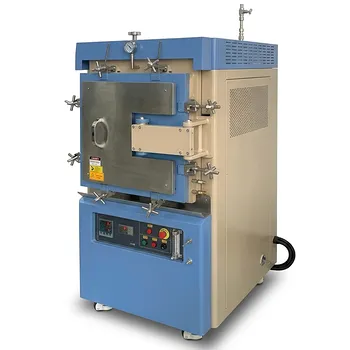
Atmosphere Controlled Muffle Furnace 1700C Maximum Temperature 80L High Capacity Vacuum Inert Gas Box Furnace
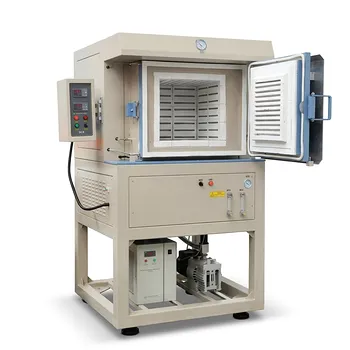
1200°C Five Side Heating Atmosphere Controlled Muffle Furnace 64 Liter High Uniformity Box Furnace for Material Synthesis
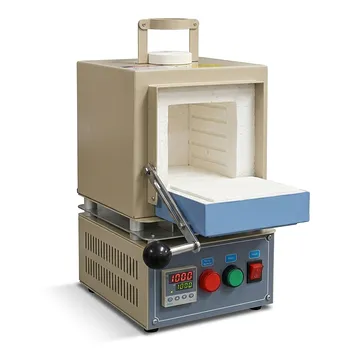
Compact 1000C Muffle Furnace with Programmable Controller and 2 Inch Top Port for Vacuum and Atmosphere Material Research
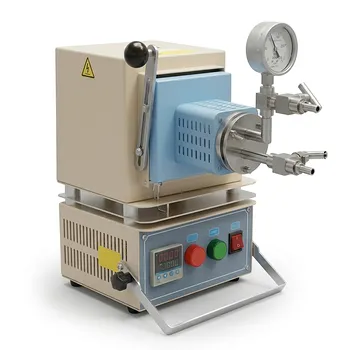
Compact Hybrid Muffle and Tube Furnace for 1000C Controlled Atmosphere Laboratory Material Sintering
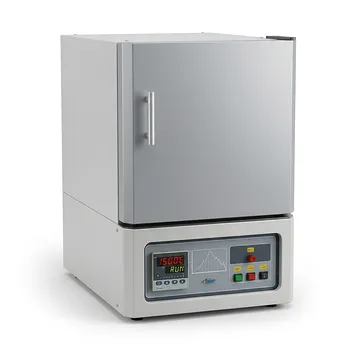
High Temperature 1500C Benchtop Muffle Furnace 3.6L Alumina Fiber Chamber Programmable Controller Sintering Annealing Carbonization Thermal Processing System
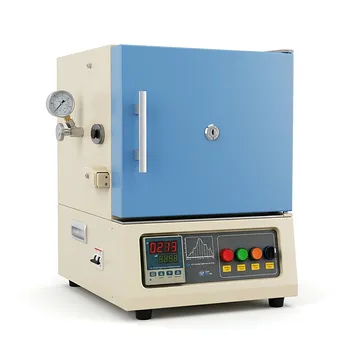
1200C Hybrid Muffle and Tube Furnace for Material Research with Dual Atmosphere Control Quartz Tubes
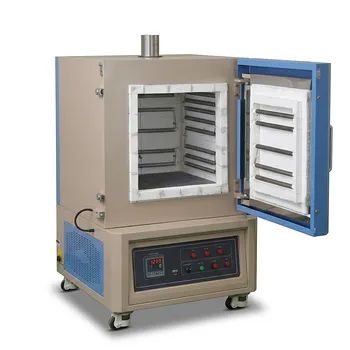
1200C High Temperature 125L Muffle Furnace 5 Side Heating for Large Batch Sintering with Optional Alloy Debinding Chamber
1750C Compact Muffle Furnace 1.7L Ultra High Temperature Laboratory Sintering System for Advanced Ceramics and Material Science Research
Large Bench Top 1700C High Temperature Muffle Furnace with 19L Chamber for Advanced Material Sintering and Annealing
High Temperature Muffle Furnace with Alloy Chamber for Debinding and Sintering Applications
1200C High Temperature Muffle Furnace with Motorized Door and Automated PC Control for Industrial Sintering and Material Processing 27 Liter
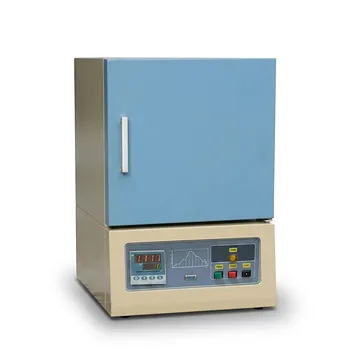
Ultra High Temperature Bench Top Muffle Furnace 1750C Sintering System with Kanthal Super Heating Elements and Precision Digital Control
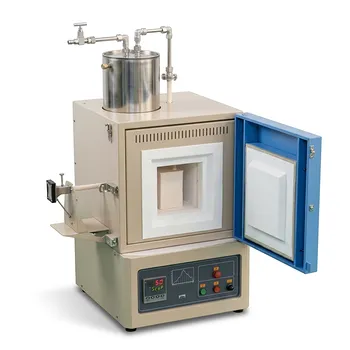
High Temperature Bench Top Muffle Furnace 1700C with Integrated Evaporating Particle Collection and 8x8x8 Alumina Fiber Chamber
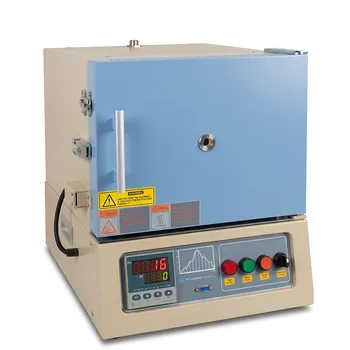
1200C Muffle Furnace 12x8x5 7.2L Heating Chamber with Quartz Observation Window and Vent Port
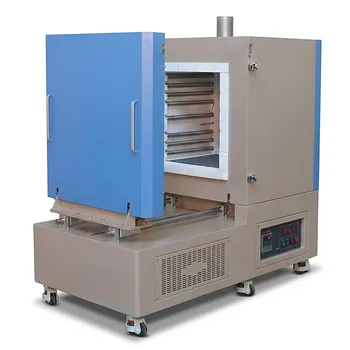
1200C Five Side Heating Muffle Furnace with Sliding Door 125L Volume High Temperature Heat Treatment System for Large Scale Sintering and Annealing
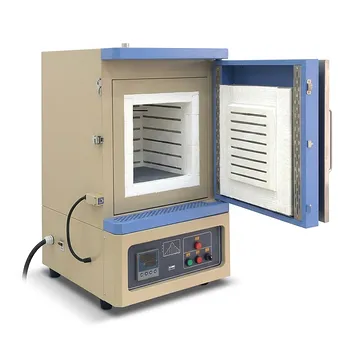
Five Side Heating Muffle Furnace High Purity Alumina Fiber 27L Chamber 1200C High Temperature Thermal Processing System for Sintering Annealing and Materials Research
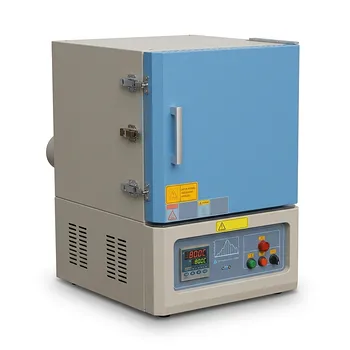
1800C Bench Top Muffle Furnace 18 Liters with Kanthal Super 1900 Heating Elements for High Purity Ceramic Sintering and Material Research
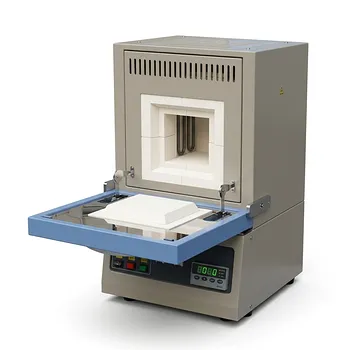
Five Sided Heating Muffle Furnace High Uniformity 1200C Lab Box Furnace 27L Alumina Fiber Chamber
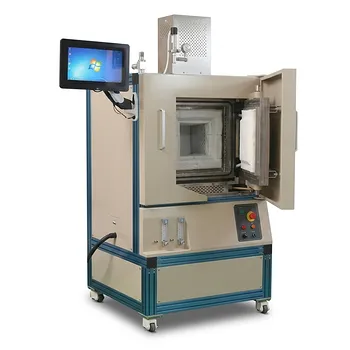
High Temperature Oxygen and Inert Atmosphere Controlled Furnace 8 Liter 1700C Sintering System for Advanced Materials RD