Why is the integration of a PID controller with a filter (PID-F) essential? Achieve Unmatched Thermal Stability.
Updated 3 months ago
Integrating a low-pass filter with a PID controller (PID-F) is the definitive solution for managing the inherent instabilities of electric resistance furnaces. This configuration is essential because it mitigates the "kick effect" caused by sudden setpoint changes and filters out industrial noise that would otherwise cause erratic control behavior. By smoothing the controller's response, the PID-F architecture ensures stable temperature maintenance despite the significant thermal inertia and time delays characteristic of furnace systems.
The PID-F controller is necessary to bridge the gap between theoretical PID precision and the harsh reality of industrial thermal dynamics. It provides a buffer that prevents high-frequency noise and sudden command changes from destabilizing the system's frequency response.
The Inherent Challenges of Thermal Control
Managing High Thermal Inertia
Electric resistance furnaces do not respond instantaneously to power adjustments. There is a massive thermal inertia, meaning the system retains heat and takes a long time to change state, making standard PID loops prone to overshooting.
The Impact of Significant Time Delay
There is often a measurable time delay between the application of power and the sensor's detection of a temperature rise. Without a filter, the derivative component of a PID controller may overreact to small, immediate fluctuations, leading to oscillations.
How the Low-Pass Filter Optimizes Performance
Mitigating the Setpoint Kick
When a technician changes a reference setpoint abruptly, a standard PID controller can experience a "derivative kick." The integrated low-pass filter smooths this transition, allowing the system to ramp up or down without stressing the electrical components or causing massive temperature spikes.
Enhancing Disturbance Rejection
Industrial environments are saturated with electrical noise and interference. The filter coefficient ensures that the controller ignores high-frequency "chatter" and only responds to genuine temperature trends, significantly improving the system's stability.
Improving Transient and Frequency Response
By incorporating a filter, the system’s frequency response is refined. This allows for a more aggressive PID tuning that can handle load changes efficiently without the risk of high-frequency instability that would plague a non-filtered system.
Understanding the Trade-offs
The Risk of Added Phase Lag
While filtering is beneficial, every filter introduces a degree of phase lag into the control loop. If the filter coefficient is too aggressive, it can actually decrease the phase margin, potentially leading to the very instability it was meant to prevent.
Increased Tuning Complexity
Implementing a PID-F system requires the operator to tune an additional parameter (the filter coefficient). This requires a deeper understanding of the system's dynamics compared to a basic three-term PID controller.
How to Apply This to Your Furnace System
Recommendations for Implementation
- If your primary focus is maximum stability in a noisy environment: Increase the filter coefficient to prioritize the rejection of high-frequency interference, even if it slightly slows the initial response.
- If your primary focus is rapid setpoint tracking: Use a lighter filter coefficient to minimize phase lag while still providing enough damping to prevent the setpoint kick.
- If your primary focus is equipment longevity: Utilize a robust filter to prevent "chattering" of power actuators (like SCRs or contactors) caused by raw derivative noise.
By precisely balancing the filter coefficient with your proportional, integral, and derivative gains, you can achieve a level of temperature precision that standard control loops simply cannot match.
Summary Table:
| Feature | Function in PID-F | Benefit for Furnace Control |
|---|---|---|
| Low-Pass Filter | Suppresses high-frequency noise | Prevents erratic power fluctuations and actuator wear. |
| Setpoint Smoothing | Mitigates "Derivative Kick" | Protects heating elements from sudden power surges. |
| Phase Margin Control | Optimizes frequency response | Allows aggressive tuning without risking system oscillation. |
| Noise Rejection | Ignores industrial interference | Maintains steady temperatures in harsh electrical environments. |
Optimize Your Thermal Processing with THERMUNITS
Precision temperature control is the backbone of successful material science and industrial R&D. As a leading manufacturer of high-temperature laboratory equipment, THERMUNITS specializes in high-performance thermal solutions designed for accuracy and durability. Our comprehensive range includes Muffle, Vacuum, Atmosphere, Tube, Rotary, and Hot Press furnaces, CVD/PECVD systems, Dental Furnaces, and Vacuum Induction Melting (VIM) furnaces.
Whether you need an electric rotary kiln or advanced thermal elements, our engineering team ensures your equipment is equipped with the latest control architectures like PID-F for maximum stability.
Ready to elevate your heat treatment precision?
Contact THERMUNITS Today to discuss your specific requirements and get a tailored solution.
References
- Sarah A. Alzakari, Fatma A. Hashim. A new control scheme for temperature adjustment of electric furnaces using a novel modified electric eel foraging optimizer. DOI: 10.3934/math.2024654
Mentioned Products
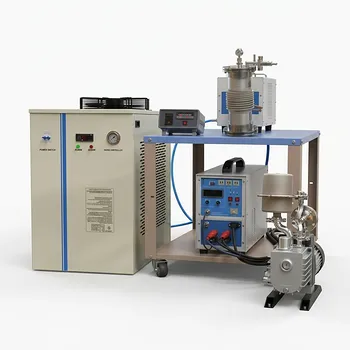
- 1100C Tube Furnace with Vacuum Flange and Programmable Temperature Controller for Material Science and Industrial Heat Treatment
- High Temperature 1200C Muffle Furnace 27L Volume 12x12x12 Chamber with Programmable PID Controller for Laboratory Material Science
- Top Loading Muffle Furnace 1200°C High Temperature Crucible Furnace with 9 Liter Chamber and Programmable PID Controller
- 1100°C Vertical Laboratory Furnace for DIY Tubular Reactors with PID Temperature Controller
- High Temperature Dual Zone Tube Furnace for Material Science Research and Professional Thermal Processing
People Also Ask
- What are the advantages of 1100°C tube furnaces for ORR catalysts? Boost Conductivity and Structural Stability.
- What role does a tube furnace play in PS template removal? Ensure ZnO/SiO2 Structural Integrity & High Performance.
- What core functions does a high-temperature vacuum tube furnace provide? Optimize np-CuSn Sintering & Joint Integrity
- What is the role of a high-temperature tube furnace in the calcination process of ZnO/In2O3 nanocomposites?
- What impact does the heating rate of a tube furnace have on biochar microstructure? Optimize Your Material R&D.

Tech Team · ThermUnits
Last updated on Jun 02, 2026
Related Products

1100C Tube Furnace with Vacuum Flange and Programmable Temperature Controller for Material Science and Industrial Heat Treatment
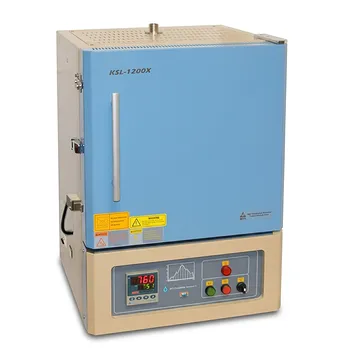
High Temperature 1200C Muffle Furnace 27L Volume 12x12x12 Chamber with Programmable PID Controller for Laboratory Material Science
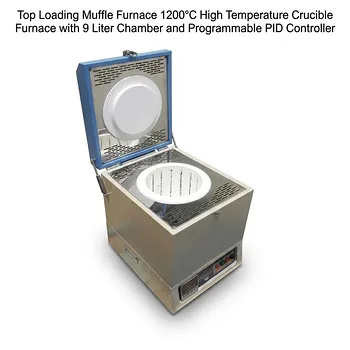
Top Loading Muffle Furnace 1200°C High Temperature Crucible Furnace with 9 Liter Chamber and Programmable PID Controller
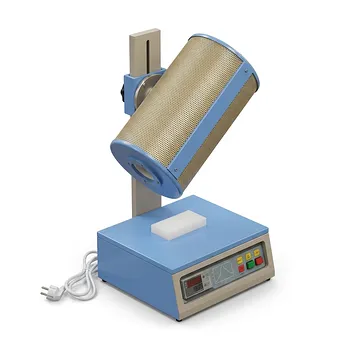
1100°C Vertical Laboratory Furnace for DIY Tubular Reactors with PID Temperature Controller
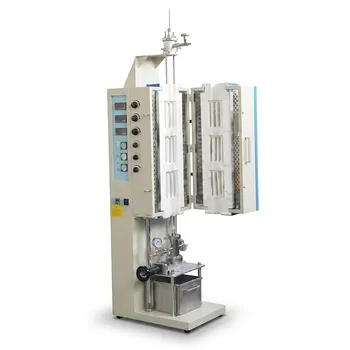
High Temperature Dual Zone Tube Furnace for Material Science Research and Professional Thermal Processing
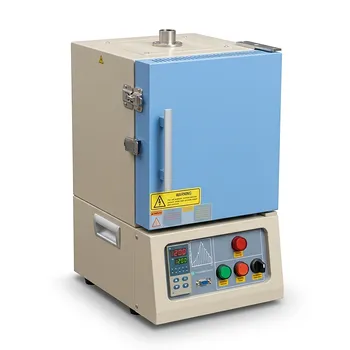
1200°C Small Box Furnace 4.2 Liter Programmable Muffle Furnace with High Purity Alumina Insulation and PID Control
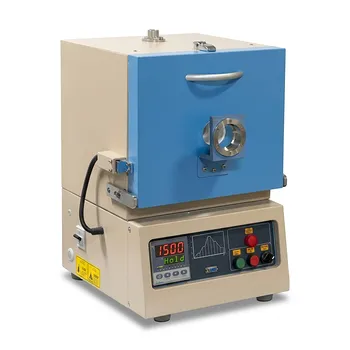
1500C Hybrid Muffle Tube Furnace 1.7L Box with 2 Inch Mullite Tube and Programmable PID Controller
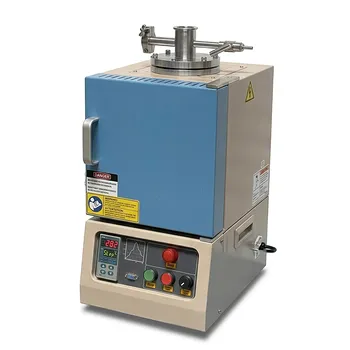
High Temperature Hybrid Muffle and Tube Furnace with Vacuum Capability and PID Control
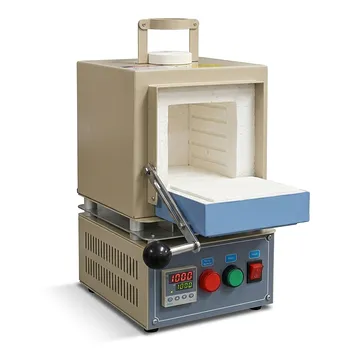
Compact 1000C Muffle Furnace with Programmable Controller and 2 Inch Top Port for Vacuum and Atmosphere Material Research
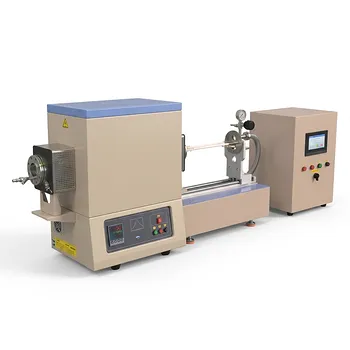
High Temperature Horizontal Electrical Assisted Sintering Furnace with 3KW Programmable Power Source for Advanced Ceramic Materials
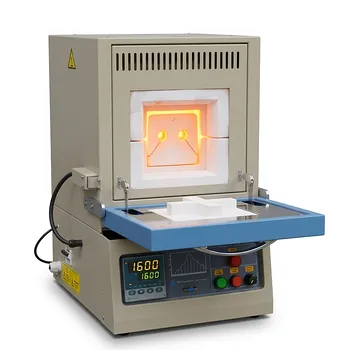
High Temperature Compact Muffle Furnace 1700 C with 30 Segment Programmable Controller and 1.7L Cubic Chamber
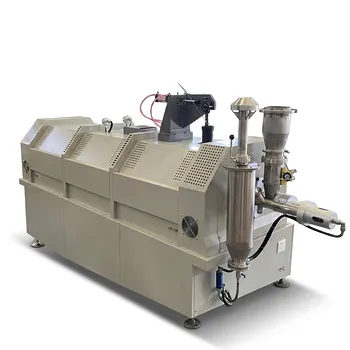
Electric Rotary Kiln Continuous Working Small Rotary Furnace Heating Pyrolysis Plant
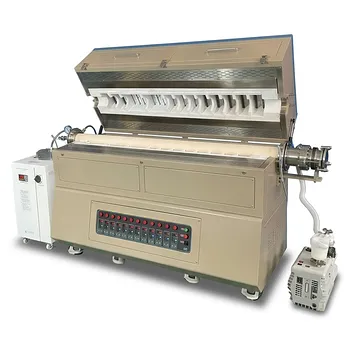
Twelve Zone 1700°C Multi Zone Split Tube Furnace with 100mm Alumina Processing Tube and Independent Temperature Gradient Control