What impact does the heating rate of a tube furnace have on biochar microstructure? Optimize Your Material R&D.
Updated 3 months ago
The heating rate of a high-temperature tube furnace is the fundamental regulator of volatile release kinetics, directly determining whether biochar develops a stable, high-surface-area microstructure or suffers structural collapse. By controlling the speed of thermal degradation, the furnace dictates the transition of biomass components—cellulose, hemicellulose, and lignin—into a refined carbon skeleton. A precise heating rate ensures that internal gases escape gradually, preserving the delicate pore networks essential for adsorption and catalytic performance.
Core Takeaway: Proper control of the heating rate allows for an orderly reorganization of the carbon framework; excessively fast rates cause internal gas pressure to erupt violently, leading to the collapse of pore walls and a reduction in the biochar's functional surface area.
The Kinetics of Volatile Matter Release
Regulating the Escape Velocity of Gases
The heating rate serves as a throttle for the escape velocity of volatile matter from within the biomass matrix. When using a controlled rate, such as 5°C/min to 10°C/min, the decomposition of organic molecules occurs steadily. This prevents the "eruptive" release of gases that can physically rupture the developing carbon walls.
Orderly Chemical Transformations
A lower heating rate provides the necessary residence time for complex chemical reactions, including dehydrogenation, deoxygenation, and polycondensation. These reactions allow the carbon to reorganize into a more stable, aromatized structure. This orderly transition is critical for creating a consistent and durable carbon skeleton.
Microstructural Evolution and Pore Stability
Formation of the Carbon Skeleton
The precision atmosphere furnace allows for the gradual thermal cracking of macro-molecules, which is essential for defining the final carbon skeleton. By maintaining a steady temperature gradient, the furnace ensures that the reorganization of atoms into a carbon-rich matrix happens without the structural distortions caused by rapid thermal shock.
Optimization of Porosity and Surface Area
Controlled heating rates are decisive in forming high specific surface areas and characteristic mesoporous or microporous structures. Slower rates prevent the "coarsening" of macropores, which occurs when internal walls melt or break under pressure. Research suggests that rates like 15°C/min can optimize the balance between pore volume and functional group density.
Preventing Structural Collapse
The primary risk of high heating rates is the violent eruption of internal volatiles, which leads to the collapse of the pore structure. When gases cannot escape fast enough through existing channels, they create internal pressure that destroys the delicate micropore network. This results in a "melted" or closed-off surface that lacks the chemical activity required for high-performance applications.
Understanding the Trade-offs
Balancing Quality and Throughput
While low heating rates produce superior microstructures, they significantly increase the processing time per batch. Operators must balance the high chemical activity of the biochar against the need for production efficiency. Choosing an excessively slow rate may improve surface area but can lead to diminishing returns in industrial throughput.
Thermal Gradients and Biomass Type
The impact of the heating rate is also influenced by the type of biomass used, such as macroalgae or woody straw. Feedstocks with higher moisture or volatile content are more sensitive to rapid heating and require more stringent furnace control to avoid structural failure. Ignoring the synergy between the heating rate and peak temperature (often 300°C to 750°C) can result in biochar with poor adsorption capacity.
How to Apply This to Your Project
Selecting the Rate Based on Your Objectives
The ideal heating rate depends entirely on the intended application of the biochar and the limitations of your high-temperature furnace.
- If your primary focus is maximizing surface area and catalytic activity: Utilize a low heating rate (e.g., 5°C/min) to ensure stable pore development and prevent structural collapse.
- If your primary focus is producing metallurgical reductants: Aim for a moderate heating rate (e.g., 10°C–20°C/min) to maintain high carbon content and a stable skeleton while improving operational efficiency.
- If your primary focus is chemical activation for gas adsorption: Use a secondary thermal treatment in a controlled atmosphere furnace at higher temperatures (900°C) after initial slow-rate carbonization to further develop pore volume.
By mastering the heating rate within a tube furnace, researchers can precisely engineer the microscopic architecture of biochar to meet specific industrial and environmental needs.
Summary Table:
| Heating Rate | Pore Structure | Surface Area | Structural Stability |
|---|---|---|---|
| Low (5-10°C/min) | Well-defined | High | Stable & Aromatized |
| Moderate (10-20°C/min) | Consistent | Medium | Balanced Skeleton |
| High (>20°C/min) | Collapsed/Melted | Low | Ruptured Walls |
Master Your Heat Treatment with THERMUNITS
As a leading manufacturer of high-temperature laboratory equipment for material science, THERMUNITS provides the precision Tube, Atmosphere, Vacuum, and Rotary furnaces required to control carbonization kinetics perfectly. Our advanced thermal solutions, including CVD/PECVD systems and dental furnaces, are designed to help industrial R&D teams achieve superior material properties and surface area optimization.
Ready to enhance your lab's efficiency? Contact us today to find the ideal furnace for your research!
References
- Ayşenur Özuysal, Görkem Akıncı. Investigation of cattle manure, poultry manure and sewage sludge as raw materials for biochar synthesis via pyrolysis: A case study for Küçük Menderes Basin-Türkiye. DOI: 10.5505/pajes.2023.71644
Mentioned Products
- High Temperature Tube Furnace 1500C with Sliding Flanges and 50mm OD for Rapid Thermal Processing Fast Heating and Cooling
- High Temperature 1700C Tube Furnace with High Vacuum Turbomolecular Pump System and Multi Channel Mass Flow Controller Gas Mixer
- 1750°C High Temperature Benchtop Vacuum Atmosphere Tube Furnace with Kanthal Super 1800 Heating Elements and 60mm Alumina Processing Tube
- High Temperature 1700C Benchtop Tube Furnace with 5 Inch Heating Zone High Purity Alumina Tube and Vacuum Sealing Flanges
- 1700C High Temperature Alumina Tube Furnace with 18 Inch Heated Zone and Vacuum Sealing Flanges
People Also Ask
- How are high-temperature tube furnaces utilized to repair etching damage? Precision Lattice Restoration Solutions
- What role does a high-temperature tube furnace play in CVD synthesis of silicon nanowires? Master VLS Growth Precision.
- What core conditions does a high-temperature tube furnace provide for rGO aerogels? Mastering Precision Synthesis.
- What role does a high-temperature tube furnace play in the sulfidation heat treatment of CoS@C/MXene nanocomposites? Guide
- How does precision tube furnace control influence CoFe nanoparticle formation? Master Your Bimetallic Synthesis.

Tech Team · ThermUnits
Last updated on Jun 03, 2026
Related Products

High Temperature Tube Furnace 1500C with Sliding Flanges and 50mm OD for Rapid Thermal Processing Fast Heating and Cooling

High Temperature 1700C Tube Furnace with High Vacuum Turbomolecular Pump System and Multi Channel Mass Flow Controller Gas Mixer

1750°C High Temperature Benchtop Vacuum Atmosphere Tube Furnace with Kanthal Super 1800 Heating Elements and 60mm Alumina Processing Tube

High Temperature 1700C Benchtop Tube Furnace with 5 Inch Heating Zone High Purity Alumina Tube and Vacuum Sealing Flanges
1700C High Temperature Alumina Tube Furnace with 18 Inch Heated Zone and Vacuum Sealing Flanges
High Temperature Split Tube Furnace 1500C for Material Research Vacuum and Atmosphere Thermal Processing

1800C High Temperature Compact Vacuum Tube Furnace with 60mm OD Alumina Tube and Kanthal MoSi2 Heating Elements

Compact High Temperature 1600C Tube Furnace with 50mm Alumina Tube and Vacuum Flanges for Material Sintering
High Temperature Three Zone Tube Furnace 1700C with Alumina Tube and Water Cooled Flanges
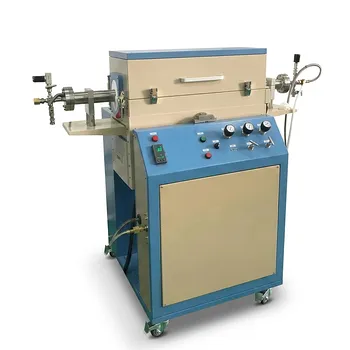
High Temperature Rocking Tube Furnace 1700°C Alumina Processing Tube with Precision Oscillation for Material Synthesis
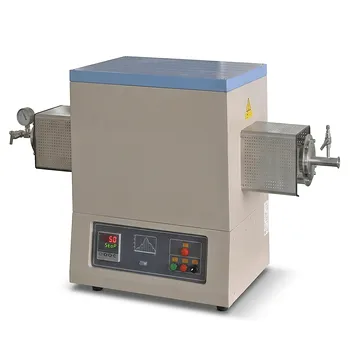
High Temperature 1700C Tube Furnace with 4 Inch OD Alumina Tube and Vacuum Sealing Flanges

High Temperature 1700C Vertical Tube Furnace for Powder Spherification and Material Sintering
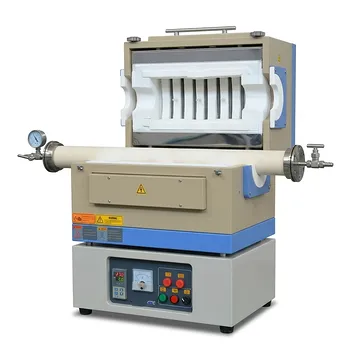
High Temperature 1600C Split Tube Furnace Vacuum Flanges Valves Optional 60mm 80mm Alumina Tube

High Temperature Automated 5 Inch Tube Furnace for Autonomous Material Research and Advanced Laboratory R&D

High Temperature 1700C Six Zone Split Tube Furnace with Alumina Tube and Water Cooled Flanges
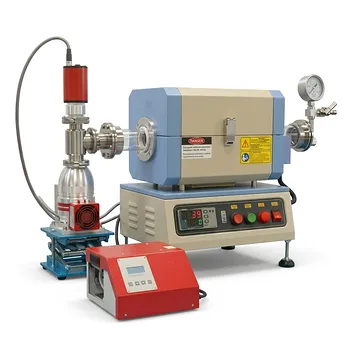
High Vacuum Compact Tube Furnace 1200C with Integrated Turbo Pump System and 8 Inch Heating Zone
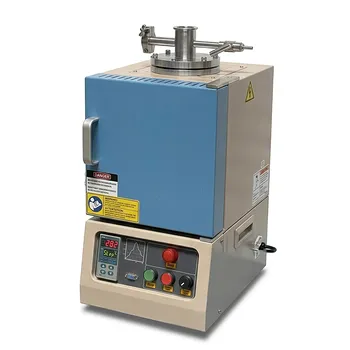
High Temperature Hybrid Muffle and Tube Furnace with Vacuum Capability and PID Control
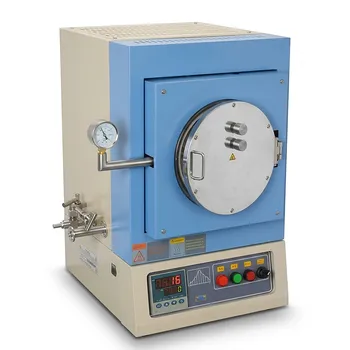
1100°C High Temperature Quartz Chamber Furnace 8 Inch OD with 7.6 Liter Capacity and Vacuum Atmosphere Capability

1100C Tube Furnace with Vacuum Flange and Programmable Temperature Controller for Material Science and Industrial Heat Treatment