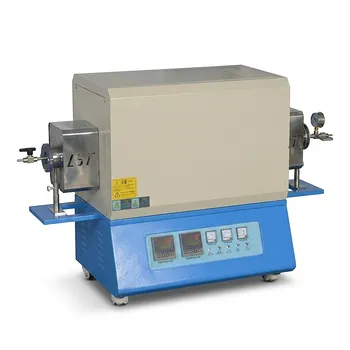
What core functions does a high-temperature vacuum tube furnace provide? Optimize np-CuSn Sintering & Joint Integrity
Updated 3 months ago
The high-temperature vacuum tube furnace serves as the foundational environment for metallurgical bonding in np-CuSn joints. It provides a precise temperature field and a controlled chemical atmosphere—typically using forming gas—to drive atomic diffusion and the formation of Cu3Sn intermetallic compounds. By effectively reducing residual surface oxides, the furnace ensures that the resulting interconnected structures achieve high density and the low electrical resistivity required for high-performance electronics.
The furnace acts as a critical process reactor that manages both the kinetic energy and chemical stability necessary to transform nanoporous precursors into a solid, conductive joint. Its primary role is to balance thermal activation with environmental purity to prevent oxidation and promote densification.
Thermal Activation and Phase Transformation
Driving Atomic Diffusion through Gradient Heating
The furnace supplies the necessary thermal energy to initiate atomic diffusion between the copper and tin components. By utilizing gradient heating, the system allows for a controlled ramp-up in temperature, which is essential for uniform bonding across the joint interface.
Facilitating the Formation of Cu3Sn Compounds
One of the core functions of the thermal field is to drive the chemical reaction that forms Cu3Sn intermetallic compounds (IMCs). These compounds are vital for the mechanical and thermal stability of the joint, and their formation is strictly dependent on the precise temperature control provided by the furnace.
Managing Sintering Kinetics
Through programmable temperature profiles, the furnace controls the sintering kinetics, ensuring that the atoms have sufficient time to migrate and bond. This prevents incomplete sintering while also avoiding excessive grain growth that could compromise the joint's integrity.
Atmosphere Management and Surface Deoxidation
Creating a Reducing Environment with Forming Gas
The furnace provides a controlled chemical environment, often utilizing forming gas (a hydrogen/nitrogen or hydrogen/argon mixture). This atmosphere is critical for reducing residual surface oxides on the copper and tin, which would otherwise act as barriers to effective bonding.
Maintaining an Oxygen-Free Environment
By operating under vacuum or an inert gas shield, the furnace eliminates oxygen from the chamber. This prevents the re-oxidation of the np-CuSn alloy at high temperatures, a factor that is vital for maintaining the purity of the metallic interface.
Removal of Volatile Contaminants
Similar to the processing of porous alloys, the vacuum environment can help in the evaporation and removal of moisture or organic residues. This ensures that the final joint is free of internal impurities that could lead to voids or structural weaknesses.
Achieving Structural and Electrical Integrity
Enhancing Densification and Pore Elimination
The combination of heat and controlled atmosphere promotes the formation of robust sintering necks between particles. This process drives the system toward high relative density, effectively eliminating internal pores that would otherwise hinder mechanical strength.
Optimizing Electrical Resistivity
The furnace's ability to create a dense, oxide-free structure directly impacts the joint's electrical performance. By ensuring a high-purity metallic path, the furnace allows the np-CuSn joint to reach its lowest possible electrical resistivity.
Controlling Microstructural Consistency
Precise soaking times within the furnace enable the microstructural reshaping of the alloy. This leads to a consistent distribution of phases, which is necessary for the joint to withstand the thermal and mechanical stresses encountered during its operational life.
Understanding the Trade-offs
Heating Rate vs. Thermal Stress
While rapid heating can increase throughput, it may introduce thermal gradients that lead to residual stress or cracking in the joint. A slower, gradient-based approach is safer for joint integrity but extends the overall processing time.
Atmosphere Purity vs. Operational Complexity
Maintaining a high-vacuum or specialized reducing atmosphere significantly improves joint quality but increases operational costs and equipment maintenance. If the atmosphere control fails even slightly, the resulting oxidation can lead to a total failure of the sintering process.
Making the Right Choice for Your Project
The specific configuration of your vacuum tube furnace should align with the performance requirements of the alloy joint.
- If your primary focus is Maximum Conductivity: Prioritize a high-purity reducing atmosphere (forming gas) and longer soaking times to ensure the complete removal of surface oxides.
- If your primary focus is Mechanical Strength: Focus on precise gradient heating and cooling to optimize the thickness of the Cu3Sn intermetallic layer and minimize internal stresses.
- If your primary focus is High Throughput: Implement multi-stage temperature programs that balance rapid heating with targeted "dwell" stages at critical phase-transformation temperatures.
Ultimately, the vacuum tube furnace is the decisive factor in whether an np-CuSn joint achieves its theoretical potential or fails due to contamination and poor densification.
Summary Table:
| Core Function | Key Mechanism | Impact on np-CuSn Joints |
|---|---|---|
| Thermal Activation | Gradient Heating | Drives atomic diffusion and Cu3Sn compound formation |
| Atmosphere Control | Reducing (Forming Gas) | Eliminates surface oxides to ensure metallic purity |
| Densification | Vacuum/Inert Shielding | Promotes pore elimination and achieves low electrical resistivity |
| Kinetics Control | Programmable Profiles | Manages phase transformation while preventing grain growth |
Master Your Advanced Material Sintering with THERMUNITS
Achieving the perfect np-CuSn joint requires the uncompromising precision of THERMUNITS thermal processing solutions. As a global leader in high-temperature laboratory equipment for material science and industrial R&D, we empower researchers to ensure both structural and electrical integrity in every bond.
Our comprehensive range of thermal solutions includes:
- Tube & Vacuum Furnaces (Ideal for np-CuSn processing)
- Hot Press & Atmosphere Furnaces
- Muffle, Rotary, & Dental Furnaces
- CVD/PECVD Systems
- Vacuum Induction Melting (VIM) & Thermal Elements
Why Partner with THERMUNITS? We provide the precise temperature control and atmospheric purity needed to drive atomic diffusion and eliminate oxidation barriers. Our equipment is engineered to transform your material precursors into high-performance, conductive structures with repeatable accuracy.
Ready to enhance your lab's thermal processing capabilities? Contact THERMUNITS Today to find the perfect solution for your heat treatment needs!
References
- Ezer Castillo, Nikolay Dimitrov. New generation copper-based interconnection from nanoporous CuSn alloy film sintered at low temperatures. DOI: 10.1039/d3ma01071f
Mentioned Products
- 1750°C High Temperature Benchtop Vacuum Atmosphere Tube Furnace with Kanthal Super 1800 Heating Elements and 60mm Alumina Processing Tube
- 1800C High Temperature Compact Vacuum Tube Furnace with 60mm OD Alumina Tube and Kanthal MoSi2 Heating Elements
- High Temperature 1700C Tube Furnace with High Vacuum Turbomolecular Pump System and Multi Channel Mass Flow Controller Gas Mixer
- 1200C High Temperature 5 Inch Split Vacuum Tube Furnace with 12 Inch Heating Zone and Separated PID Controller
- High Temperature 1100C Compact Top Loading Vertical Vacuum Tube Furnace for High Vacuum Noble Metal Melting and Material Research
People Also Ask
- What is the role of a high-temperature tube furnace in the calcination process of ZnO/In2O3 nanocomposites?
- What role does a high-temperature tube furnace play in the sulfidation heat treatment of CoS@C/MXene nanocomposites? Guide
- Why is a high-temperature tube furnace required for CuAlO2 heat treatment? Master Phase Transformation Today
- What role does a high-temperature tube furnace play in executing nitrogen absorption kinetic experiments? Expert Insights
- Function of tube furnaces in cellulose aerogel carbonization? Achieve High-Performance Materials

Tech Team · ThermUnits
Last updated on Jun 03, 2026
Related Products

1750°C High Temperature Benchtop Vacuum Atmosphere Tube Furnace with Kanthal Super 1800 Heating Elements and 60mm Alumina Processing Tube

1800C High Temperature Compact Vacuum Tube Furnace with 60mm OD Alumina Tube and Kanthal MoSi2 Heating Elements

High Temperature 1700C Tube Furnace with High Vacuum Turbomolecular Pump System and Multi Channel Mass Flow Controller Gas Mixer
1200C High Temperature 5 Inch Split Vacuum Tube Furnace with 12 Inch Heating Zone and Separated PID Controller
High Temperature 1100C Compact Top Loading Vertical Vacuum Tube Furnace for High Vacuum Noble Metal Melting and Material Research
High Vacuum Compact Tube Furnace 1200C with Integrated Turbo Pump System and 8 Inch Heating Zone
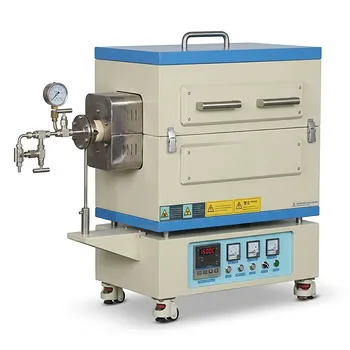
High Temperature Split Tube Furnace 1500C for Material Research Vacuum and Atmosphere Thermal Processing

Compact High Temperature 1600C Tube Furnace with 50mm Alumina Tube and Vacuum Flanges for Material Sintering
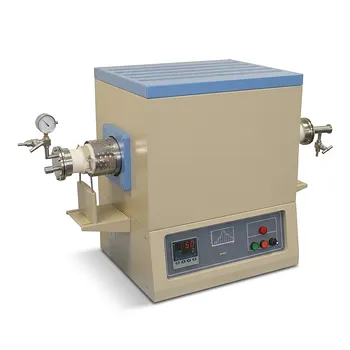
1700C High Temperature Alumina Tube Furnace with 18 Inch Heated Zone and Vacuum Sealing Flanges
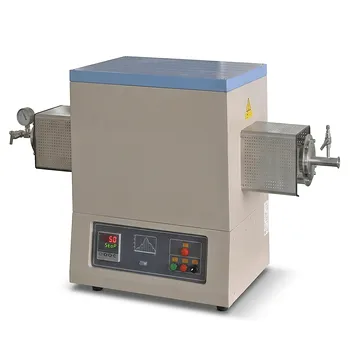
High Temperature 1700C Tube Furnace with 4 Inch OD Alumina Tube and Vacuum Sealing Flanges

High Temperature 1700C Benchtop Tube Furnace with 5 Inch Heating Zone High Purity Alumina Tube and Vacuum Sealing Flanges
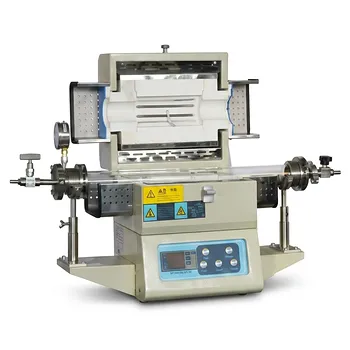
High Temperature 1200C Split Tube Furnace for CVD Research and Vacuum Atmosphere Heat Treatment
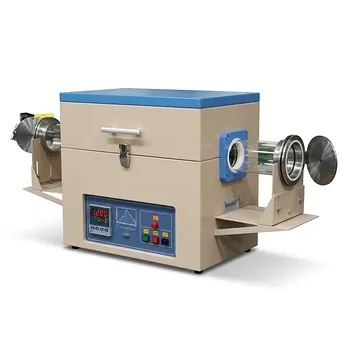
High Temperature 1200C Split Tube Furnace with Hinged Vacuum Flanges and 4 Inch Quartz Tube for Laboratory Research
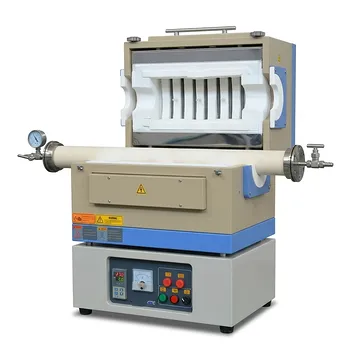
High Temperature 1600C Split Tube Furnace Vacuum Flanges Valves Optional 60mm 80mm Alumina Tube

High Temperature 1700C Vertical Tube Furnace for Powder Spherification and Material Sintering

High Temperature Automated 5 Inch Tube Furnace for Autonomous Material Research and Advanced Laboratory R&D

1100C Tube Furnace with Vacuum Flange and Programmable Temperature Controller for Material Science and Industrial Heat Treatment
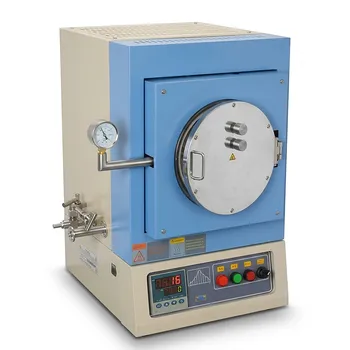
1100°C High Temperature Quartz Chamber Furnace 8 Inch OD with 7.6 Liter Capacity and Vacuum Atmosphere Capability

High Temperature 1700C Six Zone Split Tube Furnace with Alumina Tube and Water Cooled Flanges