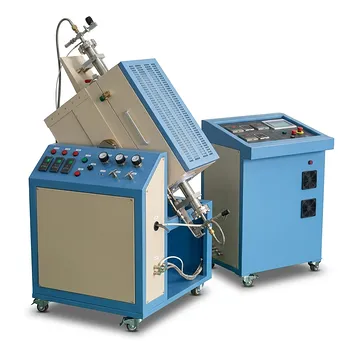
What is the role of a high-temperature tube furnace in the calcination process of ZnO/In2O3 nanocomposites?
Updated 3 months ago
The high-temperature tube furnace is the essential thermal processor that converts chemical precursors into functional ZnO/In2O3 nanocomposites. By maintaining a precise 850°C environment and a steady heating rate of 5°C per minute, the furnace drives the thermal decomposition of dried precursors, removes organic impurities, and facilitates the growth of high-crystallinity heterojunction powders with distinct crystal facets.
Core Takeaway: The tube furnace provides the controlled kinetic energy required to transition amorphous precursors into stable, high-purity crystalline structures. Without this precise thermal management, the material would lack the structural integrity and clear crystal facets necessary for high-performance applications.
Driving Phase Transformation and Crystal Growth
Achieving Complete Lattice Realignment
At the specific temperature of 850°C, the furnace provides sufficient thermal energy to overcome the activation barriers for phase transformation. This allows the atoms within the dried precursors to rearrange themselves from a disordered state into the stable crystalline lattices of ZnO and In2O3.
Regulating Growth via Heating Rates
The use of a controlled heating rate, such as 5°C per minute, prevents thermal shock and ensures uniform heating throughout the sample. This gradual increase is critical for managing the rate of gas evolution from decomposing precursors, which prevents structural collapse and promotes the growth of well-defined crystal grains.
Forming High-Quality Heterojunctions
The sustained 2-hour constant temperature environment allows the two metal oxides to interface effectively at the molecular level. This leads to the formation of ZnO/In2O3 heterojunctions, which are vital for enhancing charge separation and improving the material's overall electrical and catalytic performance.
Purification and Surface Engineering
Total Elimination of Volatile Impurities
During the calcination process, the tube furnace acts as a purification chamber that drives off residual organic stabilizers, moisture, and volatile components. This thorough removal of impurities is essential for ensuring that the final nanocomposite reaches its maximum theoretical purity and stability.
Developing Exposed Crystal Facets
The precise temperature control directly influences the surface energy of the growing crystals. By maintaining an optimized thermal environment, the furnace encourages the growth of clear exposed crystal facets, which provide the active sites required for sensing or catalytic reactions.
Enhancing Structural Stability
By facilitating a complete phase transition and reducing structural defects within the crystal lattice, the furnace significantly improves the mechanical and chemical stability of the nanoparticles. This ensures the material can withstand the rigors of electrochemical or industrial environments without degrading.
Understanding the Trade-offs
The Risk of Over-Sintering
While high temperatures are necessary for crystallinity, excessive heat or prolonged dwell times can lead to sintering. This causes individual nanoparticles to fuse together, drastically reducing the surface area and negating the benefits of the nano-scale structure.
Balancing Purity and Particle Size
A higher calcination temperature generally yields higher purity and better crystallinity, but it also promotes grain growth. Engineers must balance the need for high-purity lattices with the requirement for small, high-surface-area particles to ensure optimal performance in the final application.
Energy Consumption and Throughput
Utilizing a tube furnace for precise, slow-ramped calcination cycles increases the total production time and energy cost. While this produces superior material quality, it may present a bottleneck in high-volume manufacturing settings compared to faster, less precise heating methods.
How to Apply This to Your Project
Recommendations for Material Optimization
- If your primary focus is Maximum Catalytic Activity: Prioritize shorter dwell times at 850°C to maintain a high surface-area-to-volume ratio while still ensuring the removal of organic residues.
- If your primary focus is Electrical Conductivity: Focus on achieving the highest possible crystallinity by strictly adhering to the 5°C/min ramp rate to minimize lattice defects and optimize charge transport paths.
- If your primary focus is Material Purity: Ensure the furnace environment is properly vented to allow for the complete escape of volatile organic compounds during the decomposition phase.
The high-temperature tube furnace is the bridge between a chemical precursor and a high-performance nanocomposite, serving as the definitive tool for controlling both the purity and the structural architecture of the material.
Summary Table:
| Calcination Factor | Role of Tube Furnace | Material Impact |
|---|---|---|
| Temperature (850°C) | Overcomes activation barriers | Drives phase transformation & lattice realignment |
| Heating Rate (5°C/min) | Gradual thermal energy delivery | Prevents structural collapse & manages gas evolution |
| Dwell Time (2 Hours) | Sustained thermal environment | Facilitates heterojunction growth & high crystallinity |
| Atmosphere Control | Purification chamber | Eliminates volatile organic impurities & moisture |
Elevate Your Nanomaterial Research with THERMUNITS
Precision is the difference between a failed precursor and a high-performance nanocomposite. THERMUNITS is a leading manufacturer of high-temperature laboratory equipment specifically designed for material science and industrial R&D.
We provide a comprehensive range of thermal processing solutions tailored to your specific research needs, including:
- Tube & Rotary Furnaces for precise calcination and synthesis.
- Muffle, Vacuum, and Atmosphere Furnaces for versatile heat treatments.
- CVD/PECVD Systems for advanced thin-film and nanoparticle growth.
- Hot Press & Vacuum Induction Melting (VIM) Furnaces for specialized material processing.
Whether you are developing ZnO/In2O3 heterojunctions or scaling up industrial heat treatments, our equipment ensures the thermal stability and purity your project demands.
Contact our technical team today to find the perfect furnace solution for your laboratory!
References
- Yuan‐Han Yang, Yanhui Sun. Enhanced NO2 Gas Sensing Properties Based on Rb-Doped ZnO/In2O3 Heterojunctions at Room Temperature: A Combined DFT and Experimental Study. DOI: 10.3390/s24165311
Mentioned Products
- High Temperature Tube Furnace 1500C with Sliding Flanges and 50mm OD for Rapid Thermal Processing Fast Heating and Cooling
- High Temperature 1700C Tube Furnace with High Vacuum Turbomolecular Pump System and Multi Channel Mass Flow Controller Gas Mixer
- 1750°C High Temperature Benchtop Vacuum Atmosphere Tube Furnace with Kanthal Super 1800 Heating Elements and 60mm Alumina Processing Tube
- High Temperature 1700C Benchtop Tube Furnace with 5 Inch Heating Zone High Purity Alumina Tube and Vacuum Sealing Flanges
- 1700C High Temperature Alumina Tube Furnace with 18 Inch Heated Zone and Vacuum Sealing Flanges
People Also Ask
- How are high-temperature tube furnaces utilized to repair etching damage? Precision Lattice Restoration Solutions
- What role does a high-temperature tube furnace play in CVD synthesis of silicon nanowires? Master VLS Growth Precision.
- What core conditions does a high-temperature tube furnace provide for rGO aerogels? Mastering Precision Synthesis.
- What role does a high-temperature tube furnace play in the sulfidation heat treatment of CoS@C/MXene nanocomposites? Guide
- How does precision tube furnace control influence CoFe nanoparticle formation? Master Your Bimetallic Synthesis.

Tech Team · ThermUnits
Last updated on Jun 02, 2026
Related Products

High Temperature Tube Furnace 1500C with Sliding Flanges and 50mm OD for Rapid Thermal Processing Fast Heating and Cooling

High Temperature 1700C Tube Furnace with High Vacuum Turbomolecular Pump System and Multi Channel Mass Flow Controller Gas Mixer

1750°C High Temperature Benchtop Vacuum Atmosphere Tube Furnace with Kanthal Super 1800 Heating Elements and 60mm Alumina Processing Tube

High Temperature 1700C Benchtop Tube Furnace with 5 Inch Heating Zone High Purity Alumina Tube and Vacuum Sealing Flanges
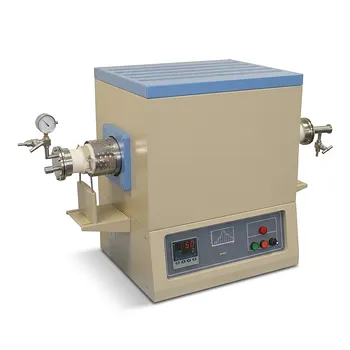
1700C High Temperature Alumina Tube Furnace with 18 Inch Heated Zone and Vacuum Sealing Flanges
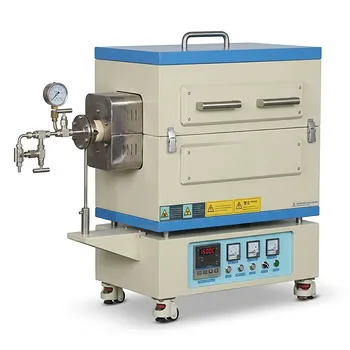
High Temperature Split Tube Furnace 1500C for Material Research Vacuum and Atmosphere Thermal Processing

Compact High Temperature 1600C Tube Furnace with 50mm Alumina Tube and Vacuum Flanges for Material Sintering

1800C High Temperature Compact Vacuum Tube Furnace with 60mm OD Alumina Tube and Kanthal MoSi2 Heating Elements
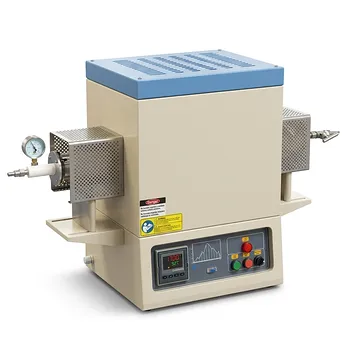
High Temperature Three Zone Tube Furnace 1700C with Alumina Tube and Water Cooled Flanges
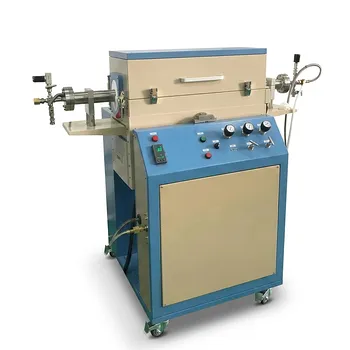
High Temperature Rocking Tube Furnace 1700°C Alumina Processing Tube with Precision Oscillation for Material Synthesis
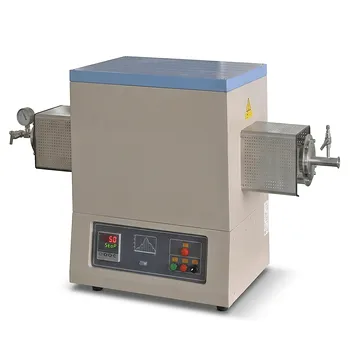
High Temperature 1700C Tube Furnace with 4 Inch OD Alumina Tube and Vacuum Sealing Flanges

High Temperature 1700C Vertical Tube Furnace for Powder Spherification and Material Sintering
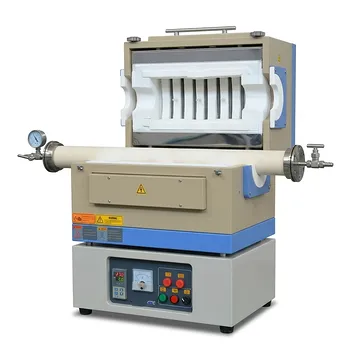
High Temperature 1600C Split Tube Furnace Vacuum Flanges Valves Optional 60mm 80mm Alumina Tube

High Temperature Automated 5 Inch Tube Furnace for Autonomous Material Research and Advanced Laboratory R&D

High Temperature 1700C Six Zone Split Tube Furnace with Alumina Tube and Water Cooled Flanges
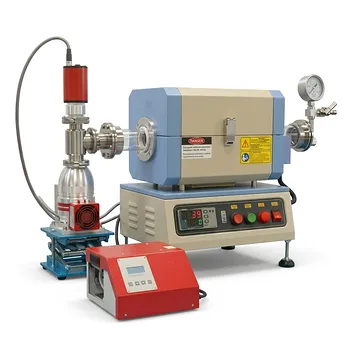
High Vacuum Compact Tube Furnace 1200C with Integrated Turbo Pump System and 8 Inch Heating Zone
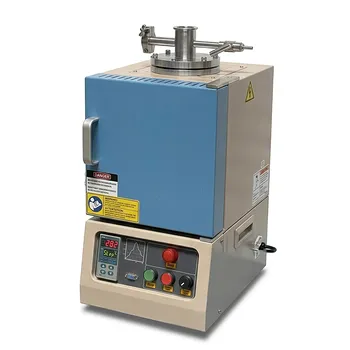
High Temperature Hybrid Muffle and Tube Furnace with Vacuum Capability and PID Control
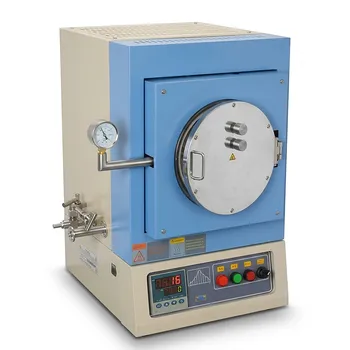
1100°C High Temperature Quartz Chamber Furnace 8 Inch OD with 7.6 Liter Capacity and Vacuum Atmosphere Capability

1100C Tube Furnace with Vacuum Flange and Programmable Temperature Controller for Material Science and Industrial Heat Treatment