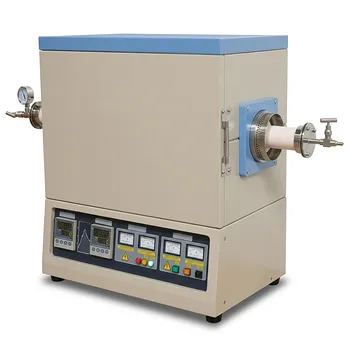
What role does a tube furnace play in PS template removal? Ensure ZnO/SiO2 Structural Integrity & High Performance.
Updated 3 months ago
The programmable tube furnace acts as the critical control mechanism for the selective decomposition of organic templates. By providing a slow, linear heating rate—typically 1°C per minute—and maintaining stable plateaus at 300°C and 500°C, it ensures Polystyrene (PS) is removed without damaging the inorganic skeleton. This precise thermal management is the only way to transform a hybrid precursor into a robust, porous ZnO/SiO2 framework.
A programmable tube furnace is essential for maintaining structural stability during template removal; by controlling the rate of organic decomposition, it prevents framework collapse and facilitates the creation of a high-strength, well-defined channel network.
The Necessity of Thermal Precision
Controlled Decomposition via Linear Ramping
Standard furnaces often suffer from temperature "overshoot," which can cause rapid gas evolution from decomposing PS.
A programmable unit allows for ultra-slow ramping, such as 1°C per minute, which regulates the exit of gaseous byproducts.
This slow exit prevents internal pressure buildup that would otherwise fracture the delicate, emerging ZnO/SiO2 walls.
Strategic Temperature Plateaus
Processing at specific intervals, such as 300°C and 500°C, allows for the phased removal of organic components.
The 300°C stage initiates the breakdown of PS chains, while the 500°C stage ensures the complete elimination of carbonaceous residues.
These stable environments provide the energy necessary for the inorganic framework to solidify and gain mechanical strength.
Structural Integrity and Morphology
Development of the Channel Network
The primary goal of using a PS template is to create a well-developed channel network for catalytic or filtration applications.
If the furnace does not maintain a uniform thermal field, the resulting pores may be non-uniform or blocked by residual impurities.
High-temperature stability ensures that the ZnO/SiO2 heterostructure achieves high crystallinity and clear crystal facets.
Managing Grain and Defect Chemistry
Beyond simple template removal, the furnace environment influences the atomic structure of the ZnO.
Precise control within the 400°C to 700°C range can induce grain merging and reorganization.
This process modifies the distribution of oxygen vacancies, which is critical if the ZnO/SiO2 framework is intended for electronic or sensing applications.
Understanding the Trade-offs
Throughput vs. Structural Quality
While slow ramping (1°C/min) preserves the structure, it significantly increases processing time and energy consumption.
Increasing the heating rate to 5°C per minute may improve throughput but increases the risk of framework collapse due to rapid gas expansion.
Atmosphere and Impurity Removal
Using an ambient atmosphere is sufficient for PS removal, but certain applications may require a Nitrogen (N2) environment to prevent unwanted oxidation.
Failure to hold the temperature long enough (e.g., a 2-hour constant calcination) can leave organic impurities that compromise the material's purity and crystallinity.
How to Apply This to Your Project
Optimized Thermal Strategies
- If your primary focus is structural precision: Use a very low heating rate (1°C/min) and multiple dwelling stages to ensure the PS template decomposes without exerting mechanical stress.
- If your primary focus is high crystallinity: Extend the final calcination time at higher temperatures (above 500°C) to facilitate grain growth and the complete removal of volatile components.
- If your primary focus is electronic optimization: Utilize a tube furnace capable of maintaining a controlled Nitrogen atmosphere to manage grain boundary density and oxygen vacancies.
Mastery over the thermal profile of your tube furnace is the single most important factor in transforming a template-based precursor into a high-performance ZnO/SiO2 material.
Summary Table:
| Parameter | Role in Template Removal | Key Specification |
|---|---|---|
| Heating Rate | Prevents internal pressure & framework collapse | 1°C per minute |
| Temp Plateaus | Facilitates phased decomposition of PS chains | 300°C & 500°C |
| Thermal Stability | Ensures uniform channel growth & high crystallinity | High-temp uniformity |
| Atmosphere | Manages oxygen vacancies and chemical purity | Air or Nitrogen (N2) |
| Calcination Time | Guarantees complete elimination of residues | ~2 hours at peak |
Optimize Your Material Synthesis with THERMUNITS Precision
As a leading manufacturer of high-temperature laboratory equipment, THERMUNITS provides the precision thermal solutions required for complex material synthesis and industrial R&D. Our advanced Tube Furnaces, Atmosphere Furnaces, and CVD/PECVD systems offer the programmable control necessary to remove delicate templates like Polystyrene while maintaining the structural integrity of your ZnO/SiO2 frameworks.
From Muffle and Vacuum furnaces to specialized Dental and Hot Press systems, our comprehensive range—including high-quality Thermal Elements—is designed to enhance lab efficiency and ensure repeatable results.
Ready to elevate your heat treatment process?
Contact our experts today for a tailored solution!
References
- Boou Li, Xiaojie Ma. The synthesis of multi-level porous MOF composite materials with different MOF contents. DOI: 10.54254/2755-2721/72/20240979
Mentioned Products
- 1100C Tube Furnace with Vacuum Flange and Programmable Temperature Controller for Material Science and Industrial Heat Treatment
- 1250C Compact Split Tube Furnace with 8 Inch Heating Zone and Programmable Controller
- 1500C Hybrid Muffle Tube Furnace 1.7L Box with 2 Inch Mullite Tube and Programmable PID Controller
- High Temperature Compact Muffle Furnace 1700 C with 30 Segment Programmable Controller and 1.7L Cubic Chamber
- 1200°C Small Box Furnace 4.2 Liter Programmable Muffle Furnace with High Purity Alumina Insulation and PID Control
People Also Ask
- What are the advantages of 1100°C tube furnaces for ORR catalysts? Boost Conductivity and Structural Stability.
- What core functions does a high-temperature vacuum tube furnace provide? Optimize np-CuSn Sintering & Joint Integrity
- What is the role of a high-temperature tube furnace in the calcination process of ZnO/In2O3 nanocomposites?
- What impact does the heating rate of a tube furnace have on biochar microstructure? Optimize Your Material R&D.
- Function of tube furnaces in cellulose aerogel carbonization? Achieve High-Performance Materials

Tech Team · ThermUnits
Last updated on Jun 03, 2026
Related Products

1100C Tube Furnace with Vacuum Flange and Programmable Temperature Controller for Material Science and Industrial Heat Treatment
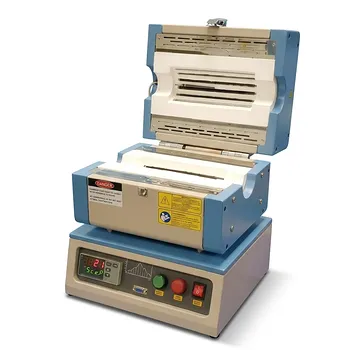
1250C Compact Split Tube Furnace with 8 Inch Heating Zone and Programmable Controller
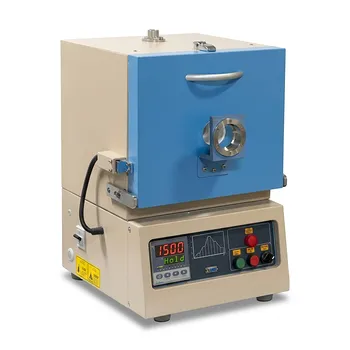
1500C Hybrid Muffle Tube Furnace 1.7L Box with 2 Inch Mullite Tube and Programmable PID Controller
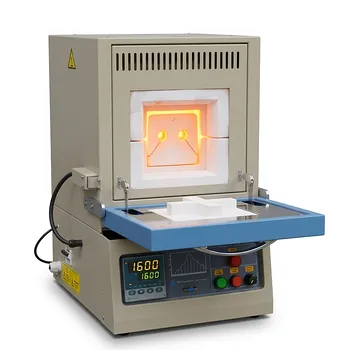
High Temperature Compact Muffle Furnace 1700 C with 30 Segment Programmable Controller and 1.7L Cubic Chamber
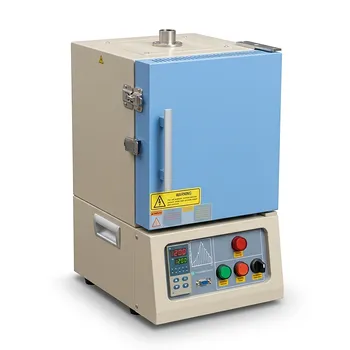
1200°C Small Box Furnace 4.2 Liter Programmable Muffle Furnace with High Purity Alumina Insulation and PID Control
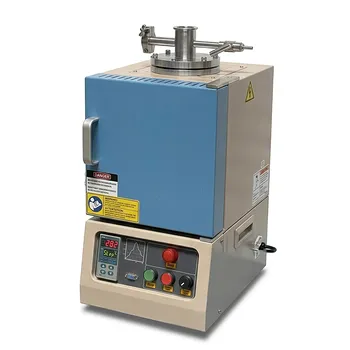
High Temperature Hybrid Muffle and Tube Furnace with Vacuum Capability and PID Control
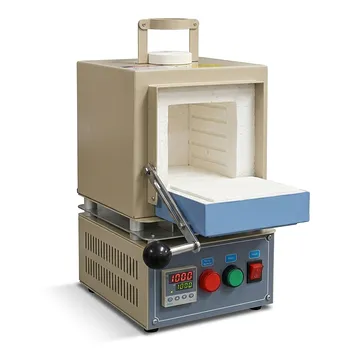
Compact 1000C Muffle Furnace with Programmable Controller and 2 Inch Top Port for Vacuum and Atmosphere Material Research

High Temperature Automated 5 Inch Tube Furnace for Autonomous Material Research and Advanced Laboratory R&D
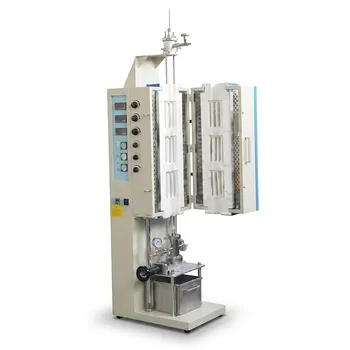
High Temperature Dual Zone Tube Furnace for Material Science Research and Professional Thermal Processing

High Temperature 1700C Tube Furnace with High Vacuum Turbomolecular Pump System and Multi Channel Mass Flow Controller Gas Mixer

High Temperature Tube Furnace 1500C with Sliding Flanges and 50mm OD for Rapid Thermal Processing Fast Heating and Cooling

High Temperature 1700C Vertical Tube Furnace for Powder Spherification and Material Sintering
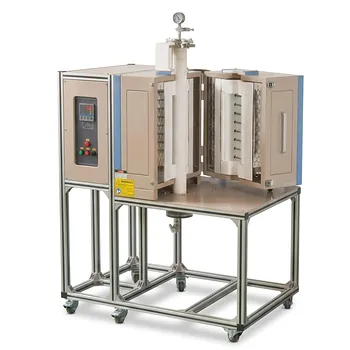
High Temperature 1700C Vertical Split Tube Furnace for Material Quenching and Single Crystal Growth
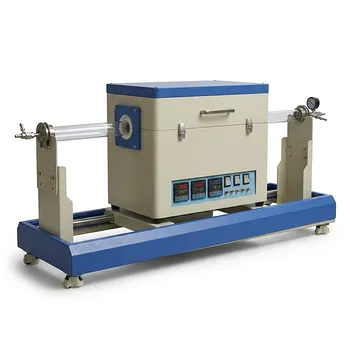
Double Temperature Zone Double Cover Tube Furnace for High Temperature CVD and Vacuum Annealing

High Temperature 1700C Six Zone Split Tube Furnace with Alumina Tube and Water Cooled Flanges
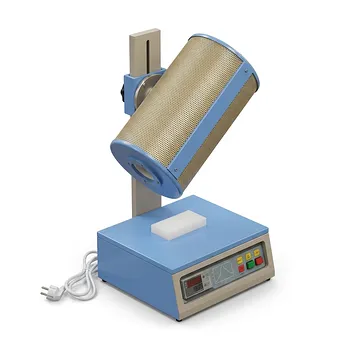
1100°C Vertical Laboratory Furnace for DIY Tubular Reactors with PID Temperature Controller

High Temperature 1700C Benchtop Tube Furnace with 5 Inch Heating Zone High Purity Alumina Tube and Vacuum Sealing Flanges

Compact Vertical Split Quartz Tube Furnace with Stainless Steel Vacuum Flanges for Rapid Thermal Quenching and Controlled Atmosphere Material Processing
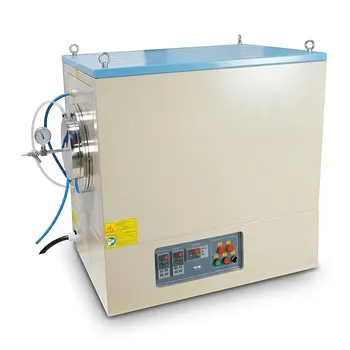
Dual Zone Tube Furnace 1100C with 11 Inch Quartz Tube and Vacuum Flanges for 8 Inch Wafer Processing