Why must experimental crucibles be pre-heated at 1100°C for 10 hours? Ensure Data Accuracy in Alloy Oxidation.
Updated 3 months ago
The primary reason for pre-heating crucibles is the achievement of absolute mass stability. This rigorous 10-hour treatment at 1100°C ensures the crucible reaches a state of "constant mass" by removing volatile impurities and moisture. Without this step, the crucible's own weight fluctuations would contaminate the sensitive oxidation data of the alloy being tested.
To ensure experimental integrity, crucibles must be rendered inert and mass-stable before use. Pre-oxidation at 1100°C eliminates baseline noise, ensuring that every milligram of recorded weight gain is attributed solely to the alloy’s oxidation process rather than the container itself.
Eliminating Baseline Measurement Errors
Achieving Constant Mass
During high-temperature experiments, even high-purity materials can undergo subtle weight changes. Pre-heating at 1100°C for 10 hours forces the volatilization of any residual moisture, adsorbed gases, or trace manufacturing impurities.
Once these components are driven off, the crucible attains a constant mass. This provides a reliable "zero" baseline that will not shift during the subsequent alloy oxidation cycles.
Distinguishing Alloy Gain from Container Flux
In oxidation kinetics studies, researchers measure the weight gain of an alloy as it reacts with oxygen to form a scale. If the crucible loses mass through volatilization while the alloy gains mass through oxidation, the resulting data is mathematically compromised.
Pre-treatment ensures that the electronic balance records only the oxygen uptake of the alloy. This precision is critical for accurately calculating the oxidation rate and understanding the protective qualities of the oxide film.
The Role of Material Integrity
Why High-Purity Alumina is Used
High-purity alumina (or corundum) is selected for these experiments due to its exceptional chemical inertness. It remains stable at extreme temperatures, such as 950°C to 1100°C, without reacting with the alloy specimens or the resulting oxides.
This thermal stability ensures the crucible acts as a passive carrier. It provides a neutral environment where the alloy can be studied without the risk of the container adhering to or contaminating the sample.
Capturing Spalled Oxide Products
As alloys undergo cyclic oxidation, the protective oxide layer can crack and flake off, a process known as spalling. Using a pre-stabilized crucible allows researchers to collect these flakes at the bottom of the container.
Because the crucible’s mass is fixed, the total weight of the crucible, the sample, and the spalled flakes can be measured together. This provides a complete picture of the total oxidation that has occurred over time.
Understanding the Trade-offs and Pitfalls
The Risk of Insufficient Pre-heating
If a crucible is pre-heated at a temperature lower than the experimental temperature, it may continue to lose mass during the test. This leads to under-reporting the oxidation rate, as the crucible's weight loss partially cancels out the alloy's weight gain.
Contamination and Reuse
Reusing crucibles without re-stabilization is a common pitfall in laboratory settings. Residual oxides from previous tests can react with new samples, leading to cross-contamination and invalidating the chemical analysis of the oxide scales.
Importance of the Crucible Lid
While pre-heating stabilizes the container, using a lid during the experiment is equally vital for certain alloys. The lid prevents the loss of volatile alloy components and simulates a closed service environment, ensuring the measured mass gain reflects the true growth of the oxide film.
How to Apply This to Your Project
Making the Right Choice for Your Goal
- If your primary focus is high-precision oxidation kinetics: You must pre-oxidize your alumina crucibles at or above your target experimental temperature for at least 10 hours to ensure a zero-drift baseline.
- If your primary focus is analyzing spalled oxide morphology: Ensure the crucible is large enough to contain all potential debris and has been pre-sintered to prevent the debris from adhering to the crucible walls.
- If your primary focus is testing volatile-heavy alloys (e.g., those containing Germanium or Chromium): Use a pre-stabilized crucible equipped with a tight-fitting lid to capture all mass changes within the local environment of the sample.
By strictly adhering to the 1100°C pre-heating protocol, you ensure that your experimental data is a pure reflection of the alloy's chemical behavior, free from the interference of container-driven variables.
Summary Table:
| Parameter | Specification | Purpose in Oxidation Experiments |
|---|---|---|
| Temperature | 1100°C | Ensures treatment temperature exceeds test conditions to prevent mass loss during use. |
| Duration | 10 Hours | Provides sufficient time to volatilize all moisture, gases, and manufacturing impurities. |
| Goal | Constant Mass | Achieves a stable "zero" baseline for precise weight-gain measurements. |
| Material | High-purity Alumina | Offers chemical inertness and thermal stability to prevent sample contamination. |
Elevate Your Material Research with THERMUNITS
Precision in material science starts with the right thermal environment. As a leading manufacturer of high-temperature laboratory equipment, THERMUNITS provides the advanced solutions needed for rigorous alloy oxidation and industrial R&D.
Our comprehensive range of thermal processing solutions includes:
- Muffle, Vacuum, Atmosphere, & Tube Furnaces
- CVD/PECVD Systems, Rotary Furnaces, & Hot Press Furnaces
- Vacuum Induction Melting (VIM) & Electric Rotary Kilns
- Dental Furnaces & High-Quality Thermal Elements
Whether you are conducting high-precision kinetics research or complex heat treatments, our equipment ensures the stable temperature control required for experimental integrity. Contact THERMUNITS today to discover how our high-temperature solutions can optimize your lab’s performance.
References
- Huiling Gu, Zongwu Wei. Effect of Ge Contents on Oxidation Resistance of Ni‐15Cr‐5Al Alloy at 1000°C. DOI: 10.1155/2024/4720038
Mentioned Products
- 1100C Crucible Melting Furnace with Stirring Function for Glovebox and Air Sensitive Alloy Research
- 600°C Vertical Crucible Furnace with SS316 Alloy Reactor and 6 Port Vacuum Flange
- Automatic 10 Crucible Induction Melting and Casting System with Stirring Function and Glovebox Integration 2000C
- Vertical Crucible Furnace 1000C High Temperature Laboratory Equipment 4.7 Inch Diameter Chamber SS316 Anti Corrosive Enclosure
- Compact Crucible Melting Furnace 1100C Programmable Temperature Controller Metal Sintering Equipment
People Also Ask
- Why are internal getters such as Titanium used during the synthesis of oxygen-sensitive materials in a melting furnace?
- How should the choice between a Quartz crucible and an Alumina crucible be made for La2O2S? Optimize Material Purity
- What technical capabilities must a high-temperature furnace possess for 1100°C HEA annealing? Precision & Stability.
- Why use ceramic crucibles for coal nano-hybrid heat treatment? Ensure Purity and Thermal Stability.
- Alumina Plates in Polymer Carbonization: Ensure Flatness and Suppress Shrinkage

Tech Team · ThermUnits
Last updated on Jun 02, 2026
Related Products
1100C Crucible Melting Furnace with Stirring Function for Glovebox and Air Sensitive Alloy Research
600°C Vertical Crucible Furnace with SS316 Alloy Reactor and 6 Port Vacuum Flange
Automatic 10 Crucible Induction Melting and Casting System with Stirring Function and Glovebox Integration 2000C
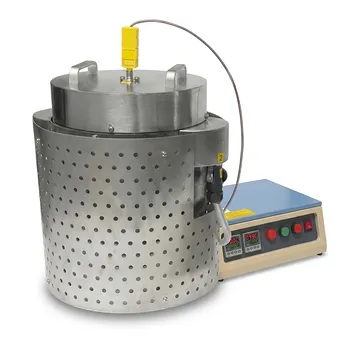
Vertical Crucible Furnace 1000C High Temperature Laboratory Equipment 4.7 Inch Diameter Chamber SS316 Anti Corrosive Enclosure
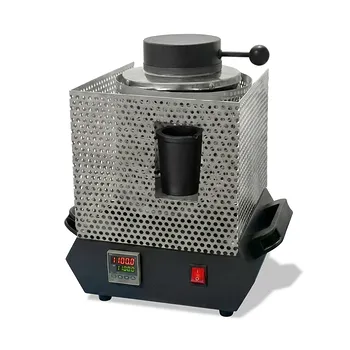
Compact Crucible Melting Furnace 1100C Programmable Temperature Controller Metal Sintering Equipment
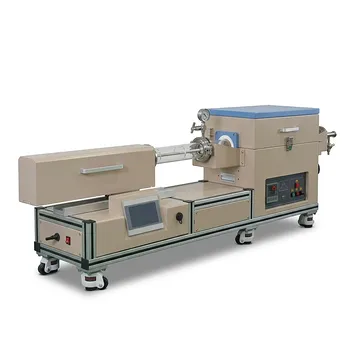
1200C Sliding Internal Crucible Tube Furnace for Controlled Atmosphere Thin Film Deposition and Material Sublimation Research
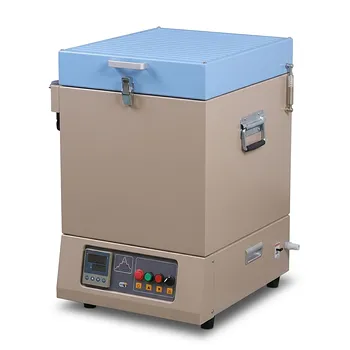
High Temperature Vertical Crucible Furnace with 22L Heating Chamber and 1200C Maximum Temperature