The Architecture of Ash: Why Precision is the Only Currency in Cellulose Carbonization
Apr 23, 2026
The Illusion of Simplicity
In material science, there is a dangerous tendency to simplify. We look at carbonization and see a bonfire. We think that if we apply enough heat to biomass, we will inevitably get the carbon we desire.
But in the world of high-performance energy storage, the difference between "charcoal" and "engineered hard carbon" is not the temperature itself. It is the system of control surrounding that temperature.
To transform cellulose into a functional material for a sodium-ion battery, you aren't just burning it; you are performing molecular-level surgery.
The System vs. The Heat
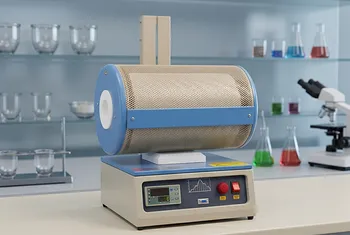
Precision in a programmable tube furnace is not a luxury; it is the infrastructure of the reaction. Without it, the "pathway" of pyrolysis becomes chaotic.
1. The Protection of Vacuums and Inertia
At 1,000°C, oxygen is an enemy. It is a corrosive force that will turn your research into CO2 and ash in seconds.
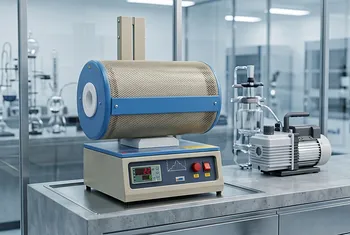
A tube furnace creates a sanctuary. By purging the environment with high-purity Nitrogen or Argon, the system ensures that the cellulose undergoes dehydration, not combustion. We are removing the water and the volatiles while leaving the carbon skeleton intact.
2. Ramping: The Speed of Molecular Escape
If you heat cellulose too fast, the volatile organic compounds (VOCs) within the fibers expand violently. This creates internal pressure that can shatter the emerging microporous structure.
- Controlled Ramping (e.g., 5°C/min): Allows for a rhythmic, "breath-like" release of gases.
- Thermal Stability: Prevents the "sintering" or melting of pores before they have a chance to solidify.
Engineering in Angstroms
The soul of carbonized cellulose lies in its d002 interlayer spacing. This is the physical gap between layers of carbon where ions must travel.
If your furnace fluctuates by even 20 degrees, this spacing changes.
| Temperature (°C) | d002 Spacing (nm) | Application Focus |
|---|---|---|
| 1,000 | ~0.391 | High-capacity Sodium intercalation |
| 1,200 | ~0.375 | Optimal balance for Charge/Discharge |
| 1,400 | ~0.367 | High conductivity, lower capacity |
As the temperature rises, the carbon layers begin to align like a stack of paper. A programmable furnace allows a researcher to "freeze" this alignment at the exact moment the geometry is perfect for the specific ion they are targeting.
The Cost of Inconsistency
In the words of the financier Morgan Housel, "The hardest financial skill is getting the goalpost to stop moving." In the lab, the hardest technical skill is getting the thermal field to stop moving.
If a furnace cannot maintain a perfect isothermal hold, the batch becomes heterogeneous. You end up with a material that is 80% high-performance carbon and 20% "dead weight."
In commercial R&D, that 20% failure rate is the difference between a breakthrough and a discarded project.
Summary: Thermal Precision as a Tool
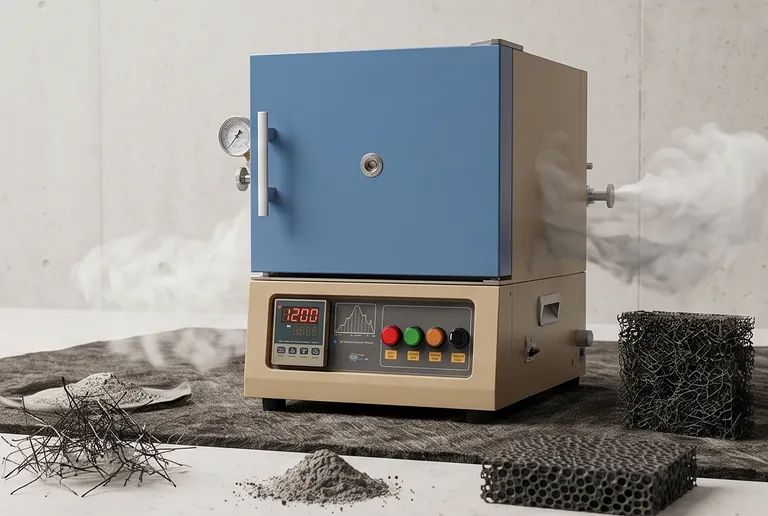
| Parameter | Systemic Role | Technical Consequence |
|---|---|---|
| Inert Atmosphere | Displacement of Oxygen | Prevents mass loss; ensures pure carbon yield |
| Programmable Ramping | Controlled De-volatilization | Preserves the hierarchical pore structure |
| Isothermal Holding | Chemical Equilibrium | Ensures uniform graphitization across the sample |
| Field Stability | Geometric Consistency | Dictates the final d002 interlayer spacing |
Crafting the Future of Carbon
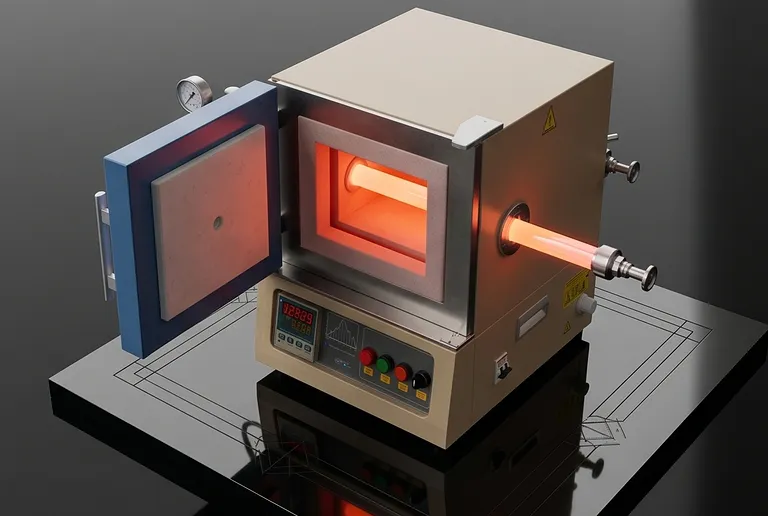
Material science is increasingly a game of margins. Whether you are engineering anodes for sodium-ion batteries or high-surface-area catalysts, the quality of your output is limited by the quality of your thermal environment.
At THERMUNITS, we build the systems that make this level of control possible. From programmable Tube Furnaces to high-vacuum CVD systems, our equipment is designed for the engineer who knows that "close enough" is never enough.
Bring the rigor of a systematic thermal profile to your next breakthrough.
Quick Links
Suggested Products
Automated 1200 C Tube Furnace for AI Material Research with 6 Inch OD and Sliding Flange 5 Inch Two Zone Rotary Tube Furnace 1100C for Powder CVD and Material Synthesis High Temperature Hybrid Muffle and Tube Furnace 1700C Programmable PID Controlled Box System with Vacuum Flange and Alumina Processing Tube 1100C Tube Furnace with Vacuum Flange and Programmable Temperature Controller for Material Science and Industrial Heat Treatment 5 Inch Rotary Tube Furnace with Automatic Feeding and Receiving System 1200C Three Zone CVD Powder Processing
ThermUnits
Last updated on Apr 15, 2026
Related Products
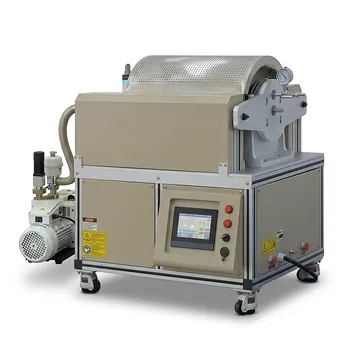
Automated 1200 C Tube Furnace for AI Material Research with 6 Inch OD and Sliding Flange
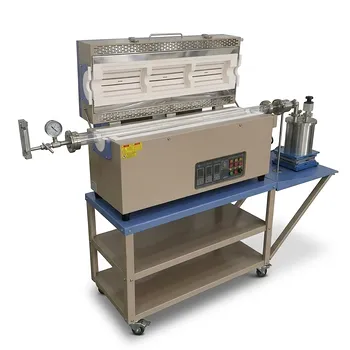
5 Inch Two Zone Rotary Tube Furnace 1100C for Powder CVD and Material Synthesis
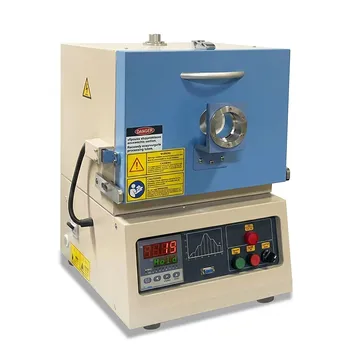
High Temperature Hybrid Muffle and Tube Furnace 1700C Programmable PID Controlled Box System with Vacuum Flange and Alumina Processing Tube

1100C Tube Furnace with Vacuum Flange and Programmable Temperature Controller for Material Science and Industrial Heat Treatment
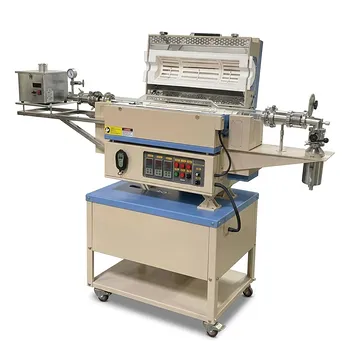
5 Inch Rotary Tube Furnace with Automatic Feeding and Receiving System 1200C Three Zone CVD Powder Processing

5 Inch Three Zone Rotary Tube Furnace with Integrated Gas Delivery System and 1200C Capability for Advanced Material CVD Processing

High Temperature 1700C Vertical Tube Furnace for Powder Spherification and Material Sintering
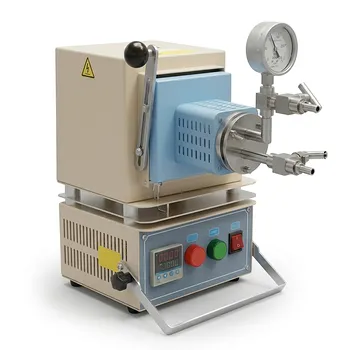
Compact Hybrid Muffle and Tube Furnace for 1000C Controlled Atmosphere Laboratory Material Sintering

Compact Vertical Split Quartz Tube Furnace with Stainless Steel Vacuum Flanges for Rapid Thermal Quenching and Controlled Atmosphere Material Processing
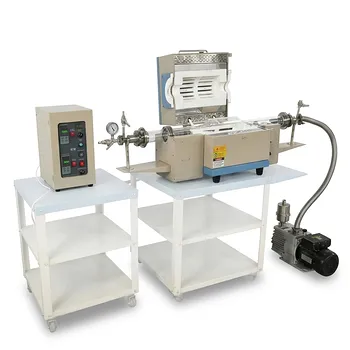
Two Zone Rotary Tube Furnace for Powder CVD Coating and Core Shell Material Synthesis 1100C
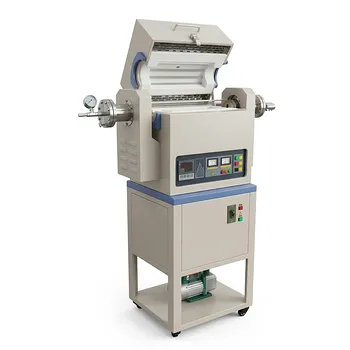
High Temperature Rotary Tilt Tubular Furnaces for Advanced Powder Sintering and Material Processing
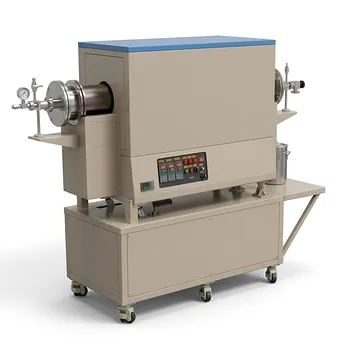
900°C Max Rotary Tube Furnace with 8 Inch 310S Alloy Tube and Optional Multi Zone Heating for Industrial Material Calcination
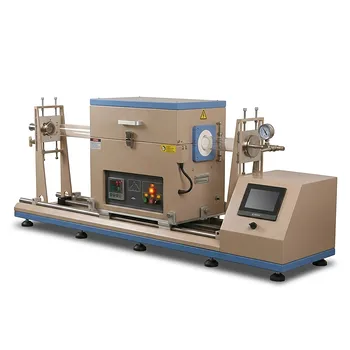
1200C Sliding Tube Furnace for Rapid Thermal Processing and CVD Graphene Growth with 100mm OD Capacity

High Temperature Automated 5 Inch Tube Furnace for Autonomous Material Research and Advanced Laboratory R&D
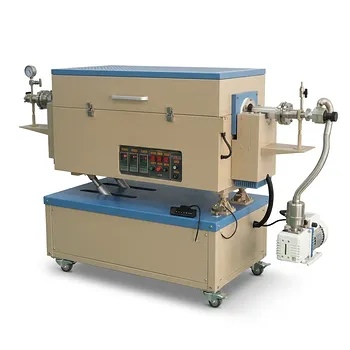
Three Zone Rotary Tube Furnace for High Temperature Powder Processing and Material Research

Compact High Temperature 1600C Tube Furnace with 50mm Alumina Tube and Vacuum Flanges for Material Sintering
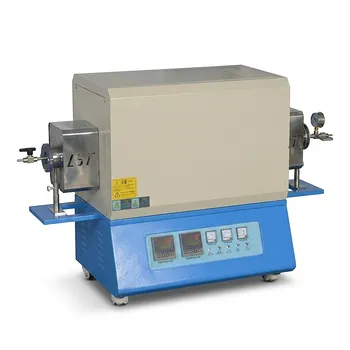
High Temperature Dual Zone Vacuum Tube Furnace for Material Research and CVD Processing
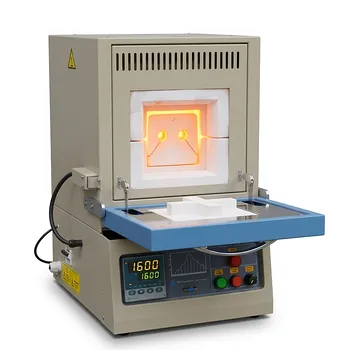
High Temperature Compact Muffle Furnace 1700 C with 30 Segment Programmable Controller and 1.7L Cubic Chamber
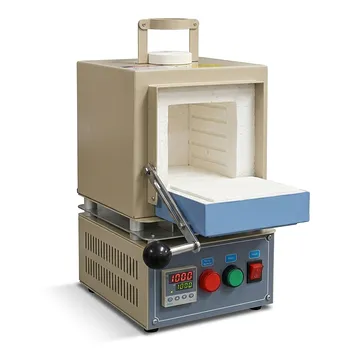
Compact 1000C Muffle Furnace with Programmable Controller and 2 Inch Top Port for Vacuum and Atmosphere Material Research