The Ghost in the Fiber: How Thermal Precision Rewrites the Surface Life of Hafnium Oxide
Apr 19, 2026
The Invisible Metamorphosis
In material science, we often treat heat as a hammer. We use it to force atoms into place. But in the world of Hafnium Oxide ($HfO_2$) fibers, heat is more of a sculptor, removing the scaffolding to reveal a hidden nature.
When you place an amorphous $HfO_2$ fiber into a high-temperature furnace, it enters as a hydrophobic material—repelling water. When it emerges, it is thirsty. Its water contact angle has plummeted to 38.7°.
This transition is not a mere accident of temperature. It is a systematic reorganization of chemistry, geometry, and phase stability.
Shedding the Organic Skin
The journey begins with a sacrifice. The precursor fiber relies on a polystyrene (PS) template to maintain its structure. This polymer core is the source of the material's initial hydrophobic personality.
As the furnace ramps up, the PS template undergoes thermal degradation. It burns away, leaving behind a hollow inorganic shell.
- Template Removal: The organic core is eliminated, removing the non-polar influence.
- Shell Exposure: The inherent energy of the Hafnium Oxide is revealed.
- Hollow Architecture: What remains is a high-surface-area skeleton that interacts with the environment in ways the original fiber never could.
The Geometry of Thirst
Surface wettability is governed by two masters: chemistry and roughness.
$HfO_2$ is naturally hydrophilic, but the thermal process amplifies this through morphological roughening. As the polymer leaves, it creates a porous, uneven landscape.
According to Wenzel’s state, an increase in surface roughness for a naturally hydrophilic material will make it more hydrophilic. The water does not just sit on the surface; it is pulled into the micro-pores of the monoclinic shell.
From Chaos to the Monoclinic Order
At temperatures between 400 °C and 800 °C, the fiber undergoes a psychological shift in its atomic structure. It moves from the disorder of the amorphous state to the disciplined monoclinic crystalline phase.
| Feature | Pre-Thermal Degradation | Post-Thermal Degradation (800 °C) |
|---|---|---|
| Wettability | Hydrophobic | Hydrophilic |
| Contact Angle | High / Repellent | ~38.7° |
| Phase | Amorphous | Monoclinic |
| Structure | Solid Polymer-Core | Hollow Inorganic Shell |
| Surface | Smooth | Rough & Porous |
This crystallization is visible in the sharpening of XRD peaks, specifically at the (100) and (111) planes. As polycondensation completes, the inorganic skeleton densifies, locking in the fiber's new identity.
The Engineer’s Dilemma: The Cost of Perfection
In engineering, every gain has a hidden cost. The same porosity that makes these fibers excellent for aqueous filtration also makes them fragile.
- Porosity vs. Strength: Higher temperatures increase crystallinity but can lead to "over-sintering."
- Grain Growth: If the crystal grains grow too large, the specific surface area drops.
- Thermal Stability: While 800 °C ensures a stable monoclinic phase, excessive heat can make the fiber brittle and prone to structural failure under pressure.
The goal is not just heat; it is precision. Achieving the 38.7° contact angle requires a furnace that can maintain a perfect environment for the oxide to mature without over-aging.
Mastering the Thermal Environment
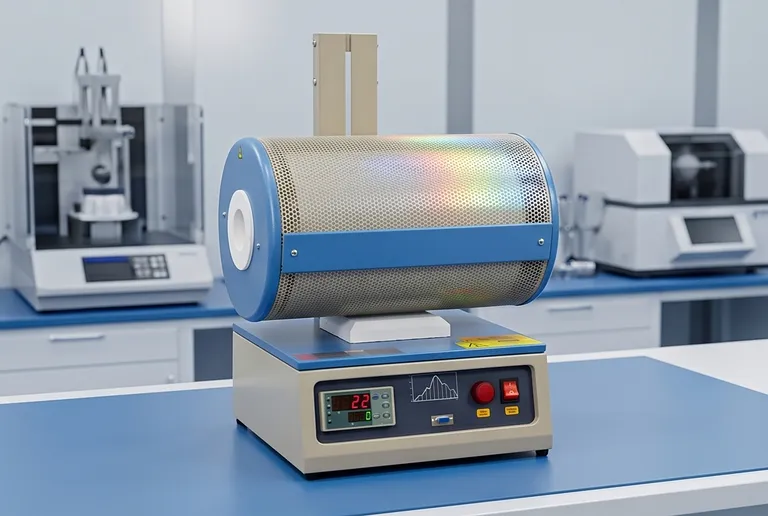
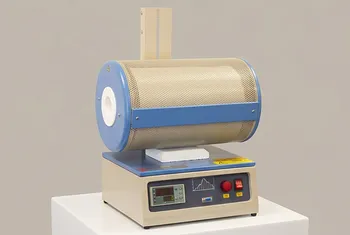
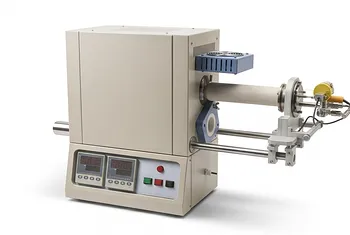
The transformation of $HfO_2$ is a reminder that the furnace is the most critical tool in the R&D lab. Whether you are developing gas sensors, catalytic substrates, or biomedical scaffolds, the result depends on the reliability of the thermal ramp.
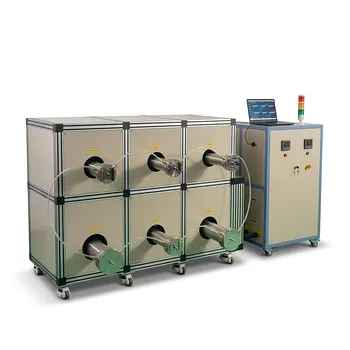
THERMUNITS provides the precision required for these delicate material transitions. Our high-temperature solutions are designed for the rigors of material science:
- Atmosphere & Vacuum Furnaces: Control the environment to prevent unwanted oxidation or contamination.
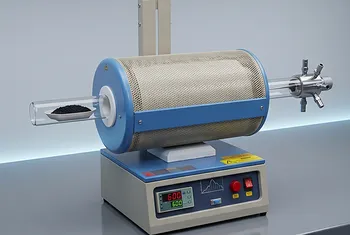
- Tube & Muffle Furnaces: Achieve uniform heating for consistent crystalline phase development.
- CVD/PECVD Systems: For advanced deposition and surface engineering.
- Specialized Kilns: Scalable solutions for industrial R&D.
To achieve the perfect monoclinic phase and the ideal surface morphology for your next project, Contact Our Experts.
Quick Links
Suggested Products
1700C Hydrogen Gas Tube Furnace with 60mm Alumina Process Tube and Integrated Hydrogen Safety Detector 1500C Compact Hydrogen Gas Tube Furnace with 2 Inch Alumina Tube and Hydrogen Detector 1100C Dual Zone Hydrogen Gas Tube Furnace with Quartz Tube and Integrated H2 Leak Detection System Three Zone Hydrogen Gas Tube Furnace with 82mm Superalloy Tube and Dual Hydrogen Detectors 1200C High Temperature Material Processing System 1200C Hydrogen Atmosphere Box Furnace with 5 Heated Sides and 64L ChamberFurther Reading
The Architecture of Isolation: Why Atmosphere Defines Material Destiny The Invisible Architect: Precision Thermal Oxidation in NiO@Ni Synthesis The Geometry of Heat: Engineering Magnetic Biochar Through Controlled Pyrolysis The Architecture of Absence: Why Atmosphere Control Defines the Fate of Mesoporous Carbon The Architecture of Absence: The Invisible Logic of Nitrogen Purging
ThermUnits
Last updated on Apr 15, 2026
Related Products
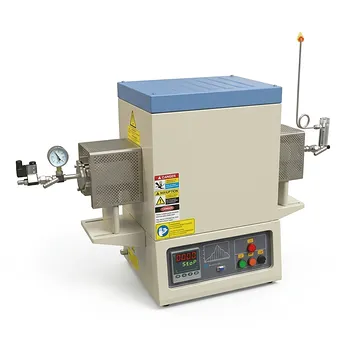
1700C Hydrogen Gas Tube Furnace with 60mm Alumina Process Tube and Integrated Hydrogen Safety Detector
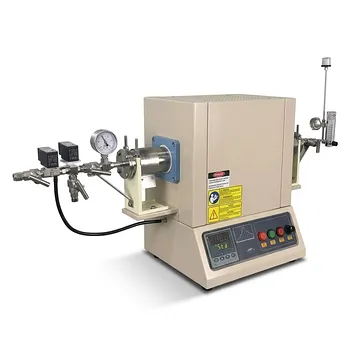
1500C Compact Hydrogen Gas Tube Furnace with 2 Inch Alumina Tube and Hydrogen Detector
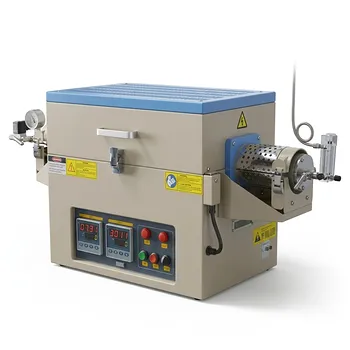
1100C Dual Zone Hydrogen Gas Tube Furnace with Quartz Tube and Integrated H2 Leak Detection System
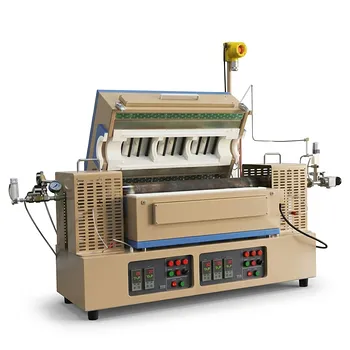
Three Zone Hydrogen Gas Tube Furnace with 82mm Superalloy Tube and Dual Hydrogen Detectors 1200C High Temperature Material Processing System
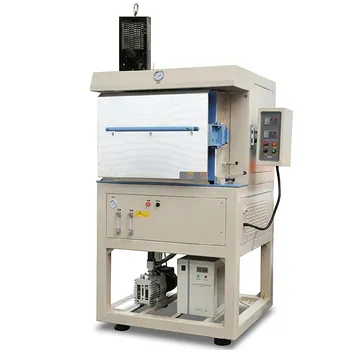
1200C Hydrogen Atmosphere Box Furnace with 5 Heated Sides and 64L Chamber
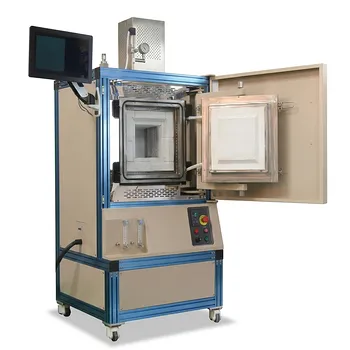
High Temperature Hydrogen Atmosphere Box Furnace 1650C Max Reducing Environment Material Synthesis System 8x8x8 Chamber
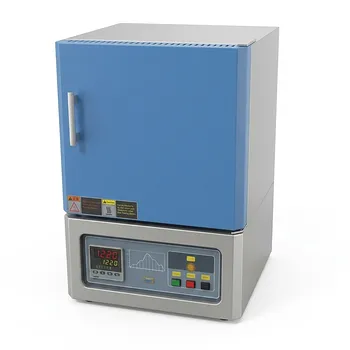
High Temperature Benchtop Muffle Furnace 1700C 10L Chamber Alumina Fiber Insulation MoSi2 Heating Elements
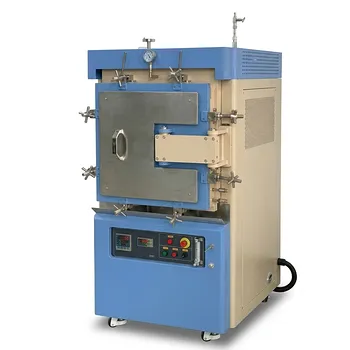
High Temperature Economic Hydrogen Gas Box Furnace 1600C Atmosphere Controlled Thermal Processing System 65L Capacity