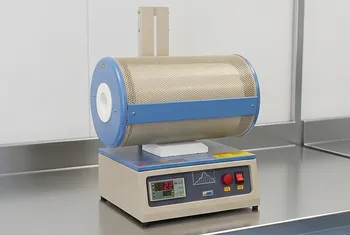
The Invisible Architect: Why Atmosphere Control Defines the High-Performance Catalyst
May 07, 2026
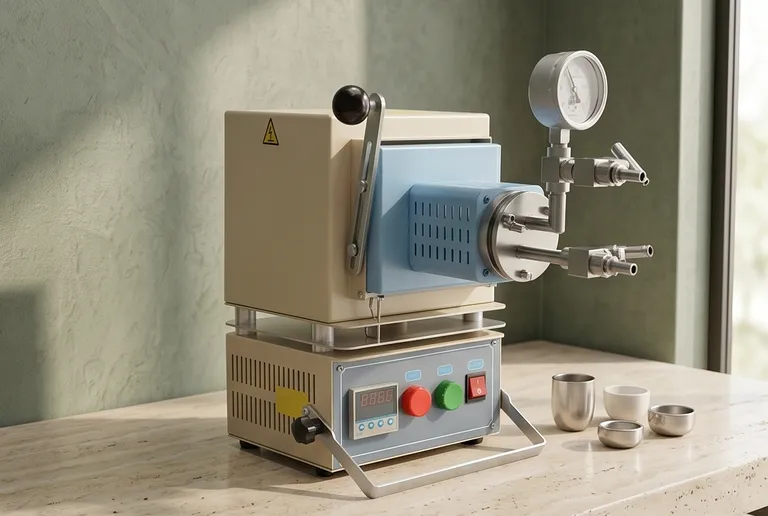
The Cruelty of Open Air
In the world of material science, heat is often viewed as the primary driver of change. We focus on the temperature ramp, the dwell time, and the cooling rate. But heat in a vacuum of context is dangerous.
For the researcher developing Hydrogen Evolution Reaction (HER) catalysts, the air we breathe is a pollutant. At 800°C, oxygen isn't just a gas; it is a violent corrosive agent.
The difference between a breakthrough catalyst and a failed experiment often comes down to the "invisible architect"—the atmosphere control system. It is the system that manages the silence between the molecules.
The Oxidation Tax: Protecting the Metal Center
Consider the 2D PhenPtCl2 nanosheet. Its efficiency depends entirely on the electronic state of its Platinum (Pt) atoms. When we anneal these materials to tune their charge distribution, we are performing a delicate surgery at the atomic level.
If a stray oxygen molecule enters the tube, that surgery fails. Instead of a refined electronic structure, you get an oxide.
Atmosphere control isn't just about adding Argon; it is about the disciplined displacement of risk. By purging the environment before the first kilowatt of heat is applied, we ensure that ligand detachment happens in a vacuum of interference.
Carbon as a Scaffold, Not a Fuel
High-performance catalysts often rely on carbon substrates derived from microbial or synthetic sources. These structures provide the high surface area and conductivity required for rapid electron transfer.
To the chemist, this carbon is a scaffold. To a furnace filled with air, this carbon is fuel.
Without a strictly regulated inert atmosphere, the very structure meant to support the catalyst is consumed. Atmosphere control transforms the furnace from a combustion chamber into a protective sanctuary for the catalyst’s pore structure.
The Reduction Discipline: Forging Metallic States
Sometimes, the goal isn't just to protect, but to transform. Converting copper oxides into metallic states (Cu0 or Cu+) requires more than just heat—it requires a "reducing appetite."
By introducing controlled mixtures of H2/Ar or H2/N2, researchers can induce specific metal-support interactions. This is the engineering of the active site.
- Precision: Precisely timed gas transitions allow for multi-stage reactions.
- Purity: High-purity gas sources prevent the "poisoning" of the catalyst surface.
- Safety: Sealed systems allow for the use of hydrogen without the risk of external combustion.
The Geometry of Smallness: Preventing Sintering
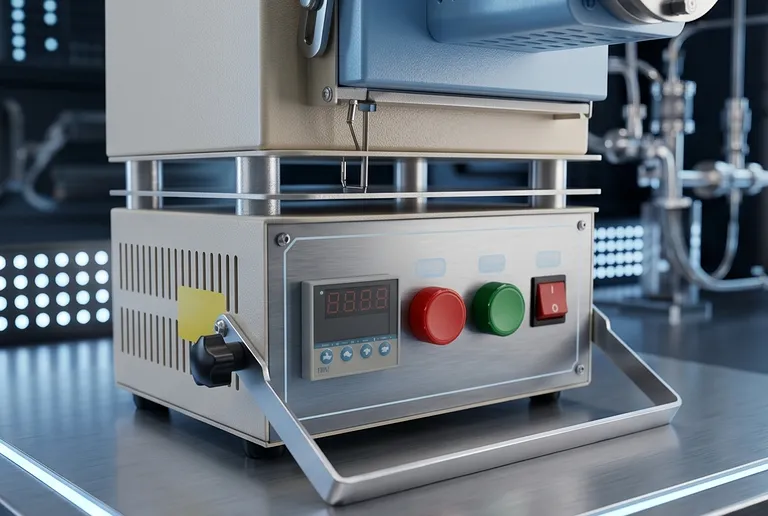
In catalysis, surface area is currency. The more atoms you expose to the reactant, the higher your ROI.
However, thermodynamics favors the large. At high temperatures, small particles naturally want to aggregate—a process known as sintering. Oxidation often acts as a bridge that facilitates this migration, turning high-energy single atoms into inactive clusters.
Atmosphere control arrests this movement. By maintaining an environment that prevents oxide bridging, we can anchor elements in a single-atom state, maximizing the utility of every precious metal atom.
The Engineering Trade-off: Flow vs. Uniformity
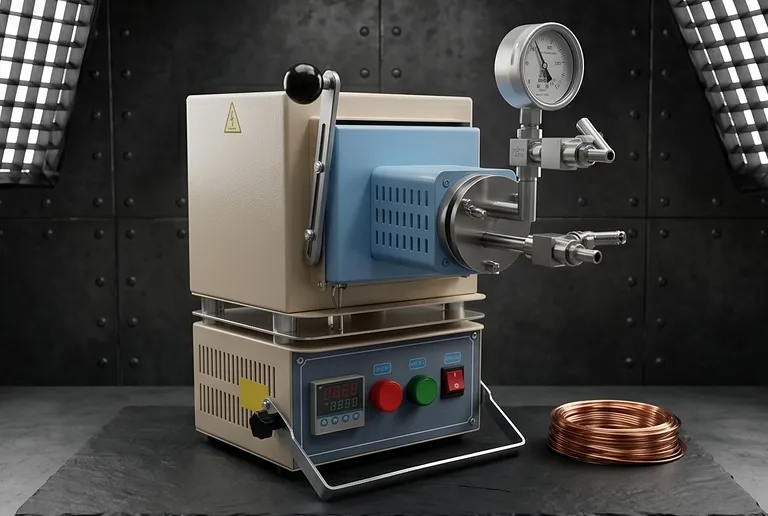
Every system has a tension. In a tube furnace, that tension exists between atmospheric purity and thermal uniformity.
| Parameter | The Goal | The Risk |
|---|---|---|
| Gas Flow Rate | Rapidly displace oxygen and moisture. | Can create "cold spots" and temperature gradients. |
| Seal Integrity | Zero ppm of oxygen ingress. | Thermal expansion can stress mechanical seals. |
| Gas Composition | Precise H2/Ar ratios for reduction. | Impurities in the source gas can alter the lattice. |
Achieving the "perfect bake" requires equipment designed to balance these variables—pre-heating gases before they hit the sample and maintaining seals that survive the brutal expansion of high-heat cycles.
Engineering the Future of Research
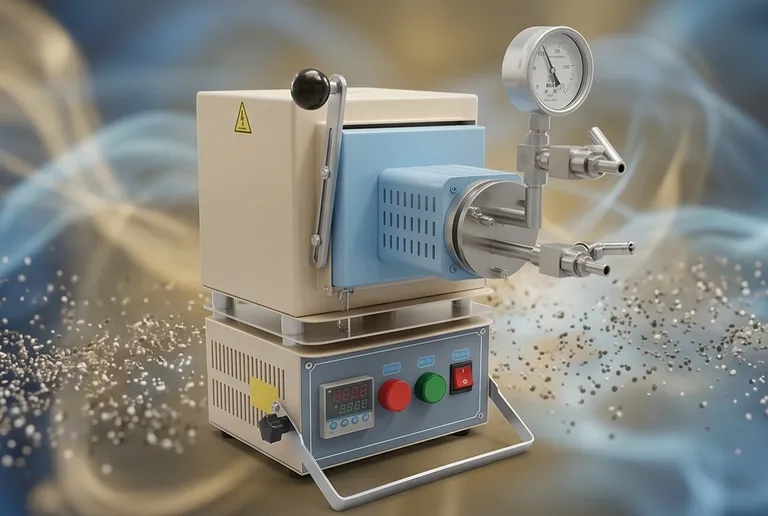
At THERMUNITS, we understand that a furnace is more than a heating element; it is a chemical reactor where the future of energy is forged.
Our comprehensive range of thermal processing solutions—from Tube and Atmosphere Furnaces to advanced CVD/PECVD systems and Vacuum Induction Melting (VIM)—is engineered for researchers who refuse to leave their atmospheric variables to chance.
We provide the precision required to protect your active sites, preserve your scaffolds, and ensure that your phase transformations are a result of your intent, not an atmospheric accident.
To find the ideal thermal environment for your next breakthrough, Contact Our Experts.
Quick Links
Suggested Products
Vertical 1700C Vacuum and Atmosphere Tube Furnace with 80mm Alumina Tube Compact High Temperature 1600C Tube Furnace with 50mm Alumina Tube and Vacuum Flanges for Material Sintering 900°C Max Rotary Tube Furnace with 8 Inch 310S Alloy Tube and Optional Multi Zone Heating for Industrial Material Calcination Split Vertical Tube Furnace with 1200C Quartz Tube and Stainless Steel Vacuum Flanges for Rapid Thermal Processing High Temperature 1700C Tube Furnace with High Vacuum Turbomolecular Pump System and Multi Channel Mass Flow Controller Gas MixerFurther Reading
The Silent Guardian of Kinetics: The Engineering Logic Behind Stable Molten Salt Environments The Architecture of Isolation: Why Atmosphere Defines Material Destiny The Invisible Architect: Precision Thermal Oxidation in NiO@Ni Synthesis The Architecture of Thrifty Precision: Why Tube Furnaces Define the R&D Continuity The Architect of Atoms: Why Precision is the Only Currency in TMD Synthesis
ThermUnits
Last updated on Apr 15, 2026
Related Products

Vertical 1700C Vacuum and Atmosphere Tube Furnace with 80mm Alumina Tube

Compact High Temperature 1600C Tube Furnace with 50mm Alumina Tube and Vacuum Flanges for Material Sintering
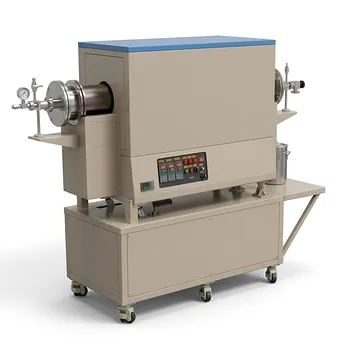
900°C Max Rotary Tube Furnace with 8 Inch 310S Alloy Tube and Optional Multi Zone Heating for Industrial Material Calcination
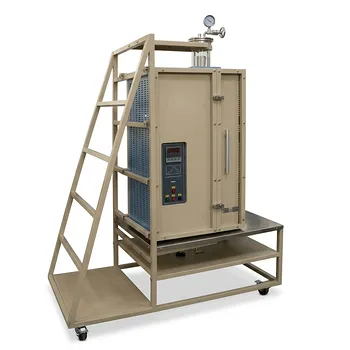
Split Vertical Tube Furnace with 1200C Quartz Tube and Stainless Steel Vacuum Flanges for Rapid Thermal Processing

High Temperature 1700C Tube Furnace with High Vacuum Turbomolecular Pump System and Multi Channel Mass Flow Controller Gas Mixer

1100C Tube Furnace with Vacuum Flange and Programmable Temperature Controller for Material Science and Industrial Heat Treatment
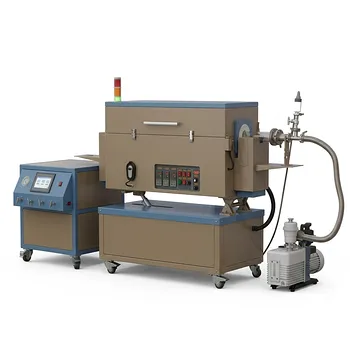
5 Inch Three Zone Rotary Tube Furnace with Integrated Gas Delivery System and 1200C Capability for Advanced Material CVD Processing
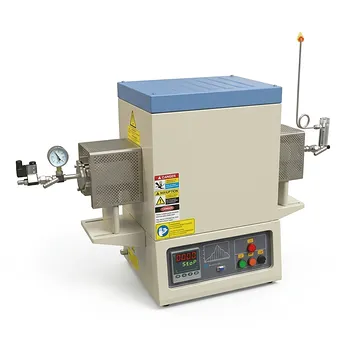
1700C Hydrogen Gas Tube Furnace with 60mm Alumina Process Tube and Integrated Hydrogen Safety Detector
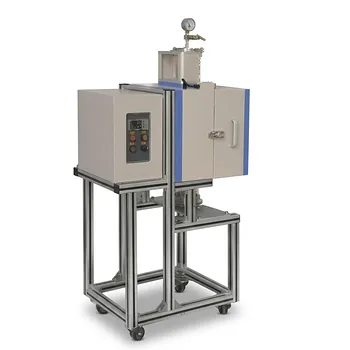
1200°C 5 Inch Vertical Quartz Tube Furnace with Stainless Steel Vacuum Flanges

High Temperature 1700C Six Zone Split Tube Furnace with Alumina Tube and Water Cooled Flanges

Compact Vertical Split Quartz Tube Furnace with Stainless Steel Vacuum Flanges for Rapid Thermal Quenching and Controlled Atmosphere Material Processing

High Temperature 1700C Benchtop Tube Furnace with 5 Inch Heating Zone High Purity Alumina Tube and Vacuum Sealing Flanges

1800C High Temperature Compact Vacuum Tube Furnace with 60mm OD Alumina Tube and Kanthal MoSi2 Heating Elements

1200C High Throughput Multi Channel Tube Furnace with 50mm Quartz Tubes for Annealing and Material Phase Diagram Research
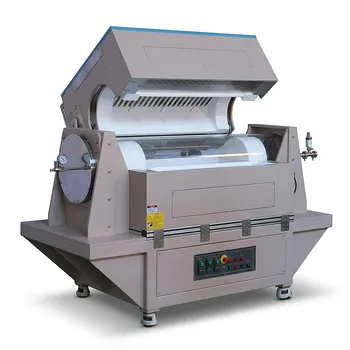
Three Zone Tube Furnace with 11 Inch or 15 Inch Quartz Tube and Hinged Flanges for Vacuum Atmosphere Heat Treatment

High Temperature 1700C Vertical Tube Furnace for Powder Spherification and Material Sintering
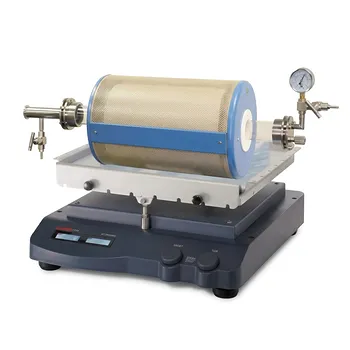
High Temperature Rocking Tube Furnace with Quartz Tube and Vacuum Flange for Materials Synthesis

High Temperature Automated 5 Inch Tube Furnace for Autonomous Material Research and Advanced Laboratory R&D
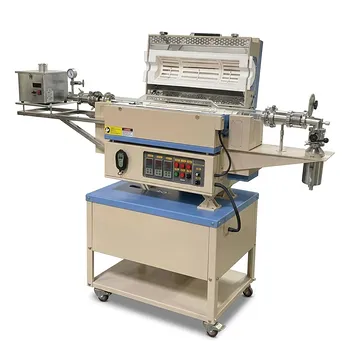
5 Inch Rotary Tube Furnace with Automatic Feeding and Receiving System 1200C Three Zone CVD Powder Processing