The Architect of Atoms: Why Precision is the Only Currency in TMD Synthesis
Apr 18, 2026
The Invisible Margin of Error
In the synthesis of 2D multi-element transition metal dichalcogenides (TMDs), the difference between a Nobel-caliber discovery and a discarded substrate is often less than five degrees Celsius.
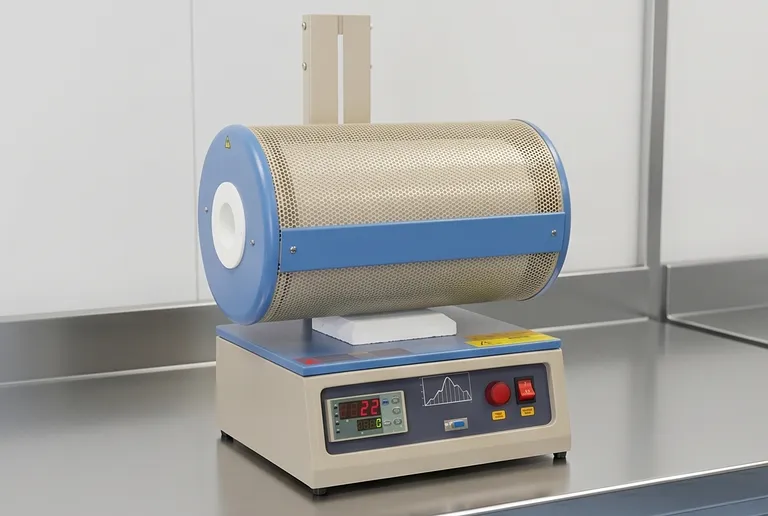
Researchers often treat the tube furnace as a "black box"—a tool that simply provides heat. But in the realm of 2D materials, the furnace is the primary architect. It is the engine that drives the chemical transformation of precursors into high-quality crystals.
When we talk about Mo-S or complex ternary Ni-Mo-S systems, we aren't just heating material; we are managing a delicate kinetic ballet.
The Geometry of Heat
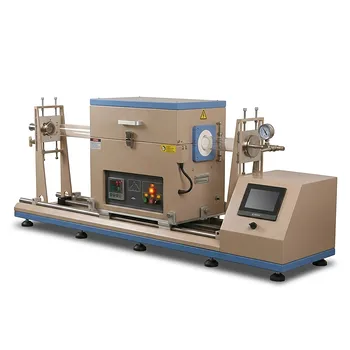
The primary function of a high-precision tube furnace is to provide a precisely controlled thermal environment. This is not merely about reaching a target temperature; it is about the "thermal window."
Regulating the Transformation
Most multi-element TMDs find their form within a narrow corridor, typically between 400 and 600 °C.
- Too low: The precursors fail to decompose, leaving a messy film of unreacted chemicals.
- Too high: The vapor pressure climbs too fast, and the atoms sublime before they can find their place in the lattice.
Precision allows us to "freeze" the reaction at exactly the right moment of high crystallinity.
The Stoichiometric Challenge
In ternary systems like Ni-Mo-S, the stakes are higher. You are asking three different elements to agree on a single crystalline structure. Without a uniform thermal field, elements segregate. You end up with "islands" of binary materials rather than a true ternary alloy.
The Atmosphere as a Shield
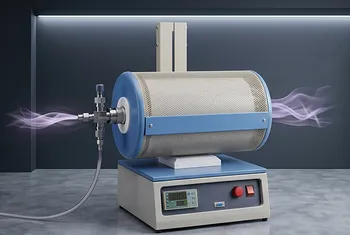
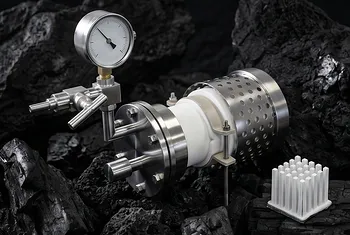
If temperature is the architect, the atmosphere is the guardian. A tube furnace must act as a perfectly sealed reactor, maintaining high-purity inert gas flows (like Argon) at specific pressures—often around 1.5 torr.
In this low-pressure vacuum, the furnace prevents the greatest enemy of transition metals: oxidation. By controlling the gas flow dynamics, the furnace ensures that sulfur or selenium vapors interact uniformly with the substrate, preventing the "turbulence" that leads to uneven film thickness.
The Systematic Failures of "Good Enough"
In engineering, as in medicine, the most dangerous problems are the ones we assume are solved.
- Spatial Non-Uniformity: A furnace set to 500 °C is rarely 500 °C across its entire length. Growth outside the "sweet spot" leads to inconsistent data.
- Cross-Contamination: The quartz tube remembers. Residual precursors from previous runs can subtly alter the stoichiometry of the next experiment, a "memory effect" that ruins repeatability.
- Vapor Transport Turbulence: If the heating ramp is too aggressive, the gas flow becomes chaotic. Instead of a continuous large-area film, you get a scattered map of crystalline islands.
Optimization: The Strategic Approach
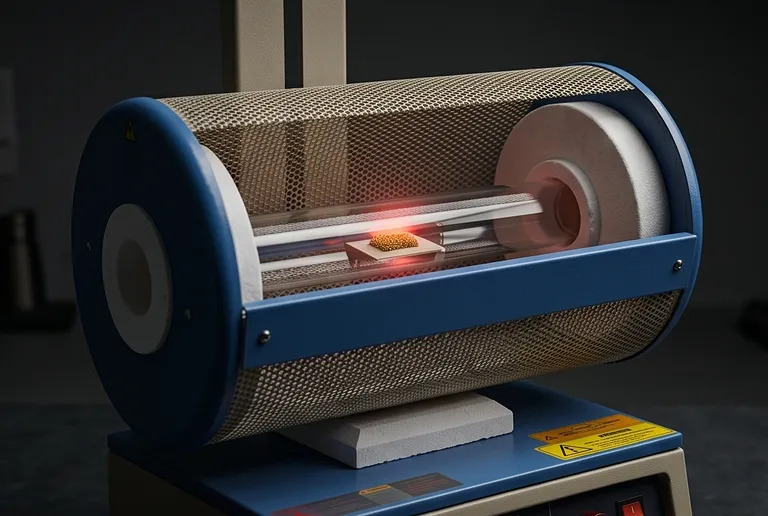
To master the synthesis of next-generation electronics, one must match the equipment to the objective:
| Objective | Operational Strategy | Required Feature |
|---|---|---|
| Large-area Uniformity | Low-pressure settings & long soaking times | Long constant-temperature zone |
| High Crystallinity | Slow cooling ramps to minimize defects | Precision programmable PID control |
| Complex Ternary Alloys | Independent control of precursor evaporation | Multi-zone heating capabilities |
The Engine of Discovery
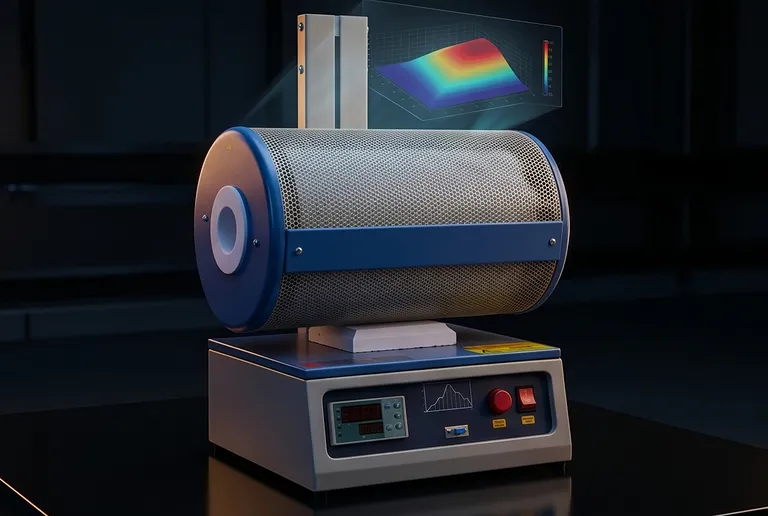
Precision is not a luxury; it is the fundamental requirement for repeatability. In the pursuit of 2D materials that will power the next century of semiconductors and catalysts, the tube furnace remains the most critical variable in the laboratory.
At THERMUNITS, we build the systems that eliminate the "noise" from your thermal processing. From CVD systems to vacuum induction melting, we provide the stability required for world-class R&D.
To find the thermal solution that fits your specific research window, Contact Our Experts.
Quick Links
Suggested Products
Vertical 1700C Vacuum and Atmosphere Tube Furnace with 80mm Alumina Tube Compact High Temperature 1600C Tube Furnace with 50mm Alumina Tube and Vacuum Flanges for Material Sintering 900°C Max Rotary Tube Furnace with 8 Inch 310S Alloy Tube and Optional Multi Zone Heating for Industrial Material Calcination Split Vertical Tube Furnace with 1200C Quartz Tube and Stainless Steel Vacuum Flanges for Rapid Thermal Processing High Temperature 1700C Tube Furnace with High Vacuum Turbomolecular Pump System and Multi Channel Mass Flow Controller Gas MixerFurther Reading
The Silent Guardian of Kinetics: The Engineering Logic Behind Stable Molten Salt Environments The Architecture of Isolation: Why Atmosphere Defines Material Destiny The Invisible Architect: Precision Thermal Oxidation in NiO@Ni Synthesis The Architecture of Thrifty Precision: Why Tube Furnaces Define the R&D Continuity The Architecture of Stability: Why Precision Aging is the Soul of Gas Sensor Reliability
ThermUnits
Last updated on Apr 15, 2026
Related Products

Vertical 1700C Vacuum and Atmosphere Tube Furnace with 80mm Alumina Tube

Compact High Temperature 1600C Tube Furnace with 50mm Alumina Tube and Vacuum Flanges for Material Sintering
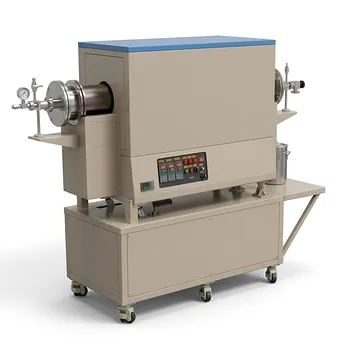
900°C Max Rotary Tube Furnace with 8 Inch 310S Alloy Tube and Optional Multi Zone Heating for Industrial Material Calcination
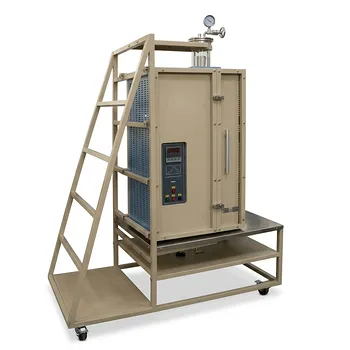
Split Vertical Tube Furnace with 1200C Quartz Tube and Stainless Steel Vacuum Flanges for Rapid Thermal Processing

High Temperature 1700C Tube Furnace with High Vacuum Turbomolecular Pump System and Multi Channel Mass Flow Controller Gas Mixer
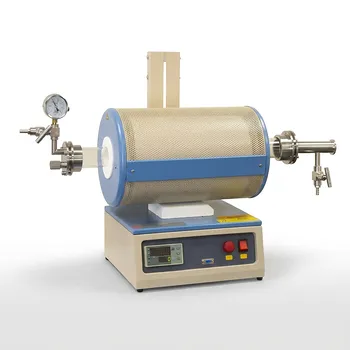
1100C Tube Furnace with Vacuum Flange and Programmable Temperature Controller for Material Science and Industrial Heat Treatment
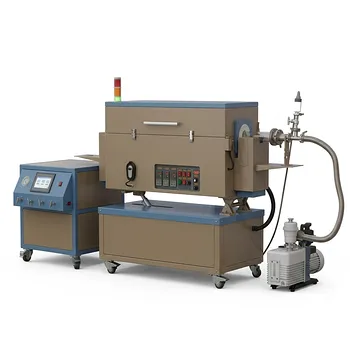
5 Inch Three Zone Rotary Tube Furnace with Integrated Gas Delivery System and 1200C Capability for Advanced Material CVD Processing
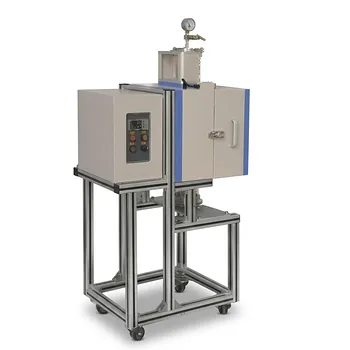
1200°C 5 Inch Vertical Quartz Tube Furnace with Stainless Steel Vacuum Flanges

High Temperature 1700C Six Zone Split Tube Furnace with Alumina Tube and Water Cooled Flanges
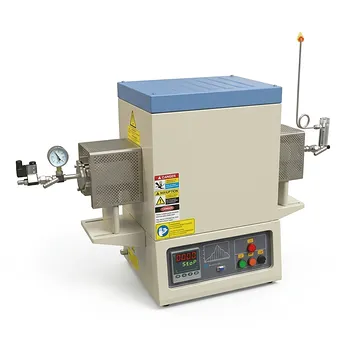
1700C Hydrogen Gas Tube Furnace with 60mm Alumina Process Tube and Integrated Hydrogen Safety Detector

Compact Vertical Split Quartz Tube Furnace with Stainless Steel Vacuum Flanges for Rapid Thermal Quenching and Controlled Atmosphere Material Processing

High Temperature 1700C Benchtop Tube Furnace with 5 Inch Heating Zone High Purity Alumina Tube and Vacuum Sealing Flanges
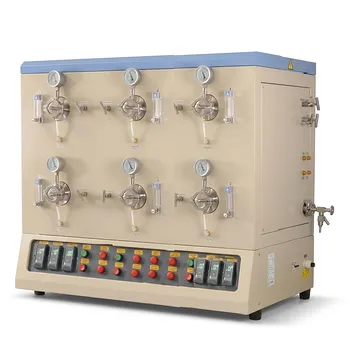
1200C High Throughput Multi Channel Tube Furnace with 50mm Quartz Tubes for Annealing and Material Phase Diagram Research
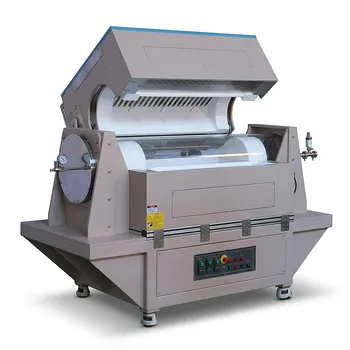
Three Zone Tube Furnace with 11 Inch or 15 Inch Quartz Tube and Hinged Flanges for Vacuum Atmosphere Heat Treatment

1800C High Temperature Compact Vacuum Tube Furnace with 60mm OD Alumina Tube and Kanthal MoSi2 Heating Elements

High Temperature 1700C Vertical Tube Furnace for Powder Spherification and Material Sintering
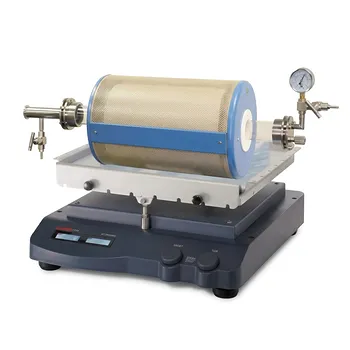
High Temperature Rocking Tube Furnace with Quartz Tube and Vacuum Flange for Materials Synthesis

High Temperature Automated 5 Inch Tube Furnace for Autonomous Material Research and Advanced Laboratory R&D
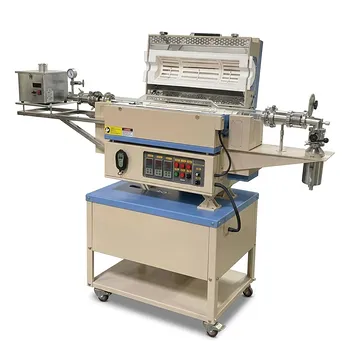
5 Inch Rotary Tube Furnace with Automatic Feeding and Receiving System 1200C Three Zone CVD Powder Processing